Posts Tagged diversity

STEM Tuesday– Astronauts and Space Travel — In the Classroom


Reading books from this month’s list confirmed something I instinctively knew – I am nowhere near adventurous enough to be an astronaut. Here are my brief takes on the books I read.

Support Independent Bookstores - Visit IndieBound.org

Countdown: 2979 Days to the Moon
by Suzanne Slade, illustrated by Thomas Gonzalez

Countdown tells the story of how mankind journeyed to (and first walked on) the moon. Unlike most books about astronauts, this book is told in free verse poetry. It is also primarily illustrated, gorgeously, by Thomas Gonzalez.


Support Independent Bookstores - Visit IndieBound.orgLost in Outer Space
by Tod Olson

This book screams for a read-aloud. Once you get into it, it gets increasingly difficult to put down. Olson does a great job of telling Apollo 13’s story. He puts his own spin on it by sprinkling the perspective of Commander Jim Lovell’s daughter Barbara (a teenager at the time) throughout.


Support Independent Bookstores - Visit IndieBound.orgCutting-Edge Astronaut Training
by Karen Latchana Kenny

This book is a quick but informative read, covering how astronauts train to go into space.


Support Independent Bookstores - Visit IndieBound.org
Above and Beyond: NASA’s Journey to Tomorrow
by Olugbemisola Rhuday-Perkovich

This book looks at NASA from the beginning of the space program through to expectations for the future. One thing I love about this book is that it weaves in what is happening in the world at various points in time and how those things impact NASA’s missions.

Springboard From the Books

Each of these books has references to materials that readers can explore in order to delve more deeply into the subject matter. Look through the books and take some time to explore these materials, most of which are online.

You can also explore materials provided from author and publisher websites.

Tod Olson, Lost in Outer Space: http://todolson.com/resources/lost-in-outer-space-resources

Countdown: https://peachtree-online.com/portfolio-items/countdown

Suzanne Slade’s Book Resources: https://www.suzanneslade.com/contact-me

Suzanne Slade’s Great Space Resources: https://www.suzanneslade.com/great-space-resources

Explore Free Verse

Take a closer look at Coundown and challenge students to create their own free verse poetry. As an added challenge, have students use poetry as a means of writing nonfiction – whether it’s describing something or telling a nonfiction story.

Here are two great resources for looking at and developing some free verse:

https://www.poetry4kids.com/news/how-to-write-a-free-verse-poem

https://powerpoetry.org/actions/5-tips-writing-free-verse-poem

As a bonus, you can read about Suzanne Slade’s journey in writing this book here: https://picturebookbuilders.com/2018/08/countdown-2979-days-to-the-moon-giveaway

Signs of the Times

Pick an event from one of the books. Explore what was going on in the world at that point in time. Here are some questions you might want to answer:

What songs were popular? Listen to some.
What TV shows were people watching? Watch one.
What were people wearing?
What problems was the world facing at that time?
Who was the President of the United States? Who were the other world leaders?
What was the cutting-edge technology for that time?

Consider making a timeline of important world events, including one or more of the significant events mentioned in the book(s).

Who do you know who was alive during that time? Interview one or more people to get their perspective(s) on the event.

Consider Being an Astronaut

Do a little career exploration and determine if you have what it takes to be an astronaut.
What is NASA looking for in astronauts? Find out here: https://www.nasa.gov/audience/forstudents/postsecondary/features/F_Astronaut_Requirements.html

There is a short video where astronauts talk about what kinds of people NASA looks for in astronauts here: https://youtu.be/4fXsAvv96Gw.

Take an Astronaut test – would you be a good candidate? https://www.astronaut-test.com/quiz

NASA has a behind the scenes look at astronaut training from about 15 years ago. Poke around the information and read entries from an astronaut trainee’s journal here: https://spaceflight.nasa.gov/shuttle/support/training

Then answer the question. Do you have what it takes to be an astronaut? Why or why not?

Pick astronaut or another career and do a little research into it.
What kind of skills and/or training does it require?
What is a typical workday like?
What is the pay range?

One place to look for career information is the U.S. Bureau of Labor and Statistics: https://www.bls.gov/k12/students

Support Independent Bookstores - Visit IndieBound.org
It takes many people to put astronauts up in space. One book that highlights a lot of these jobs is Team Moon: How 400,000 People Landed Apollo 11 on the Moon by Catherine Thimmesh.

Read this and/or look through NASA’s website to see what other careers help with space exploration. Do any of them interest you?


Other Ideas:

Look Into Life in Space

Take an online tour of the ISS in space with astronaut Sunita (Suni) Williams: https://youtu.be/06-Xm3_Ze1o

Or watch the 30 minute video A Day in the Life Aboard the International Space Station: https://www.nasa.gov/audience/foreducators/stem-on-station/dayinthelife

How is life in space similar to your life? How is it different?
Would you like to live in space? Why or why not?
Bonus: Can you find out what your home looks like from space?

Astronaut Biographies

There is so much information available on the NASA website. Here is where you can find a lot of the information related to astronauts: https://www.nasa.gov/astronauts.

Biographies for NASA’s active astronauts can be found here: https://www.nasa.gov/astronauts/biographies/active.

There are other links for information on former astronauts, international astronauts, and more.
Students could choose an astronaut to profile, explore the information provided, and write a biography about them.


I hope you have fun journeying into space with these books and activities.

****************************

Janet Slingerland loves learning about science, history, nature, and (well) everything, which she then turns into a book. To find out more about Janet and her books, check out her website: janetsbooks.com

STEM Tuesday– Astronauts and Space Travel — Book List

STEM Tuesday CoSTEM Costume Contest

So you want to be an astronaut! What’s next? According to Chris Hadfield, who spent two tours aboard the International Space Station, you need to get a good education. Learn new things. Fortunately, we’ve got a list of books for that.

ASTRONAUTS:

Cutting-edge Astronaut Training, by Karen Latchana Kenney

This book shows how astronauts train for space missions, what type of gear they need, and the technology they use. Readers visit the Neutral Buoyancy Lab in Houston and learn how astronauts aboard the International Space Station used a 3-D printer to manufacture a wrench needed for urgent repairs.


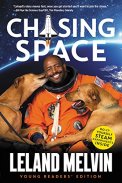
Chasing Space Young Readers’ Edition, by Leland Melvin

Astronaut Leland Melvin knows how to solve problems, whether on the football field or aboard the space shuttle. He shares a personal and realistic journey through astronaut training and space travel. Includes hands-on STEAM experiments at the back.


Lost in Outer Space: The Incredible Journey of Apollo 13, by Tod Olson

Written like an adventure novel, this is a true story about the mission to the moon that nearly ended in tragedy. Two hundred thousand miles from Earth, an explosion rips through the spacecraft. Readers follow along with astronauts in space and mission control on the ground as they race to fix the problem.


From Farmworker to Astronaut: My Path to the Stars, by José M. Hernandez

When he was ten years old, José M. Hernandez watched astronauts walk on the moon. From that point, he knew he wanted to go to space. Encouraged by his father (You can do this, m’ijo!), José made a plan for school, college, and beyond. Rejected 11 times from the astronaut program, he didn’t give up and finally made it aboard the Space Shuttle.

NASA:

Countdown: 2979 Days to the Moon, by Suzanne Slade; illustrated by Thomas Gonzalez

Getting to the moon began with a dream – an outrageous idea – that we could land a man on the moon and bring him safely back to Earth. The challenge: to do this in a decade. Written in verse, this book documents the Apollo program, providing full spreads to highlight the astronauts for each mission.

Above and Beyond: NASA’s Journey to Tomorrow, by Olugbemisola Rhuday-Perkovich

NASA was established in 1958, and in that time it has launched spaceships, shuttles, telescopes, and space probes. It’s landed men on the moon and rovers on planets. Packed with photos and profiles of lesser-known contributors to the space program.


The Apollo Missions for Kids: The People and Engineering Behind the Race to the Moon, with 21 Activities, by Jerome Pohlen

Each of the seven chapters focuses on a specific aspect of rocket science. Sidebars profile scientists, engineers, and mathematicians involved in the Apollo missions. Hands-on activities include orbital mechanics, engineering the lunar lander skin, and replicating an experiment done on the moon.

Moon Mission: The Epic 400-year Journey to Apollo 11, by Sigmund Brouwer

Relive the Apollo mission as one of the astronauts. Experience all of the life-or-death challenges and near disasters, that occurred or were predicted, in the centuries long quest to walk on the moon. Each chapter is broken into three stages (like a rocket) and is chock full of history, STEM, and a science mystery to solve.

WOMEN IN SPACE:

Reaching for the Moon: The Autobiography of NASA Mathematician Katherine Johnson, by Katherine Johnson

Written in an engaging, authentic voice, 100-year-old Katherine Johnson weaves history, segregation, civil rights, and African American culture into a conversational discussion of her life as a mathematical prodigy and computer at NASA.


Galaxy Girls: 50 Amazing Stories of Women in Space, by Libby Jackson; illustrated by students from the London College of Communication

Fifty stories of amazing women around the world essential to our missions to the moon and space. Includes female astronauts, mathematicians, engineers, physicists, test pilots, and aerospace psychophysiologists. As well as a timeline and “your own mission” plan.


To Fly Among the Stars: The Hidden Story of the Fight for Women Astronauts, by Rebecca Siegel

History remembers the Mercury 7 as America’s first space heroes. But there were 13 female pilots (air racers, test pilots, and flight instructors) who secretly completed the same astronaut tests. A look at the systemic sexism they battled to prove their right to become astronauts. Includes historic photos, glossary, and notes.


STEM Tuesday book list prepared by:

Sue Heavenrich writes about science for children and their families, from space to backyard ecology. Bees, flies, squirrel behavior—things she observes in her neighborhood and around her home—inspire her writing. A long line of ants marching across the kitchen counter generated one of her first articles for kids. When not writing, you can find her committing acts of science from counting native pollinators to monitoring water quality of the local watershed.


Maria is a children’s author, blogger, and poet passionate about making nature and reading fun for children. She’s been a judge for the Cybils Awards from 2017 to present. And a judge for the #50PreciousWords competition since its inception. Her poems are published in The Best Of Today’s Little Ditty 2017-2018, 2016, and 2014-2015 anthologies. When not writing, critiquing, or reading, she bird watches, travels the world, bakes, and hikes. Visit her at www.mariacmarshall.com

South Asian Storytelling: Author Interview with Sayantani DasGupta, and Giveaway


Today, I am delighted to welcome Sayantani DasGupta to Mixed-Up Files to talk about her experience writing her third book in the middle-grade adventure fantasy Kiranmala series, THE CHAOS CURSE. Sayantani’s novels feature a powerful girl character who carries a quest on her shoulders and must overcome the conflict between good and evil.


  1. Tell us about “The Chaos Curse,” and how your journey has been writing three novels in the Kiranmala series?

The Chaos Curse is the third in the Bengali folktale and string theory inspired Kiranmala and the Kingdom Beyond series. Kiranmala, the 12-year-old protagonist of the series, thinks she’s just an ordinary immigrant daughter growing up in New Jersey, until she realizes all her parents’ seemingly outlandish stories are true, and she really is an Indian princess from another dimension. This third and final installment of the series finds Kiranmala having to once again battle the evil Serpent King, who wants to collapse all the stories of the universe together, destroying the multiplicity of the multiverse. It is varied and heterogeneous stories, after all, which make the universe keep expanding. The Chaos Curse finds Kiranmala once again teaming up with some old friends, as well as some new ones, to try and stop the Serpent King and his nefarious Anti-Chaos Committee. Will they save the stories in time to save the multiverse?


  1. Your work is about a powerful twelve-year old girl Kiranmala who is proud of her ancestral heritage, connected to her family, and has a strong desire to fight for good over evil. Can you discuss how you broke stereotypes with this series?

It took me many years to find an editor for The Serpent’s Secret, as ten years ago, there didn’t seem to be any room in the publishing industry for a funny, fast paced fantasy starring a strong brown immigrant daughter heroine. The answers were often similar: “We love your voice, but how about writing a realistic fiction story about your protagonist’s cultural conflict with her immigrant parents?” In other words, the story that was expected and wanted was one that reinforced stereotypes about South Asian immigrant parents (as oppressive, or regressive, or rigid) and allowed a certain type of expectation about South Asian parents and children to be fulfilled. Many marginalized communities face this narrative demand – to tell stories of conflict, stories of suffering, stories of pain – for others’ voyeuristic pleasure. But for that very reason, in our stories, joy is an important form of resistance. To portray a strong, funny Desi heroine with doting, loving parents is to break a stereotype that mainstream America has about our communities. Other ways this series breaks stereotypes is to challenge the notion of fixed good and evil altogether. For instance, the rakkhosh monsters who are pretty uniformly baddies in the first book get more nuanced in the second and third. Like any beings, there are good rakkhosh and bad rakkhosh, and Kiranmala must get over her prejudice against them, realizing that heroes and monsters are not based on family, or appearance or community, but rather, what someone chooses to do each and every day with their lives.


  1. In a previous interview, you shared with me that as a child, Bengali folktales were an important part of you finding your own identity. How did you personally approach storytelling in this series and make Bengali folklore accessible to young readers?

I grew up in the U.S. with very few positive ‘mirrors’ in the culture around me – not in the books I read, not in the TV shows and movies I watched. (Here, I refer of course to Dr. Rudine Sims Bishops’ important framing of books as ‘mirrors, windows and sliding glass doors.’) It was only when I would go on my long summer vacations to India that I could see heroes and heroines who looked like me – brown kids being strong and heroic, saving the day. When I thought about adapting these stories to an American audience, I was at first nervous – would I be doing these cultural stories an injustice? But then I remembered that folktales are oral stories, and as such often change in the telling. Even my grandmother would often sprinkle in her stories with little morals she wanted us grandchildren to hear on that particular day because of some naughty thing some cousin had done. So in changing and adapting the stories, I still felt like I was being true to their nature as oral folktales. Just like so many aunties and uncles and parents and grannies before me, I was simply adapting my storytelling to my audience.


  1. Although the story is predominantly in English, you sprinkle Bengali in the books too. Tell us about the power of weaving Bengali words into Kiranmala’s world.

I think many of us immigrant kids or Third Culture kids aren’t just multilingual, but we speak a mash-up of multiple languages at once. We speak Spanglish and Hindlish and in my case, Benglish. Sprinkling in Bengali words without apology and without italics was a way of not only honoring the language of my family and community, but reflecting the real way that so many of us communicate. I knew that non-Bengali speakers would pick up words and meaning from context, and that young Bengali readers might be seeing familiar words in an English book for the first time. That felt like a really important responsibility – and so I tried very hard to use Bengali pronunciation to guide the way I spelled these words (rakkhosh for instance instead of the more Hindi-fied “rakshas” or “rakshasa”). I also narrated the audio books myself, and tried very hard to keep to Bengali pronunciations of all these words – I wanted young listeners to hear their language pronounced correctly!


  1. You discussed in my previous interview that you hoped to inspire children to have radical imaginations through your stories. How has that manifested in your school visits and public readings/signings?

When I talk about radical imagination, I am usually talking about kids from marginalized communities being able to see themselves as protagonists in stories, see their own strength and heroism reflected back to them in them in books. It’s hard to be what you can’t see, right? And every kid deserves to see someone like them as a hero. But what I have found in my school visits is something else very interesting. I do meet many immigrant kids or Desi students who come up to me, hugging my books, so excited that Kiranmala is a brown kid, like them! But I also meet many non-Desi kids who are equally excited about Kiranmala’s adventures, and this feels very radical. When a gaggle of young blonde boys runs up to me telling me how much they love the series, I see something radical here too – their unquestioned ability to not just accept but cherish a strong girl as a hero, a protagonist of color. When radically representational of our todays, I truly believe that stories can help make better futures for us all by making space in all our imagings for liberatory possibilities of leadership, family and community. In other words, if you grew up reading strong brown female protagonists as a kid, it’s not such a stretch of the imagination to rally behind a strong woman of color president, right?


  1. What has writing this series taught you about yourself? And what advice do you have for children, young adults, and adults who want to pursue writing?

When I was in practice as a pediatrician, I used to write prescriptions for reading. This is because stories are good medicine, in all the senses of that word. This same notion brought me to Narrative Medicine, the field in which I teach. And it’s this same impulse that has pushed me to write for young people. I guess what I’ve realized is that storytelling is a critical act of healing – particularly the sort of storytelling that is filling in the narrative erasures of the past – the gaps in positive representation that so many of us suffered through. I’ve also come to realize that fantasy is an amazing way to talk about oppression, prejudice, racism, justice. But at the same time, particularly when you’re writing for young people it’s also got to be a cracking good story. Young readers are unfailingly honest. They’re not going to let you get away with lecturing them or talking down to them. They know when they’re being respected and a story is speaking with and for them.


My advice to people of any age who are writing is this – follow the joy, follow the passion. Tell the story YOU want to hear first and foremost. Don’t follow trends, or worry about publication at first. Tell the best story that only you can tell. As Toni Morrison says (and I always tell students), “If there’s a book you want to read and it hasn’t been written yet, then you must write it.” And I truly believe each of us has the privilege and responsibility of telling our stories.


Enter the giveaway for a copy of THE CHAOS CURSE by leaving a comment below. You may earn extra entries by blogging/tweeting/facebooking the interview and letting us know. The winner will be determined on Monday, March 9th, 2020, and will be contacted via email and asked to provide a mailing address (US/Canada only) to receive the book.

If you’d like to know more about Sayantani and her novel, visit her website: http://www.sayantanidasgupta.com/writer/ Or follow her on twitter : https://twitter.com/Sayantani16