
Blog

Children’s Authors Chat about —Where Do We Go From Here?

How are you all doing? Anyone feeling like this #shelteringinplace is going on forever? Perhaps you feel like you are stuck in the Groundhog Day movie over and over? While these restrictions are necessary, it is still somewhat difficult to be stuck in a place of so much uncertainty. What will happen when things begin to open up? Will life go back to normal or will there be a NEW normal? At this point no one knows.


I decided to ask some of my fellow kidlit authors about what they are doing now and their hopes  for the future. Perhaps reading these, you’ll feel that there is HOPE for life again, even if it’s a new normal.


After all, as Albert Einstein states,  “In the middle of difficulty lies opportunity.”


” I don’t know what the future holds for in-person visits, but I sure hope that they happen. It is a treat to connect with writers in person. While they don’t, I will continue virtual visits and will keep on WRITING! After all, I’m a writer. My job is to get out great books that will connect with readers during all of these times!” — Nancy Castaldo

“For me, my schools have cancelled my workshops so there’s not much I can do, especially if they remain closed until September. I’ll re-evaluate then. In the meantime, I’ve been giving many free readings and mini workshops online and it’s been fun to interact with kids again!”– Lydia Lukidis

“Gosh, for now, nobody knows what will happen with in-person schools, much less in-person author visits. I’m certainly willing to adapt my presentations for virtual visits, but I’ll miss interactions with kids:( I will also increase my online classes and might seek out a faculty position with an MFA program, too. I’m recently divorced, so this financial hit of lost gigs is a bit of a wakeup call about the fragility of the freelance life. As for book publication, I think we’ll all have to be extra creative about online offerings.” — Donna Janell Bowman

“As teachers and school districts have reached out for permission to read my books aloud and make recordings, I’ve been asking how they plan to use the recordings with students. To say I’m blown away by their creative ideas would be an understatement!
Some are book specific, but many could be done with a wide variety of books. I’d like to find an easy-access way to share these great lesson ideas and teaching strategies with other educators. I’m still pondering the best way(s) to do that and how the lessons might work when the recorded read alouds are no longer available, but it’s exciting to think about. School closures have demanded so much creative thinking, and teachers have risen to the challenge. Educators rock!” — Melissa Stewart

“I’ve been connecting one-on-one with some enthusiastic readers” — Laurel Neme

“I am trying out my first virtual writing workshop lesson with middle schoolers (It helps to work in one!) next week. It’s specific to THE NEST THAT WREN BUILT, but could be adapted for other books, or even done without a book connection. If successful, I’ll work on marketing this as an alternative to in-person school visits.”– Randi Sonenshine

“My WFH (work-for-hire) writing projects have all been put on hold, so I most likely will dive into research for a couple MG projects that I have been working on.” — Lisa Idzikowski

“Today I held a virtual visit for kids at home. I used one of my school visits that I knew would translate okay via screen, was an older one that is not requested much for live visits (i.e. not my “best”). I promoted via e-newsletter (mostly teacher-librarians) and social media. I offered it for free but made a request in the registration and confirmation emails for donations and/or book purchases. I had 64 families register and probably 40 show up (many with 2 kids). So far I have received 1 donation and of course don’t know about purchases. I did it mostly for myself — I desperately miss teaching– but also as a test of the interest/ willingness-to-donate.” — Heather Montgomery

“I already do virtual visits and am happy to keep doing them, but I hope we won’t get rid of in-person visits. I was telling someone the other day about times when kids have come up to me with their private concerns, and that can’t happen through a Zoom meeting. But, I do think there’s a lot to offer with virtual visits too and I’d love to see them continue to evolve. I’ve been teaching writing classes online already and would love to do more of that, although again, as much as I love webinars, in-person classes are better. As for marketing, I think there’s an opportunity to have virtual tours across the world in collaboration with bookstores. The signed copies would be missed, though.” — Samantha Clark

“I have been doing virtual school visits for 5 years at least so I doubt that will change very much. But I intend to go back to in person visits. Physical presence has a power that virtual presence does not. I will be more mindful of keeping myself protected on the road, more hand washing, less handshaking. But my life has been a mix of virtual and personal connections for a long time now and I don’t see a need for it to change drastically. But here’s what I hope will be the longer term impact for publishing. This pandemic is proving that it’s possible to run a publishing house with the majority of staff working from home. Which means that even though big publishers will likely remain in NY, their work force could be much more geographically spread out and that would be good news indeed for diversity. The expense of living in or near NYC is what drives out diverse applicants and drives up the cost of producing books.” — Rosanne Parry

“All my spring school visits were cancelled (all have said they will rebook next year, but who knows if that will be possible.)” — Buffy Silverman

” I had a few events around my book launch but have had several events cancel or postponed until next year. I’m putting in conference proposals (NSTA?) in hopes I’ll be able to travel one day, creating digital resources kids can use now, doing occasional zooms (for free) with classes of kids. Fortunately I had several blog posts and podcast interviews that continue to roll out and keep my book in folks’ mind. Other than that, I’m trying to get more reviews on Amazon, B&N, Goodreads and offering to do the same for other creators. I figure that’s one of the best ways for books to be discovered right now.”– Kirsten Williams Larson

” I will be doing a virtual joint book launch with Teresa Robeson. I recently did three Zoom visits for schools and look forward to doing more of these going forward. Although I will be very happy to return to in person visits when it is safe to do so!” — Nancy Churnin

“With school visits, educator conferences, and book festivals all being cancelled, it leaves me wondering what will happen with my three new books coming out this summer and fall. I’m already focusing a bit of what I can do online but hope for some in-person events, too. I hope to jump back into in-person school visits in the fall but will happily Zoom with classes, too.” — Annette Whipple


And, me, what am I doing and what do I hope for?   I, like everyone above hope very much to get back to doing in-school visits. The sense of energy and connection with the students from actually being in front of them is difficult to achieve in a virtual school visit. I believe that teachers want this, too. I am taking this time to work on something I’ve had percolating for years. I’m starting a new STEM podcast with Jed Doherty. Look for Solve It! — a brand new podcast for kids and families to learn how real scientists, engineers, and experts use curiosity, critical thinking, and creativity to solve everyday problems in their jobs. — Jennifer Swanson

Also good news is that agents are accepting submissions, and editorial meetings are still happening at publishers. Even though things may move more slowly, the publishing world churns on.


Finally I think we can all agree on one thing:  TEACHERS and LIBRARIANS ROCK!!!   Despite their many challenges they are doing a fabulous job connecting the best way they can with their students.

So, you see, even though we may all be hunkered down in our houses, the creative spirit lives on– THRIVES even!  Let us all hope that one day soon we’ll all be able to get together in a classroom,  at a conference or workshop, or even just for coffee,  and share this spirit in person.

I leave you with this quote from a truly amazing and inspiring woman:


“You may not control all the events that happen to you,

but you can decide not to be reduced by them.”  — Maya Angelou


Stay safe, my friends.

If you have things you are doing now, please let us know. If you have hopes for the future, also post below. Let’s promote HOPE!

Author Spotlight: Eileen Moskowitz-Palma + a GIVEAWAY!

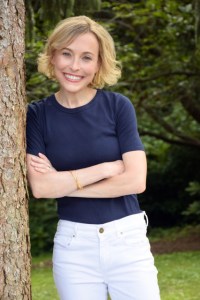
Eileen Moskowitz-Palma and I first crossed paths more than a decade ago, at the Backspace Writers Conference, in New York. I can’t remember which panels I attended, but one thing stands out: meeting Eileen. We were sitting in a large, well-lit room, waiting for the keynote to begin, when she turned around and smiled at me. It was the warmest, friendliest smile I had ever seen, and naturally I wanted to bask in her… Eileen-ness.
It didn’t take before she and I became fast friends, chatting about our daughters (we both have onlies); our writing styles (we both err on the side of funny), and our diminutive statures (Eileen is half an inch taller than I am, which she never lets me forget.) 🙂

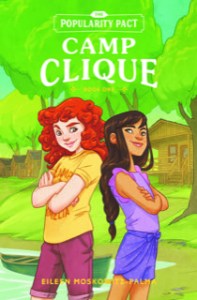
Her debut middle-grade novel, THE POPULARITY PACT: CAMP CLIQUE, which Kirkus describes as “{a}…solid mix of s’mores and girl empowerment… encouraging but never saccharine,” is out now from Running Press Kids. Here is a brief summary:

In the blink of a summer, Bea goes from having a best friend and a place she belongs to being dropped and invisible, eating lunch alone and only talking to teachers. The end of sixth grade and the start of Camp Amelia can’t come soon enough. 

But then the worst part of school, ex-best friend Maisy, shows up in Bea’s safe place and ruins it all. Maisy lands in the same bunk as Bea and summer suddenly seems dire. Never having camped a day in her life, Maisy agrees: it’s hopeless. She should be at home, spending time with her little sister and hanging out with her super popular crew of friends–not at this stupid adventure camp failing everything and being hated by everyone. In a desperate bid to belong, Maisy offers Bea a deal: if Bea helps her fit in at the camp, she will get Bea into the M & M’s, their town’s popular clique, when they enter seventh grade in the fall. The Popularity Pact is born.

 MR: Hi, Eileen! Before we start, can I say how excited I am about this novel? It’s your first middle grade!

EMP: Thank you for that wonderful introduction Melissa. You are one of my first real writing friends and the best take away from that conference! When we met all those years ago, I introduced myself as a rom-com writer, and I really thought that’s what I was. I even published a rom-com back in 2014. But one day the idea for The Popularity Pact series came to me. I was two pages in to the manuscript when I realized I finally felt at home as a writer.

MR: CAMP CLIQUE is told from the alternating perspectives of two ex-BFFs, Bea and Maisy, who strike a mutually beneficial deal in the name of popularity. Is the quest for popularity an issue that affected you as a tween? If so, how did it shape your experience in middle school, and beyond?

EMP: Middle school wasn’t about popularity for me as much as it was about navigating strong and meaningful female friendships. For most kids, late elementary school into middle school is when friendships feel more important than anything else in their world. I loved having a best friend and the certainty that came with knowing I had someone to sit with at lunch or pair up with on a school project, but most importantly I loved having someone I could talk to about anything. I lived for those after-school hangouts, and phone calls and sleepovers. As long as I had my person, I felt a strong sense of belonging. But when my best friend and I had an argument, it felt like the floor had been ripped out from under me. In The Popularity Pact series, I wanted to tap into those complicated dynamics of tween friendships, the intensity of both the good and bad moments.

MR: In addition to popularity, Maisy has other issues on her mind: troubles at home, and acute anxiety. She seeks out the crunchy-granola camp therapist, Dr. Beth, for help. Do most camps have therapists in residence now? If so, what kind of research did you have to do to see how these therapists work with campers? (i.e., short-term vs. long-term therapy; reporting to parents, etc.).  I would imagine it’s very different from therapy done in a more traditional setting.

EMP: From the small bit of research I did, it seems like more and more camps are recognizing the need for mental-health support that extends into the summer months. It makes perfect sense for a child who is undergoing therapy during the school year to seek the same supportive care while at camp. I didn’t extend my research into how therapy is typically done at most camps, because Camp Amelia is unique. Instead, I imagined what type of therapy environment would work for a kid like Maisy who was resistant to therapy, and anxious about talking about her issues at home. Dr. Beth was born because I thought she had the perfect personality and out-of-the-box methods to get Maisy to open up about the secret she had been keeping for over a year. Dr. Beth shares her therapy cabin with a menagerie of rescue cats. The way she holds back and lets the cats come to her is similar to the way she gets through to Maisy.

MR: I actually went to two sleepaway camps as a child: the artsy Camp Hillcroft, where I made enamel jewelry and sang folk songs around the campfire, and sporty Camp Gilford, where I was bullied mercilessly and wished I had a Dr. Beth to talk to. Did you go to sleepaway camp? If so, how did the experience shape the novel? Maisy and Bea’s characters specifically?

EMP: I never went to sleepaway camp because my family spent most of the summer at a cottage in Twin Lakes, Connecticut, an area of the Berkshires which is home to several summer camps. When I was building the world of Camp Amelia, I thought of the white Birch trees that I always associate with the woods that surround Twin Lakes. I pictured the fireflies zapping across the summer sky and heard the sound of the crickets. I remembered how it was always cold there at night, not matter how hot the days were. I thought of the feeling of the wet dirt path under my feet after swimming in the lake. That cottage was my safe place away from any drama I had waiting for me back home. It was the one place where the stressors of my school life couldn’t permeate. I thought about what it would feel like if an ex-best friend showed up there, and it was easy to think about how Bea would feel when Maisy permeated her camp life. For Maisy’s perspective, I thought about some of the uncomfortable parts of country life, like how cold the lake water is, or how scary it can be to see little creatures running across a dirt path. I imagined what it would be like for an anxious kid like Maisy to get sent to camp in the woods against her will.

MR: Camp Amelia is an adventure camp, with the focus on team spirit and athletic ability. There’s even a camp-wide sports competition (“the Cup”), where winning is everything. Were you sporty like Bea, or anxious like Maisy? Perhaps an amalgam of both?

EMP: I was definitely not sporty. I was a tiny, uncoordinated kid with asthma who got picked last in P.E. In fact I was so unathletic, that my P.E. teacher would have to give me multiple tries to pass each section of the mandatory yearly fitness challenge. Like Maisy, I am an anxious person, so I was always scared of getting hit with the ball, whether it was a dodgeball or a basketball. I always try to think of ways to add more natural drama and tension to a story. I came up with the camp idea first, but then I thought…What if it’s an adventure camp? And what if Maisy was anxious and unathletic like me? In every scene where Maisy has to confront a fear at adventure camp, I was able to think about how I would feel in that situation and it made it very easy to write.

 MR: Book Two, THE POPULARITY PACT: SCHOOL SQUAD, comes out on October 6. Can you give us a teaser?

EMP: I would love to! Bea kept up her end of the bargain by getting Maisy “in” with the girls at camp. Now it’s Maisy’s turn to fulfill her promise to ingratiate Bea with the popular girls. When Bea is accepted into this new inner circle, she begins to lose sight of what true friendship is all about. As Bea seems prepared to sacrifice anything to be “cool,” Maisy realizes there’s more to life than hanging out with a bunch of mean girls. Can she convince Bea that the popularity pact was a mistake? Can these former friends find their way back to each other?

MR: And finally, what’s your wildest camp story? I know you have one…

EMP: It took over 40 years for me to finally have my own camp experience. When my book tour was canceled because of COVID-19, I was devastated about the school visits that weren’t going to happen. I had been looking forward to connecting with readers in the classroom because of my experience as a former elementary school teacher. At the same time, my social media feed was filling up with posts by desperate parents who were suddenly juggling multiple homeschooled kids, while also working from home. I realized I could help. My husband and I brainstormed the idea of a free virtual writing camp. I would give kids a multi-session program that was positive, educational, and creative, while also allowing their parents a reprieve that they didn’t have to feel guilty about. In four days, I had a roster filled with 75  kids from all over the country, and a growing wait list for the next session. I have just completed my first camp session, and it has been just as healing for me as it has been for the kids. It gives me a sense of purpose and allows me to serve others in a time when I have been feeling helpless. For more information about my writing camp, or other writing resources for children during this time, please visit my website (see below).

MR: Oh!!! One last thing! A MUF author interview wouldn’t be complete without a lightning round, so…

S’mores or bug juice? S’mores

Friendship bracelets or French braiding? Not to brag, but I am really good at braiding, so French Braiding of course.

Favorite camp song? I actually wrote my own camp song for Camp Clique, which I am very proud of.

Favorite sporty activity? Running

Favorite artsy activity? Painting

The ideal care package? Beauty products and chocolate…lots and lots of chocolate: 🙂

Best camp prank? I have never done a prank in real life. BUT, I had a lot of fun writing a prank scene that the Sunflower bunk girls play on their rival bunk the Dandelion Bunk.

And now… a camp-tastic

GIVEAWAY!!!

Eileen has generously offered to gift THREE lucky readers with an autographed copy of Camp Clique, a bookmark, and two friendship bracelets! Just comment on the blog for a chance to win!

When EILEEN MOSKOWITZ-PALMA double majored in Elementary Education and English at the University of Massachusetts, Amherst, she thought she would have to choose between a career as a writer or a teacher. It wasn’t until she was almost 40 that she realized she could do both. Now, Eileen divides her time between writing middle-grade novels and teaching Beginner Novel Writing and Writing for Children and Young Adults at The Writing Institute at Sarah Lawrence College. Eileen lives in Westchester, New York, with her husband and daughter. Learn more about Eileen on her website and follow her on Instagram.

Interview with Joy McCullough: Author of A Field Guide to Getting Lost

Hello Mixed-Up Filers!

Today, I am pleased to welcome to our site, Joy McCullough, author of A Field Guide to Getting Lost, which just came out this week from Atheneum Books for Young Readers.

JR: Hi, Joy and thanks for joining us today!

First off, I really enjoyed A Field Guide to Getting Lost. For those who don’t know about the book, can you tell us a little bit about it and where the idea for this story came from?

JM: Sure! Field Guide is about Sutton and Luis, two kids whose parents start dating each other. They are very different from one another but they have in common that neither one of them likes to spend time outside. But then they go on a hike with their parents and end up getting lost…

The spark of the story actually came when I was wandering a park with my visiting father and we got lost. He made a joke about being lost in the park, and at first it sounded like a picture book to me. Eventually it morphed into the middle grade story it is now!

JR: That’s really funny, and some of the best stories come from personal experiences. Sutton and Luis are endearing characters, and the story switches back and forth between their points of view. There was also a lot of humor, but there were also some sad parts. How difficult was it to veer back and forth between characters and emotions?

JM: Writing dual perspective can be tricky, but honestly it came really naturally with this story. The balance of humor and pathos is also something done sort of by gut feeling. As I recall, the humor and action of the story came first, for the most part. Then later I layered in more of what was going on emotionally for the characters.

JR: This was your MG debut after having previously written, Blood Water Paint, a YA. Do you prefer one genre to another, and what appealed to you to write a Middle Grade this time?

JM: Blood Water Paint was indeed my debut novel, but it was the tenth novel I wrote. Of those nine previous unpublished novels, seven of them were middle grade. So I had written a great deal of middle grade before debuting with YA. I love YA, but middle grade feels like home.  Moving forward, I am working on both middle grade and YA projects. If possible, I really recommend writing in multiple categories. For one thing, the publishing process can be quite slow, so having other things to work on when you’ve got a lull in one category is great. But also emotionally, my MG and YA projects require very different things from me and fuel me in very different ways, and it’s lovely to be able to move between the two.


JR: I know the feeling well of breaking through after several unpublished novels. Can you tell us a little bit about your writing journey getting to this point? 

JM: As mentioned above, my journey was long. I wrote and queried five manuscripts before I got my first agent. I had five books go on submission to editors before a book sold. My debut novel was the tenth book I wrote. People are usually either horrified or super encouraged to hear my story. I understand both reactions. It doesn’t take everyone that long. But I will say that as agonizing as it was, I am so grateful that I debuted when I did, with that specific book and team at that specific stage of my life. Things worked out how they were supposed to.

JR: I read on your website,  https://joymccullough.com/  that you used to study playwriting in college. How has that helped you in your novel writing?

JM: I wrote plays for a long time before I started writing novels. Obviously dialogue comes easily to me. Also, an awareness of the rhythms and musicality of language. This serves me most of all in my novels in verse, but I think is important in all writing. And I brought to novel writing a fundamental understanding of plot and character development, though they unfold in different ways in plays and novels.

JR: I couldn’t agree more. Having that background definitely helps with dialogue. You met your husband atop a Guatemalan volcano? How did that come about?

JM: Ha, well I spent a year after college traveling in Latin America and spent the bulk of the time in Guatemala. At one point I was invited to climb a volcano with a group of other young adults. I am NOT an outdoorsy person (much like Sutton and Luis), but I was making a real effort to say yes to whatever opportunities came my way during that year. So I said yes. I was not equipped for this challenging climb—the summit of the Volcán de Agua is 12,340 feet above sea level and 5,550 feet above the trail head. I…did occasional step aerobics. My husband was in our group and came to my aid when it became clear (very early!) that I was going to need some serious help. He carried my pack and stayed at my side all the way up, through the night we spent in the crater, and all the way down.

JR: Okay, important question. On your site you also say that you love chocolate. What’s your favorite?

JM: I am partial to dark chocolate, and I love a pairing with orange. Theo Chocolates makes a dreamy chocolate orange bar.

JR: What’s your writing process like?

JM: It’s different with every project, but here are the things that are mostly consistent: I do some pre-writing work on character, mostly. I don’t outline a whole book, but I’ll often outline about the first 50 pages to get me going. Once I’ve drafted those, I’ll often outline the next chunk. I’m pretty good at letting first drafts be terrible and just getting them on the page so I have something to work with. Now that I write that out, I guess I do have a process! But I think it’s the revision process that sort of all over the place.

JR: What’s your favorite book from childhood?

JM: Oh I can never pick a single favorite. But these books all had a big impact in various ways: The Babysitters Club, The Chronicles of Narnia, and the Ramona Quimby books.

JR: What’s your favorite movie?

JM: I definitely don’t have a favorite movie. I’m not one to re-watch movies, either, even when I’ve loved one, so I don’t know if movies I have loved in the past even hold up. Instead I’ll tell you a few TV shows of recent years that I have loved: The Good Place, One Day at a Time, Call the Midwife, Miss Fisher’s Murder Mysteries.

JR: Something people would be surprised to learn about you?

JM: I don’t know, I’m a pretty open book on social media.


JR: What’s the best piece of writing advice you’ve received and is there any advice you can give to writers looking to break in?

JM: During intermission of the first performance of my first play, my college playwriting professor asked me what I was working on next. Learning early to write the next thing was a valuable lesson. Through my long journey to publication, I always started writing the next project as soon as one was out in the query trenches or on submission to editors. That way I would have something new to submit sooner than later, but more importantly, I would put my heart into the new thing and care less about whatever was getting rejections. So I would pass that advice on to newer writers, and also to build your writing community. Not for the sake of connections in a ladder-climbing sense, but because building those relationships is how you survive this business. Yes, writing friends may give you valuable critiques, but they’ll also give you emotional support when you need it, celebrate with you, share perspective, etc.

JR: That’s great advice. What are you working on next?

JM: I’m answering these interview questions on a break from copyedits on my next MG novel! It’s called Across the Pond, about an American girl whose family moves into a Scottish castle. It’s coming from Atheneum in spring of 2021. I also have a spring 2021 YA novel coming from Dutton, but the title hasn’t been announced.

JR: I look forward to those! How can people follow you on social media? 

JM: I’m on Twitter and Instagram as @JMCwrites. And my website is joymccullough.com.


JR: Thanks again to Joy McCullough and make sure you go out and get A Field Guide to Getting Lost!

JM: Thanks so much for having me!