Posts Tagged “writing for children”

Children’s Authors Travel to Israel and Inspiration Blooms

Leslie Kimmelman in Israel


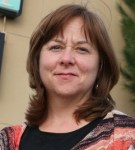
                                         Author Leslie Kimmelman has just returned from a tour of Israel, as one of eighteen  picture book and middle grade authors sponsored by the  PJ Library Organization. I wondered what a trip with so many creative and zany minds would be like. How would Israel look through their eyes? What details did they see that might go into a book? Did they come up with story ideas? Leslie is one of the most creative people I know and I couldn’t wait to ask when she returned.

Annabelle: Was there a single experience that you would like to share with young readers?

Leslie:Every single experience was a revelation–I think one of the most important things in life is to let go of preconceived notions as much as possible and be open to new adventures. The trip was everything I expected, only in the sense that it was an incredible trip. But it opened my eyes and enriched me in ways I never could have anticipated. You can see how meaningful the trip was to me by counting my (over)use of adjectives in answering your questions!         

Annabelle: What surprised you the most? How would you explain or dramatize it in a book?

Leslie: I’m not up to that yet–still processing everything that happened, and waiting to see what rises to the top. I will say that two things stood out to me. The first was how moving it was to be in a place with thousands and thousands of years of history. I am a huge history enthusiast, but I don’t think I’ve ever felt so strongly that feeling of walking in the steps of civilization after civilization–civilizations that thrived, then were gone, then replaced by another, and so on. Particularly in Jerusalem. We had an underground tour that gave me goose bumps. Being connected to the generations that came before us is one of the most compelling traditions of Judaism, I believe, but in Israel I felt that in a visceral way. I’m trying to get over the feeling that I may not have the words adequate to describe what I experienced. (Not something a writer wants to feel!) 

The second thing that struck me quite strongly and unexpectedly is how many disparate communities make up the country. Standing in Jerusalem and seeing and hearing so many different cultures, all at the same time–a bar mitzvah at the Kotel, the call to prayer from the minaret, the holy places of Christianity. I am not diminishing the very considerable problems of these groups living together in close proximity, but it was amazing to see. We also toured an extremely impressive school where Jewish and Arab children learn together in both languages. The person who showed us around and does outreach for the school is from, improbably, New Jersey. Either of these two themes would be a good underpinning for a children’s book.

Annabelle: Wow, agreed! So was traveling as a group of writers like being in an idea laboratory? Did you and your colleagues bounce ideas off each other?

Leslie: It wasn’t so much that we bounced ideas of each other, though there was some of that. It was more that we were experiencing all of these new and fantastic adventures in the company of a group of incredibly talented and thoughtful people, who just happened to also be children’s book authors and artists. (And did I mention funny? There were definitely a lot of really funny people on the trip.) It was exciting to be able to see each new experience through the eyes of so many interesting colleagues. Everyone had a different take, something to add.  As far as specific ideas go, I think we were all too busy taking it in to formulate specific ideas. At least, I was…. I can’t wait to see what kind of books this trip inspires from everyone.

Annabelle:Neither can I! Now tell me –did anything unexpected happen?

Leslie:  Everything was unexpected, especially for me, as I’d never been to Israel before. The trip was planned so beautifully. It approached Israel from every possible perspective: historical, archaeological, political, cultural, aesthetic. Each experience added to the mosaic. We got to do things that even Israelis don’t get to do–like a behind-the-scenes, close-up look at the Dead Sea Scrolls. That was very emotional. Kayaking on the Dead Sea was magical: The Israelis I spoke with didn’t even know that was a possibility! Celebrating Shabbat in an Israeli home (we divided into groups of three authors per home) was inspiring. From a purely practical standpoint, nothing unexpected happened, which was kind of unexpected! No one got lost or sick–oh, except that one person’s luggage didn’t arrive with the rest. (He was a really good sport about it.) Mostly everything went like clockwork. Everyone got along as if we’d known each other for years. Pretty awesome.

Annabelle: What stood out about the culture? In writing about it, would you focus on history, food, music, art, or something else?

Leslie: Again, I think the history and the multicultural aspect resonated most with me. I definitely want to find out more about some of the people who loom large in Israel’s history. We saw the kibbutz home of David Ben Gurion, the first president of Israel, and it was remarkably modest. But check back in a few months. And I have to add: The food was excellent, too!

Annabelle: Thanks, Leslie. I can’t wait to see how this experience blossoms into one of your books!

Leslie Kimmelman’s latest books are BELLY BREATHE, A VALENTINE FOR FRANKENSTEIN, and WRITE ON, IRVING BERLIN, a Sydney Taylor Notable Book.


Resource to celebrate Women’s History Month all year long!

I love discovering new resources to research the lives of amazing women throughout American history. As March is National Women’s History month, I set out to learn more about the history of the movement and ended up finding an incredible online source for research.
I uncovered the National Women’s History Museum, which for the time being does not have a physical building to visit, but offers a ton of information on their website, www.womenshistory.org

The history buff (aka nerd) in me got wide-eyed and downright giddy as I scrolled through the vast collection of historical entries, photos, and biographies. The stories abound!
I learned about how the 1913 Women’s Suffrage Parade in Washington, D.C., devised by Alice Paul, became a turning point for the women’s suffrage movement in the United States.

Photo credit: Library of Congress

The images of female athletes through the years are intriguing. The collection includes pictures of tennis great Billie Jean King, gold medalist runner Wilma Rudolph, the incredible multi-athlete Babe Didrikson and shots of young women playing sports over the years.

The Women of NASA exhibit shares the journeys of women involved in the space exploration and the race to the moon. Do you know what the National Aeronautics and Space Administration used to be called? Check it out: https://www.womenshistory.org/exhibits/women-nasa

Photo Credit: NASA/Carla Cioffi

There is even a tab for students and educators!

Near and dear to my heart is the Biographies section. I discovered the stories of Charity Adams Earley who led the first African American women unit of the army overseas during World War II. And then there is business leader Maggie L. Walker, the first female bank owner.

I also discovered that you can nominate someone to have their biography featured. I did just that, nominating Virginia Hamilton, the subject of my most recent book. Virginia was the most honored author of children’s literature, and the first African American to receive the Newbery.

So, here’s to the women of our great country, and to discovering their great stories and sharing them with young readers all throughout the year!

STEM Tuesday– Awesome Animal Antics– Interview with Author Patricia Newman

Welcome to STEM Tuesday: Author Interview & Book Giveaway, a repeating feature for the fourth Tuesday of every month. Go Science-Tech-Engineering-Math!

Today we’re interviewing Patricia Newman, author of Eavesdropping on Elephants: How Listening Helps Conservation. This fascinating book is a 2019 Outstanding Science Trade Book for Students: K-12 (National Science Teachers Association and the Children’s Book Council) and won a Eureka! Gold Award from the California Reading Association.

Mary Kay Carson: Why did you write Eavesdropping on Elephants?

Patricia Newman: Back in the 1980s I visited Kenya and saw elephants in the wild for the first time. I watched the way they moved, observed their family groups, and experienced how fiercely the matriarch protects her herd when she charged our safari van. One day we took a hike outside the national park and came across a massive elephant skull. Any child who has seen The Lion King understands the circle of life, but it wasn’t at all clear to us how this elephant had died. Natural causes or poaching? The tusks were gone. Did a park official or a poacher take them? The idea that a poacher carried away the tusks under cover of darkness gave me shivers.

I must have passed my interest in elephants on to my daughter Elise, because she worked for Cornell’s Elephant Listening Project as an undergrad. She had daily contact with Katy Payne, Peter Wrege, and Liz Rowland. She explained their research to me and described how she sat in front of the computer cataloguing forest sounds. And she told stories of snatching the headphones off her ears when an elephant trumpeted a very loud alarm call. I knew then I wanted to write about them. Elise handled the introductions, and the rest…well, you know.

School Library Journal says about Eavesdropping on Elephants, “…this book does an excellent job of transporting readers and providing a clear, multifaceted picture of African forest elephants…The more you listen to wildlife, the more your mind opens up to new ideas about why the world is a place worth saving.”

MKC: How did you research this book? Did it involve travel? 

Patricia: I did not spend time with forest elephants. The scientists were not at their research station in the Central African Republic when I wrote this book, but I did sit in the Elephant Listening Project’s lab and listen to forest sounds. I had headphones on my ears and for hours I watched video and listened to sound files.

You might think listening to sounds is a poor substitute for actually being in the field, but it wasn’t. The sounds were transformative and immersive! I felt elephant rumbles and roars deep in my chest. I heard water sloshing as elephants walked through it. I literally swatted away a mosquito buzzing in my ear. I could imagine the forest mud sucking at my feet. And I learned how to identify the sounds of frogs, buffalo, parrots, gorillas, and chimps.

By allowing my ears to take over, I learned to appreciate the forest in a whole new way. And I wanted my readers to have the same experience. Eavesdropping on Elephants tells the story of field scientists helping an endangered species, but it’s so much more. Through the power of video and audio QR codes, the book allows readers to walk in the scientists’ shoes inside the forest. I always ask kids to tell me what they see in the videos or hear in the audio. Their responses would make Katy and Peter proud.

Patricia Newman’s books show kids how their actions can ripple around the world. Newman hopes to empower kids to think about the adults they’d like to become. Find out more about the author and her award-winning books at www.patriciamnewman.com.

MKC: To whom did you imagine yourself writing to while writing the book?

Patricia: Throughout, I imagined my daughter at age ten. What would she want to know? Elephant facts, for sure. But she was also interested in the “how” and “why” of the world. This book was a challenge because the narrative unfolded over the course of many years. How would I squeeze in Katy Payne’s early work with infrasound, sprinkle in some Elephant Listening Project history, and still keep the ten-year-old Elise engaged? I decided to use the passage of time to my advantage.

Science is not performed in a vacuum, nor is a long-term investigation quick. I thought the story of how Katy’s work on infrasound at the Oregon zoo morphed into ELP was a great example of real science in action. Questions and observations often lead scientists down unexpected paths and to unexpected conclusions.

Also, scientists sometimes age out of their work. When Katy retired from ELP, Peter carried on her vision but added his own flair. I thought the staff change was a great example of the inclusiveness of science—how different individuals can contribute to and build on the same project.

MKC: For readers who loved Eavesdropping on Elephants, what other middle-grade books would you suggest?

Patricia: A tough question because I don’t know of any other books about forest elephants for children (or for adults for that matter). They are just coming into their own as a species and few people know about them. Young readers interested in elephant research might consider The Elephant Scientist by Caitlin O’Connell and Donna M. Jackson, which features Caitlin’s work with savanna elephants. Also, consider Bravelands #3: Blood and Bone by Erin Hunter, the author of the Warriors series. The third installment of Bravelands is told by the African elephant—but it’s a savanna elephant, not a forest elephant.

Win a FREE copy of Eavesdropping on Elephants!

Enter the giveaway by leaving a comment below. The randomly-chosen winner will be contacted via email and asked to provide a mailing address (within the U.S. only) to receive the book.

Good luck!

Your host this week is fellow elephant fan Mary Kay Carson, author of Mission to Pluto and other nonfiction books for kids. @marykaycarson