
Posts Tagged middle-grade readers

STEM TUESDAY: Zoology – Craft & Resources

Reading Like a Writer

I am a student of nonfiction. If you hope to write nonfiction well, you have to be. When studying a book, I prefer to read it three times:

That first read is for pure enjoyment: letting the writing wash right through me and learning cool facts – did you know that venom is used to control diabetes!?!

On the second read I focus on the craft and writing techniques I can learn from.

By the third read I’m looking for specific examples of a technique that caught my eye on the second read, like how the author used sidebars to include material that is supportive but not critical to the main text.

This approach is not much different from my scientific approach to observation. When I recently came across two beetles wrestling, I first watched from above, impressed by their phenomenal horns and robotic legs; then I knelt to get a closer view and wondered why the smaller one was winning; finally, I held each one in my hand to use a magnifier. When I felt the little one’s extra spiky legs grip my finger, my questions were answered.

Want to read like a writer?

Focus on one element at a time. Reading the STEM books the first time, I noticed that many included dialog.

I wondered: Why does an author use dialog in a nonfiction book?

Support Independent Bookstores - Visit IndieBound.org


To get a closer view, I focused in on Sy Montgomery’s Kakapo Rescue: Saving the World’s Strangest Parrot.


  • Chapter 4, page 21, starts with a direct quote, “Codfish Base from Lisa’s nest.”

That quote caught my eye and had me asking questions: What is “Codfish Base?” Who who is Lisa? Why does she have a nest? It’s a fantastic hook and has me diving into the chapter.

  • Chapter 5 includes dialog at the beginning as well, from page 29:

    “There’s a penguin in the freezer,” she announces.”

    “Really?” asks a volunteer. “What kind?”

I wondered: Who says that? Where is it “normal” to have a penguin in the fridge? If that doesn’t have you wanting to get to know these characters, I don’t know what will!

  • The dialog on pages 44-45 is entirely different. It is a tragic scene – the death of a kakapo chick.

I wondered: Why did the author choose to use dialog to show this particular scene? For me, the words of the characters played out the scene so well that I was reacting emotionally right along with the characters.

Compare how other authors use dialog. Just like with the beetles, my next step was to put texts from two different authors under my magnifying glass.

I asked myself: What are the most effective ways to use and frame quotes?

  • Support Independent Bookstores - Visit IndieBound.orgFirst I read the “Wild Rhinos” section on page 8 of Emi and the Rhino Scientist which uses snippets of quotations embedded within a paragraph:

How do you describe a rhino?

You’d probably start with size. “Rhinos are really big animals,” says Terri. Only elephants are bigger land animals. Their wide bodies are propped up on short, thick legs that end in three-toed hooves. Rhinos have thick necks with giant heads and one or two horns. A rhinon may look like a slow-moving tank as it lunmbers around, but don’t be fooled. “Rhinos can move quickly,” says Terri. They can whip around in an instant and run as fast as deer. Rhinos share speed with their close relative the horse.

I noticed how Mary Kay Carson has used dialog but the paragraph is also chock full of other information. What impact do the quotes impart? Why did Carson use quotes here instead of pure expository?

  • Support Independent Bookstores - Visit IndieBound.orgI compared Carson’s technique to other texts which make use of quotes in a similar manner. An example is the passage about bearded lizard venom on page 92 of Caitlin O’Connell’s Bridge to the Wild.

I listed ways in which O’Connell’s and Carson’s use of quotes were similar.

  • Support Independent Bookstores - Visit IndieBound.orgI contrasted those texts with a different framing, a full scene played out using primarily dialog. An example can be found on page 55 of Pamela Turner’s Gorilla Doctors: Saving Endangered Great Apes.

I asked myself: How did the framing of the dialog change the impact? In what ways were the techniques similar? Different?

What did I learn? When an author uses direct quotes from an expert, the quote often provides information and lends authority to the text, but quotes can also work to generate curiosity, create rounded characters, add humor, etc. and, how an author frames those quotes can dramatically change their impact.

Try it Yourself!

After reading and analyzing other writers’ use of dialog, try it yourself.

  1. Audio record a conversation.
  2. Write a text using quotes from that conversation.
  3. Write a different text using the quotes in a different manner.
  4. Compare the impact of the two texts. Compare to a friend’s draft.

Many people don’t think about the craft of nonfiction, but I learn heaps when I study works of gifted writers who carefully craft their text. Happy reading! Happy Writing!

What other STEM texts have great examples of dialog techniques? Share in the comments below!

Heather L. Montgomery writes for kids who are WILD about animals. She reads and writes while high in a tree, standing in a stream, or perched on a mountaintop boulder. Visit her at: www.HeatherLMontgomery.com


The O.O.L.F. Files

One way to really understand STEM is to illustrate the subject of interest. Our Out of Left Field (O.O.L.F.) STEM Tuesday topic this month is science illustration. Visual science allows accurate interpretation of an object by combining knowledge of the subject, visual and tactile study of the subject, and artistic skill. Learn more about science illustration and careers, see some cool examples, and even explore a free online course at the links below.

Links:


STEM TUESDAY: Zoology – In the Classroom


Welcome to the Second STEM Tuesday of the Month!
This inaugural post offers some really wild ideas for connecting zoology books, activities, and kids. With this month’s selections and ideas, your students can spy on animals, find connections to scientists (and each other), and spread enthusiasm for zoology as they model a disease outbreak.

Cover of Beastly Brains: Exploring How Animals Think, Talk, and FeelHelp kids channel their inner Jane Goodall. Budding zoologists will soon be organizing and interpreting their observations like the pros when they read Nancy Castaldo’s Beastly Brains: Exploring How Animals Think, Talk, and Feel and hit the schoolyard to conduct scientific observations of animal behavior.
This book provides a comprehensive synopsis of science’s attempt to answer some fascinating questions, such as: What types of feelings, if any, do non-human animals have? Do they plan, anticipate, and think about themselves? How can we know? With the help of the Beastly Brains teacher guide (pages 16-19), segue into some serious fun: watching animals, the zoological way, and try to answer some of those questions. The guide includes instructions and a downloadable template for an observation record (ethogram).

After you cover the basics, practice with your students in the schoolyard or classroom animal center. Then set them loose on self-selected observations (AKA homework)—at a local park, home-based bird-feeder, or even the grocery store. (After all, humans are animals, too!).

Ask critical questions about the experience, such as:

  • Is there anything about this situation that might interfere with the animals’ typical behavior? (For example, captivity or the presence of an observer can influence animals’ behavior.)
  • What do students think might be going on inside the observed animals’ heads?
  • How sure can students be about their inferences?

Drawing from the book’s content, consider the challenges zoologists face as they try to make sure their own interpretations are correct. For another perspective and a simplified version of an ethogram activity, check out Pages 93-94 of the next book in this week’s feature…

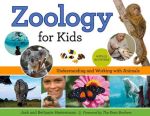
IMage of cover of Zoology for Kids: Understanding and Working with Animals, with 21 ActivitiesPlay out a musical chairs-style model of habitat loss. A simplified ethogram activity is one of 21 experiences in Zoology for Kids: Understanding and Working with Animals by Josh and Bethany Hestermann. Providing a broader introduction to zoology than Beastly Brains, this book also offers a wide range of activities, including ecology-based crafts and games.

The Resource Game (p. 106) is worth a special look. Like many of the books on this month’s STEM Tuesday list, Zoology for Kids tackles habitat loss and the need for conservation to support the diversity of animal life on our planet. The Resource Game brings this issue to a concrete level for readers and helps students focus on animals’ needs for water, food, and space. The game may remind you of musical chairs—with a twist—as “animal” players seek out new resources when their own habitats are disrupted.


Image of cover of Zoology: Cool Women Who Work with AnimalsBreak the ice before kids “meet” zoologists. While several of this STEM Tuesday’s books introduce readers to animal scientists, Zoology: Cool Women Who Work With Animals, written by STEM Tuesday founder Jennifer Swanson, focuses on several female zoologists. Readers follow these scientists’ varied journeys to this field. With targeted questions, the book also encourages readers to identify with each scientist.

A fun activity called  That’s Me!  is a social ice-breaker often used to foster an inclusive classroom environment. With a tweak or two, it can support Cool Women’s connection-building between readers and featured scientists.
During the game, a leader makes a statement. Listeners decide if the statement describes themselves. Everyone who thinks so pops out of his or her chair and calls, “That’s me!”

Tweak the game for this book with statements that are true of the featured scientists. Aim to select facts that will be true of many of your students. You might start with the following ideas: “If I could, I’d have tons of pets.” “I’m not really sure what I want as my future career.” “I’ve taken care of a particular animal for most of my life.” “I sometimes have a lot of questions.” You can also turn some of the book’s highlighted Essential Questions into That’s Me statements.

Image of cover of Gorilla Doctors: Saving Endangered Great ApesCatch the zoology bug! Model a disease outbreak. Author Pamela S. Turner’s vivid storytelling about a mountain gorilla veterinarian who pays “nest” calls is sure to make Gorilla Doctors a hit with students. Among other topics, readers will learn about threats to gorillas’ survival, including the fact that well-meaning humans–who might not be ill–can pass potentially fatal germs on to our genetic cousins. This is a perfect opportunity to try an infectious disease modeling activity, described by a teacher in a 7-minute Teaching Channel video.

Carrying cups of a white liquid (milk), students “harmlessly” interact—only to find out later that  “germs” have spread from one individual to many. (You have spiked one of the cups with an additive that will change colors with the addition of a readily available solution.)

Want to take this further? Challenge students to consider this experience specifically as a model for the spread of disease between humans and gorillas. What is well represented and not so well represented in this activity? What specific changes could we make in order to improve the model of what is described in the book?

Wolf HowlingPlease join the pack! (It’s your turn to howl.)
Humans are social animals, right? We need each other and we share resources. So, please: Contribute to this blog community! We hope this will be a dynamic space for all of us as adult learners exploring this exciting territory–connecting middle grade readers with STEM books and their important themes.

  • Which ideas seem most intriguing to you?
  • What follow-up suggestions do you have?
  • What works really well with your readers and STEM learners?
  • What else is on your mind?

Carolyn Cinami DeCristofano is often spotted in her semi-wild habitat of Southeastern Massachusettts writing science/STEM books for kids, arranging her author visits, and working as a STEM curriculum and professional development consultant for authors, schools, museums, and anyone else who gives a hoot about science ed. Follow her on Facebook or contact her through her website http://carolyndecristofano.com.


Indie Spotlight: Kids Ink Children’s Books, Indianapolis

Always a delight to learn about a thriving independent children’s bookstore! We’re speaking today with Shirley Mullin, owner of Kids Ink Children’s Books in Indianapolis, Indiana
MUF: Kids Ink has been open for over three decades, riding out even the bookstore blues of ten years ago. What’s your survival secret? Have you made adaptions over the year that helped?
Shirley:
We have made constant adaptations to changes in the book industry, the economy, and our customers. We’ve been constant in basic principles ie Kind, Fair, and Honest. We also have always emphasized customer service focusing as much as possible on the children and young adults asking them if they have read a book that they really like. Or, asking what interests them.

Beyond that, however, we have adapted our business to stay viable. We are constantly look for new markets. Several years ago we started supplying books for several title programs which has been successful. We offer not only the books but our expertise in choosing titles. This often involves taking books to the district for a “show and tell, ” helping them decide what works for the curriculum. We are currently beginning to experiment with pop-up stores in some of our larger retirement communities offering holiday shopping and gift wrapping at the facility.
Maintaining our presence at major educational events has also been important either selling books tailored to the event or providing information about the store.Finally, we have expanded our assistance to schools helping them find and book authors…often linking schools together.   We then supply the books for the school to sell.

MUF: Describe the atmosphere you try to create in your shop. What are some special features of Kids Ink?
Shirley:
We have always had a train table and have sold trains.   The past few years we have sold Brio. The train gives children a focus point and something engaging while their adults shop. It is not unusual for us to be called the Train Store.
We do our best to maintain the store as a bright cheerful place. All the fixtures are white so the books and toys stand out. Because we are about 20 percent books, our displays are interesting with perhaps a raccoon puppet and a book with a raccoon title or a Playmobil Knight package with a book about knights.Our front window is large and attracts attention most recently with banned books and now featuring the up-coming John Green book.
But the most important component of atmosphere is the staff. We try to make sure that we are able to greet everyone courteously and respond to their questions. We greet everyone who walks through the door and try to be aware of when they need suggestions.

MUF: Kids Ink is a small shop, so your books must be curated. How do you decide what books and related items to carry?
Shirley:
Terri orders all the sidelines/toys. She has a good eye for what our customers want. We only sell real quality toys with emphasis on “playability,” safety, and good construction. (I am quite able to order toys that never sell!) I personally order all the front list. I read all of the picture books before ordering and many of the novels and non-fiction. For all of them, I think about who might want this book and/or who should need this book. Sometimes there is a book that is about a subject or event that hasn’t been requested but the book is important and needs to be read.
For non-fiction, I look at who wrote the book. Are they qualified to write about this topic? I favor non-fiction that has good elements like Table of Contents, Index, Bibliography and Suggested Reading.
Most important, I watch for books that are inclusive of gender, race, and sexuality. Diversity is very important to me and all of the staff.

MUF: As middle-grade authors, we’re curious to know what titles, new or old, fiction or nonfiction, you find yourself recommending most often to readers ages 8-12?
Shirley:
Books by Jeanne Birdsall, the Penderwicks, Kimberly Brubacker Bradley’s The War that Saved My Life, Rita Garcia Williams titles, Pam Munoz Ryan titles, Jason Reynolds, Ghost and Patina.Non-Fiction varies a lot depending on what the child finds interesting. We have a lot of requests for biographies, books about animals, and weather.

MUF: Do you have any activities coming up that would be of special interest to middle-graders?
Shirley:
Sarah Cannon, a debut novelist will be signing on 12/2/17 from eleven to one for Oddity. Her book will be of interest for this level.

MUF: If a family is visiting Indianapolis from out of town, would there be family-friendly places near your shop where they could get a snack or meal after shopping? And if they could stay longer, are there some unique family activities or sights they shouldn’t miss?
Shirley: We are next door to The Flying Cupcake, a marvelous place incredibly popular with all our customers. Then next door to that is Father Bryne’s Pizza with unusual grilled thin crust pizza. Across the street is a long established Illinois Street Food Emporium which is known for chicken salad croissants baked daily in house as well as a Grater’s Ice Cream store. In addition, our corner contains shopping for everyone…a jewelry store, a boutique with unusual home items, an art store, clothing store, and a Starbucks.
Even better, The Children’s Museum of Indianapolis is twenty blocks from the store. It is the largest children’s museum in the world.

MUF: Thanks, Shirley, for sharing news  about your fine shop.  Readers, have you visited Kids Ink yet?