Posts Tagged history

Editor Spotlight: Thalia Leaf from Calkins Creek

Today, we have a treat for readers who are especially interested in history and historical fiction for kids. Recently, I was delighted to interview Thalia Leaf, who is an associate editor at Calkins Creek. Thalia offered several insights into her publishing imprint and what she looks for in submissions. So let’s get started!


Dorian: How did you get involved in children’s publishing?

Thalia: I always wanted to work in children’s publishing, but I got here in a roundabout way. Before I worked in publishing, I taught English abroad. It was so fascinating to see the way kids responded (or didn’t respond) to certain books—it’s so important for kids to have books that are interesting and relevant to them. When I came back to the U.S., I interned at a literary agency where I worked on a pretty wide range of children’s books, which I loved. My first job in publishing was in adult books though—I worked on very serious history books for a handful of years. I was really delighted when an opportunity came up to work on U.S. history-focused fiction and nonfiction at Calkins Creek. It combined the work I’d been doing on history books for adults and my dream of working on children’s books.


Dorian: Can you tell us a little bit about Calkins Creek?

Thalia: Calkins Creek is an imprint of Astra Books for Young Readers. Our list includes fiction and nonfiction for kids and teens. We focus on publishing books about American history, which might sound sort of narrow, but within it there’s potential for books on a huge range of topics from science and art to racial justice and political activism. We love books that highlight an untold story about a person or an event that kids really ought to know about. Of course, it’s most important that our books are exciting, kid-friendly, and beautifully produced. Some of my favorite Calkins Creek books are Memphis, Martin, and the Mountaintop: The Sanitation Strike of 1968 by Alice Fay Duncan; Dorothea’s Eyes: Dorothea Lange Photographs the Truth by Barb Rosenstock; Without Separation: Prejudice, Segregation, and the Case of Roberto Alvarez by Larry Dane Brimner; Buzzing with Questions: The Inquisitive Mind of Charles Henry Turner by Janice N. Harrington;  Race Against Time: The Untold Story of Scipio Jones and the Battle to Save Twelve Innocent Men by Sandra Neil Wallace and Rich Wallace; and Blood and Germs: The Civil War Battle Against Wounds and Disease by Gail Jarrow.


Dorian: They all sound fascinating. Have you always been interested in books about history and historical fiction, and what books sparked your interest in the genres?

Thalia: Yes, I have! What I love about historical fiction is that it has same escapist appeal of sci-fi and fantasy, but you also get to learn something! As a little kid, I was pretty obsessed with the 19th century thanks to the Little House books and Caddie Woodlawn, which my mother read to me starting in kindergarten. I was very into dressing up in 19th century clothes and was always asking my parents to take me to living history museums like Old Sturbridge Village. When I got a bit older, I read historical fiction on my own; in middle school my friend Ana and I read every book we could find on the Tudors. Some of my favorite middle grade and YA historical fiction books were The Witch of Blackbird Pond, The Sally Lockhart series, All of a Kind Family, and The Devil’s Arithmetic. I wish I’d had books like Show Me a Sign by Ann Clare LeZotte and Prairie Lotus by Linda Sue Park when I was a kid.


Dorian: With so much misinformation in various media, it must be challenging to edit books that deal with history. How do you meet that challenge?

Thalia: The prevalence of misinformation is exactly why I think publishing great children’s books on historical subjects is so important. Our understanding of history affects our understanding of the present. Much of American history is difficult and ugly and uncomfortable. But we don’t make things better by avoiding talking about them. Kids don’t need things sugarcoated for them—and they’re pretty good at detecting BS.


Dorian: What are some of your favorite middle-grade books you’ve worked on and why?

View from Pagoda Hill by Michaela MacColl is probably my favorite Calkins Creek middle-grade book. It’s based on the author’s family history. I’m relatively new to the imprint, so the books I’ve actually worked on have yet to come out.


Dorian: What middle-grade books do you have coming up that you’re excited about?

Thalia: They’re still in the early stages, so I can’t say too much. I’m especially excited about a book we have on a woman who worked as a spy during World War II and another about a young girl who solves the mystery of a Revolutionary War-era diary she finds.


Dorian: Very intriguing! What subjects or historical time periods are you particularly interested in seeing in your submissions box from agents?

Thalia: I want to find untold stories that urgently need to be told, and these come from all historical periods and are about all topics. At the moment, though, I’m especially interested in stories of immigrants, as well as books that deal with more recent history (1975-2008). I’d also love to see manuscripts on Jewish topics that break the mold a bit. Manuscripts that deal with LGBTQ+ themes would be especially welcome, as I think there’s a massive amount of untold history there. Graphic novel submissions would be especially welcome. I’m constantly updating my manuscript wishlist, which you can find here.


Dorian: What advice do you have for authors who’d like to write about historical events (nonfiction or fiction)?

Thalia: First, do your research! The best books come from discovering a person or an event that no one knows about but everyone ought to know about. Sometimes you’ll read a newspaper article or see something on social media that intrigues you and makes you want to dig deeper and find out if there’s a good story there. Second, make sure your story has a proper narrative arc, even if you’re writing nonfiction. When writing history, it’s hard not to make a book just a recitation of the facts, but it’s so important that you shape the story you’re telling. Even in nonfiction, your characters need to have “wants” or goals, encounter obstacles, and succeed or fail in a way that changes them or their world.


Dorian: Great advice! Is there anything else you’d like to add?

Thalia: Calkins Creek only accepts agented submissions and all submissions must include a bibliography.

This has been wonderful. Thanks so much for taking the time out to give our readers such great information about you and Calkins Creek.

Find Thalia’s wishlist and more about Calkins Creek by following her on twitter


Smashing the Single Story Narrative: A New Middle-Grade Series by Kate Messner

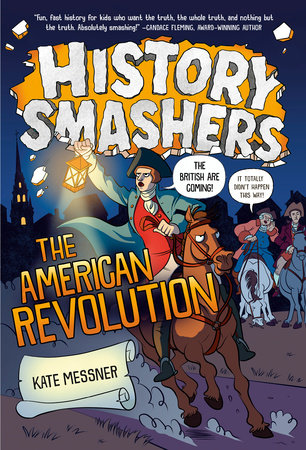
Paul Revere’s famous cry “The British are coming!” warned residents of Lexington and Concord of the imminent danger of British invasion. Right?

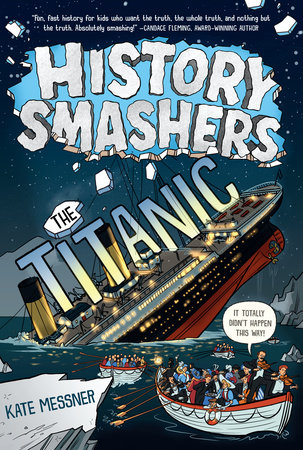
The Titanic was touted as “unsinkable” before its ill-fated maiden journey. Right?

Well, not exactly. The stories we’ve been told about historical events have been skewed by the fact that most were written from a single perspective. And no event has EVER had only one perspective.  That’s why I’m so excited that author Kate Messner is writing a new series for middle-grade readers called History Smashers.

History Smashers: The Titanic by Kate Messner

Before we talk about the books, though, let’s talk a bit more about this notion of  the “single story narrative.” Last fall, while walking my daily two-mile neighborhood loop, I listened to author Linda Sue Park discuss her book PRAIRIE LOTUS with Matthew Winner on The Children’s Book Podcast. In the podcast, she talked about the “single story narrative” and about how she introduces the idea of a single story to young readers.  The analogy she uses is very clever. You should click the link above and listen to the podcast.

Since then, I’ve thought about how much of our history has been learned from a single perspective, and I’ve pondered the challenges teachers, parents, librarians, and those of us who write, edit, and publish for young readers, face.  Digging deeper, I listened to the TED Talk titled The Danger of a Single Story by Chimamanda Ngozi Adichie that Linda Sue mentions in the podcast. The talk is more than ten years old, but never has it been more important that we ask ourselves “Who else was there?” and “What if we start the story from a different perspective?”

History Smashers: The American Revolution

In an interview with Publisher’s Weekly, Messner says she wants “to tell stories in a way that’s respectful of kids. Kids can handle more than we think they can. And I feel like being honest with kids is really important. Sometimes our teaching of history has not fared so well in that area, particularly when it comes to our failings as a country, our mistakes. We like to teach little kids nice stories about history. I think we can start to have those conversations earlier.”

Out of that vision, the History Smashers series was born. With five titles complete and more on the way, the reviews are fantastic!

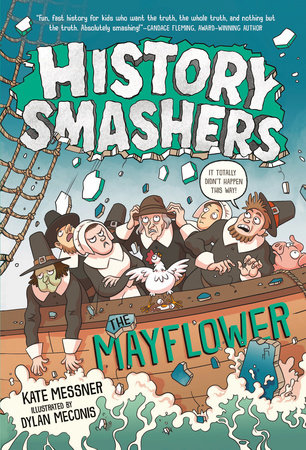
“Critical, respectful, engaging: exemplary history for children.” —Kirkus Reviews, The Mayflower, starred review
”The book’s format may be a good match for those with shorter attention spans, and permits it to be gratifyingly capacious in what it covers.” —New York Times Book Review

“Kate Messner serves up fun, fast history for kids who want the truth, the whole truth, and nothing but the truth. Absolutely smashing!” —Candace Fleming, award-wining author

I also love that these books are fact-packed and visually enticing, with sidebars, graphic panels, and lots of illustration. They’ll be a welcome addition to classroom, public, and home libraries. I have no doubt they’ll be conversation-starters for years to come. Keep the conversations going, friends!

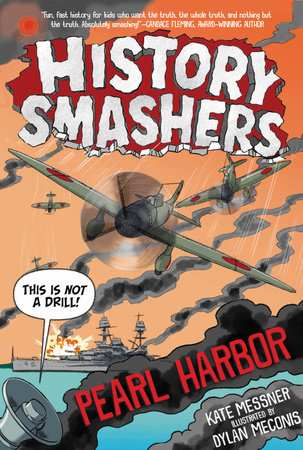
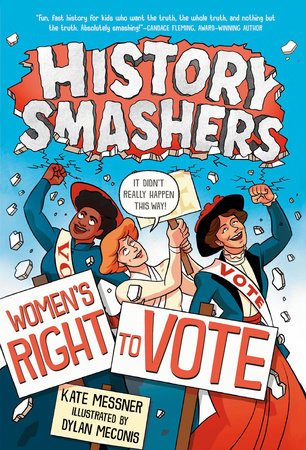
History Smashers: Pearl Harbor.   History Smashers: Women's Right to Vote  History Smashers: The Mayflower


Exploring THE PLACES WE SLEEP with Author Caroline DuBois

I have a new guest for you, today! She’s written a tender, moving tale in verse that journeys a young girl through everyday details while living during a time of national crisis. The first words of this story made me pause and take notice. And the rest, poked me right in the heart to the end. The writing is beautiful and real, the story is important, and the growth of the main character is hopeful. I’m very excited to share The Places We Sleep with you and welcome Author Caroline DuBois to share her thoughts about the book.

Hi Caroline! It’s wonderful to have you visit our Mixed-Up Files family. Let’s share your beautiful cover and story with readers first.

THE PLACES WE SLEEP

by Caroline DuBois

A family divided, a country going to war, and a girl desperate to feel at home converge in this stunning novel in verse.

It’s early September 2001, and twelve-year-old Abbey is the new kid at school. Again.

I worry about people speaking to me / and worry just the same / when they don’t.

Tennessee is her family’s latest stop in a series of moves due to her dad’s work in the Army, but this one might be different. Her school is far from Base, and for the first time, Abbey has found a real friend: loyal, courageous, athletic Camille.

And then it’s September 11. The country is under attack, and Abbey’s “home” looks like it might fall apart. America has changed overnight.

How are we supposed / to keep this up / with the world / crumbling / around us?

Abbey’s body changes, too, while her classmates argue and her family falters. Like everyone around her, she tries to make sense of her own experience as a part of the country’s collective pain. With her mother grieving and her father prepping for active duty, Abbey must learn to cope on her own.

Written in gorgeous narrative verse, Abbey’s coming-of-age story accessibly portrays the military family experience during a tumultuous period in our history. At once personal and universal, it’s a perfect read for fans of sensitive, tender-hearted books like The Thing About Jellyfish.

If you would, share with our readers one book from your childhood that has stayed with you, and how can children’s authors in today’s unsettled world achieve this same unforgettable feel?

Mary Norton’s The Borrowers sparked my imagination as a child. My librarian mom introduced it to me. Norton’s world-building of tiny people living in the walls and borrowing from the people with whom they lived was pure escape for me from the big complicated world.

Children’s authors in today’s uncertain world can achieve this same unforgettable feel by either delivering children to a rich land of imagination, or by providing children a story in which they can see themselves. Then they can envision and dream of ways they can be and all the things they can achieve.

What made you decide to write “The Places We Sleep” in verse?

Abbey’s story came to me naturally in poetry, perhaps as a lyrical way to process 9/11 and my brothers’ deployment, but also likely because I’d recently completed my MFA in poetry. It began as more of a character sketch through poems and eventually turned into a story. I wanted to write about how world events have rippling effects on individuals and familial relationships in unexpected ways. The snapshots or scenes that poems allow you to write provided me with the perfect medium.

Your description of poems being scenes is fascinating and also beautiful. It definitely worked. How much of the novel is inspired by your own experience growing up in the South in a military family?

Although I did not grow up in a military family, both of my grandfathers served in the military, as well as both of my brothers, my brother-in-law, and my sister-in-law. Abbey’s story is about being a military child, but it’s also about many other things—identity, loss and grief, creating art in the face of tragedy, tolerance and acceptance, and friendship. It’s about how world events can touch individuals in large and small ways.

That they do. ♥ This couldn’t have been an easy story to write. What was the most difficult part?

I faced two specific challenges in writing this story. One was creating full, round characters through poems. And the other was making decisions about how to approach a national tragedy age-appropriately and sensitively. Having a great editor at Holiday House and a sensitivity reader helped with both.

Why do you think this story is important for the middle-grade audience?

Middle grade students I’ve taught often have had only a fuzzy understanding of the events of 9/11, and the nonfiction texts they’ve typically enjoyed the most in my classroom were almost always couched in a narrative story. I hope Abbey’s story will spark curiosity in young readers about 9/11 and the monumental lessons we learned and are still learning from that tragedy. I hope the book will leave readers with a memorable story about a girl who may not be all that different from themselves. Furthermore, I hope student readers are gently nudged to learn the names of others with whom they share classes and hallways and to act with kindness and dignity to those they may not know or understand. Maybe it will even inspire some young reader to choose to deal with life’s challenges through art or poetry or other forms of creativity.

Inspiring young readers to engage in conversation about the events of 9/11 is a wonderful.

How much research did you do for the story?

I lived through 9/11 and began writing and reading about it immediately thereafter. Additionally, I’ve had various family members in the military as well as taught students who experienced and still experience islamophobia. I conducted research as I was writing the story, as well as mined the living resources around me to create as authentic a portrayal of the historical backdrop to the story as I could.

What can young readers expect from your main character Abbey?

I hope that young readers can see themselves in Abbey as she navigates challenging world events along with the struggles of middle school and adolescence. Currently, teens and children are facing their own difficult world events. I hope readers see how Abbey perseveres and strives to be a good friend, to be kind, and to express empathy and tolerance to others.

All extremely important traits, especially in today’s world. Do you have any advice for librarians and teachers on how to encourage middle schoolers to give in verse books a try?

Books in verse make great shared read-aloud opportunities. You’re never too old to be read to or to enjoy reading aloud to someone else. Another way to inspire and hook a child on the joy of reading is by giving a book talk. Where an educator may not have time to read an entire chapter, there’s always time for a poem or two. And once one student starts reading it, the likelihood is that his or her friends will pick it up too. Books in verse create more white space between scenes as well as playful or dramatic visual messages with syntax, punctuation, and form, which can motivate adolescent readers.

Circling back to my first question, what do you hope stays with your readers after they read this story?

Perhaps The Places We Sleep will spark curiosity in young readers about 9/11 and the monumental lessons we learned and are still learning from that tragedy. I hope student readers are gently nudged to learn the names of others with whom they share classes and hallways and to act with kindness and dignity to those they may not know or understand. Maybe it will inspire some young reader to choose to deal with life’s challenges through art or poetry or other forms of creativity.

Here’s a little bit more about Caroline:

Caroline Brooks DuBois found her poetic voice in the halls of the English Department at Converse College and the University of Bucknell’s Seminar for Young Poets. She received a Master of Fine Arts degree in poetry at the University of Massachusetts, Amherst, under the scholarship of Pulitzer Prize winning poet James Tate, among other greats in the poetry world.
DuBois’s writing infuses poetry and prose and has been published by outlets as varied as Highlights High Five, Southern Poetry Review, and The Journal of the American Medical Association and has been twice honored by the Society of Children’s Book Writers and Illustrators. Her debut middle-grade novel-in-verse, The Places We Sleep, is published by Holiday House and to be released August 2020.
DuBois has taught poetry workshops, writing classes, and English at the middle school, high school, and college levels. In May 2016, she was recognized as a Nashville Blue Ribbon Teacher for her dedication to her students and excellence in teaching adolescents.
DuBois currently lives in Nashville, Tennessee, where she works as an English instructional coach and sometimes co-writes songs for fun with her singer-songwriter husband. She has two teenage children and a dog, Lilli, and she enjoys coaching soccer and generally being outside.
WEBSITE | TWITTER | INSTAGRAM

Thank you for sharing some of your writing journey with us, Caroline! All the best with The Places We Sleep.