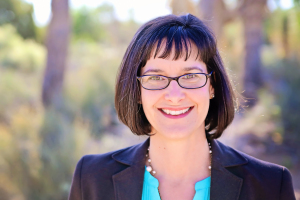
Charlie Ilgunas is Associate Editor at Little Bee Books, which publishes titles for kids 0-12; Little Bee’s new Middle Grade imprint is Yellow Jacket. He earned his BA from Washington University in Saint Louis and a Graduate Certificate in Publishing from the University of Denver, after which he interned at Bloomsbury before moving to Little Bee. Charlie signed his first title as an editorial assistant at Little Bee five years ago. He works mainly on picture books and middle grade.
Hi Charlie, thanks for chatting with us. I’ll say right up front that Yellow Jacket published some of my favorite middle grade titles this year and last: Rajani LaRocca’s delicious Midsummer’s Mayhem, which is getting all kinds of attention, Samuel Pollen’s The Year I Didn’t Eat, about a boy with anorexia, and Melanie Sumrow’s The Prophet Calls, which centers on a girl living inside a religious cult. These are three wildly different middle grade books in subject, theme, and tone, so I’m wondering—what made them all just right for Yellow Jacket?
That selection really speaks to the diverse tastes of our editors here at Little Bee/Yellow Jacket. Some of us are interested in delving into heavier subjects like Samuel’s, some love magical realism and reimagingings of classics like Rajani’s, and some are interested in dropping children into stories that would be completely outside their experience like Melanie’s. And though we’re still guided by our goals of publishing books about acceptance, anti-bullying, awareness, diversity, and empowerment, because middle grade is a fairly new venture for us, we have a lot of freedom to make our case for submissions that may fall outside those guidelines if we see a need in the market for something else or are just moved by a stunning manuscript.
Little Bee Becomes an Indie

In a starred review, Kirkus called Rajani LaRocca’s debut “A delectable treat for food and literary connoisseurs.”
Can you give us a little industry background on Little Bee and Yellow Jacket? I understand Little Bee was recently purchased by its original founders. What’s the relationship with Simon & Schuster? I really love how GLBTQ-positive Little Bee is. How does the partnership with GLAAD work?
Bonnier started Little Bee five years ago, and we launched Yellow Jacket’s first titles last summer. We also have a licensing imprint, BuzzPop, created about a year after Little Bee. Simon & Schuster has been our distributor since we started, and we’ve built a great relationship with their sales team. The last five years have gone pretty well for us—we’ve had such wonderful responses to so many of our books over these years. But because of circumstances outside our control, Bonnier was considering selling Little Bee. Our CEO and CFO offered to buy the company from them, and luckily that all worked out. So now we’re an independent publisher, which has been a pretty exciting transition!
Our partnership with GLAAD came about not too long after I acquired Prince & Knight. We decided we wanted to make a major commitment to publishing LGBTQ+ stories, because we saw how lacking the children’s space was at the time. Now there are so many books out there, especially heavily promoted at stores every Pride month, which warms my heart! So we were looking for partners to help us collaborate on books, developing topics and giving feedback on submissions, as well as assisting us in getting word out about them. GLAAD has been a major help in that regard.
The Buzz on Editing Middle Grade
When I ask people what makes a book middle grade, they usually say something like: a focus on friendship and family. But so many middle grade books are also exploring political activism, gender identity, mental health—subject matter that used to lean more YA. What’s your take? Are kids from 8-12 more sophisticated now? More prepared to handle tougher topics?
Middle grade stories can really go anywhere. It’s my favorite age range, because children are equipped and ready to choose books on their own for the first time and approach them with a boundless imagination, without a lot of preconceived notions and biases. In a lot of ways, the world is so much wider than YA or adult, which can feel more bound by genre.
Friendship and family go part and parcel with many good middle grade stories. It can be hard to sink your teeth into a story without a little heart to ground the characters. And friends and family are constants in all stages of life, even when (and maybe especially when) discussing political activism, gender identity, and such—how a character’s friends and family react in relation to that aspect of their identity. I don’t necessarily think the topics are tougher or heavier than middle grade books from past decades, just a little different. The topics authors are interested in discussing have evolved to engage with the issues facing children today.

Moser’s middle grade is a retelling of the Irish folktale, The Children of Lir.
From Pitch, to Pitch-Perfect
What’s the biggest factor that decides you to give a thumbs up on a book. Is it voice? Concept? What do you consider “fixable” and what isn’t?
Voice, voice, voice! Concept may get me to read a submission quicker, as it’s the first thing I see of any project in an agent’s pitch. But concept without a voice driving the story is just so disappointing. We want to love each submission that we choose to read! Even so, if the writing is of good quality, voice is fixable, but takes a more intense investment than editing story holes and plot elements. You have to read and reread, and delve deep into the heart of the story, and figure out a way to get the author to focus and bring it out a little more in the characters they create.
How hands on are you as an editor with books you acquire? What’s the most intensive editorial project you’ve ever worked on?
It really depends on the project. Some are written so well that I don’t need to do much development work; I can focus on line editing and transitions and such. But some stories need rewriting/restructuring. That has happened more with picture books at this point, since we are newer to acquiring middle grade! Two of the most intense projects I worked on recently, one was a nonfiction picture book about a trans Civil War soldier. The other was a middle grade retelling of “Ali Baba and the Forty Thieves.”
The picture book involved so much outside reading (including a 200-page pension file!) as well as photo research to make sure the illustrator’s work was as accurate to the time as possible. For the middle grade book, I did a lot of research into tenth-century Baghdad—the buildings there at the time, the layout of the city, the clothes people wore . . . all fantastically interesting to investigate!

Lenzi’s novel is a reimagining of “Ali Baba and the Forty Thieves” told from the perspective of Marjana.
What unique talents or perspectives do you think you bring to the table as an editor? Are you as friendly as your patronus, the capybara?
Curiosity has been a huge benefit. If I’m reading about something in a submission that I find interesting and think, huh, that’s new to me! Let’s learn a little more about that, that often leads me to discover something else tangentially related that I can discuss with the author about incorporating, or something we can tie to another element of the story. I’m generally interested in history/nonfiction. So it’s not really a chore to do a lot of outside research to make sure the story we’re telling is accurate—it’s a fringe benefit!
And hah, I like to think of myself like that! Friendly, stoic, and easygoing!
What’s on Charlie’s Wish List?
Are there any under-represented MG genres or topics you’d like to see more of? Any trends that really excite you?
Survival stories! In the purely fictional realm, that is. I’ve been looking for one ever since I got outbid on a fantastic submission. Hatchet was one of my favorite books as a kid. I would love to find a nail-biting survival story along those lines.
Other than write the next book, what’s the most effective thing an author can do, pre- or post-publication, to help boost sales of his or her books?
Find a community of authors (published or unpublished) to engage with and share work with. Either to critique and improve a manuscript ahead of an agent submitting it to publishers, or to just enjoy and talk about with friends after a book gets published. I see it as a much more fun version of networking! Authors are so supportive of each other. Becoming fans of each others’ work has benefits as far as sales, too, because if one author has success with a book, they can blurb their friend’s book, or talk to booksellers about it, or do joint signings, panels, etc., bringing the book to their own fans.
Up Next for Yellow Jacket

Crumbled is the first in a series introducing the hilarious Nobbin Swill.
What do you have forthcoming in middle grade?
Fiadhnait Moser’s The Serendipity of Flightless Things comes out in mid-August; it has utterly amazing writing. I was so blown away by some of the passages, and I still think about them all the time. It’s a retelling of the Irish folktale The Children of Lir. It gets quite spooky in the second half!
Crumbled!, the first book in Lisa Harkrader’s new series, The Misadventures of Nobbin Swill, comes out in late August. It is so hilarious, I was just laughing at my desk the first time I read it. And the follow-up, Croaked! (2020) may be even funnier! I love it, too, because it is heavily illustrated in two-color, and I think the illustrations really add to the humor.
And finally, the aforementioned The Forty Thieves: Marjana’s Tale, coming out in October. Christy Lenzi reimagines “Ali Baba and the Forty Thieves” told from the perspective of Marjana, the girl who keeps saving Ali Baba from the wrath of the thieves after he’s found their treasure. She created a story that adds so much emotional depth to the original, and I can’t wait to get it into readers’ hands!
Thanks so much for your time, Charlie!
You can learn more about Charlie and follow him at:
Twitter: https://twitter.com/chillgunas
LinkedIn: https://www.linkedin.com/in/cilgunas/
Little Bee Books Website: https://littlebeebooks.com/
Like this:
Like Loading...



 Karen Latchana Kenney loves to write books about animals, and looks for them wherever she goes—from leafcutter ants trailing through the Amazon rain forest in Guyana, where she was born, to puffins in cliff-side burrows on the Irish island of Skellig Michael. She especially enjoys creating books about nature, biodiversity, conservation, and groundbreaking scientific discoveries—but also writes about civil rights, astronomy, historical moments, and many other topics. Her award-winning and star-reviewed books have been named a YALSA Quick Pick for Reluctant Readers, a 2015 Book of Note from the TriState Review Committee, a 2011 Editor’s Choice for School Library Connection, and Junior Library Guild selections. She lives in Minneapolis with her husband and son, and bikes, hikes, and gazes at the night sky in northern Minnesota any moment she can.