
Blog

STEM Tuesday– Awesome Animal Antics– Book List

Animals chat, build, migrate, and do all sorts of things. Their antics are the subject of so many STEM titles that we just had to make a list this month of the latest and the greatest. Please suggest your favorites if we’ve missed any. Like our other lists, these books are great classroom and library additions.

Support Independent Bookstores - Visit IndieBound.org The Superpower Field Guide: Beavers by Rachel Poliquin and John Firth

Through meeting Elmer, an ordinary beaver, readers discover the many attributes all beavers have that make them crucial to wetland habitats. This new series turns traditional field guides upside down, creating a fun, informative look at each species. Cartoony illustrations liven it up further.


Support Independent Bookstores - Visit IndieBound.org Penguins vs. Puffins by Julie Beer

We love the mock contest setting of this title. Which bird is better? Penguins or puffins? Beer does a wonderful job of pointing out similarities and differences of the many species of these birds. And of course, the beautiful National Geographic photos are a hit!


Death Eaters by KellySupport Independent Bookstores - Visit IndieBound.org Milner Halls
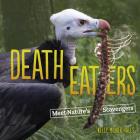
Vultures are one of the most misunderstood and least appreciated wild species. Readers will discover just how important and amazing they are in Kelly Milner Halls latest book. Readers will love the nod to the Harry Potter series, too!


Animal ZombSupport Independent Bookstores - Visit IndieBound.orgies by Chana Stiefel

Zombies really do exist in the animal kingdom! This book features zombying parasites, bloodsucking vampires, sea beasts, ghosts, and others that will excite and inform fans of animals and horror.


Support Independent Bookstores - Visit IndieBound.org Where the Animals Go: Tracking Wildlife with Technology in 50 Maps and Graphics by James Cheshire and Oliver Uberti

This cross-over title will appeal to any reader who is fascinated by animal migrations. It’s filled with topographical maps that provide a rich look at wildlife and geography. Readers can follow the record flight patterns of Arctic terns to pythons in Florida.


Support Independent Bookstores - Visit IndieBound.org Eavesdropping on Elephants: How Listening Helps Conservation by Patricia Newman

Most elephant books feature Asian elephants or the African elephants that live on the plains. This NSTA Outstanding Science Trade Book title follows a group of scientists who listen to forest elephants–a relatively unknown species. A great addition to a science unit on sound, this book also includes QR codes that take readers inside the forest to hear elephants the way the scientists heard them.

Support Independent Bookstores - Visit IndieBound.org Little Monsters of the Ocean: Metamorphosis Under the Waves by Heather Montgomery

You might think that butterflies and frogs are the only creatures that undergo metamorphosis, but you would be wrong. Leave it to STEM author Heather Montgomery to show us that there are many ocean animals that also experience this life-changing cycle.


Support Independent Bookstores - Visit IndieBound.org Smart About Sharks by Owen Davey

Owen Davey has compiled so much information about sharks into this richly illustrated book that even the most knowledgeable shark enthusiasts will find something they didn’t know. A shark book that should be on every ocean book shelf.


Support Independent Bookstores - Visit IndieBound.org Absolute Expert: Dolphins by Jennifer Swanson and Justine Jackson-Ricketts

Aspiring marine biologists will enjoy learning about dolphins with National Geographic explorer and dolphin expert, Justine Jackson-Ricketts in this ultimate dolphin resource book.


Support Independent Bookstores - Visit IndieBound.org Unstoppable: True Stories of Amazing Bionic Animals by Nancy Furstinger

Inspiring tales of animals using prosthetics, braces, orthotics, and wheelchairs to live out their lives fill the pages of this STEM title. Readers will get a glimpse into how cutting-edge technologies are improving the lives of animals and humans.


Support Independent Bookstores - Visit IndieBound.org Snowy Owl Invasion: Tracking An Unusual Migration by Sandra Markle

This book goes hand-in-hand with Where The Animals Go. Readers will dive into the unusual migration of snowy owls in this beautifully illustrated book by Sandra Markle.


Support Independent Bookstores - Visit IndieBound.org Backyard Bears:  Conservation, Habitat Changes, and the Rise of Urban Wildlife by Amy Cherrix

Have you ever seen a bear in your backyard? More and more people are experiencing these extraordinary visitors each year. Readers will take a look into why this is happening and how conservation can play a role going forward in this recent Scientists In the Field title.


STEM Tuesday book lists prepared by:

Nancy Castaldo has written books about our planet for over 20 years including, THE STORY OF SEEDS: From Mendel’s Garden to Your Plate, and How There’s More of Less To Eat Around The World, which earned the Green Earth Book Award, Junior Library Guild Selection, and other honors. Nancy’s research has taken her all over the world from the Galapagos to Russia.  She strives to inform, inspire, and educate her readers. Nancy also serves as the Regional Advisor of the Eastern NY SCBWI region. Her 2018 multi-starred title is BACK FROM THE BRINK: Saving Animals from Extinction. Visit her at www.nancycastaldo.com

Patricia Newman writes middle-grade nonfiction that inspires kids to seek connections between science, literacy, and the environment. The recipient of a Sibert Honor for Sea Otter Heroes and the Green Earth Book Award for Plastic, Ahoy!, her books have received starred reviews, been honored as Junior Library Guild Selections, and included on Bank Street College’s Best Books lists. New in 2018:  Eavesdropping on Elephants: How Listening Helps Conservation. During author visits, she demonstrates how her writing skills give a voice to our beleaguered environment. Visit her at www.patriciamnewman.com.


Indie Spotlight: Stories Bookshop, Brooklyn

Sue Cowing for Mixed-Up Files:  I love the full name of this unique children’s bookstore in Brooklyn—Stories Bookshop & Storytelling Lab (www.storiesbk.com) It’s a place that encourages kids not only to read good stories, but to make them!.   We’re talking today with Maggie Pouncey, co-owner:

MUF: Some people are inspired to open a bookstore because their town needs to have one. Brooklyn has several, yet there was nothing like the store you imagined, a bookshop with a storytelling “lab.”   Please tell us a little about your vision and how you are carrying it out.
Maggie:We believe sharing stories with your children is the surest lifelong gift you can give them, particularly in this digitally saturated age we live in. Brooklyn is a city filled with young families with tons of activities for kids, but it had no children’s only bookshop.

We loved the idea of these two symbiotic spaces—the small curated shop where you could find new books you’d never seen before, and the Storytelling Lab, which would be a community gathering place where stories were made, shared, and told. My husband, Matt Miller, and I spent a couple months writing our business plan —we needed one to apply for a small business loan—and we spent much of that time clarifying our mission for Stories, how we wanted the place to feel, and how we wanted it to serve in young readers lives and the lives of their families.

MUF: How do you choose what books to carry in your shop? Do you have some favorite themes?
Maggie: Because our shop is so small —smaller than the children’s section in many general interest bookstores!—we have to say no to a lot of things. Our largest sections are for picture books and board books, and/but we have thriving graphic novel and middle grade sections as well.

We also have a robust section of feminist books and books about change-makers; with so many good titles coming out inspiring kids to be activists, we even have an Activist Book Club people can subscribe to. We just love good stories! And books that have the kind of timelessness all great literature doe

MUF: As middle- grade authors, we’re curious to know what titles, new and old, fiction and nonfiction, you find yourself recommending most often to this age-group?
Maggie: We sell a lot of books by Brooklyn authors! Our bestselling middle grade books have been The Wild Robot and The Wild Robot Escapes by Peter Brown—such wonderful stories and can work as read-alouds to kids as young as 5 or 6.  We sell a lot of the fabulous mystery/ghost story, Greenglass House,

by Kate Milford. And the great memoir-in-poetry Brown Girl Dreamingby Jaqueline Woodson. (All three from Brooklyn!) We also sell a lot of beloved series —Harry Potter of course, and we’ve been very enamored of Nevermoor: The Trials of Morrigan Crow; Wings of Fire(and anything dragons!); Wildwood;The Penderwicks; in graphic novels Amulet, Lumberjanes, all the Raina Telgemeier books.

MUF: What’s happening at the upcoming meeting of your Middle Grade Book Club?  Do middle-grade authors make appearances at your shop?
Maggie:Our Middle Grade Book Club for kids 8-12 meets once a month, and we read and discuss classics, graphic novels and new favorites. When it’s a local author we invite them to come! Peter Brown and Kate Milford have come. Karina Yan Glaser came to talk with us about the first book in her wonderful series set in Harlem, NYC, The Vanderbeekers. Last month we discussed Jacqueline Woodson’s powerful new novel, Harbor Me, and she came to talk with the group which was thrilling for the kids! This month we’re reading Dave Eggers’s new middle grade fantasy adventure, The Lifters, and after that we’ll do an awesome new graphic novel, Fake Blood by Whitney Gardner.

MUF: Tell us something about your writing workshops for this age group, past and future. Have you spawned some writers?
Maggie: It may be a bit too soon to know if we’ve helped usher in a new generation of Brooklyn writers—but we certainly hope we do 🙂 We teach an art class called Mini-Makers for babies and it’s such fun to watch  them explore new materials and make a very good mess making gorgeous art!

The graphic novelist Justin LaRocca Hansen teaches an amazing Graphic Novel Class for kids 7-12, and they really explore every part of the process, from idea, to penciling, to inking, to presenting their work to a live audience of their families!

We host a Storytime 6-days a week —on week-days led by our staff and on Sundays featuring an author or illustrator who shares a book and often does a drawing demonstration for us. I’m off right now to introduce Jessie Sima and her new picture book, Love, Z! These are such a lively and warm mornings, and I do hope they are showing the kids who come week after week the joy of making things.

MUF: If a family from out of town makes a day-trip to visit Stories Bookshop, are there family-friendly places nearby where they could get a snack or a meal afterwards?   And if they can stay longer, are there some nearby sites or activities they shouldn’t miss?
Maggie: Absolutely! Brooklyn is filled with family-friendly diversions and eateries! Just around the corner from us is Bklyn Larder—a delicious stop for lunch.  The bakery Ovenly offers tons of sweets treats. We’re also in walking distance from both Prospect Park and Fort Greene Park, lovely places to spend an afternoon walking or kicking a ball.

Brooklyn is a great walking city, and it’s the best way to see all the different neighborhoods. Brooklyn Bridge Park, the Brooklyn Botanic Gardens and the Brooklyn Museum are not to be missed.

MUF:   Thanks, Maggie, for making time for this interview, and for inspiring us with your vision of kids of all ages reading and creating stories.


Interview and Two 30 Minute Skype Giveaways with Author Tara Lazar

I’d like to welcome Tara Lazar to the Mixed-Up Files blog. She’s an amazing author and has done so much to help the kidlit community as well as teachers, media specialists, and students.

Please tell us all about Storystorm and how you came up with the idea for it. 

Jealousy, that little green monster, is to blame. In November 2008, I saw writing friends post all about the amazing National Novel Writing Month challenge and I came down with a bad case of FOMO. So I thought–what kind of challenge could I create for picture books? Writing one manuscript in a month was not much of a challenge, and writing one every day for a month was pure insanity. So I thought maybe a story idea a day was doable—a challenge, but not an insurmountable one. I called it Picture Book Idea Month or PiBoIdMo, borrowing from the NaNoWriMo nomeclature. That year I did it on my own. The following year I decided to throw it up on my website. What the heck, right? Maybe a dozen people would participate with me. I had no expectations for it whatsoever.


I love how this evolved into Storystorm, where writers, illustrators, and students can use this challenge to come up with 30 story ideas in 31 days for any genre each January. You don’t have to write a manuscript (but you can if the mood strikes). You might think of a clever title. Or a name for a character. The object is to heighten your idea-generating senses. Ideas may build upon other ideas. Your list of potential stories will grow stronger as the days pass. On Tara’s blog, daily posts by authors, illustrators, editors and other publishing professionals will help inspire you. By the end of the month, you’ll have a fat file of ideas to spark new stories.

Sign up for this free idea challenge using this link by January 7 if you’d like the chance to win some amazing prizes! 

What are some great ways for teachers, media specialists, and parents to encourage kids to join in your challenge?  

Honestly, the daily posts are so much fun, they could easily spend just five minutes reading it with the students, then give the students five minutes to brainstorm. It’s just that easy and simple.


What has surprised you the most about Storystorm?  

How much writers love it. How many books have been created as a result. I had no idea it would resonate this strongly.


How has Storystorm helped writers and students?  

I think it helps everyone tune into their creativity. Creativity isn’t something that necessarily comes naturally. You have to make time and space for it, like anything else in life. The little daily motivation it provides is surprisingly powerful. And hopefully after thirty days, it becomes a habit.


If you were giving us a Storystorm Skype right now, how would you motivate us to come up with ideas? 

I often tell students that all you need for a story is a character and a problem. I tell them to just look around the room. Anything can be a character. The chair you’re sitting on. I mean, a chair has a lot to complain about, having all those butts on it all the time.


LOL! I wonder if we’ll see a chair book in your future. ?

How do participants keep track of their ideas and how detailed do they need to be?  

Whatever makes the most sense for that writer. A notebook. A Microsoft Word document. A note on your phone. The idea can be one word like “mustache” or a title or a sentence or an entire paragraph. These are your ideas, your rules.


Once people come up with all these ideas, what should their next steps be?  

They have to decide what idea calls to them the most, what would make an interesting story. I find I get a gut reaction from certain ideas—they just beg to be written. Maybe not immediately, maybe they just simmer in my brain awhile, but I know I want to write that idea. If you do not get a gut reaction, maybe share your ideas with trusted critique partners or writing friends to see what they think. What idea sounds most promising? This isn’t an exact science, either. Maybe you need to build on your existing ideas until you get an AHA moment. Experiment. Try writing something. You never know what will happen. I love the act of discovery as I am writing a story. Some start out one way and then veer off in a different direction. I then step back and refine the story concept.


That’s great advice, Tara! Sometimes I find that a few ideas mesh together into an amazing one. Between the inspiring daily blog posts and Storystorm community, the ideas usually flow for me, but I found a few tricks to spark ideas on slower days, thanks to some of your wonderful archived posts. The ones I use most are 500+ Things That Kids Like and 100+ Things Kids Don’t Like. I also scroll back to posts from previous years, for both Storystorm and the original PiBoIdMo. Tammi Sauer’s posts are always a huge help!

What are some of your favorite tools and tricks for coming up with as many unique ideas as possible?

Get out and live life. I have gotten so many ideas from things that happen to me or things I see around me. The difference is being aware that something can be an idea. If you want lightning to strike, you need to hold a lightning rod. (OK, I don’t mean that literally.) But going through a normal day—knowing in the back of your mind that you are seeking inspiration—causes inspiration to visit. You are looking at the world through a different lens.


You have been on fire with your amazing picture books. Huge congratulations to you and all your lucky readers! What are some great ways that teachers and media specialists can use picture books with 9 – 11 year-old students?

Can you find the blue eyeball monster?

I find that the older students are so sharp at picking out hidden humor in picture books and noticing small details. Some of my illustrators have included tiny characters in multiple pages of our books. In 7 ATE 9, there is a tiny mouse in the office of the daring Private I. Who is that mouse? He has his own story. What is it? In THE MONSTORE, there is a furry blue eyeball monster that appears on sixteen pages of the book. Who is he? What is he watching for?

Picture books often have extra characters in their pages—ones who never receive a single line of text from the author. This is a technique many picture book artists utilize to lend more depth to a story.

Have students flip through any picture book to find a recurring background character. They can then write a story from that character’s point of view.


That’s a great exercise to use with students. First, they put on a detective hat to find the recurring character and then create a new story from another point of view. Brilliant!

Thank you again for stopping by the Mixed-Up Files, Tara. Your challenge has always been amazing for me (I’ve come up with 40 – 90 ideas each year). I’m so grateful for all the work you put into it and everything you do for writers and readers.

Good luck to everyone who is participating in Storystorm! If you haven’t joined the Facebook group yet, hop on over for some cheers plus even more support and inspiration as your ideas multiply in this fun challenge. I hope the ideas flow and that you discover tons of gems that turn into incredible stories in 2019.


Tara has generously donated two half hour Skype visits. Thank you so much, Tara! One is open to everyone—you can ask Tara publishing questions or for extra Storystorm inspiration. The second is a thirty minute Skype school visit for teachers and media specialists—the topic will be decided between Tara and the winner. Teachers and media specialists may enter both Rafflecopter widgets.

Winners will be posted on January 10th. Good luck, everyone!  

You can find out more about Tara Lazar on her website, Twitter, Pinterest, Instagram, and Facebook. Don’t forget to join the supportive Storystorm Facebook group and check out the challenge chat on Twitter.

Here is the Skype visit that everyone can enter.

a Rafflecopter giveaway

Here is the classroom Skype visit for teachers and media specialists.

a Rafflecopter giveaway