
Mom, I’m bored!
School is barely out for most districts, but perhaps you’ve already heard this from your tween.
Have no fear, the library and your local independent book store are here!
Check out the latest releases for your middle-grade readers. A bit of nonfiction, a dash of fiction and their boredom will be relieved!
Hector: A Boy, A Protest, and the Photograph that Changed Apartheid, written by Adrienne Wright
Page Street Kids, June 4 release

Shop your local indie bookstore
On June 16, 1976, Hector Pieterson, an ordinary boy, lost his life after getting caught up in what was supposed to be a peaceful protest. Black South African students were marching against a new law requiring that they be taught half of their subjects in Afrikaans, the language of the White government. The story’s events unfold from the perspectives of Hector, his sister, and the photographer who captured their photo in the chaos. This book can serve as a pertinent tool for adults discussing global history and race relations with children. Its graphic novel style and mixed media art portray the vibrancy and grit of Hector’s daily life and untimely death.
Heartbreaking yet relevant, this powerful story gives voice to an ordinary boy and sheds light on events that helped lead to the end of apartheid.
Escape from the Isle of the Lost: A Descendants Novel (The Descendants), written by Melissa de la Cruz
Disney-Hyperion, June 4 release

Shop your local indie bookstore
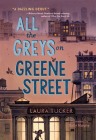
All the Greys on Greene Street written by Laura Tucker
Viking Books for Young Readers, June 4 release
Shop your local indie bookstore
SoHo, 1981. Twelve-year-old Olympia is an artist–and in her neighborhood, that’s normal. Her dad and his business partner Apollo bring antique paintings back to life, while her mother makes intricate sculptures in a corner of their loft, leaving Ollie to roam the streets of New York with her best friends Richard and Alex, drawing everything that catches her eye.
Then everything falls apart. Ollie’s dad disappears in the middle of the night, leaving her only a cryptic note and instructions to destroy it. Her mom has gone to bed, and she’s not getting up. Apollo is hiding something, Alex is acting strange, and Richard has questions about the mysterious stranger he saw outside. And someone keeps calling, looking for a missing piece of art. . . .
Olympia knows her dad is the key–but first, she has to find him, and time is running out.
Sea Sirens (A Trot & Cap’n Bill Adventure) written by Amy Chu, illustrated by Janet K. Lee
Viking Books for Young Readers, June 11 release

Shop your local indie bookstore
Trot, a Vietnamese American surfer girl, and Cap’n Bill, her cranky one-eyed cat, catch too big a wave and wipe out, sucked down into a magical underwater kingdom where an ancient deep-sea battle rages. The beautiful Sea Siren mermaids are under attack from the Serpent King and his slithery minions–and Trot and her feline become dangerously entangled in this war of tails and fins.
This beautiful graphic novel was inspired by The Sea Fairies, L. Frank Baum’s “underwater Wizard of Oz.” It weaves Vietnamese mythology, fantastical ocean creatures, a deep-sea setting, quirky but sympathetic main characters, and fast-paced adventure into an imaginative, world-building story.
Maximillian Fly written by Angie Sage
Katherine Tegen Books, June 11 release

Shop your local indie bookstore
Maximillian Fly wants no trouble. Yet because he stands at six feet two, with beautiful indigo wings, long antennae, and more arms than you or me, many are frightened of him.
He is a gentle creature who looks like a giant cockroach. This extraordinary human wants to prove his goodness, so he opens his door to two SilverSeed children in search of a place to hide.
Instantly, Maximillian’s quiet, solitary life changes. There are dangerous powers after them and they have eyes everywhere. But in this gray city of Hope trapped under the Orb, is escape even possible?
Maximillian Fly is a masterful story brimming with suspense, plot twists, and phenomenal world building. This compelling novel delves into family dynamics and themes of prejudice, making the case for tolerance, empathy, and understanding.
Midsummer’s Mayhem Hardcover written by
Yellow Jacket, June 11 release

Shop your local indie bookstore
Eleven-year-old Mimi Mackson comes from a big Indian American family: Dad’s a renowned food writer, Mom’s a successful businesswoman, and her three older siblings all have their own respective accomplishments. It’s easy to feel invisible in such an impressive family, but Mimi’s dream of proving she’s not the least-talented member of her family seems possible when she discovers a contest at the new bakery in town. Plus, it’ll start her on the path to becoming a celebrity chef like her culinary idol, Puffy Fay.
But when Mimi’s dad returns from a business trip, he’s mysteriously lost his highly honed sense of taste. Without his help, Mimi will never be able to bake something impressive enough to propel her to gastronomic fame.
Drawn into the woods behind her house by a strangely familiar song, Mimi meets Vik, a boy who brings her to parts of the forest she’s never seen. Who knew there were banyan trees and wild boars in Massachusetts? Together they discover exotic ingredients and bake them into delectable and enchanting treats.
But as her dad acts stranger every day, and her siblings’ romantic entanglements cause trouble in their town, Mimi begins to wonder whether the ingredients she and Vik found are somehow the cause of it all. She needs to use her skills, deductive and epicurean, to uncover what’s happened. In the process, she learns that in life, as in baking, not everything is sweet.
This Was Our Pact written by Ryan Andrews
First Second, June 11 release

Shop your local indie bookstore
It’s the night of the annual Autumn Equinox Festival, whenthe town gathers to float paper lanterns down the river. Legend has itthat after drifting out of sight, they’ll soar off to the Milky Way andturn into brilliant stars, but could that actually be true? This year,Ben and his classmates are determined to find out where those lanternsreally go, and to ensure success in their mission, they’ve made a pactwith two simple rules: No one turns for home. No one looks back.
The plan is to follow the river on their bikes for as long as it takes tolearn the truth, but it isn’t long before the pact is broken by allexcept for Ben, and (much to Ben’s disappointment) Nathaniel, the onekid who just doesn’t seem to fit in.
Together,Nathaniel and Ben will travel farther than anyone has ever gone, down awinding road full of magic, wonder, and unexpected friendship*.
*And a talking bear.
The Girl Who Sailed the Stars written by

Shop your local indie bookstore
When Oona Britt was born in the magical town of Nordlor, where all of the homes are built from wrecked ships, her parents never expected her to be a girl. Having listened to a faulty prediction from a washed-up soothsayer, they were promised a “bold and brave son,” so as the youngest of seven sisters, Oona’s birth became a disappointment — especially to her sea captain father, who doesn’t believe there’s a place for girls aboard ships.
But Oona is different from the rest of her family. She longs for adventure and knowledge. So she steals aboard her father’s ship just as he’s about to set sail for his annual winter whale hunt, and suddenly finds herself in the midst of a grand adventure! The ship has its own sea cat, Barnacles, and a navigator named Haroyld, who show Oona how to follow the stars. But for all that, Oona’s father is furious. Can she prove to him that she’s worth his love and pride, even though she’s not the bold and brave son he was promised?
The Boy, the Boat and the Beast written by Samantha M. Clark
Paula Wiseman Books/Simon and Schuster, Paperback release June 25

Shop your local indie bookstore
A shout out to one of our contributors, Samantha M. Clark, as her middle-grade novel is released in paperback this month!
A boy washes up on a mysterious, seemingly uninhabited beach. Who is he? How did he get there? The boy can’t remember. When he sees a light shining over the foreboding wall of trees that surrounds the shore, he decides to follow it, in the hopes that it will lead him to answers. The boy’s journey is a struggle for survival and a search for the truth—a terrifying truth that once uncovered, will force him to face his greatest fear of all if he is to go home.

 Congratulations to Augusta Scattergood, who won the copy of Kurt Kirchmeier’s novel.


