
Posts Tagged Middle Grade

Beyond the Dog Day’s of Summer

I just going to say it. I’m a cat person. Their aloof disdain for my humanness and the general consensus that they are just using me for food and a few scratches behind the ears just makes me love them all the more. They are not needy in the least, at a time in my life when I often feel my nurturing resources are close to depleted.

Despite my cat person-ness, I am a complete and total sucker for dog books. A Dog’s Purpose tied me up in knots and I read The Art of Racing in the Rain in one sitting. With the dog days of summer behind us, why not a cool dog reading list for your middle grade reader? These are some of my favorites. They range from heart pounding to heart breaking to laugh out loud funny.

Take your pick and happy tails, friends.


Hero, by Jennifer Li Shotz
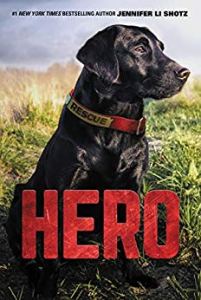
Hero, a retired search-and-rescue dog, is not prepared for a stray puppy to come into his life. But when he and twelve-year-old Ben find Scout injured and afraid, the new addition leads them down an unexpected and dangerous path.

When Scout goes missing, it’s up to Hero to use his search-and-rescue skills to find Scout and bring him home.

Get ready for a canine adventure full of danger, loyalty, and the unbreakable bond between a boy and his best friend.

(and don’t miss the other titles in this ongoing series!)


Rules of the Ruff, by Heidi Lang

Twelve-year-old Jessie is in for a long summer at her aunt and uncle’s house. Her cousin Ann has a snotty new best friend, which leaves Jessie all alone. But Jessie is industrious, and—not content with being ignored all summer—she convinces Wes, a grouchy neighborhood dog walker, to take her on as his apprentice.

Sure, dog walking turns out to be harder than she expected, but she has Wes’s dog-walking code, the Rules of the Ruff, to guide her, and soon she’s wrangling her very own pack. But when a charismatic rival dog walker moves to town, she quickly snatches up most of Wes’s business—and Jessie decides she isn’t going to take this defeat with her tail between her legs.


Ruff vs. Fluff, by Spencer Quinn

From the outside, Queenie the cat and Arthur the dog appear to have a lot in common. Both pets live in the charming Blackberry Hill inn. They both love their humans, twins Harmony and Bro. They both have a fondness for sausage.

But that doesn’t change the fact that they are mortal enemies.

Goofy, big-hearted Arthur loves everyone he’s ever met . . . except the snobby, scheming cat who’s devoted her life to ruining his.

Queenie is a bit choosier. And who can blame her? When you’re brilliant AND exquisitely beautiful, you can’t be expected to rub tails with commoners. Especially not slobbery dogs.

But when the twins’ beloved cousin is framed for murder, Queenie and Arthur must work together to clear his name . . . something Queenie finds even more distasteful than inexpensive caviar. Can two enemies put aside their differences long enough to solve the mystery?


Wish, by Barbara O’Conner

Eleven-year-old Charlie Reese has been making the same secret wish every day since fourth grade. She even has a list of all the ways there are to make the wish, such as cutting off the pointed end of a slice of pie and wishing on it as she takes the last bite.

But when she is sent to the Blue Ridge Mountains of North Carolina to live with family she barely knows, it seems unlikely that her wish will ever come true. That is, until she meets Wishbone, a skinny stray dog who captures her heart, and Howard, a neighbor boy who proves surprising in lots of ways. Suddenly Charlie is in serious danger of discovering that what she thought she wanted may not be what she needs at all.

From award-winning author Barbara O’Connor comes a middle-grade novel about a girl who, with the help of a true-blue friend, a big-hearted aunt and uncle, and the dog of her dreams, unexpectedly learns the true meaning of family in the least likely of places.


Good Dog, by Dan Gemeinhart

Brodie was a good dog. And good dogs go to heaven.

Except Brodie can’t move on. Not just yet. As wonderful as his glimpse of the afterlife is, he can’t forget the boy he left behind. The boy he loved, and who loved him in return.

The boy who’s still in danger.

So Brodie breaks the rules of heaven. He returns to Earth as a spirit. With the help of two other lost souls — lovable pitbull Tuck and surly housecat Patsy — he is determined to find his boy and to save him.

Even if it costs him paradise. Even if he loses his eternal soul.

Because it’s what a good dog would do.


Rain Reign, by Ann M. Martin

Rose Howard is obsessed with homonyms. She’s thrilled that her own name is a homonym, and she purposely gave her dog Rain a name with two homonyms (Reign, Rein), which, according to Rose’s rules of homonyms, is very special. Not everyone understands Rose’s obsessions, her rules, and the other things that make her different―not her teachers, not other kids, and not her single father.

When a storm hits their rural town, rivers overflow, the roads are flooded, and Rain goes missing. Rose’s father shouldn’t have let Rain out. Now Rose has to find her dog, even if it means leaving her routines and safe places to search.

For Those Who Write Short: How to Lengthen Your Manuscript

In online and in-person writing circles, I often hear fellow writers bemoan having to cut down their lengthy manuscripts. “Oh no!,” they wail. “I have to cut 30,000 words!” My problem is a different one. I write short. My first drafts tend to be one-half to two-thirds the suggested word counts. I used to feel insecure about this, but now I think this is my process. I feel a little like a painter—I do the broadbrush outline first, then with each draft add more detail and depth. I’ve come up with a few ways to add, so in case you are my fellow traveler on this narrow road, I share them with you.

Add Physical Descriptions

I’ll can get all the way to the end of my first draft and realize I have never given my main character a physical description. Not a hair color, eye color, even a race. Part of me thinks, it shouldn’t matter! The reader can fill in whoever they want! But it can be distancing for the reader if they can’t picture your character. Not only should you include a physical description, but you probably need to mention that physical description more times than seem appropriate. Do you know how many times JK Rowling told us that Ron has red hair? A lot, my friends. A whole lot. Even in book seven. When reading, I didn’t even notice it, but when I started looking for it, it seemed absurd. All of those reminders, though, make Ron seem like a living, breathing person, whom I might run into at the Leaky Cauldron.

Describe Places

Your main character’s home, school, soccer field, favorite spot in the woods—all of the important places where he or she experiences events–should be described. This is a great opportunity to use the setting to show us more about the character. Does the soccer field feel like freedom or dread? The description should show us that.

Check the Calendar

It is likely that some holiday happens during the timeline of your book. Have you included it? If it’s the start of the school year, you’ve got the major Jewish holidays, and then Halloween. Summer includes Fourth of July. Your character has a birthday, right? Or his or her friends or family members do? Think about writing those up. They might be interesting scenes to play around with.

Give Your Main Character Friends

I heard an editor mention that one of the consistent issues she sees in middle grade and young adult manuscripts is that the main character doesn’t have friends. “You guys, it’s really weird if they don’t have friends,” she said. “If they don’t, there needs to be some explanation for that.” Even if your character is alone on a spaceship, he or she should remember friends from back home, and if you can find a pet or at least a pet rock, that would be good. Side characters in general are a great opportunity to flesh out your character and introduce new conflicts.

Figure Out Where You’re Cheating

Sometimes, the reason my book is short is because I’m gliding over the hard parts. I want to get from A to B, but I’m not entirely sure how it would happen, so I just skip that part. This type of thing drives readers crazy. You have to do the work. But you don’t have to do it alone. This is a great spot to phone a friend. Ask a fellow writer (or anyone, really) to brainstorm with you. “Here’s what’s happening and where I need to go,” you’ll say. “What do you think might get them there?” It’s amazing what people who haven’t been living in the book like you have will come up with. Even if they don’t have the magic bullet solution, their fresh ideas may spark something in you that will get you to the answer you need.

Fix a Problem

There is likely some issue with your manuscript that you’ve identified, or that beta readers point out consistently. Maybe people aren’t connecting with your main character, or the conflict doesn’t seem intense enough, or the pacing is too slow. It may be possible to address that problem through a subplot, or adding another character. Brainstorm solutions; try to come up with at least twenty possibilities. Talk them over with other writers, and get their ideas, too. You’ve got the space! Consider yourself lucky, and use it to your advantage.


Finally, maybe writing short isn’t all bad. The book that made me cry most recently (Kate DiCamillo’s Lousiana’s Way Home) comes in at a slim 40k. One of my all-time favorite books, David Almond’s Skellig, is just shy of 34k. You can pack an emotional wallop–and plenty of laughs–without oodles of words. Don’t add text just to lengthen. Say what you need, and trust that it’s enough.


Query Cowbells, Yard Art, and Other Ways Authors Celebrate (and Why)

I’ve been reminded lately that celebration is something we should do more often. In the writing world, we are happy when we get to make big announcements – book deals, releases, signing with an agent. Those announcements almost always lead to a celebratory dinner, a launch party, a champagne toast, or a hearty round of “Huzzah!” on social media.

But those BIG announcements can be a long time coming. Some writers are still waiting and working toward them.

That’s why I was so excited when critique partner and illustrator Jane Dippold presented our critique group members with Query Cowbells.

.

According to Jane’s detailed instructions for use, one should:

  • Ring the Query Cowbell once with extreme exuberance upon hitting “send” on any email query. Twirl in a circle like a puppy and settle into your favorite spot. You did it!
  • Shake the Query Cowbell vigorously two times upon receiving any form rejection: once for perseverance and once for your amazing, but not yet accepted, manuscript.
  • Upon receiving a personal rejection with vague but important revision suggestions, put the Query Cowbell down and REVISE!  Ring the Query Cowbell softly, once, when you finally go to bed at 3 A.M.
  • There are many more Query Cowbell instructions, but you get the idea. If you are submitting, you have reasons to celebrate! 

soup

Author Sarah Aronson has one of my favorite reasons for celebrating. “Every time I get to page 100 of a draft, I make this soup,” she says.  100-Page Party Soup. Why not? Click here for her recipe and you can make it yourself.

Author/Illustrator Lita Judge celebrates in really BIG way. She explains, “I have always felt a strong connection to Stonehenge and other ancient rock circles. I fell upon the idea that I would erect my own stones, adding a pillar each time I finish a book. When I step into the yard or look out my windows the pillars remind me of all the projects I have been fortunate enough to create. Each one is hard won and will stand for my lifetime. They are my special way of celebrating this rich life of creating.” 

Lita’s husband Dave sets an 800-pound stone in their yard.

Lita poses with three of her celebratory monuments.

Author Nancy Roe Pimm also celebrates each book with an addition to her garden.  “I always loved concrete lawn ornaments, even before the well-dressed geese began making appearances on lawns throughout the country. I would never buy a lawn statue for myself, because let’s face it- it’s not a real “need.” When I found the winged fairy reading a book, it suddenly felt like a need. I had two books out that year, Colo’s Story and the Daytona 500 book. I decided to celebrate and treat myself to the book reading fairy.”
There are so many reasons to celebrate.
You finished a draft.
You started a draft!
You conquered that revision.
You found a critique partner.
You’ve signed up for your first writing conference.
Don’t wait for the big stuff. Celebrate every step along the way.
This has me thinking. I’ve just completed a blog post!
Champagne, anyone?