
Posts Tagged middle-grade readers

Support local booksellers with these new releases!

Now more than ever we need to support our local book sellers and children’s book authors. And, we need to keep fueling the minds of the middle-grade readers in our lives. What better way than to purchase these up-and-coming releases geared toward this awesome age group.  Note that each has a link to click on to an independent book seller near you. My favorite local book store, Gathering Volumes in Perrysburg, Ohio, was more than happy to take my order over the phone last week and ship out a gift to my niece. There are some great reads on this list! Happy shopping!

Greystone Secrets #2: The Deceivers by Margaret Peterson Haddix, HarperCollins Publishers, April 7

Support Independent Bookstores - Visit IndieBound.org
Shop your local indie bookstore

The second book in the Greystone Secrets series from the master of plot twists, Margaret Peterson Haddix—perfect for fans of A Wrinkle in Time and The City of Ember!

Until their mother vanished, the Greystone kids—Chess, Emma, and Finn—knew nothing about the other world.

Everything is different there. It’s a mirror image, except things are wrong. Evil. Their mother tried to fix it, but she and an ally got trapped there along with Ms. Morales, their friend Natalie’s mom.

Now the four kids—brave Chess, smart Emma, kind Finn, and savvy Natalie—are determined to rescue everyone.

To do so, they have to go back: into the other world, where even telling the truth can be illegal.

But in such a terrifying place, Chess doubts he can ever be brave enough. Despite all her brains, Emma can’t seem to break the code. With everything spiraling out of control, Finn has to pretend he’s okay.

And for Natalie, the lies of the other world include some she wishes were actually true. What if she’s gotten so used to lying she no longer knows what to believe?

The second book in the Greystone Secrets series, The Deceivers, by bestselling author Margaret Peterson Haddix, continues the twisty and suspenseful story of the Greystone kids and examines the power of the truth—or a lie—to alter lives, society, and even an entire reality.

The Big, Fun Kids Cookbook, Hearst Home Books, April 7

Support Independent Bookstores - Visit IndieBound.org

Shop your local indie bookstore
It’s the ultimate kids cookbook from America’s #1 food magazine: 150+ fun, easy recipes for young cooks, plus bonus games and food trivia!

The Big, Fun Kids Cookbook from Food Network Magazine gives young food lovers everything they need to succeed in the kitchen. Each recipe is totally foolproof and easy to follow, with color photos and tips to help beginners get excited about cooking. The book includes recipes for breakfast, lunch, dinner, snacks and dessert—all from the trusted chefs in Food Network’s test kitchen.

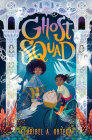
Ghost Squad by Claribel Ortega, Scholastic, April 7
Support Independent Bookstores - Visit IndieBound.org
Shop your local indie bookstore
Coco meets Stranger Things with a hint of Ghostbusters in this action-packed supernatural fantasy.

For Lucely Luna, ghosts are more than just the family business.

Shortly before Halloween, Lucely and her best friend, Syd, cast a spell that accidentally awakens malicious spirits, wreaking havoc throughout St. Augustine. Together, they must join forces with Syd’s witch grandmother, Babette, and her tubby tabby, Chunk, to fight the haunting head-on and reverse the curse to save the town and Lucely’s firefly spirits before it’s too late.

With the family dynamics of Coco and action-packed adventure of Ghostbusters, Claribel A. Ortega delivers both a thrillingly spooky and delightfully sweet debut novel.

Kate the Chemist: The Big Book of Experiments, by Kate Biberdorf, Penguin Young Readers Group, April 14

Support Independent Bookstores - Visit IndieBound.org

Shop your local indie bookstore

Packed with 25 incredible science experiments kids can do at home, Kate the Chemist introduces young scientists to the fascinating world of STEM!

Have you ever wondered how to make a volcano explode? Or why dropping dry ice in soap bubbles forms neon brains?

With 25 kid-friendly science experiments, and stunning full-color photographs, Kate the Chemist’s big book of experiments, shows kids just how fun—and easy—it is to be a scientist. Learn how to make slime, fake tattoos, edible snot, and more! Experiments include step-by-step instructions, an ingredients list, full color photographs, a messiness factor rating, and a note from Kate.

Create future engineers, scientists, and inventors, and introduce your child to the world of STEM with Kate the Chemist: The Big Book of Experiments!

And, last but not least, this title came out last month, but wanted to shed some light on this great story!

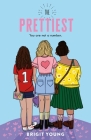
The Prettiest by Brigit Young, Roaring Brook Press, April 14
Support Independent Bookstores - Visit IndieBound.org

Shop your local indie bookstore

A must-read for young feminists, The Prettiest is an incisive, empowering novel by Brigit Young about fighting back against sexism and objectification.

THE PRETTIEST: It’s the last thing Eve Hoffmann expected to be, the only thing Sophie Kane wants to be, and something Nessa Flores-Brady knows she’ll never be . . . until a list appears online, ranking the top fifty prettiest girls in the eighth grade.

Eve is disgusted by the way her body is suddenly being objectified by everyone around her.

Sophie is sick of the bullying she’s endured after being relegated to number two.

And Nessa is tired of everyone else trying to tell her who she is.

It’s time for a takedown. As the three girls band together, they begin to stand up not just for themselves, but for one another, too.

Thomas Jefferson and the Tripoli Pirates by Brian Kilmeade and Don Yeager, Penguin Young Readers Group, April 21

Support Independent Bookstores - Visit IndieBound.org
Shop your local indie bookstore
A page-turning middle-grade adaptation of the New York Times bestseller about how a newly independent nation was challenged by foreign powers and what happened when America’s third president decided to stand up to intimidation.

When Thomas Jefferson became president in 1801, America was deeply in debt and needed its economy to grow quickly, but its merchant ships were under attack. Pirates from North Africa routinely captured American sailors and held them as captives demanding ransom and tribute far beyond what the new country could afford.

Jefferson found it impossible to negotiate a truce, and decided to move beyond diplomacy. He sent the U.S. Navy and Marines to blockade Tripoli—launching the Barbary Wars and beginning America’s journey toward future superpower status.

This vivid and accessible young readers adaptation of the New York Times bestseller features an exclusive new introduction, extensive back matter, and eye-catching art throughout. Chronicling a crucial moment in American history, this historical thriller will excite and inspire the next generation of patriots.

Echo Mountain by Lauren Wolk, Penguin Young Readers Group, April 21

Support Independent Bookstores - Visit IndieBound.org

Shop your local indie bookstore
The Newbery Honor–winning author of Wolf Hollow and Beyond the Bright Sea returns with the story of an unforgettable young heroine in Depression-era Maine.

“Brilliant.” –Lynda Mullaly Hunt, bestselling author of Fish in a Tree

When the Great Depression takes almost everything they own, Ellie’s family is forced to leave their home in town and start over in the untamed forests of nearby Echo Mountain. Ellie has found a welcome freedom, and a love of the natural world, in her new life on the mountain. But there is little joy, even for Ellie, as her family struggles with the aftermath of an accident that has left her father in a coma. An accident unfairly blamed on Ellie.

Determined to help her father, Ellie will make her way to the top of the mountain in search of the healing secrets of a woman known only as “the hag.” But the hag, and the mountain, still have many untold stories left to reveal and, with them, a fresh chance at happiness.

Echo Mountain is celebration of finding your own path and becoming your truest self. Newbery Honor– and Scott O’Dell Award–winning author Lauren Wolk weaves a stunning tale of resilience, persistence, and friendship across three generations of families, set against the rough and ragged beauty of the mountain they all call home.

Ways to Make Sunshine by Renee Watson, Bloombury USA, April 28

Support Independent Bookstores - Visit IndieBound.org
Shop your local indie bookstore
From Newbery Honor and Coretta Scott King Author Award winner Renée Watson comes the first book in a young middle grade series about Ryan Hart, a girl who is pure spirit, kindness, and sunshine.

Ryan Hart has a lot on her mind—school, self-image, and especially family. Her dad finally has a new job, but money is tight. That means some changes, like selling their second car and moving into a new (old) house. But Ryan is a girl who knows how to make sunshine out of setbacks. As her brother says when he raps about her, she’s got the talent that matters most: it’s a talent that can’t be seen, she’s nice, not mean!

Ryan is all about trying to see the best in people, to be a good daughter, a good sister, a good friend. But even if her life isn’t everything she would wish for, when her big brother is infuriating, her parents don’t quite understand, and the unexpected happens, she always finds a way forward, with grace and wit. And plenty of sunshine.

Acclaimed author Renée Watson writes her own version of Ramona Quimby, one starring a Black girl and her family, in this start to a charming new series.

Living the Confidence Code: Real Girls, Real Stories, Real Confidence by Katty Kay, Claire Shipman and JillEllyn Riley, HarperCollins Publishers, April 28.

Support Independent Bookstores - Visit IndieBound.org
Shop your local indie bookstore
New from the New York Times, USA Today, and Wall Street Journal bestselling authors of The Confidence Code for Girls!

The best way to understand confidence is to see it in action. That’s why bestselling authors Katty Kay, Claire Shipman, and JillEllyn Riley have collected 30 true stories of real girls, pursuing their passions, struggling and stumbling, but along the way figuring out how to build their own special brand of confidence.

From Bali to Brazil, South Africa to Seattle, Australia to Afghanistan, these girls took risks, doubted themselves, and sometimes failed. But they also hung in there when things got hard. Along the way they discovered what matters to them: everything from protesting contaminated water to championing inclusive books to the accessibility of girls’ basketball shoes, and so much more.

Different goals, different stories, different personalities, all illustrating the multitude of ways to be confident in the world.

Packed with photos, graphic novel strips, and engaging interviews, Living the Confidence Code proves that no matter who you are, or how old you are, nothing is out of reach when you decide to try. Join this growing global community of powerful girls and imagine—what would you like to do, once you tap into your confidence? How will you write your story?

Hunger Winter: A World War II Novel by Rob Currie, Tyndale Publishers

Support Independent Bookstores - Visit IndieBound.org
Shop your local indie bookstore

The thrilling story of one boy’s quest to find his father and protect his younger sister during the great Dutch famine of World War II.
“Sometimes you have to take a chance, because it’s the only chance you have.”

Thirteen-year-old Dirk has been the man of the house since his papa disappeared while fighting against the Nazis with the Dutch Resistance. When the Gestapo arrests Dirk’s older sister, who is also a Resistance fighter, Dirk fears that he and his little sister, Anna, might be next.

With only pockets full of food and his sister asleep in his arms, Dirk runs away to find his father. As Dirk leads Anna across the war-torn Netherlands, from farmyards to work camps, he must rely on his wits and his father’s teaching to find his way.

Middle Grade Student-Produced Book Trailers

***When I thought about sharing this middle grade learning project with you all just a few weeks ago, I really wasn’t thinking I’d be opening with the following paragraph. Hopefully, everyone is weathering necessary school closings as best we can. Teachers, librarians, and parents have such a critical role to play in our world’s response to this pandemic; let’s keep teaching our kids that we all learn amazing lessons from books, both fiction and non-fiction, and that sharing good stories benefits all learners. I hope this book trailer project idea might work for your classroom situation in the coming weeks, whether you’re face-to-face with your kids or working remotely with them.***

In school? Teaching from home? Need an extra project idea to supplement your kids’ online academics? Whether you are a middle grade teacher, a librarian, or a homeschooling parent, it may be a good time to try a project that employs a little freedom and a lot of creativity: middle grade student-produced book trailers.

Student-produced book trailers are a fantastic way to inspire readership of new books, incorporate technology into learning, employ writing skills, and practice project planning and organization. If your school is in session, this is the kind of project that will energize your students despite the springtime sluggishness that tends to set in around now, or to regain the attention of those who’ve grown hard to hook. Or, if your school is among the many closing for several weeks and suddenly implementing online learning, your readers may need a project with wide parameters to which they can bring a highly individualized amount of knowledge and expertise.

A book trailer project addresses multiple areas of standards for learning, as well: reading, writing, speaking, listening, technology…and depending on the content of the book for which the trailer is produced, possibly history, science, world studies/cultures, and others!

Here’s a step-by-step that worked with my students recently:

  1. Ask students to think about movie trailers out there right now, and trailers they can recall from recent years. Students’ contributions  can be listed on the board, in the virtual classroom collaboration space, or on a group email. Have the class brainstorm and share characteristics that made those movie trailers memorable.
  2. Introduce the concept of a book trailer via discussion or info sheet. Depending on ages and interests, some students may not realize the wealth of beautiful book trailers available online that pique attention and provide visuals for a new book or series. Professionally-created book trailers by authors and publishers employ graphics, video, animation, words, music, and dialogue to craft cinema-worthy advertisements, and you can share wonderful examples with a few links.
  3. You will also find many student-produced book trailers, created for the classroom or out of fandom. Watching a variety of both professional and student-produced trailers will give you a clearer idea of the capabilities of your readers, and will allow you to generate a list of required or suggested elements for their student-produced trailers. For example:
  • Book choice (class novel, or independent read?)
  • Video footage, with or without dialogue
  • Still images, saved and cited with source, or taken by the student photographer
  • Labels, captions, and hooks written by the student
  • Quotes from the text, with chapter and page cited
  • Author info
  • An image of the book cover with author’s name
  • Music
  • Voice over
  • Reviews, either borrowed and cited or collected from classmates
  • “Coming Soon” list of similar titles or other titles by the author
  • Color, style, length, pace of the trailer
  • Questions or statements to hook the potential reader
  • Revelation of a certain number of plot points and characters…but don’t reveal the ending!
  1. What about books with characters, situations, or settings that students can’t portray in actual video footage, for whatever reason? Instead of live actors, students might try models or toys for a stop-motion process. Just as effective as costumed actors, isolating symbolic props in interesting scenes or lighting for close-up shots can be mysterious and thought-provoking. There are many more components to a book trailer than the video footage, so if your students don’t have the resources, scrap that part.
  2. Technically speaking…. On what software or web-based design program can your students produce the book trailer? If your students have dedicated laptops, they may have video-producing software at their fingertips. My students made excellent trailers using their laptop camera for video, then easily imported the segments into the video editor. Special effects and music made the video-making experience fun and frustration-free. For those with no laptop or software, kids who have hand-held gadgets (phone, tablet, iPod) will probably already be quite adept at recording video segments and emailing them to themselves for use. iMovie offers templates and tutorials as do free accounts on Animoto, Powtoon, and other web-based presentation programs. A slideshow book trailer is another great option for still images, original text, and presentation effects.

Once book trailers are completed and edited, you can think about ways to use these great middle grade projects in the future: library contests, summer reading program activities, back-to-school night for new students, or homeschool network or coop project sharing.

Thanks as always for reading, and I hope a book trailer project might work for your readers!

Cogheart Adventures: Interview & GIVEAWAY with Author Peter Bunzl

In the fall of 2014 I attended my first SCBWI-British Isles conference and met Peter Bunzl. Another Scoobie (as SCBWI is affectionately known in the UK) friend was in his conference critique group and introduced us when it was over. A second friend was in the same group and said that Peter’s excerpt had literally made her cry. Soon we all joined together in a middle grade critique group regularly meeting up back in London; and I too was immediately taken by Peter’s steampunk adventure novel about a girl and her mechanical fox searching for her missing airship pilot and inventor father.

A few months later we celebrated Peter getting an agent, and a few months after that we celebrated COGHEART being sold as the lead title in Usborne’s 2016 list. It came out in September 2016 and was simultaneously chosen as Waterstones Book of the Month; a huge deal for a debut. Four years later Peter’s fourth COGHEART ADVENTURE book, SHADOWSEA has just been released in the UK, and the award-winning first three volumes —COGHEART, MOONLOCKET, AND SKYCIRCUS are now available in the US with Jolly Fish Press. (SEE BELOW FOR HOW YOU CAN WIN ALL 3 BOOKS.) I am so pleased and excited to welcome Peter Bunzl to The Mixed Up Files!

The 1st Cogheart Adventure Moonlocket: Cogheart Adventure #2 Skycircus: Cogheart Adventure #3


MD: Hi Peter, thanks so much for joining us!

PB: Thank you for having me, it’s lovely to be here!

MD: The world in the Cogheart adventures is so much fun with mechanicals (mechanical animals and people) and other distinctive and unique details. How did you come up with the world of the Cogheart adventures and did anything help you with your world-building?

PB:  Thanks! The inspiration came from reading about the clockmaking geniuses of the 18th and 19th Century who built the first automata and androids. It was their desire to create artificial life – or an illusion of life – which really chimed with me as a writer and animator. Someone who’s primary goal it is to make people believe in imaginary characters with all their heart. 

Those tales of clockwork robots and their creators helped me envisage a fictional Victorian world where mechanical-people and humans lived side by side. A world which begged the question: What makes us human, and could that spark of life ever exist inside a machine?

MD: Your story worlds are a cool mix of imagination and historical accuracy. When you are planning and writing a book, what kind of research do you do? Do you use mood boards or other visual prompts?

PB: Research plays a big part in the crafting my stories. I use Pinterest to save inspiring images and create mood boards for my projects. I collect Victorian photos of interesting looking people and locations. I also use Evernote to save research documents. Historical descriptions of the places the characters visit etc.

For the steampunk aspects of the story, I read about real airships, like the Graf Zeppelin and the Hindenburg. There’s lots of zeppelin battles in the Cogheart Adventures. I didn’t stick to the physics of flying, because I saw from great steampunk that you don’t have to, but I tried not to go too wild as this is an alternate reality not a total fantasy world.

In terms of the Victoriana, I wasn’t a fanatical researcher, quite the opposite. I prefer fiction that give a flavour of the era, rather than dry history books. So I read a little bit of Dickens for the atmosphere, Treasure Island for the adventure, and some Penny Dreadful type books like: Hooligan Nights and Mord Em’ly – for their sensationalist accounts of Victorian street life.

MD: Did you intend Cogheart to become a series? Once the emotional arc was completed for the characters at the end of the first book, how did you navigate creating compelling emotional journeys for your characters in each of the subsequent books? Did you find it difficult?

PB: In the beginning, I never intended to write a series after Cogheart, but when my agent, Jo Williamson, originally sold the book in the UK it was for a two book deal and it became apparent that the publisher wanted a sequel.

The lucky thing was, after writing the first book, I had a lot of different left-over bits and pieces that never made it into the story. And those became the basis for each of the subsequent adventures.

The obvious choice for the second story was to make it more about Robert’s family, because his history had barely featured in Cogheart. So that became Moonlocket. I had an idea that I wanted to write about a magician and a mysterious locket and that fed into the story too.

I had a couple of other left-over scenes from Cogheart. One where the characters visit a travelling circus. This eventually became Skycircus. There was also a pitch that the publisher turned down for book 2, that eventually became the basis of Shadowsea.

The moral of the story is nothing is ever wasted. So don’t throw your excess ramblings!Shadowsea, the 4th Cogheart Adventure

MD: Had you always intended to write for children?

PB: I actually set out to write for Young Adults first of all, but along the way my story turned into a children’s book because the plot and ideas were much more suited to that age group.

As soon as I realized that was the way it was going I wrote a little Post-it for myself with the words: MARVEL, MAGIC and HUMOUR on it. So I knew the things I needed to add more of in the edits.

The more I wrote the more I discovered that my ideas fitted well into the middle grade bracket. Before I was writing, I worked for ten years in the animation industry on various projects. I wrote and directed my own short films on the side and my scripts often featured child protagonists, so to me it didn’t feel a great leap from that to writing children’s fiction.

MD: How do you find the words and rhythm that characterize your stories?

PB: I don’t think anyone has ever asked me this question before! Thanks.

I suppose it has a lot to do with voice. Your voice as a writer, but also the specific voice of the story, which is either directly the character’s, in a first person book, or in a third person’s story like the Cogheart Adventures, it is part character-voice and part narrator-voice.

As you write a book, you start to get a strong idea of which of those is required, where and when. It has a lot to do with how the book sounds as you read it in your head during the editing process, and with who the characters are.

The Cogheart Adventures are written in third person, but the narration is always close to our heroes. Apart from the prologue, you never see or hear anything they don’t themselves. I would describe that style as ‘close third person’ or  ‘over the shoulder’.

It has moments of free indirect style, where the narration is almost directly Robert and Lily’s point of view and you try to weave their words and thoughts into what they are experiencing. And moments which are more straight up narration.

Narration can’t be too intrusive, in my opinion. For me it should paint an exciting visual picture, but fade into the background in terms of its opinions. Although I feel it can be more stylized at the beginning and end of a story, where you’re trying to draw a reader in or wrap things up.

MD: What authors or creators have had a strong impact on your work?

PB: As a young reader I adored the quirky British fantasy of Diana Wynne Jones, Roald Dahl and Joan Aiken; I was forever popping into the bookshop to see when the next Terry Pratchett was coming out. More recently I loved Philip Pullman’s His Dark Materials series and his Sally Lockhart books, plus I enjoy a bit of Dickens, and greatly admire Mervyn Peake’s incredible Gormenghast stories.

They all influenced me in countless ways – some for plotting, others for character or worldbuilding; or poetic language, strange names and humour. When a stunning sentence leaps out at me from a book I underline it so I can refer to it later when I need writing inspiration.

MD: Your attention to detail and the images you create are often very visual. Do you find that your past work as an animator and filmmaker influences your writing?

PB: Coming from a background of animation and film, means that I will see the story very vividly in my head. As I write it unspools like a movie.

My years studying film also taught me a lot about story structure. How to tell a story economically and cinematically. There’s a grammar in film in the way you structure a sequence of shots that’s similar to the way you structure clauses and sentences in fiction. I’ve read some great books on both editing processes that highlight those similarities.

Each shot, or each sentence, should ask a question that’s part-answered and part-added-to by the next one and the next one. And yet each answer also withholds information until you’re ready to reveal it. That’s basically how to create the illusion of a developing story with suspense. It’s when you have the elements in the wrong order that it jars and seems off.

MD: What do you enjoy most about being a full-time children’s author and what do you dislike?

PB: I love meeting readers. Especially kid readers, because if they enjoy your book they’ll tell you so in no uncertain terms. They say things like: “You’re my favourite author of all time!” “Better than Roald Dahl!” “One of the best books I’ve ever read!”

Those kind of comments are ace, especially if they tell you personally or write you a letter with pictures of the characters they’ve drawn. All of their feedback is such a joy and it’s one of the best parts of writing children’s books.

The worst part is when you see a disparaging adult review online. Especially when they say things like: “I tried to read this book, but it seems like it was written for kids”. Don’t read bad online reviews, that’s my advice. Somehow they stick to your brain much more than the good ones. Maybe it’s their spikes that make them sticky.

MD: Your record of four books in four years is remarkable! And these are not short chapter books, these are 140-page middle grade novels with tight plotting and beautiful language.  The UK tends to have a much shorter lead time for publishing than in the US, which is exciting in terms of seeing your book come out with a relatively short turn-around, but it also must be an enormous amount of pressure. What advice do you have for other writers—whether they are just starting out or already mid-career— in terms of ‘just getting it done?’ What does a typical day look like for you?

PB: Write what you love, not what you think the market is looking for. That way you will always have some joy in doing it, even on days when that joy is buried deep and seems unaccessible.

In terms of my writing process, I sit down at a desk and try and write for a few hours each day. I write on the computer and I use Scrivener, because I love the way you can keep all your documents and chapters together but separate. It lets you see the structure of your novel in one window and jump between different parts.

When I’m not writing I have a notebook for the ideas that come at odd times, and a writing diary where I try and keep track of my word counts and how it’s all going – just a short note for each day, so I know if I’m on track or not. That way you can assess your own progress. Give yourself a small gift if you hit your goal for the week or month, and a bigger gift if you finish the whole book.

MD: I’ve noticed that boys and girls equally enjoy your books. Can you speak to any secret sauce you’ve put in, or why you think your books are so appealing across what are sometimes considered traditional gender lines?

PB: I have no idea why this is. I think maybe because the books have both a boy and girl hero, who are equally brave and courageous, equally strong and equally good at problem solving and getting each other out of trouble.

I really don’t think books should be gendered anyway. As long as it’s age appropriate, boys and girls should be able to read anything they like without the publishing industry, or parents, deciding: “oh, pirates and space are for boys” or “princesses and cooking are for girls”. It’s nonsense. What’s more important is writing a good story that’s inclusive and empathetic and can appeal to everyone.

MD: Peter, thanks so much again for joining us at MUF. Your insights into your work, the writing process and writing philosophy are fabulous. Is there anything you’d like to add about your books to the writers, librarians, teachers and avid readers that enjoy our blog?

Peter Bunzl: Author of the Cogheart Adventures

PB: Thank you. If you are looking for more information about my books, I  have a website: peterbunzl.com which has updates and links about all my books. It also has a great amount of teaching resources, created by me and the publisher and by teachers who sent me their brilliant suggestions and ideas. I am pretty active on twitter: @peterbunzl and instagram: @peter_bunzl so feel free to say hi over there too!

Thanks again Peter! Cogheart Adventures are available wherever fine books can be found.

Jolly Fish Press is giving away a copy of all three books to one lucky winner! Enter BELOW for a chance to win.
a Rafflecopter giveaway

(This giveaway is only available in the US.) The contest ends at midnight on February 19th and the winner will be announced on February 20th.  GOOD LUCK!