Posts Tagged middle-grade readers

Indie Spotlight: [words] Bookstore, Maplewood NJ

screenshot_627

Mixed-Up Files posts monthly interviews with the owners of children’s-only bookstores and there are still many more of those to feature, but I’ve recently discovered [words] bookstore in Maplewood, N.J. (wordsbookstore.com), a general independent bookstore with a strong emphasis on children’s books, and most importantly with a unique and hopeful mission. This is a bookstore with a heart, and I’m eager to spread the news. Today I’m talking with [words]Co-owner Jonah Zimiles.

[word] Co-owners Jonah and Ellen Zimiles

[word] Co-owners Jonah and Ellen Zimiles

MUF: I gather you first got into the bookstore business because the only bookstore in Maplewood was closing? How brave!
Jonah: Thank you. We have lived in Maplewood for twenty-three years and raised our two children here. When the economy deteriorated in the Fall of 2008, we wanted to find a way to help our community. My wife and son were walking in town when she saw a sign saying that the bookstore was closing in a month. Ellen thought that we should buy the bookstore, even though we did not have retail or book industry experience.

MUF: Your store has also taken on the unique mission “to help Maplewood become a model community of inclusion” by acknowledging and serving a special community, families with members on the autism spectrum. How did that come about?
Jonah: In addition to assisting our community buffeted by the recession, we were interested in providing a model vocational training program for young people with autism. Our hope is that through our bookstore, we will inspire other for-profit businesses to hire employees with autism. Our son, who is now 17, has autism. We have always found Maplewood to be a warm and welcoming community, and we wanted to play our part in furthering that culture.screenshot_639

MUF: Tell us about your “Second Sundays.”
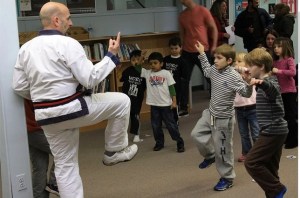
Jonah: Our Second Sundays programs were created to provide parents of special needs children the opportunity to sample for free many activities that are often available for typical children but unfortunately not for the special needs population. At the same time, it allows us to acknowledge and publicize service providers who are offering these services or to give new ones considering this market a chance to try out working with our kids at our store. Activities include: yoga, karate, arts & crafts, drama, sewing and cooking, to name a few.screenshot_629

MUF: Not only do you welcome autism syndrome kids in your store and provide programs they can take part in, you also employ them as part-time workers and provide vocational training. Tell us how that works.
Jonah: Most of our kids come to us through job sampling programs in their school. They come in small groups with job coaches once or twice per week and progress through a series of jobs depending upon their skill levels and interests. We also have paid employees on our staff with autism.

MUF: Say a ten-year-old comes into your store looking for “a good book.” Do you have some favorite titles, fiction or nonfiction, that you are especially recommending to middle-graders right now?
Jonah: Our middle graders love Rick Riordan, Jeff Kinney and Dan Gutman. One of our favorite books is R. J. Palacio’s Wonder.screenshot_631

MUF: I’ve just re-read Marcello in the Real World for a workshop. It seems there have been a slew of original and engaging novels for children in the last few years whose main characters are somewhere along the autism spectrum——Mockingbird, London Eye Mystery, The Blue Bottle Mystery, Colin Fisher — and that these stories have the positive side-effect of creating insight and understanding in the general reader. Are these books popular at your store? Have any of their authors come for a visit?
Picture 30Jonah: We have seven or eight autism authors visit our store for readings during April for Autism Awareness Month but these authors so far have been non-fiction authors. We have tried unsuccessfully to get Jodi Picoult to our store. Some of our favorites have included practitioners like Ricki Robinson, author of Autism Solutions, researchers like Martha Herbert, author of The Autism Revolution, and parents, like Priscilla Gilman, author of The Anti-Romantic Child: A Story of Unexpected Joy.

MUF: [Words] became an instant community center in another sense after Hurricane Sandy hit, didn’t it?

[words], a haven during Sandy

[words], a haven during Sandy

Jonah: Yes! Most of the power in our town (including in the homes of our owners and most of our employees) and the surrounding towns were knocked out for a week, but power was maintained on the block where [words] is located, so we became a community center to which people came to charge their cell phones and computers, learn the latest news, and to get some needed respite from the travails of the storm and the power outage.

MUF: If a family from out of town came to visit your store, would there be a family-friendly place nearby where they could get a bite to eat after browsing?
Jonah: Yes, dozens! Arturo’s across the street is extremely popular and delicious, and the Laurel offers a terrific relaxed atmosphere with great food.

MUF: And if they could spend some time in Maplewood, are there some family activities or sights in the area that they shouldn’t miss?
Jonah: In addition to our quaint village with many fine shops, we have a beautiful park in our town that is well worth a visit, as well as a gigantic nature preserve, the South Mountain reservation. Of course, the best reason to come to Maplewood is to meet the Maplewoodians!screenshot_636

MUF: Any exciting programs coming up in March?
Jonah: Many! Two are of particular note. On Saturday, March 2, we celebrate Read Across America, with a kids’ Pitchapalooza featuring four local children’s authors. On March 20, Harlan Coben kicks off his publicity tour for his exciting new thriller, Six Years.

MUF: Thank you so much , Jonah, for sharing the goals and programs of your store with us.

Readers, if you’re as inspired as I am to read about what Jonah and Ellen are doing at [words], I’m sure they’d love to hear your comments–and have you visit!screenshot_624

Sue Cowing is the author of the middle-grade puppet-and-boy novel, You Will Call Me Drog, published in 2011 by Carolrhoda Books and in 2012 by Usborne UK


Teaching with Themed Literature Units: Older Middle Grade

Recently, I wrote about the value of Themed Literature Units, structured units of study designed to develop crucial literacy skills as students read, write about, discuss, and sometimes respond artistically to high-quality children’s literature.  My previous post, “Finding My Way: Teaching with Themed Literature Units,” introduces a strategy for organizing meaningful literacy instruction around memorable middle grade literature.  The post also offers a glimpse into three classrooms where teachers and middle grade students are reading great books on themes such as “Adapting to new situations,” “Taking risks to help others,” and “Courage is inside all of us.”

Today, I’d like to expand our list with an additional themed literature unit for older middle grade readers in an unusual context — a middle school Spanish class.

Overcoming Obstacles in the Search for Identity ~ 8th grade
Ceinwen Bushey is teaching 8th grade Spanish in a Seattle middle school.  She developed her unit, “Overcoming Obstacles in the Search for Identity” to help her students understand their own quests for identity and to recognize similar struggles in other adolescents in Latin America.  She introduced her students to the unit this way:  “For most teenagers like yourselves, middle school is a time of fast growth – physically, mentally, emotionally, and socially. It’s also a time for developing your sense of identity, self-esteem, and relationships with your peers. This is true for kids all around the world, but some have it tougher than others. Imagine having to deal with all the things everyday teens have to deal with, then adding to them some really big obstacles. Think about what it would be like to have to move to a new country, learn to speak a new language, make new friends, eat food you’ve never seen before, not have MTV to watch, not have iPhones or iPads or Facebook, and have people thinking you look weird because you’re different from them. Over the next couple of weeks, we are going to read, write, and discuss the lives of kids your age that are trying to figure things out, just like you, but who are from Latin America and have to overcome really big obstacles like the ones I just mentioned. They are teenagers who have to move to the United States from other countries, and try to figure out who they are; they’re searching for their identity. The end goal of our work together is to promote cross-cultural understanding and develop awareness that the journey toward understanding oneself is universal; that is, it connects us all to one another.”

Big Ideas
The unit guides students to understand two big ideas:
The path to self-discovery is a universal human experience and connects us all; and
Tough experiences are often the ones that teach us the most about ourselves.

Book List
            

As older middle grade readers grow, they yearn to figure out who they are and how they can make a difference in this world.  Ceinwen Bushey’s unit guides her middle schoolers to take a cross-cultural look at ways that young people, like them, find ways to overcome the obstacles in their lives as they search for identity.

Katherine Schlick Noe teaches beginning and experienced teachers at Seattle University. Her debut novel, Something to Hold (Clarion, 2011) won the 2012 Washington State Book Award for the middle grade/young adult and has been named a 2012 Notable Social Studies Trade Book for Young People.  Visit her at http://katherineschlicknoe.com.

“Finding My Way”: Teaching with Themed Literature Units

Speak your mind, even if your voice shakes.
Virginia Euwer Wolff

Each of us must find ways to live with courage and hope in an imperfect world. Middle grade students, in particular, stand on the cusp of self-discovery but are often uncertain how to navigate their path through adolescence.  Many care deeply about fairness, justice, and reaching out to others, yet they wonder Where do I fit in?  How can I make a difference?

In my writing and in my work with beginning teachers, I’ve been inspired by National Book Award-winning author Virginia Euwer Wolff and her quote above.  She goes on, “It’s the kids with the faltering voices … many of us are writing for them.  Not to change them into different kids, but to keep them company while they evolve.”  Books raise questions, offer a sense of life’s complexities, and illustrate how people make decisions under less-than-perfect circumstances.  Fiction and nonfiction can help middle grade readers develop empathy and gain insight into how people – real and imagined – deal with challenges no matter who they are, or where or when they live.  And often, it’s a teacher or librarian who puts the book into a reader’s hands that helps her find her voice.

My job is to help beginning teachers learn how to open the world of literacy to students in kindergarten through eighth grades.  One of the most meaningful assignments we undertake is a Themed Literature Unit, a structured unit of study designed to develop crucial literacy skills as students read, write about, discuss, and sometimes respond artistically to high-quality children’s literature.  Each unit is focused on what I call a “human issues theme” (e.g., working for justice, reaching out to others, persevering despite obstacles, caring for the environment), vital challenges that we all face as members of a democratic and global society.

Here are three examples of units my graduate students will be teaching this winter:

Adapting to New Situations ~ 4th grade
Susie Henderson teaches at a highly diverse urban school in Seattle.  Her students and their families come from all over the world and have had to face the challenges of adapting to new environments.

Here’s how she explains the goal of this unit: “It is my hope that students will make connections to their own experiences and mature/grow in their understanding of the real world through the exploration of this theme. Given that adapting to new situations is a vital skill for all of us, the unit will pave a path for students to explore what it means to adapt and also realize that this is something that all humans do.” 

Big Ideas
The unit guides students to understand three big ideas:
Adapting to a new situation or environment means we find a way to belong in an unfamiliar place or with different people;
It takes courage to adapt to new situations; and
In order to adapt, we must be willing to reach out to others and get to know them.

Book List
Because of Winn Dixie by Kate Di Camillo.  A young girl, India Opal, moves to a new town with her father. Her mother left when she was just a baby, so she is lonely when her father, a preacher, is too busy to spend much time with her. India tells a story of how she came to be friends with many interesting people, all because of a big dog that falls into her lap one summer day shortly after moving to her new Florida town.  I will offer this as one of our book club choices.

My Name is Maria Isabel by Alma Flor Ada. Maria is a new girl in the United States, who has just moved from Puerto Rico. Her teacher insists on calling her Mary, but she wants badly to be called by her real name, which tells a lot about her family and her past. Book club choice.

Seaglass Summer by Anjali Banarjee. Poppy Ray wants to be a veterinarian. She gets to go spend the summer with her uncle on an island in Washington, which tells her a lot about what it is really like to be an animal doctor. Through this experience, she starts to reconsider if this is what she wants to do with her life. Book club choice.

Esperanza Rising by Pam Muñoz Ryan. Born into a wealthy family in Mexico, young Esperanza has lived a good life,. But things change all of a sudden, and Esperanza has to move to California with her mother where they no longer have the life they have always known. Esperanza realizes quickly that her life might never be the same. Book club choice.

The Trouble Begins by Linda Himelblau. A young Vietnamese boy immigrates to the USA with his grandmother to meet up with the rest of the family. He has a lot of catching up to do to adapt to a new life, a new language, and a new school. Book club choice.

Riding Freedom by Pam Muñoz Ryan. Charlotte, a young orphan in New Hampshire, wants to run away from the orphanage and ride horses. She is a very good rider, but since she is a girl, she is not allowed to in the 19th century. She disguises herself as a boy in order to be able to ride. Book club choice.

Sarah, Plain and Tall by Patricia MacLachlan. Caleb and Anna are excited when their father gets a mail-order bride to come live with them. They really love her and hope she will stay, but she is not so sure about the prairie life. Book club choice.


Taking Risks to Help Others ~ 5th grade
Toby Steers teaches fifth grade across an open-concept “hallway” from Susie.  He wanted to help his fifth graders get ready for the challenges that lie ahead next year in middle school.

Toby explained the unit in a letter to families: “While reading books, students will learn about dangerous times and places where people showed great bravery to help other people.  Students will also learn that, when they stand up to a bully on the playground or apologize when they have hurt someone, they are taking important risks too. The goal of this unit is to learn about how to take important ideas from reading that help students make important decisions in their lives.”

Big Ideas
Taking risks to help others means accepting that bad things might happen to you;
We need courage and determination to take risks to help others; and
Taking risks means overcoming doubts.

Book List
An Apple for Harriet Tubman
by Glennette Tilley Turner. A picture book exploring the early life of Harriet Tubman and connecting with her open heart and courage to help others as she became an adult.    From this book, students will learn that we need courage and determination to help others. I will read this aloud to get students thinking about risks at the beginning of the unit.

The Librarian of Basra: A True Story from Iraq by Jeanette Winter.  An amazing Iraqi librarian risks her life to save the cultural heritage of her country.  From this book, students will learn that taking risks to help others means that we accept that bad things might happen to us.  I will use this book in a literacy strategy lesson on identifying character traits that different risk-takers have in common

Crossing the Wire by Will Hobbs.   A boy leaves his family in Mexico to try to cross the border into the United States to earn and send money back to his family.  Along the way, he takes many dangerous risks, always remembering the hunger and poverty of his family that he is trying to help.  From this book, students learn that we need courage and determination to help others.  I will use it as a longer read-aloud over the course of the unit.

The Breadwinner by Deborah Ellis.  Parvana lives in Taliban-ruled Afghanistan and must dress as a boy to work in the market to support her family.  At this time, girls and women were not allowed to be in public by themselves and, since her father is under arrest, none of her family can safely leave the house.  From this book, students will learn that taking risks to help others means overcoming doubts.  Book club choice.

Return to Sender by Julia Alvarez.  Tyler makes friends with a girl whose parents are undocumented farm workers on his father’s Vermont farm.  When Mari is threatened with deportation, how will their friendship survive?  From this book, students will learn that taking risks means accepting that bad things might happen to us. Book club choice.


Courage is Inside All of Us ~ 5th grade
Mo Newton’s fifth graders are also facing the big step from elementary into middle school.  Like Toby, she wanted to help them develop the inner strengths and skills we all need to face big challenges.  She chose to focus on the power of finding the courage that lies within each of us.

Big Ideas
We all can build the strength to be courageous;
Even though we are afraid, we can still show courage; and
We can show courage in big and small ways.

Book List
Call it Courage by Armstrong Sperry. Mafutu is afraid of the sea and is taunted by his community for being a coward. When he can’t handle the teasing anymore he decides that he has to conquer his fear and show his community that he can be brave. This story shows Mafatu’s journey and how he was able to discover courage.  One choice for students to read and discuss in book clubs.

The Dandelion Seed by Joseph Anthony.  A beautifully illustrated picture book about a dandelion seed that is afraid to let go. The seed decides to find the courage to allow the wind to carry it on a remarkable journey.  I will use this book to teach several of the literacy skills in our unit.

Fire from the Rock by Sharon Draper. In 1957 in Little Rock, Arkansas, Sylvia Patterson is asked to be one of the first African American students to enroll in Central High School. While she is trying to decide if she can summon the courage to do this, racial tension and violence explode throughout the city. The time has come for Sylvia to gather up the strength to walk through the doors of Central High School.  Book club choice.

Number the Stars by Lois Lowry. In 1943, ten-year-old Annemarie and her best friend, Ellen, live in Copenhagen, Denmark. Ellen is Jewish, and her religion makes her a target for the Nazi soldiers. For protection she moves in with Annemarie, pretending to be part of her family. Annemarie finds herself in a dangerous situation where she has to find the courage to help Ellen escape. Book club choice.

Something to Hold  by Katherine Schlick Noe. Kitty’s family has recently moved to an Indian Reservation in Warm Springs, Oregon, where she is one of the few white children. She struggles with feelings of loneliness, wanting desperately to be accepted, but feeling like she does not fit in anywhere. Throughout the year, Kitty faces many challenges that force her to discover that even she has courage inside.  This will be our class read aloud during the unit.

Research tells us that learning experiences that are personally meaningful and engaging also may be more memorable and long lasting.  Themed Literature Units can be one way to engage students with learning that stretches their hearts as well as feeds their minds.  You can learn more about teaching with thematic literature at the Literature Circles Resource Center (click on “Themed Literature Units”).  And please contact me if you would like more information about any of these particular units!


Katherine Schlick Noe teaches beginning and experienced teachers at Seattle University. Her debut novel, Something to Hold (Clarion, 2011) won the 2012 Washington State Book Award for the middle grade/young adult and has been named a 2012 Notable Social Studies Trade Book for Young People.  Visit her at http://katherineschlicknoe.com.