By Annabelle Fisher on April 21, 2017 / Author Interviews, Book Lists, Diversity, Fiction, For Librarians, For Parents, For Teachers, For Writers, New Releases, Writing
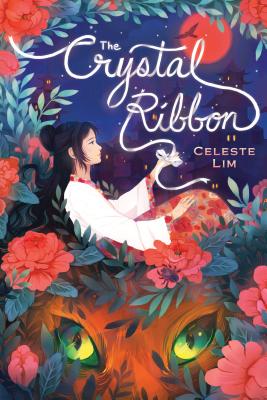
In a story set in medieval China, Celeste Lim brings a young girl of exceptional heart together with the animal spirits of ancient myth to overcome a dark fate. Wed at age eleven to a three-year-old, Jing’s life seems like a dismal sentence, and yet it is full of surprise and adventure. In the interest of full disclosure, Celeste began weaving her tale while in my class at Manhattanville College’s Graduate Program in Creative Writing. From the first evening she read aloud, her writing voice captivated me and I felt certain that her tale was destined for publication. And now that it’s here, I get to interview her!
Would you tell us a little about your writing background and early writing experience?
Growing up in Malaysia exposed me to a myriad of languages at a young age. We learned Bahasa Malaysia, our national language, in class; English was a compulsory subject as well because we were colonized by the British; and I went to a Chinese school because of my heritage. Therefore, what I has been exposed to growing up taught me that English books were written for and about Western people; Chinese books were written for and about Chinese people; Malay books for and about Malay people, and so on. So naturally, when I attempted to write my first English novel at age seventeen, I wrote a story about three fair-skinned, red-haired sisters who live in New York City, a place I’d only ever read about in books and saw on TV. That manuscript has been sitting in a hidden folder on my computer ever since.
How did you come to write Jing’s story?
Your first class focused on writing from our unique reservoir of seminal experience. I remember how groundbreaking it felt to me to realize that I was actually allowed to write about what I knew in a language that was supposedly foreign to my culture. That was a huge turning point in my writing journey and was also how Jing’s story was conceived.
The Crystal Ribbon’s magical creatures or jing, are important elements in the story. Could you explain more about them here? Did the jing characters spark your imaginyation as a child? Do you have a favorite jing?
This is one of my favorite things to talk about! Just like beings such as fairies and mermaids, jing are mythical creatures that sprung from the lips of storytellers, and since then have consistently appeared in ancient and medieval Chinese literature. The existence of jing came from the Taoist idea that through enough spiritual training, anything is able to attain a higher level of existence. Jing are non-human creatures that, after a hundred years of spiritual training, have attained the ability to speak, and a human level of consciousness and intelligence.
Because these ideas are so much a part of our mainstream religion, as a child I took them for granted, being more intrigued by gnomes and fairies. But now I do actually have a favorite jing–the huli jing, or fox jing! Other than being a very handsome creature, it feels like a very complex character, having the potential to be equal parts good and evil, which is why I chose it to be my character Jing’s unlikely friend.
Although Jing’s world contains magical helpmates, she couldn’t escape being sold into marriage at age eleven. At the hands of her three-year-old husband’s family, she suffers many cruelties. Were these scenes difficult to write? Explain how you approached them.
The novel actually started out as a third-person narrative. As a person living almost a thousand years later, I found it difficult to write in a way that helped me connect intimately to those experiences. But when my editor suggested I switch to first person, the barrier seemed to disappear. First person is not my writing strength, but in this point of view, I was forced to experience everything as Jing. I found that the words in these scenes came easier and sounded more authentic, raw, and immediate.
Although The Crystal Ribbon is set in medieval China, Jing could be a role model for girls today. What qualities do you think serve her best?
I’ll name two of the traits that I admire in Jing, resilience and introspection. I believe her resilience stems from hope, something that she carefully preserved and did not let her hardships extinguish. Initially, her hope might be that things will eventually change for the better on their own, but I think it is her introspection, her constant self-examination, that allowed Jing to discover the strength to change the course of her life.
Having a first book published can be both thrilling and daunting. Since this is your first experience with having a book published, what surprised you about the process?
It was surprisingly less stressful than I anticipated! I am admittedly a bit of a Hermione Granger when it comes to things I’m unfamiliar with. I remember researching and reading up tons about the publishing process and hearing many anecdotes of bad publishing experiences from fellow authors. But fortunately, I have a good working relationship with my editor. I believe that is a huge reason why I feel safe and reassured in her hands.
Like this:
Like Loading...



