Posts Tagged diversity

STEM Tuesday — Polar Ecology– Book List

You may need to pull on a pair of fuzzy wool socks and heat up a cuppa cocoa before reading these books. Get ready for some armchair adventures into the frozen polar regions.

Polar Environments

Polar Worlds, by Wade, Rosalyn.

The first half introduces the polar environment and highlights things explorers need to stay alive. The second half focuses on animals in the north and south polar regions, from puffins to penguins.


Ice: Chilling Stories From a Disappearing World,  by Laura Buller, Andrea Mills, and John Woodward

A browsable book that ranges from the prehistoric to present. Meet polar plants, frozen frogs, and other wonders of the icy world. Plenty of climate change alerts sprinkled throughout the pages.


Climate Change and the Polar Regions, by Michael Burgan.

An introduction shows how scientists study climate. Following chapters focus on the impacts of climate change to the Arctic and Antarctic, from melting ice to changing ocean currents to wildlife.


Antarctica: Enchantment of the World, by Wil Mara

Did you know there was moss and grass growing in Antarctica or frozen steam towers from active volcanoes? How about that someone was born there? In addition to amazing maps, showing all the research stations and land forms, and unbelievable photographs, this book explores the history, scientists, politics, tourism, exploitation, and folklore of Antarctica.


Polar Wildlife


The Arctic, by Wayne Lynch

It may look cold and barren, but the Arctic is filled with a diversity of wildlife. From seabirds to blubbery beasts, this photo-rich book provides a field trip to the land of the midnight sun.


Arctic Tundra : Life at the North Pole, by Salvatore Tocci

This book presents an overview of the tundra – a desert at the top of the world. Readers will see how ice and cold shape the landscape and the plants and animals that live there.


Poles Apart: Why Penguins and Polar Bears Will Never Be Neighbors by Elaine Scott

After exploring the fossil evidence of Pangea, this book offers a look at the unique physical and climactic differences of each pole, the people and animals that reside in each, and the lessons gained from explorers and scientists. It includes a good resource list of books and websites.


Frozen Realms, by Melissa Gish

Explore the deep sea beneath the North Pole! Numerous short “Ask a Scientist” features accompany photographs of amazing underwater creatures – including dragons.


Polar Scientists and Explorers


The Polar Bear Scientists (Scientists in the Field Series), by Peter Lourie

Beginning on page one, readers are in a helicopter, chasing polar bears. Once captured, the scientists collect measurements and take samples of blood, fat, and even hair. Then they fasten a radio collar around the bear’s neck and move away, so the polar bear can return to its own hunt. There’s a series of conversations with a scientist, and thoughtful comments about the impacts of a warming climate on polar bears.


Frozen Secrets: Antarctica Revealed, by Sally M. Walker

This book focuses on modern explorers and scientists. You’ll learn how to survive extreme cold and meet the scientists studying the secrets of the ice, from how it forms to how it moves. And there’s a robot!


Ice Scientist: Career in the Frozen Antarctic by Sara L. Latta

Interspersed among the realities of bone chilling cold and blinding sunlight, are descriptions of scientists who have and do work in the Antarctic. These scientists found dinosaurs, meteorites, 20,000 species of nematodes, coral, and massive glaciers in Antarctica. The engaging text and sidebars combine with chapter notes, a glossary, further reading & links to create a great look at a chilly science.


Lost in the Antarctic: The Doomed Voyage of the Endurance, by Tod Olson

Olsen writes a compelling, account of Ernest Shackleton’s ill-fated 1914 expedition to Antarctica. When their ship, the Endurance, became trapped in a sea of ice, the crew rescued whatever food and supplies they could. There are maps, photos, packing lists, and enough ice and frigid weather to make you head to the kitchen for a mug of cocoa.


Race to the Bottom of the Earth: Surviving Antarctica, by Rebecca E. F. Barone

This book chronicles the parallel journeys undertaken by Antarctic explorers. In 1910 two explorers, each leading their own expedition, set their sights on reaching the South Pole: Captain Robert Scott and Roald Amundsen. Their goal: to be the first to reach the Pole and make history. In 2018 two more explorers set off for the South Pole. Captain Louis Rudd hoped to complete the first solo crossing of Antarctica. Colin O’Brady set out on the same trek, determined to make it across the finish line first. Adventure mixes with STEM in this nail-biting story of survival.


STEM Tuesday book list prepared by:


Sue Heavenrich writes about science for children and their families, from space to backyard ecology. A long line of ants marching across the kitchen counter inspired her first article for kids. When not writing, she’s committing acts of citizen science in the garden. She blogs about science for kids and families at archimedesnotebook.blogspot.com.


Maria Marshall is a children’s author, blogger, and poet passionate about making nature and reading fun for children. She’s been a judge for the Cybils Awards from 2017 to present. Her poems are published in The Best Of Today’s Little Ditty 2017-2018, 2016, and 2014-2015 anthologies. When not writing, critiquing, or reading, she bird watches, travels the world, bakes, and hikes. Visit her at www.mariacmarshall.com/blog.


STEM Tuesday — Coding– Writing Tips and Resources

Conditional Statements

Welcome to the STEM Tuesday Coding Revival & Traveling Medicine Show! Grab a great book from the STEM Tuesday Coding recommendation table, have a seat and let the power of coding revive your STEM soul. Can I get a “Hallelujah!”?

Citation: George R. Brunk II 1950’s Revival Photographs. Theron F. Schlabach Photograph Collection (HM4-378 Box 1 Folder 4 photo). 

Our simple and elegant design looks at coding through fresh eyes and is inspired by the universal power of the coding embedded in our daily lives. 

Coding is two-fold. We mainly associate coding with the writing of computer programs, but coding also means classifying or identifying something by assigning it a code. I like to preach coding as being the logical breakdown of a process or event. Coding is a way of thinking. 

Coding, on one hand, is computer programs and video games and special effects and entertainment. The scope of computer coding reaches far and wide into almost every aspect of modern life. Alexa is Alexa because Alexa’s software codes it to be Alexa. Banks, governments, law enforcement, education, sports, etc. all increasingly rely on the power of code.

Coding also exists outside the electronic world. 

Coding is biological. Coding is chemical. Coding is physical. 

Coding is animal, vegetable, and mineral.

Coding spans from describing how atoms interact to how our entire universe behaves.

Now that’s truly a hallelujah thought!

Conditional statements

If/then, hypothesis/conclusion, cause/effect are conditional statements. Thinking in code requires using conditional statement tools. Thinking within the logic of a conditional statement helps break down a process which leads to an understanding of that process.

If this happens, then that happens. If this doesn’t happen, then that happens. 

A simple tool with so much power. A way to look at the world and attempt to understand it. The knowledge of the human race is built upon conditional statements. The knowledge waiting to be discovered will most certainly be found by observing if this happens, then that happens.

Simplify & design

Once one knows how something works, the process and the design, and the logic can be extrapolated to other things. Build a better building by studying the steps (coding) termites use to build a mound or the organization of chemical bonds in a crystal. One of the coolest things in molecular biology I’ve been reading about is DNA origami. Molecular scientists are using the predictive binding inherent between the nucleotide bases of the DNA genetic code to fold DNA strands into molecular tools for a wide range of processes, from drug delivery systems to micro-robots. 

Better design comes from a better understanding. Better understanding comes from thinking like a coder!

Steps to Code

A. Observe!

     Watch something happen. Pay attention to what is happening and record what is seen.

(There’s an almost indefinable book first released in 1969 called, Supper of the Lamb by Robert Farrar Capon. The book combines culinary science, philosophy, religion, and economy in a stream of consciousness style as the author prepares four meals for eight from one leg of lamb. The entire second chapter is about observing an onion. How it’s packaged, designed, and executed to produce a wonder of nature and of flavor. That’s next-level observation!)

B. Break down the parts.

     Take the observations, place them in order.

C. Study how the parts fit and how they work.

     Come up with ideas (hypothesis) of how to get from part A to part B. 

D. Mimic.

     Try out your idea. If it works, then move forward. If it doesn’t work, then try something different.

E. Repeat. 

     Iterate until you imitate.

Logic muscle  

Coding requires healthy logic muscles. Living life through a coder’s lens takes practice and discipline. The logic muscles need work. Practice daily and code your world! Observe. Observe. Observe. 

Thank you for attending the STEM Tuesday Coding Revival & Traveling Medicine Show! We hope you feel the coding inspiration flowing through your veins. On your way out, don’t forget to grab your complimentary bottle of Dr. Swanson’s Patented Problem-Solving Elixir! It is guaranteed, organic, pure STEM with a touch of STEAM for added flavor.

Go out and code, my friends! 

See the world through new eyes!

By Unidentified U.S. Army photographer – Image from Historic Computer Images, Public Domain.


Mike Hays has worked hard from a young age to be a well-rounded individual. A well-rounded, equal opportunity sports enthusiasts, that is. If they keep a score, he’ll either watch it, play it, or coach it. A molecular microbiologist by day, middle-grade author, sports coach, and general good citizen by night, he blogs about sports/training related topics at www.coachhays.com and writer stuff at www.mikehaysbooks.comTwo of his science essays, The Science of Jurassic Park and Zombie Microbiology 101,  are included in the Putting the Science in Fiction collection from Writer’s Digest Books. He can be found roaming around the Twitter-sphere under the guise of @coachhays64.


The O.O.L.F Files

The Out Of Left Field (O.O.L.F.) Files this month branches out into the world of coding. As I said in previous O.O.L.F. Files, all roads lead down the rabbit hole of curiosity and inquiry. Have fun sliding down your rabbit hole of curiosity and inquiry! Just remember to come back and do good work.

Bioinformatics: Where code meets biology by Daniel Bourke

Code.org

Code.org® is a nonprofit dedicated to expanding access to computer science in schools and increasing participation by young women and students from other underrepresented groups. Our vision is that every student in every school has the opportunity to learn computer science as part of their core K-12 education. They also sponsor the Hour of Code event.

Best Coding Tools for Middle School from Common Sense Education

Coding in Astronomy

I never really thought much about the relationship between astronomy and coding until a few years ago. But when you think about how the immense amount of data generated by modern telescopes collecting electromagnetic wave spectrum from distant galaxies, that data needs to be organized and analyzed. Astronomy and coding. It’s a no-brainer-relationship.

DNA Origami


Indie Spotlight: Ashay ByThe Bay, Black Children’s Bookstore Vallejo CA

Given the challenges of the pandemic, many independent bookstores have turned  increasingly to online sales to survive. Deborah Day, founder and CEO of  “The #1 Black Children’s Bookstore,” Ashay By The Bay, Vallejo, California, made hers an online shop from the beginning in 2000. It survived the recession of 2008 and is still going strong. Fittingly, Ashay is a powerful Yoruba word that means “it shall be so.” It is also Deborah Day’s given name.

So! Day has developed an engaging and user-friendly website (www.ashaybythebay.com) with over 800 titles, from  baby books to picture books to fiction and nonfiction for middle grade and young adult readers. Most have black American and African subjects, themes, and characters.  But since there is a large Latin American community nearby she also has school collections of Spanish and bilingual books for them. More about her school collections in a moment.

It’s exciting to see so many books for kids about black culture, people, and history gathered onto one curated site. I have now added several titles to my staggering must read pile. For instance, though I’m not a fantasy or science fiction fan at all, I can’t wait to read Tomi Adeywmi’s West-African inspired fantasy, Children of Blood and Bone.  Before the week is out I will probably also dip into Nnedi Okarafor’s imaginative and highly praised tale of magic and adventure in Nigeria, Akata Witch. As Day understands, good books for kids are good for everybody!

Before COVID, Day advertised grew her business by going to events, holding book fairs, and helping groups to conduct book fairs. She loved making in-person contacts that way. Now that those events are no longer possible she is relying more on social media ads, and she is hearing from people across the country.

The Pandemic also poses a challenge to her goal of getting children’s books about black subjects and black experience into the schools where they can have more impact on students’ understanding. Few schools are buying books right now and many students are doing distance learning. What an important time to build a home library, Day says. Of course there are many digital book available online, but the students are already screen-weary from school work. Day loves books and believes and holding a book to read is a more satisfying experience.

During shutdown, people can consult the Ashay website for the lists of the book collections, organized by age/grade e level, that Day offers to schools, and find ideas for books to order. These collections include many core curriculum books, but also give a chance for some independent publishers to become better known. Here are just a few of the many titles on her lists for middle graders:

Biographies: The Truths We Hold: An American Journey (Young Readers’ Edition) by Kamala Harris ; Portraits of African- American Heroes, by Tonya Bolden , including figures from dance, law athletics, science, and more. Who Was Jesse Owens? By James Buckley and Gregory Copeland; Brave. Black. First, 50+ African American Women Who Changed the World, by Cheryl Hudson; Hidden Figures, Young Reader’s Edition, byMargot Lee Shetterly; Black Women in Science: A Black History Book for Kids by Kimberly Brown Pellum;

Award-winning Fiction:

P.S. Be Eleven, Rita Williams-Garcia; The Season of Styx Malone, by Kekla Magoon; Harbor Me by Jaqueline Woodson; Ghost and Look Both Ways, by Jayson Reynolds; A Sky Full of Stars by Linda Williams Jackson;Ghost Boys by Jewell Parker Rhodes; The Red Pencil by Andrea Davis Pinkney.

Nonfiction:

The Boy Who Harnessed the Wind by William Kamkwamba;28 Days: Moments in Black History That Changed the World by Charles R. Smith; The Talk: Conversations about Race, Love, and Truth, edited by Wade and Cheryl Hudson; Hand in Hand: Ten Black Men who Changed America, by Andrea Davis Pinkney.

The Arts:

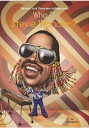
Radiant Child: The story of Young Artist Jean Michel Basquiat by Javaka Steptoe; Who is Stevie Wonder? By Jim Gigliotti; The Legends of Hip Hop by Justin Bua; The Rose That Grew from Concrete,by Nikki Giovanni and Tupak Shakur; Poetry for Young People: African American Poetry, edited by Arnold Rampersad and Marcellus Blount; Who is Stevie Wonder? By Jim Gigliotti and Who HQ’; Misty Copeland: Life in Motion.

December 2020:  an ideal time to get to know more about black culture from the excellent books being published for children.   It’s also an ideal time to give beautiful, real books to children who’ve been doing schoolwork online all day. And let’s please bypass the chains when we buy these books (Amazon will survive the economic crisis) and support independent booksellers like Ashay instead. A triple win!