Posts Tagged diversity

The (Almost) No-Rules Storytelling Project for Middle Graders: “Tell Me a Story”

For those of you starting to compile ideas for the new school year, here’s a storytelling project that promotes creativity, engages interest, and can be readily differentiated.

Early fall is a great time for a storytelling activity for middle graders in your ELA classes, library or author workshop, or homeschool sessions. Learners might be eager to employ creativity after summer break, and seeing evidence of student work through storytelling early on can guide your personalized instruction moving forward. Students’ topics might connect with middle grade titles you plan to introduce. And as these early-in-the-year projects might be a little more loosely structured than formal writing assignments later, it’s a nice way to ease into the workload of a new year.

So for an (almost) no-rules storytelling project, consider saying to your Language Arts, homeschool, or library students, “Just tell me a story…”  Then stand back for the flood of questions! “Real, or made up?” “Does it have to have me in it?” And of course, “How long does it have to be?”  For an open-ended storytelling project like this, almost anything goes—fiction or creative non-fiction; almost any genre; set in current times, recent or long-ago past, or the future. Really, once the most basic of guidelines (appropriateness, length or time involved, etc.) are established, set storytellers free to compose and create.

What’s more, an open-ended storytelling project has great flexibility for differentiation. Some, most, or all of a story might be told visually, told aloud, told through song or drama, told with or through a partner or group… and even if the student utilizes minimal or no written words, you can still assess their story sense with categories that might feed your rubric creation:

  • their ability to perceive and comprehend conflict and characters/key figures;
  • their ability to convey setting and passage of time; and
  • their ability to communicate messages, lessons, and themes to others.

Here are some ideas to get your assignment wheels turning in preparation for an (Almost) No-Rules Storytelling project:

1. Try timed brainstorming by categories for idea generation (books read, places visited, fun family times, cool facts, weird tales), then narrow down to potential story topics.

2. Once a writer has an idea, they can think about all the ways in which the story might be told:

  • Graphic/comics-style story – Show some great graphic novel or memoir examples to get storytellers’ wheels going (When Stars Are Scattered, New Kid, El Deafo).
  • Map story – The writer draws a map that includes all the locations important to their story, then briefly summarizes the story’s events in brief phrases or images associated with those micro-settings.
  • PTD story – Story events are summarized or sketched on a traditional Plot Triangle Diagram (or create a plot diagram that is not so traditional!).
  • Drama performance – Write the story in “sides” like Shakespeare used: Each performer holds a list of their lines, each with a bit of the previous line to serve as the cue. A great exercise in listening, reacting, and communication!
  • Musically – Tell the story set to original music or to a known song reset to the student’s story in lyric form; add movement (dance, statues, interpretive movement, etc.) if the storyteller would like.
  • Art series – Tell the story in a series of sketches, paintings, drawings.
  • Photography – Show examples of photo essays or photojournalism; storytellers use a camera and a series of images they photograph to tell a story. (Or, offer class members a series of abstract, unrelated images taken with your camera and challenge each learner to tell a story based on the images.)
  • Oral storytelling – Storytellers use whatever notes they want to suit their comfort level as they tell the story aloud.
  • Group storytelling – Group members add on lines or plot spontaneously to keep a story going; or, group members can generate a story in pieces while working independently, then compile the events in a way that tells a cohesive story.

3. Encourage students to think outside the box, and to feel free to experiment with form, structure, and style. Combine two or more methods of storytelling or invent an original way to tell the story.

4. Ready some resources for inspiration:

Secrets of Storytelling by MUF’s own contributor Natalie Rompella offers ready-made activity sheets, writer tips, and fun story prompts.

Writing Magic by Gail Carson Levine – Chapter One is online here and includes starters and advice.

Story cubes are fun for everyone and might especially benefit visual learners and English language learners in the idea generation process.

5. Finally, for inspiration, share some MG titles with learners in which characters’ storytelling is part of the plot:

Anything But Typical by Nora Raleigh Baskin – Twelve-year-old Jason is autistic and often struggles with relationships in a neurotypical world. Thanks to a site where Jason posts original stories, he has the chance to make a friend in a fellow writer named Rebecca—if he can just work up the courage to meet her.

Isaiah Dunn Is My Hero by Kelly J. Baptist – To get by in tough times, young Isaiah looks to his late father’s stories about Isaiah’s inspirational superhero self.

Welcome Back, Maple Mehta-Cohen by Kate McGovern – Eleven-year-old Maple loves dictating stories into her recorder—but reading words on the page is difficult due to her dyslexia. When Maple must repeat fifth grade, she uses her storytelling skills to hide the truth from classmates.

Good luck to all educators as you ready your stellar assignments for fall, and thank you for the invaluable work you do for middle graders and all learners.

Author Spotlight: Lakita Wilson + a GIVEAWAY

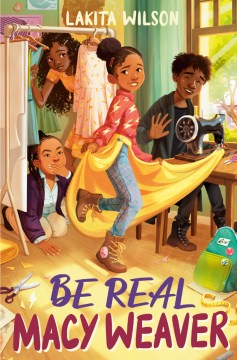
In today’s Author Spotlight, Lakita Wilson chats about her MG debut, Be Real, Macy Weaverout tomorrow, July 12, from Viking—as well as how she juggles her job as a college professor with her writing life. Plus, scroll down for a chance to win a copy of Be Real, Macy Weaver! 

Book Summary

Eleven-year-old Macy Weaver knows relationships are complicated. Fresh off her latest friendship breakup, she’s spent most of her summer break on her own. So, when Macy’s mother decides to go back to college three states away, Macy jumps on the chance to move—anything for a fresh start.

But Macy’s new home isn’t exactly what she expected. Her mother’s never around and her dad’s always working. Lonelier than ever, Macy sets her sights on finding a new best friend. When she meets Brynn, who’s smart and kind and already seems to have her whole life figured out—down to her future as a fashion model—Macy knows she’s it. The only problem is that Brynn already has a BFF and, as everyone knows, you can only have one.

Resorting to old habits, Macy turns one small lie into a whole new life—full of fantastic fashion and haute couture—but it isn’t long before everything really falls apart. Ultimately, Macy must determine how to make things right and be true to herself—rather than chasing after the person she thinks she’s supposed to be.

Interview with Lakita Wilson

MR: Welcome to the Mixed-Up Files, Lakita! Thanks for joining us today.

LW: Thank you, for having me!

MR: First, I have to tell you how much I enjoyed Be Real, Macy Weaver. It’s the kind of book I would have been drawn to as a tween, because—like Macy—I was desperate to have a best friend. I’m guessing the desire for a close friendship was something you craved, too?

LW: Of course. I think, for me, it took so long to find my community because I still struggled to find myself. It’s kind of hard finding people who get you, if you haven’t quite gotten yourself yet.

Would I Lie to You?

MR: Macy, the fashion-forward protagonist, weaves a web of lies to impress Brynn, the object of her BFF affection. At the same time, the lies cause Macy untold guilt, shame, and anxiety (i.e., she gets the “creepy-crawlies” whenever she tells a lie and/or feels anxious). What is it about lying that makes most of us get the “creepy-crawlies”? And what were you trying to say about lying in general?

LW: Macy told pretty big lies throughout the story. Other characters told smaller lies, or let lies linger to cover up things they didn’t want to reveal either. I truly believe that people want to be their most authentic selves, but there’s often an inner voice telling us that our truest self isn’t good enough. So, lying becomes a shield to protect us from the potential rejection of our peers. I think the conflict of needing to live in our truth, yet fearing such vulnerability creates anxiety. Describing the creepy crawly feeling Macy felt on her arms and legs, was my way of showing how this anxiety doesn’t just stay inside of us, but shows up in physical ways.

Significance of Symbolism

MR: Speaking of webs, Macy befriends a spider—Charlotte—with whom she shares her secrets, worries, and fears. I know this is an homage to Charlotte’s Web, but it’s also a symbolic choice. Other bits of symbolism include Macy’s first and last names (i.e., Macy’s = a department store/Macy is into fashion; Weaver = weaver of lies/weaving of fabric). Labels are symbolic, too (clothing labels/labeling oneself and others). I’m guessing these were purposeful choices. Why is symbolism important to you as a writer?

 LW: Okay, here’s the funny thing about Macy’s name. I chose Weaver on purpose. Here is a girl who constantly weaves a web of lies and she’s learning to sew in the book. So, it made sense. However, the first name wasn’t an intentional choice. I love Macy Gray, and I think the name Macy is pretty—so that’s how I chose her first name. The ridiculous thing is, I live in walking distance of a Macy’s department store. You would think I would’ve connected the two a LOT sooner than I did. I still shake my head over this all the time!

MR: In addition to friendship, abandonment is a predominant theme in your book. For instance, Macy’s mom uproots the family so she can attend college in another state—and then promptly checks out of Macy’s life. How does this feeling of abandonment affect Macy in terms of the choices she makes, and the lies she tells?

Attachment Theory

LW: As I was writing Macy’s story, I needed to figure out why she was so needy. Everyone wants a best friend, but there was a certain desperation that Macy had about needing a best friend, right from the beginning. And that level of neediness doesn’t come out of nowhere.

When it comes to parenting, there are four different attachment styles. I teach my college students that parents who are present and responsive to their child’s needs help create a secure-attachment. Children who develop a secure-attachment are more confident, trusting, and able to explore the world and interact with peers, knowing that they have this safe base to always go back to—even if situations get a little tough. But Macy didn’t have that with her Mom.

When a parent is sporadic with their time, attention and affection, this creates an anxious-insecure attachment. These children often know deep down they can’t rely on the parent, so they become clingy—with that parent, and other relationships. These children become needy, angry and distrustful. We see this play out in Macy’s behavior almost from the very beginning of the story. She’s very needy in her friendships, clinging to them like they are her only hope. She quickly becomes angry or anxious when her expectations are dashed. And she never gives anyone the true version of Macy, because she’s not only distrustful of others, she doesn’t trust herself to be loveable or worthy of friendship.

Switching it Up

MR: Turning back to writing, Be Real, Macy Weaver is your first MG novel, but you’ve written a YA novel, too (Last Chance Dance is coming out in spring 2023), as well as nonfiction (What Is Black Lives Matter?) and biographies of such luminaries as Thurgood Marshall, Rosa Parks, and Michelle Obama. Is it tricky to switch it up? Or just fun?

 LW: For me, it’s super fun. I’m interested in a lot of things, and super curious about the world around me. Being able to write in different genres and for different age groups gives me multiple lanes and strategies in which to talk to children about the world around us.

A Writer’s Juggling Act

MR: In addition to being a children’s book author, you are a college professor. How do you juggle your writing career with your day job? What does your writing routine look like? 

LW: I don’t know if I would be able to write as much if I had a typical nine-to-five job. Even though I am full-time faculty at my college, I don’t go into the office Monday-Friday from nine to five. Faculty are fortunate enough to stack our schedules with courses on certain days, freeing other days for things like writing. So, in order to keep up with my teaching responsibilities and write, I usually keep a pretty strict, consistent schedule. I also use a planner that I write down a schedule and a to-do list. I used to get up every day at 5 a.m and write for a few hours while the world slept. Then I would go to work, or run errands. But the pandemic has ruined me. I’m up all night, wandering my house like the resident ghost. So, I’ve switched my writing schedule according to when my kids are in school. When my daughter is home from college, I tend to write overnight because during the day we distract each other with invitations to watch the latest reality show. 🙂

Social Media Star

MR: Lakita, I noticed that you’re killing it on social media, with an impressive 23K followers on Instagram (LakitaReads). What is the secret to your success? Any tips for other writers trying to up their social-media game? Do you have a preferred platform? Also, how much time do you spend on social media?

LW: Yes. I am killing my social media accounts—and not in a good way. Ha! In 2017/2018, I was book blogging and sticking to strict schedules, and posting three times a day, every day. Instagram was my go-to platform. My followers consistently went up, and I formed many cool relationships from the experience. Now I post sporadically, and it’s killing my engagement, and my followers are dropping off by the dozens. Sometimes I feel guilty about wasting a great platform and I just want to donate it to an organization that’s willing to bring it back to life. But, there’s also the hope that one day I’ll revive that page and bring it back to its glory days. Poor @LakitaReads, lol.

Next Project

MR: What are you working on now, Lakita? Can you give us a hint?

LW: Right now, I am finishing up a draft of my second middle-grade novel. I will give you a one-word hint: bald. I’m also working on a non-fiction project centering hip hop and feminism.

Lightning Round!

MR: And finally, no MUF interview is complete without a lightning round, so…

Preferred writing snack? Chipotle. I know this isn’t technically a “snack”, but it’s what I prefer. I need to cut down though. I eat it way too much when the kids are at school.

Coffee or tea? Pepsi.

Cat or dog? Two dogs. One old. One young—to give you the perfect balance.

Favorite designer? Alexander McQueen

Favorite model? Naomi Campbell

Zombie apocalypse: Yea or nay? Nay. I scream when a leaf blows by my window. Do you honestly think I can handle zombies?!

Superpower? I just taught my puppy to push a button when he wants a treat. Is that a superpower, or do I now work on-call for my puppy? Hmm…

Favorite place on earth? My bed. Sleep is the best!

If you were stranded on a desert island with only three things, what would they be? A functional Chipotle restaurant (staffed), one of those inflatable floaties, and Megan Thee Stallion—we’re on a deserted island, so she’ll have plenty of time to teach me to dance! (You know, I almost gave a more acceptable answer here, but in honor of Macy I’m choosing to Be Real, ha!)

MR: Thank you for chatting with us, Lakita—and congratulations on the publication of Be Real, Macy Weaver. I thoroughly enjoyed it, and I know MUF readers will too!

LW: Thank you for having me!

And now…

A GIVEAWAY!

For a chance to win a copy of Be Real, Macy Weavercomment on the blog–and, if you’re on Twitter, on the Mixed-Up Files Twitter account for an extra chance to win! (Giveaway ends 7/13/22 EST.) U.S. only, please. 

About Lakita

Lakita Wilson is a Professor of Education, writer, and advocate for diverse and inclusive children’s literature. A 2017 recipient of SCBWI’s On-the-Verge Emerging Voices Award, Lakita also obtained her MFA in Writing for Children and Young Adults from Vermont College of Fine Arts. Lakita lives in Maryland with her two children and Shih-Tzu. Learn more about Lakita on her website and follow her on Twitter and Instagram: Lakitareads and Lakitawrites.

STEM Tuesday –Community Science – Author/Scientist Interview with Jessica Taylor

Welcome to STEM Tuesday: Author Interview, a repeating feature for the last Tuesday of every month. Go Science-Tech-Engineering-Math!

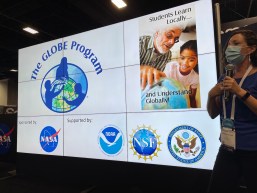
Today we’re interviewing Jessica Taylor, Physical Scientist at NASA Langley Research Center in Hampton, Virginia. She serves as the Principal Investigator for the GLOBE Clouds program, an exciting community science program that lets citizens around the world get involved in observing and researching Earth’s environment. GLOBE is the initials for the “Global Learning and Observations to Benefit the Environment” program. By the way, outside of her NASA responsibilities, Jessica is also the author of an upcoming STEM children’s book, “How Do Satellites Stay In Space?”

* * *

Christine Taylor-Butler. Jessica, thank you so much for agreeing to be interviewed for the STEM Tuesday blog. I had an opportunity to sit in on your presentation about the GLOBE Cloud program and think it would be a fascinating asset for classrooms and libraries. Tell me a bit about yourself. What’s your background?

Jessica Taylor – My background is in Meteorology, Finance and Science Education. I went to Florida State University and got all of my degrees from there.

CTB: How did you get involved in Meteorology?

JT: I grew up outside of Tampa, Florida. Tampa is the lightning capital of the world and I just loved watching thunderstorms and thought they were really cool. A teacher encouraged me to research lightning. What I learned was that scientists are still learning about lightning. I thought it would be fun to have a job where you could learn about something that was of interest to you. That’s basically what science is: learning about things that you don’t fully understand yet. That’s how I decided to pursue Meteorology as a career.

CTB: And now you are working at NASA. Wow! How did that happen?

globeprogramJT: Yes. I wound up at NASA because of the GLOBE program. I was a GLOBE student at Florida State. My professor was the principal investigator for GLOBE cloud. That meant he helped to oversee the science part of the program. I got really engaged in doing science outreach and training teachers. That’s how I decided to pursue science education. I asked questions about how people learn. My professor encouraged me to take classes in education. It was through that journey and my connections with the GLOBE program that helped me get the job at NASA Langley. They were looking for someone who had experience in GLOBE.

CTB: So how long have you been involved in the GLOBE program?

JT: I’ve been with the GLOBE program since 2000 when I was a college student and now I’ve been at NASA for ten years.

CTB: So now NASA has a Citizen Science program. Tell me a bit about the GLOBE Cloud program.

Water cycle

Illustration of water cycle.

JT: GLOBE involves communities from over one hundred countries around the world, collecting and sharing data. That helps scientists better understand the environment. The cloud program is part of that initiative. It helps us analyze and better understand clouds and how they work. Did you know that more than 70 percent of the Earth is covered by clouds? They help our planet control its temperatures. For instance, we know certain clouds block some of the sun’s heat from reaching the Earth’s surface. Other types of clouds are higher in the atmosphere let energy pass through and act like insulation. So we have satellites that collect data on clouds, but we also collect data from citizen observers on the ground. We combine that data and put it online where anyone can access it.

Note for our readers: here’s a link to a short intro and video to help students understand how to get started watching clouds: https://www.globe.gov/web/s-cool/home

CTB: Who is your target audience? Would you say this program is aimed at teachers? Kids? Librarians?

JT: Yes! All of the above! GLOBE is a community of students, teachers, the general public, scientists all working together to understand the environment.

CTB: So even children as young as elementary school can participate in cloud observation or a classroom can work together to upload what they are observing outside for comparison with observations made by scientists? Can they go to the website and get additional information?

Globe app

There’s a GLOBE app too!

JT:  Absolutely. We have online tutorials and lots of different hands-on activities that teachers or educators can do. Librarians, for example, could host a citizen science program for students or adults and engage them at looking at the natural world and recording it. For the clouds program, there are guides to help everyone identify the types of clouds. We even have a GLOBE Observer app that helps you make observations, take photos and even measure the height of trees. Then you can submit the data to NASA. We even help you figure out when satellites are above taking measurements. That way you can submit your observations and we can match them with satellite data taken around the same time. You can find the app here: https://observer.globe.gov/about/get-the-app

cloud science books

NASA has free pamphlets in English and Spanish to help you learn about clouds.

CTB: If you had one hope or goal for what this program can do, what do you want people to get out of it?

cloud template

Photo courtesy of NASA

Cloud template

GLOBE has a guide with a punch-out center to help you make cloud observations.

JT: For people to notice, to recognize the environment and that nature is all around you. Even when you live in an urban environment you are still surrounded by nature, the atmosphere for example. Through regular observations of the environment, I’ve found that people get a much greater appreciation for nature and what is going on in the environment. That’s the whole goal of the program. By getting people to ask questions they become better at knowing and wondering what’s happening.

CTB: If a kid wanted to follow in your footsteps, what kind of courses should they be taking right now?

JT: If you want to go into science or meteorology, don’t shy away from science or math courses. Sometimes they’re hard. Somethings they’re REALLY hard. But that’s okay. You can persist and you’ll be able to do it. I know I struggled myself in some of my math classes later on, but I had a support system of people to turn to. Be open to ask questions of your teachers or peers. That’s important. And take as many classes in math and science as you can. Then learn to ask questions. That’s a skill!

CTB: I often tell students and teachers that life is not about the right answer, but seeing the wrong answer and investigating why and how to fix or improve something.

JT: It’s interesting that asking questions is a skill. Most people don’t know that it gets easier with practice. Participating in the GLOBE program helps you develop skills in observation and asking questions. I work in the Earth Science division. Sometimes people don’t think of Earth as one of the planets NASA is studying. But it’s the most important planet because we live here. NASA has a hugely important role to play in monitoring our home planet, collecting that data, making it publicly available and helping to answer questions about how the Earth is connected and how it is changing. We do it all for the benefit of humanity.

CTB: You’ve also written a children’s book in your free time. So you’re officially a STEM author. What’s the name of the book?

JT: The title is How Do Satellites Stay In Space? It’s being published by Flowerpot Press and comes out in September (2022). In the book, I explain the science behind satellites, what data they collect and how we get them into space.

Satellite Cover

sample satellites

“A friendly, enlightening text for future scientists or anyone curious about space.”Kirkus Reviews


CTB: Jessica, thank you for giving us a peek into your work with the GLOBE Cloud program. And for your marvelous new book for young scientists. Any last words for our school and library audiences?

JT: Just keep being curious and asking questions. And if you want to learn more about how to get involved, you can go to https://www.globe.gov/

CTB: Note to readers. NASA provides a wealth of information to help students, teachers and libraries learn about science and scientists. All available free of charge. NASA scientists are passionate about helping the community. And now you know about them too! Become a GLOBE Observer/Citizen Scientist! Happy exploring!


Jessica Taylor

Courtesy of NASA

Jessica Taylor is a Physical Scientist at NASA Langley Research Center in Hampton, VA. She leads the Science Directorate’s Science Education team. This team engages teachers, students, and the public in authentic NASA science experiences. Jessica serves as the Principal Investigator for GLOBE Clouds and My NASA Data programs. Jessica loves her work because she helps make Earth science exciting and meaningful to everyone. Jessica received Bachelors degrees in Meteorology and Finance, and a Masters degree inScience Education for Florida State University. Prior to joining NASA, Jessica worked at the College of William and Mary’s STEM Education Alliance and served as Director for School Improvement at the Florida Department of Education. A fierce advocate for encouraging girls towards fields in STEM she is affiliated with the PBS SciGirls program. Jessica now lives in Virginia where her family watches and observes the clouds together.


author christine Taylor-butler

Photo by Kecia Stovall

Your host is Christine Taylor-Butler, MIT nerd and author of Bathroom Science, The Oasis, Save the Tigers, and many other nonfiction books for kids. She is also the author of the middle grade sci-fi series The Lost Tribes. Follow @ChristineTB on Twitter and/or @ChristineTaylorButler on Instagram