Posts Tagged contemporary realistic middle-grade fiction

Interview and Giveaway with Pura Belpré Honor Author Alexandra Diaz


Alexandra Diaz is the author of The Only Road, a Pura Belpré Honor book and Américas Award winner, which she also co-translated into Spanish, El único destino. She is also the author of the YA novels, Of All the Stupid Things (re-titled When We Were) which was a ALA Rainbow List book, and Good Girls Don’t Lie. For her day-job, she teaches circus arts to children and adults. She can be found at alexandra-diaz.com, facebook.com/AlexandraDiazAuthor, or on Twitter @alexandratdiaz.

(Photo credit: Owen Benson)

From Indiebound:

Twelve-year-old Jaime makes the treacherous and life-changing journey from his home in Guatemala to live with his older brother in the United States in this gripping and realistic middle grade novel.

Jaime is sitting on his bed drawing when he hears a scream. Instantly, he knows: Miguel, his cousin and best friend, is dead.

Everyone in Jaime’s small town in Guatemala knows someone who has been killed by the Alphas, a powerful gang that’s known for violence and drug trafficking. Anyone who refuses to work for them is hurt or killed–like Miguel. With Miguel gone, Jaime fears that he is next. There’s only one choice: accompanied by his cousin Angela, Jaime must flee his home to live with his older brother in New Mexico.

Inspired by true events, The Only Road is an individual story of a boy who feels that leaving his home and risking everything is his only chance for a better life. It is a story of fear and bravery, love and loss, strangers becoming family, and one boy’s treacherous and life-changing journey.

PURA BELPRE HONOR BOOK
ALA NOTABLE BOOK
“Powerful and timely.” —Booklist (starred review)
“An important, must-have addition to the growing body of literature with immigrant themes.” —School Library Journal (starred review)

Congratulations on the Pura Belpré Honor! Tell us what it was like to find out about it. How did you celebrate?

I was driving a friend to Tuscan and didn’t hear the phone ring. It wasn’t until 11 o’clock that night that I checked my messages. I was very excited and thrilled and couldn’t really believe it. In the morning I double-checked the messages and sure enough it was still there! Once back in Santa Fe, my mom and sister took me out for lunch, and the ladies in my writing group brought cake and ice cream to our following meeting. It was awesome and such an honor!

In your Author’s Note, you tell us that you are the child of Cuban refugees. How does that inform your writing in The Only Road?

I grew up hearing stories of what it was like to leave family and home behind. Though my parents’ experience was different than what my characters went through, the thoughts and feelings remained the same: what was going to happen, would they make it, would they ever come back, and so forth. But mostly it was the sense of not having any other choice.

How did you decide to depict the uglier, more violent aspects of the journey and still make the book appropriate for middle-grade readers?

I wanted a book true to the current immigration status and the experiences of real people. But yes, I also didn’t want to introduce situations that readers weren’t prepared to understand. For example, I mentioned that if the gangs thought Ángela was pretty enough, she would become one of the gang members’ girlfriends and left it at that. The reader could then interpret that to whatever level they felt comfortable.

Why did you choose to have Ángela and Jaime travel together, rather than Jaime going it alone?

By traveling together, they could help each other out, it adds compassion, and it also ups the tension. I love characters and characters’ relationships with each other. As a writer, I think I would have been a bit bored if Jaime were on his own, especially as other characters come and go.

A Spanish version of The Only Road was also published. Can you tell us about the process?

I think I had just finished writing the English version when I was asked if I wanted to translate it. The prospect excited and scared me as my brain shifted continuously from “I’d love to!” and “I can’t do it!” I never learned Spanish in school so my writing abilities are not very strong. But my mom said we had to do it and I’m so glad we did. We worked on the translation together—her focusing more on the grammar and vocabulary and me on the narrative/character voice and structure. I chose the title El único destino because “destino” has a double meaning of “destination” and “destiny”. Hopefully the overall effect worked well!

What kind of research did you do to get the details right?

I read a lot of biographies, autobiographies, and other nonfiction material that discussed the immigrants’ journey. I also interviewed a few people who had either immigrated themselves or worked with immigrants or along the migration trail. I knew I wouldn’t want to experience it for myself, but I did want to remain true to what happens and several resources expressed similar events. Thank goodness for the internet, which allowed me have access to much more than I would have found otherwise, including a map of the cargo train routes through Mexico. I did visit Mexico a couple of times to get a feel for the country and what it looks like and translate that sense into the book.

If there was one single thing that you wanted readers to get from The Only Road, what would it be?

Young people read about slavery and the Holocaust but not so often about what is happening with immigration today. I would like readers to know this is something that is going on in the world today, possibly even happened to classmates or neighbors. And for those readers who have experienced something similar, I wanted to remind them that they are not alone and there’s always hope.

How is writing middle-grade fiction different from writing for young adults?

When I write YA, I tend to write in first person, while middle grade comes out in third. Most of the differences I noticed were around that: first person is more internal and limited to what that one character is experiencing while third person allowed me to move into an occasional omniscient or different characters’ point of view. Also, when writing for young adults, anything goes in terms of language, sex, violence, etc. but middle grade fiction requires a few more filters. That said, I never felt restricted or frustrated in terms of what content to include. If anything, I feel I’m a better and more diverse writer as a result.

What other books do you recommend to readers who enjoyed The Only Road?

The Red Umbrella by Christina Diaz Gonzalez is a great historical novel about Cuban immigration in the 1960s that is truthful and compassionate.


I also enjoyed The Arrival by Shaun Tan, which is a wordless graphic novel that truly captures the feel and emotions of an immigrant or refugee.

What’s your favorite thing about middle-grade fiction (as a reader or a writer)?

I love getting involved in the story and situations of youth. I feel I can connect better with them than I do adults or fiction for adults. I also enjoy that for the most part middle-grade fiction is fast-paced with good action and generally has some funny lines.

What advice do you have for someone who wants to write middle-grade fiction?

It’s important to know your audience, how they behave and interact together. Some of the biggest mistakes I’ve noticed is talking down to your reader, or having the protagonist seem too young or too good. Read a lot of middle grade and write even more. If there are people you trust who can give you constructive criticism, that’s great, keeping in mind that your work can always be better, but not every bit of feedback has to be applied. Remain true to yourself while striving to make your writing better. Above all, keep writing and keep going no matter what setbacks you might find.


Alexandra has kindly offered a copy of The Only Road as a giveaway. Enter below (USA/Canada only, please).

a Rafflecopter giveaway

The Unexpected Life of Oliver Cromwell Pitts: An Interview with Avi

As a big fan of other novels by Avi like Crispin: The Cross of Lead and The True Confessions of Charlotte Doyle, I was thrilled to get to read an advance copy of The Unexpected Life of Oliver Cromwell Pitts and interview Avi. If you’re devoted to middle grade historical fiction, action, and adventure, you’ll definitely want to read this one!

About the Book

In The Unexpected Life of Oliver Cromwell Pitts, a young boy wakes to find his father missing and his house flooded by a recent storm. It’s 1724 in the seaside town of Melcombe Regis, England, and Oliver is alone with no money and no food. His father has left behind a barely legible, waterlogged note stating that he’s gone to London, where Oliver’s sister, Charity, is in some kind of trouble.

Exploring damage to the town in the storm’s aftermath, Oliver discovers a shipwreck on the beach. Removing anything from a wrecked ship is a hanging offense, but Oliver finds money that could save him from being sent to the ghastly children’s poorhouse, and he can’t resist temptation. When his crime is discovered, Oliver flees, following his father’s trail. His journey is full of cruel orphan masters, corrupt magistrates, and conniving thieves—but when he finally reaches his destination, Oliver finds that London might be the most dangerous place of all.

The Interview

All the reviews, which have been glowing and star-studded, compare this story to those of Charles Dickens. Are the wonderful similarities they note intentional? Is your book an homage to Dickens?

Thanks for your kind words about The Unexpected Life of Oliver Cromwell Pitts. I am a reader and admirer of Dickens, but I think this book is cast more in the light of those great 18th century literary lights, Fielding, Defoe, Sterne, Smollett, et al.

My real homage to Dickens is to be found in Traitors’ Gate. It is full of references to Dickens and his life. Indeed, my hero there is named John Huffam, which is taken from Dickens’ extended name.

Oliver is a fantastic character. He’s pugnacious and funny and brave. There’s so much to love about him. Where are the points of intersection between Oliver and a contemporary twelve year old? Where do they diverge?

Young people today, as in the 18th century, lived and still live in a world created, and usually controlled by adults. Not necessarily a bad thing, and often a necessary thing.  That said, the young will often chaff under the restrictions, both physical and psychological of the adult world. Keenly aware of what is fair and unfair, they are the ones who should sit on the Supreme Court.

As I was reading your book, I was struck by the very tricksy way you use language. Here’s a bit from the first page:

On November 12, 1724, I, Oliver Cromwell Pitts, lay asleep in my small room at the top of our three-story house, when, at about six in the morning, I was shocked into full wakefulness by horrible sounds: roaring, wailing, and screeching. Confounded by such forceful clamors, I was too frightened to shift from my bed.

You manage to start with action but also language that feels appropriate for the 1700s. Can you tell us how you chose language that evoked the time period but was still accessible to young readers?

I have a great love of language and words. I enjoy browsing through dictionaries. (Short chapters!) English, the only language (alas) I know, has a huge and wonderfully rich vocabulary that has evolved over centuries. All of it is available to the writer.  (And language invention is welcome.) I love using old, but understandable words in a historical context. Indeed, when writing historical fiction one of the key challenges is giving the language itself a sense of the past. I think of the Unabridged Oxford Dictionary as my writing partner.

One of my favorite things about this book is how funny it is. As I read, I started marking particularly funny lines, and by the end, I had a ton of tagged pages. Here’s one of my favorites:

I am of the belief that when two adults exchange a meaningful look in the presence of a child, there is little doubt that the adults will have nothing pleasing to say to that child.

Oliver is both astute and funny in this passage. And what about the horrible Mr. Probert (who gets what he deserves if you ask me!), who says:

An authority has written: The sooner poor children are put to laborious, painful work, the more patiently they will submit to it forever.

And of course, in this description of Oliver’s father:

A stiff-rumped clink-clank.

I could go on quoting you to yourself for a long time, but instead, can you tell us about the role of humor in this book? Dickens wasn’t very funny. How did you work in the laughs and still end up with a book that feels Dickensian?

Funny is serious work. In this book, what is humorous comes out of Oliver’s character, who is often alone, and keenly observant. But it also derives from the historical style of the 18th century, which can be comical and satirical. Writers of that day looked upon the world with amusement, affection, and skepticism, as did our own Benjamin Franklin.

The poorhouse where Oliver ends up is pretty awful, and Oliver’s escape from it is pretty marvelous. Were there really places like that for children in the 1700s?

The poorhouse is based on research I did, even to the daily food allowance.  I also came upon an image of a punishment basket. The moment I saw it I knew I wanted to use it.

I know there is a ton of research behind this book. Were there any delicious factual tidbits that would have loved to work in to the pages but didn’t have room for?

As for what I left out, there is a whole library about British prisons, Newgate in particular, that could have been included. I somewhat regret that I did not use more of that.

We at the Mixed-Up Files are obsessed with middle grade literature. Why are you drawn to writing for this age group? What do you think characterizes middle grade and makes it distinct from young adult or adult books with young protagonists like those by Dickens?

I love the way middle-graders read. They are passionate readers, who can engage fully with the experiences depicted in a story. They embrace character and plot with enthusiasm. They care about what happens. They can be articulate about what they read, too, but not in a pedantic fashion. “It’s good.” “It’s bad.” “I loved it.” I hated it.”

“It was boring.” “It was exciting.” All cool.

They approach reading with both hands and an open heart.

I once had a letter from a middle-schooler which began, “I read your book, and it was boring at first. But by page two it got really good.”

I loved that.

They also like puns.

For the reader who adores The Unexpected Life of Oliver Cromwell Pitts, which one of your other books should he or she read while waiting for the next installment?

Those who enjoy The Unexpected Life of Oliver Cromwell Pitts might like the above mentioned, Traitors’ Gate, and also, The True Confessions of Charlotte Doyle, Crispin, Beyond the Western Sea, Catch You Later, Traitor—all adventures stories with historical settings, all character driven.

I know more books are in the works. Any hints about what dreadful fate will next befall our noble hero?

As for Oliver’s fate, he has been sentenced to be shipped to the American colonies and sold into slavery for a period of seven years. I am writing the book now, and he is not enjoying the experience.  Freedom calls, but an iron collar round his neck is not easy to get off. And where is his sister?  I’m not one of those writers who always knows the endings.  So, I’m working as fast as I can because I too want to know what happens.

About the Author

Avi is the author of many books for young readers including Catch You Later, Traitor, the Newbery Medal novel Crispin: The Cross of Lead, and the Newbery Honor books The True Confessions of Charlotte Doyle and Nothing But the Truth. He lives in Colorado. For more information, visit www.avi-writer.com.

10 middle grade books made into movies

With winter break coming up, and hopefully some down time in your household, get kids psyched to watch great films and read great books with these middle grade books-made-into-movies combos. 

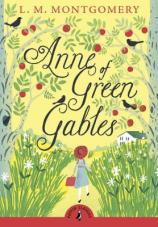
Anne of Green Gables by  L. M. Montgomery
This beloved book, originally published over 100 years ago, features the charming and spirited Anne Shirley, an 11-year-old orphan adopted by a brother and sister who thought they were adopting a son to help them on their farm. Instead, Anne arrives, and the lives of all three are changed (for the better!). Stream it on iTunes


The BFG by Roald Dahl
At first BFG (Big Friendly Giant) doesn’t seem all that friendly to Sophie, not when he snatches her out of her bed one night, but soon the two are fast friends, and working together to stop the other, meaner giants from swollomping young children.
Stream it on Amazon


The Sisterhood of the Traveling Pants By Ann Brashares

This lovely novel about the friendship between four girls and the introduction of a pair of magical jeans into their lives was made into a fantastic flick with now-big-name stars Amber Tamblyn, America Ferrera, Blake Lively and Alexis Bledel. Stream it on Amazon


Sounder by William H. Armstrong
Set in the Depression-era, this American classic about an African-American family dealing with racism and poverty is moving and powerful, and the film, with powerhouse actors including Cicely Tyson, Paul Winfield, will touch your entire family.
Stream it on Amazon


The Chronicles of Narnia: The Lion, the Witch and the Wardrobe by C.S. Lewis
Four siblings + a magical wardrobe = a tale that’s been thrilling readers for almost 70 years.
Stream it on Netflix 


Holes by Louis Sachar
Sachar’s novel, which won the Newbery Medal and the National Book Award, is about a boy named Stanley Yelnats, who’s sent to Camp Green Lake, a detention center. There, he and other boys spend all their time digging holes exactly five feet wide and five feet deep, until Stanley decides to figure out just what they’re digging for… and why.
Stream it on iTunes

Diary of a Wimpy Kid by Jeff Kinney
Poor Greg, stuck in the middle of three brothers, stuck in middle school, and generally stuck. His suffering sure is hilarious for the rest of us, as evidenced by the sound of giggles that emit from kids as they read their way through Kinney’s block-buster series.
Stream it on iTunes


The Princess Bride: S. Morgenstern’s Classic Tale of True Love and High Adventure by William Goldman
Delightful and playful and all sorts of perfection. Definitely not inconceivable! Stream it on Netflix


Percy Jackson and the Olympians: The Lightning Thief by Rick Riordan
A modern quest story, with a twelve-year-old demigod named Percy Jackson at the center. When Percy is sent to Camp Half-Blood, he discovers that he’s half immortal, and that his father is Poseidon, the ruler of the sea.
Stream it on iTunes


Harry Potter and the Sorcerer’s Stone by J.K. Rowling
Maybe you’ve heard of this book? A little something about a boy wizard? Read this blockbuster phenom of a novel together, then watch the films as a family. Stream it on iTunes

Stay tuned for more books into movies: next up is a film adaptation of Sherman Alexie’s amazing YA book, The Absolutely True Diary of a Part-Time Indian. Cannot wait!

Andrea Pyros is the author of My Year of Epic Rock, a middle grade novel about friends, crushes, food allergies, and a rock band named The EpiPens.