Posts Tagged contemporary realistic middle-grade fiction

Author Spotlight: Chris Baron

I’ve been a fan of Chris Baron’s work since 2019, when I fell in love with his debut MG novel in verse, All of Me. My admiration for Chris’s books—and for his gorgeous, critically acclaimed writing—continued with The Magical Imperfect (2021), and most recently with The Gray, published last month by Feiwel and Friends/Macmillan, and hailed by Colby Sharp as “a magical and important book.” Now, it is my greatest pleasure to extend a warm Mixed-Up Files welcome to Chris Baron, shining brightly today in the Author Spotlight!

But first…

A Summary of The Gray

It’s been a tough year for Sasha―he’s been bullied at his middle school and his anxiety, which he calls the Gray, is growing. Sasha’s dad tells him to “toughen up”―and he does, but with unfortunate, hurtful results. His parents and therapist agree that a summer in the country, with his aunt Ruthie, might be the best medicine, but it’s the last place he wants to be. Sasha will be away from his best friend, video games, and stuck in the house that reminds him of his beloved uncle Lou, who died two years earlier.

 Aunt Ruthie is supportive, and there are lots of places to explore, and even some potential new friends. When Sasha is introduced at a local ranch to a horse coincidentally, and incredibly, nicknamed the Gray, he feels he’s found a kindred spirit. But his own Gray is ever-present. When one of his new friends disappears, Sasha discovers that the country is wilder and more mysterious than he imagined. He tries to muster enough courage to help in the search . . . but will the Gray hold him back?

Chris Baron: The Interview

MR: Welcome to the Mixed-Up Files, Chris! It’s such a pleasure to have you here.

CB: Thank you! I feel so honored to be here with you!

MR: Could you please share your inspiration behind The Gray, including your thoughtful and detailed exploration of Sasha’s struggle with anxiety disorder?

The original inspiration for the story is rooted in imagery. That’s always an important part of writing any story. There was a time in my life where my parents abruptly left our busy life in New York City and moved us to a farm in Upstate New York. There were horses, an abandoned farmhouse, bats in the barn above the haylofts, and horses! That’s where I started riding horses—where horses became an important part of my life. Of course, as magical as it all was, there were all kinds of adventures, conflicts, and undiscovered things that I learned about myself and my family.

The other significant setting that really inspired me was my summer at Camp Shalom, a sleepaway camp that just happened to be across the lake from another camp, which had been abandoned. We spent some “unauthorized” times taking rowboats over to that camp. We were sure it was haunted!

As far as the anxiety: Certainly, my personal experience is a factor here in the inspiration—but also that we are in “undiscovered country” when it comes to understanding the kind of anxiety that kids are dealing with from the pandemic, and so many other factors in modern society. I see it in my college students, in my kids, and their friends. Anxiety is on the rise. I think books can help.

I Need A Hero

MR: In your Author’s Note, you state that Sasha, the protagonist of your novel, is an “unlikely hero.” Could you please elaborate?

CB: I don’t think Sasha would ever claim to be a hero. But sometime, somewhere in the adventure of our lives, we “step up” into something bigger than we are and play a part. In the story, Sasha is surprised when he feels a strong sense of purpose coming alive around his friends—discovering what they need, and how he might help. It’s love. Love inspires us to be a hero, even the most unlikely of us. For Sasha, it helps him get out of himself and navigate The Gray.

Dealing with Anxiety

MR: Like Sasha, you struggled with an anxiety disorder as a child. Can you tell us about this experience? How were your struggles similar to Sasha’s? How were they different?

CB: It’s true. I struggled a lot (and still do). When I was a kid, anxiety disorders were not commonly recognized or diagnosed, and mental-health awareness and treatments have evolved so much since then.

Just like Sasha, I shared a great sensitivity to my environment. That’s the core of Sasha’s gift: sensitivity to nature and his environment. That’s the core similarity. When the environment is challenging, overwrought, overwhelming, it can affect my nervous system, and growing up I didn’t always have the tools to handle things. So I often imagined worlds within worlds, sat beneath trees and read books, and played games with close friends to find safety and healing. This is true for Sasha, but he experiences a much more exacerbating and tangible form of anxiety that permeates his whole life: a world he calls The Gray.

Talking Tech

MR: When Sasha leaves Manhattan for Aunt Ruthie’s house in Upstate New York, he’s forced to leave his devices and video games behind, at the suggestion of his therapist, to help ease his anxiety. Video games, phones—and social media in general—are pervasive features of modern life, but how are they particularly harmful for kids with anxiety?

CB: I am definitely not an expert, but one of the things I see is that technology and social media lives at the core of constructing self-image. As a parent, I see it with my own kids and their friends. Here is one article from the American Psychological Association that gets into some of it. For The Gray, I did extensive research including having Sasha “diagnosed” by a therapist. There are so many credible, peer-reviewed articles on this topic that are worth researching. For Sasha, devices and video games help ease his anxiety as part of his routine; but when those things stop working, the therapist suggests “an immediate break.”

I think it’s always good not to demonize things like video games and technology; there are many proven benefits for brain development, social activity, and so on. But in Sasha’s case, and the case for many of us, the things you mention can be so harmful. For Sasha, it was overwhelming for his senses and activated his imagination in unexpected ways. In the book, it’s alluded to that Sasha’s sensitivity to nature, his “gift” as Uncle Lou called it, gets taken over by his use of tech—until the tech squeezes out everything else.

This can happen sometimes: The technology dominates until it squeezes everything out and reforms the lens we look through. Sasha needs to make space for his natural gifts to grow, and shape him as they are meant to. I think that might be a little bit true for all of us.

Navigating Social Media

MR: As a follow-up, are there any concrete steps a parent, teacher, or other trusted adult can take to help kids navigate social media as well as their dependence on their devices/phones?

CB: Ha! Again, I am not an expert in this. I think we are all learning, all the time. My wife, Ella, and I are big believers in openness and honesty with our kids. We watched documentaries about social media and tech dependence. We monitor things while trying to allow freedom and discovery. Every family is different. For us, it was no phones until high school. But that isn’t for everyone. I think one concrete step might be community. Isolation can be one of the most harmful things, so being in a community of care and trust can help so much.

Ch-Ch-Changes…

MR: Change is an important theme in this novel as Sasha grudgingly learns to love his gadget-free life at Aunt Ruthie’s house in the country. He also learns to ride horses and takes lessons in the martial art of Krav Maga. At the same time, Sasha’s dad wants his son to change—to “toughen up,” despite Sasha’s anxiety. What is it about change that, for most of us, is satisfying and terrifying in equal parts?

CB: Yes! I love this question, because it almost answers itself. The world is changing fast, and even good change can be difficult. Change is such a natural part of who we are—and this novel, like my others (and so many middle-grade novels)—is a coming-of-age story at its core. For Sasha (and like many of us), we don’t like change because it’s the unknown.

I suppose this is particularly hard for Sasha, because for him the unknown means that The Gray might find him. But by taking some control, and actively pursuing things like horseback riding, Krav Maga, and of course, new friendships, he learns that he is more capable, brave, and resilient than he thinks he is. This has a hugely positive effect on understanding his anxiety. Change can often define us, but Sasha doesn’t face these changes alone. None of us should have to.

An Unlikely Friendship

MR: Friendship is another central theme in this novel, when Sasha meets Eli, an older boy who is struggling to come to terms with a violent assault perpetrated against his younger brother. Sasha, who has struggles of his own—including bullying, which heightens his anxiety—hires Eli as his bodyguard. In time, the boys forge a strong if unlikely bond. Can you tell us more about the significance of Sasha and Eli’s friendship?

CB:  Eli. One of my favorite characters ever. From the start, Sasha feels a connection with Eli. Eli, somehow, can penetrate The Gray and find Sasha in the midst of it, and because of it, Sasha and Eli form a sort of spiritual bond that draws them together. They need each other. Their unlikely friendship is a turning point for both of them.

(For more on Chris’s thoughts on The Gray, check out his interview in Publisher’s Weekly here.)

Tackling Bullying

MR: While we’re on the subject of themes, the theme of bullying is present in all three of your novels. In All of Me, Ari is bullied for his weight

in The Magical Imperfect, Malia is bullied for having eczema; in The Gray, Sasha is bullied for his anxiety (aka “the Gray”) as well as for his uncommon name. What is it about this theme that impels you to explore it, again and again?

CB: It’s funny you ask this question. Forgive my answer. We were JUST rewatching Captain America: The First Avenger the other night (one of my favorite superheroes), and my daughters always watch my face during the scene where Dr. Erskine asks a then-tiny Steve Rogers if he wants to “kill Nazis.” His response is, “I don’t want to kill anyone. I don’t like bullies.” I tear up every time. My oldest daughter actually asked me recently, “Is this why you write about bullying?”

I don’t like bullies. One way or another, we all face bullying—physical, emotional, or spiritual—and it can have a severe and negative impact on our lives. It did in mine, and I always wish I had looked for help from a trusted adult. I was often told, like Sasha is in the book, to “toughen up.” But often we are too scared, too worried, too shy. Stories always helped me with this. I’m thankful I get to write stories that might help some readers feel seen, know they are not alone, and even get help.

The Significance of Judaism

MR: Changing gears, Jewish culture, traditions—and food!—are celebrated in all of your novels. (In The Gray, Aunt Ruthie’s kugel made my mouth water). As a Jewish writer, why is it important to incorporate Jewishness, and Judaism, in your books? 

CB: The world is full of so many beautiful traditions. Judaism is part of me–and of course all of the incredible food traditions that go with it. I think Sasha’s Jewish heritage is very close to mine. The faith, the culture, and even the more mystical parts were all something I experienced with my family. For all of the Jewish holidays, big and small, I grew up hearing stories that helped me understand my heritage, my faith, my culture, and how I might fit into this giant world we live in. Those stories are relevant today, and I share them with my own children now. It’s fun to see them start to make these same connections as they grow.

MR: Also: Can you tell MUF readers about your upcoming Jewish MG anthology from Abrams, On All Other Nights: A Middle Grade Passover Anthology?

Oh, my goodness–our upcoming Jewish MG anthology is full of incredible stories from writers we love: Adam Gidwiz, Laurel Snyder, Sofiya Pasternack, and so many others. It’s been a labor of love to help edit (and write for) this project along with Josh Levy and Naomi Milliner, and we hope that this will be a wonderful book for all young readers and a fantastic companion for any Passover tradition.

Verse Versus Prose

MR: Your first two middle-grade novels were written in verse. What inspired you to choose prose for The Gray? How was your writing process for this novel different from the others? Any challenges or surprises?

CB: Since poetry feels more like my native language, I wrote much of The Gray in verse during the writing process. Of course, there are so many books that are poetic and lyrical, and I am hoping that’s true in places for The Gray. But eventually, the verse chapters became prosaic. As I explored the story, it was clear that this is a novel meant for prose. The way chapters unfolded, I found the story demanded more detail and exploration of setting, of time, and of action. So, prose… but the spirit of the book is verse.

(From the MUF archives: 5 MG authors–including Chris Baron–share their thoughts about writing novels in verse.)

The Juggler

MR: In addition to writing novels for young people as well as poetry (“Under the Broom Tree” was published in the anthology, Lantern Tree), you are a professor of English at San Diego City College and director of the Writing Center. How do you juggle these very different roles?

CB: It’s never easy to juggle. I love ALL MY JOBS, and this is an absolute gift. I often joke around with my creative writing students that when we write, we MUST be sitting in the bay window overlooking the rushing river while holding a warm tea. The reality is that we do what we can—when we can—making space when we need it and asking for help, and learning to value the creative parts of our lives in equal measure.

Advice for Writers

MR: As a professor of English, what’s your go-to advice? Also, are you a proponent of the common wisdom of “Write what you know”?

 CB: Don’t wait. The perfect moment to start is likely not coming. Just get to it. I try to teach my students that revision is not a bad word; it’s actually the fun part.

As far as “writing what we know…” Of course! Every book I write is layered with aspects of my own life and experience. It’s also important to push past the “simple” and literal truths that we know and into what we hope for, dream about, are terrified of, and desire most, in order to reach into the complexities of story and song that evolve into book-worthy ideas.

Writing Rituals: Map It Out

MR: What does your writing routine look like? Do you have any particular rituals?

CB: So many rituals! They are always changing. All of Me was written in the late hours of the night, The Magical Imperfect in the early morning. The Gray was written whenever time allowed. No matter what, I try to put on the right music. Of all my rituals, the most important thing is that I start with a map of the world, which seems to push my brain into the right focus. I always loved maps in books. I hope one day one of these maps will show up in a book!

Sneak Peek?

 MR: What are you working on now Chris? Mixed-Up Files readers (and I!) are dying to know…

CB: Oh! We already mentioned the Passover anthology….but next up is The Secret Of The Dragon Gems, a middle-grade novel I cowrote with the one and only Rajani LaRocca. We had so much fun writing this book. It comes out THIS AUGUST! Check it out here. https://nerdybookclub.wordpress.com/2023/03/30/cover-reveal-the-secret-of-the-dragon-gems-by-rajani-larocca-chris-baron/

Next year, I also have a novel in verse coming that might just be my favorite one I’ve ever written. Forest Heart. It’s a character-driven story about kids who experience a wildfire in their Northern Californian town, and how they try to save the forest they love.

Lightning Round!

MR: And finally, no MUF interview is complete without a lightning round, so…

Preferred writing snack? Any chip or chip-related snack.

Coffee or tea? COFFEE. Coffee forever.

Favorite horse? My Buckskin, Shawnee.

Zombie apocalypse: Yea or nay? Nay. (Please nay–I hope). But I’m ready, just in case.

Superpower? Flight.

Magic… Real or imagined? Real.

Favorite place on earth? Right here with my family. (Cheesy enough?) Okay, there’s a little spot in the San Diego mountains that I discovered last year…it’s old forest and running rivers. It’s my current favorite place.

If you were stranded on a desert island with only three things, what would they be? A water filtration system, a Star Trek food replicator, and while I’m in Star Trek mode—a transporter array. This way I can unstrand myself but also get back to this awesome Island.

MR: Thank you for chatting with us, Chris. It a pleasure, and I’m sure MUF readers will agree!

CB: I am such a huge fan of The Mixed-Up Files. Thank you for all you do!

Bio

Chris Baron is the award-winning author of novels for young readers including All Of Me, an NCTE Notable Book; The Magical Imperfect, a Sydney Taylor Book Award Notable Book/SLJ Best Book of 2021; The Gray (2023), Forest Heart (2024)—all from Feiwel and Friends/Macmillion—and The Secret of the Dragon Gems, co-authored with Rajani LaRocca, from Little Bee Books (2023). He is also the editor of the forthcoming MG anthology, On All Other Nights: A Middle Grade Passover Anthology(Abrams, 2024). A professor of English at San Diego City College and the director of the Writing Center, Chris grew up in New York City and completed his MFA in Poetry in 1998, at SDSU. He lives in San Diego with his family and is represented by Rena Rossner from the Deborah Harris Literary Agency. Learn more about Chris on his website and follow him on Twitter and Instagram.

Author Spotlight: Sally J. Pla

For those of you who are regular Mixed-Up Files readers, you know that I LOVE to do author interviews. So, you can only imagine how thrilled I was to have the good fortune to chat with one of my favorite authors—and favorite author friendsSally J. Pla!

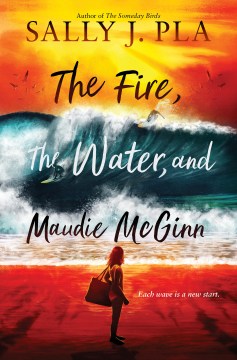
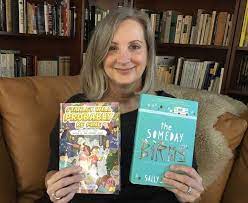
Sally, who wrote the best-selling MG novels The Someday Birds and Stanley Will Probably Be Fine, is also the author of a picture book, Benji, the Bad Day, and Me. Her latest MG novel, The Fire, The Water, and Maudie McGinn, is out tomorrow, July 11, from Quill Tree Books.

A  Summary of Maudie McGinn

Neurodivergent Maudie always looks forward to the summers she spends in California with her dad. But this year, she must keep a troubling secret about her home life—one that her mom warned her never to tell. Maudie wants to confide in her dad about her stepdad’s anger, but she’s scared.

When a wildfire strikes, Maudie and her dad are forced to evacuate to the beach town where he grew up. It’s another turbulent wave of change. But now, every morning, from their camper, Maudie can see surfers bobbing in the water. She desperately wants to learn, but could she ever be brave enough?

As Maudie navigates unfamiliar waters, she makes friends—and her autism no longer feels like the big deal her mom makes it out to be. But her secret is still threatening to sink her. Will Maudie find the strength to reveal the awful truth—and maybe even find some way to stay with Dad—before summer is over?

Interview with Sally J. Pla

MR: Sally! I’m jumping up and down with excitement to welcome you to the Mixed-Up Files. Thanks for stopping by, my friend!

SJP: I’m jumping up and down with excitement to be here! I love Mixed-Up Files! And you!

MR: First, you already know how much I loved The Fire, The Water, and Maudie McGinn. I laughed, I cried, and I rooted for Maudie from beginning to end. What was the inspiration behind this wonderful book?

SJP: Thank you so much for those kind words! In terms of inspiration, I guess you could say that for this book, the setting was the first character. Maudie’s story is set in an RV campground by the beach, in a fictional town in San Diego County. I live in this county, not too far from the beach, and there’s an actual RV campground that I often meander through during beach walks.

Something about the place is so appealing. Lawn chairs pulled up to fire pits, folks chatting, kids whizzing around on skateboards, surfers making their way up and down the cliff steps with their boards. The supply store, the rangers’ office, the snack bar—it’s a whole little world. So, as I walked, I started to weave a narrative in my head about a young girl who lived in a fictionalized beachside campground. What would be her story? And what could have brought her there?

All About Maudie

MR: The protagonist Maudie, who is autodivergent, is a kind, lovable, and highly relatable character. How were you like Maudie as a child? How were you different?

SJP: Maudie has many of my childhood behaviors, quirks, and challenges. She dislikes change. She has shy attacks– i.e., going mute when overwhelmed, just as I did. She loves simple, comfortable clothing. She is incredibly empathetic, caring, and sensitive. Nothing about her is too girly or precious. Maudie is willing to be brave, though, and she wants to delve into life; to join in, to try new things. These are all ways we are similar.

As for differences: Maudie’s mom and dad were struggling teen parents who split, and now she has a difficult stepdad situation. This is not my family history. Although, like Maudie, I did experience emotional and physical abuse in my formative years.

The Future is Female

MR: As a follow-up, Maudie McGinn is your first MG novel to feature a female protagonist. What made you decide to switch it up?

SJP: I have three boys. Between them and all their friends hanging out, I used to joke that the testosterone in my house was giving me facial hair! Because I lived in boy-world for a long time, it naturally filtered into my writing choices. But now they are grown, I am turning to my own personal stories and experiences. It’s time to write for GIRLS.

Autistic girls are diagnosed at a rate four times less than boys. They fly under the radar, because their behaviors can be more subtle. Part of why I write is that I want to shine a spotlight on this.

Poisonous Secrets

MR: An important theme in the novel is secret keeping, when Maudie’s mom makes Maudie promise not to tell anyone about the abuse she’s suffering at the hands of her stepfather, Ron. What were you trying to say about secret keeping—and secrets in general?

SJP: That sometimes, secrets are poison. They corrode your sense of self, your self-esteem. Certain secrets are intricately connected to shame. And you can’t really heal yourself from the damage they do, until you find the power within yourself to show them the sunlight. Speak them aloud. I feel so strongly that we need to learn to air certain secrets, if we ever plan to heal from them.

Maudie’s mother puts Maudie in a dire situation by making her promise to keep her new stepdad’s anger attacks upon Maudie a secret. It compounds the abuse. And Maudie has trouble speaking, in general—so how does she find her way through this dilemma?

Fact: Autistic (or otherwise neurodivergent) and disabled children are three times more likely to experience abuse than their normal-presenting peers. Quite frankly, they are more likely to frustrate a caregiver or parent. And they are less likely to be believed or listened to, after the fact.

 Hang Ten

MR: Maudie wants to learn how to surf, so she takes lessons from former pro surfer Etta Kahana. Unless I’m mistaken, Sally, you’re not a surfer yourself. How did you make the surfing scenes so realistic? What kind of research did you do?

SJP: Many of my family members are surfers. And where I live, a lot of it is just in the air. I also have surfing-enthusiast friends—most notably, my pal Janet Berend, lifelong surfer, author, and teacher. She read the whole manuscript for me to check it for surf-accuracy, and I’m forever indebted to her. (Any mistakes are my own!)

I do not surf, but when I was younger, I used to love to windsurf. I still have my old Mistral board. Nowadays, though, all I do is swim. And I deeply enjoy being surrounded by all that beautiful, watery blue.

Literary Leanings

MR: Maudie McGinn is a wonderful hybrid of prose and verse. What made you choose this particular literary form for your novel?

SJP: Maudie has a glitch: She has some auditory processing delays. Auditory processing (listening-understanding-responding within typical speed parameters) is a challenge for some autistic people. It was for me when I was very young.

So, words come to Maudie, and leave her lips, at a halting pace sometimes. Verse is perfect for this. I found myself writing verse for her without even realizing it. Verse format reflects how she sometimes thinks: in slow, considered, spare, fragments.

Path to Publication

MR: What was the path to publication like with Maudie McGinn? To use a surfing analogy, was it a smooth ride or did you wipe out once in a while?

SJP: Ha ha, great analogy! Publishing IS like surfing: a ridiculous and unpredictable combination of skill, timing, and luck. Lord knows, I’ve messed up that combination often enough in the past, but Maudie was more or less of a smooth ride. I wrote it during Covid, so there were big waves of emotion involved. But the writing flowed.

I’m so grateful to be at Quill Tree Books, an imprint of HarperCollins, that raises up underrepresented voices. Quill Tree’s slogan is: “Many branches, many voices,” and I love that.

No World Too Big

MR: You have a poem in the MG poetry anthology, No World Too Big: Young People Fighting Global Climate Change. Can you tell us about this project? How did you get involved, and why?

SJP: I was super honored to be asked to write the poem for Greta Thunberg, as she is one of my absolute heroes! Talk about an autistic girl with courage and grit! It’s such an inspiring anthology, with gorgeous illustrations by Jeanette Bradley. Editors Lindsay Metcalf and Keila Dawson were a joy to work with! And there is no more important issue affecting our next generation—affecting all of us—than climate crisis.

(For more information on the impacts of our changing climate, check out this STEMTuesday interview with author Christy Mihaly.)

Write This Way…

MR: What does your writing routine look like, Sally? Do you have any particular writing rituals?

SJP: I have insomnia, and sometimes do my best work sitting up in bed in the wee hours. That is a HORRIBLE method, however, and I do not recommend it unless you enjoy feeling dopey and groggy all day. Otherwise, I try to be an early bird. Hot tea. Quiet. A comfy armchair. Oh, and ‘Freedom’ blocking software on my laptop, to keep me from wandering away into every rabbit hole in the cyberwilderness.

A Novel Mind

MR: In addition to being an acclaimed children’s book author, you run anovelmind.com, a site about mental health and neurodiversity in children’s literature. Can you tell MUF readers a bit about it? What was the impetus behind starting this site?

SJP: Thank you for mentioning A Novel Mind! I cofounded it a few years ago with my friend, neurodivergent author/licensed therapist Merriam Saunders.

It grew out of our many, many complaining conversations, bemoaning how hard it was to find stories with quality, authentic autism/ADHD/disability/mental health representation. The stories that didn’t “other” or “pathologize” the neurodivergent kid, or use them for the purpose of what’s called “inspiration porn.” The stories that just showed neurodivergent or otherwise challenged kids going about their lives naturally, and having adventures, etc. Because these stories help show kids their power. They are great touchstones to classroom conversations. They grow empathy. They heal.

We have well over 1,000 such books in our searchable database now. And there are Educator Resource pages on the site with tons of informative links, curated by amazing autistic librarian Adriana White and myself. There are close to 200 guest posts on our weekly blog, now, written by some of today’s foremost award-winning children’s authors, and educators and other professionals. In sum: it’s a great resource, and a labor of love. I hope Mixed-Up Files readers will check it out!

MR: What are you working on now? Enquiring Mixed-Up Files readers want to know.

SJP: A dual point-of-view Romeo+Juliet retelling, set against the background of a simmering family feud, in a small farming town in the upper Midwest, in the early days of the culture wars. Upper middle-grade!

Lightning Round!

MR: And finally, no MUF interview is complete without a lightning round, so…

Preferred writing snack? Roasted almonds.

Coffee or tea? I love the smell of coffee but sadly can’t drink it! I’m “English Breakfast” all the way!

Cat or dog? Big goofy dogs are my total weakness.

Favorite beach? I grew up on Southport Beach, in Connecticut. It’s the setting of so many memories: big nostalgia! But now I live by, and love, Moonlight Beach, Swami’s, Cardiff Beach, Del Mar dog beach, La Jolla Shores–all my favorite San Diego sandy spots.

Zombie apocalypse: Yea or nay? No apocalypses of any kind for me, thank you very much!

Superpower? To not feel sensory overwhelm, fear, or anxiety anymore would be a superpower enough. But if we’re being truly aspirational: SuperWorldPeaceMaker!

Favorite place on earth? The chair in my living room that looks out over a beautiful canyon and soaring hills, and it’s so peaceful, all you hear are birds.

If you were stranded on a desert island with only three things, what would they be? A deluxe resort! Great friends! Good weather! Ha ha.

MR: Thank you for chatting with us, Sally—and congratulations on the publication of The Fire, The Water, and Maudie McGinn. I thoroughly enjoyed it, and I know MUF readers will too!

SJP: Thank you so much, Melissa! This is my most personal and heart-felt book yet, and I hope everyone who reads it, falls in love with Maudie a little bit. Then I’ll feel as if I’ve done my job.

Bio

Sally J. Pla is the award-winning author of acclaimed middle-grade novels THE SOMEDAY BIRDS and STANLEY WILL PROBABLY BE FINE, and the picture book, BENJI, THE BAD DAY, AND ME. Her books are Junior Library Guild Selections with starred reviews that have appeared on many awards lists and “best books” roundups. Her latest middle-grade novel, THE FIRE, THE WATER, AND MAUDIE McGINN, pubs on July 11, 2023 (Quill Tree/HarperCollins).

Sally has appeared on television and radio as an author and autism advocate, and she runs the website resource A Novel Mind (anovelmind.com). Learn more about Sally on her website and  follow her on Twitter and Instagram.

Judy Blume: The Author, the Legend… The MOVIE!

Judy Blume, author

Are You There God? It’s Me, Margaret was the first book I bought with my own money. Later, Judy signed it for me at a meet-and-greet at Eeyore’s, the iconic and sadly, now defunct children’s bookstore on the Upper West Side of Manhattan.

“To Melissa,” she inscribed. “Love, Judy Blume.” Yes, Judy had written “Love” in my book. This was more valuable than my collection of Bonne Bell Lip Smackers and Wacky Packages combined.

Margaret: The OG

I read Margaret obsessively, for months. Soon, my once-pristine paperback felt apart (above, left) and I retired it to my bookshelf, only to be brought out for special occasions, like birthdays, or to impress my friends. I purchased a new Margaret (this time, my mom paid for it), and when that copy fell apart, I bought another. And another. And then another…

I Must… I Must… I Must Increase My…

As a voracious reader with an underdeveloped body and an overactive imagination, Are You There God? It’s Me, Margaret—which was published in 1970, when books weren’t banned for using words like “menstruation,” “masturbation,” and “wet dreams”—had an enormous impact on me. I could relate to Margaret’s yearning for breasts, and for her period, and for her desire to impress the girls in Nancy Wheeler’s secret club, the Four PTS’s. And who could begrudge Margaret’s crush on Philip Leroy? Sure, Jay Hassler was nicer, and he had clean fingernails, but Philip Leroy was hot.

Margaret Simon, Movie Star

With that in mind, you can imagine my reluctance to see the movie version of Margaret. I knew it couldn’t possibly be as good as the book, but I was too curious not to go. Plus, my 23-year-old daughter, an avid Margaret fan too, gamely agreed to go with me. So, off we went.

I was grateful to see how closely the movie hewed to the book, especially its 1970s setting, updated and enhanced by a more inclusive and diverse cast. Abby Ryder Fortson, the 15-year-old star, brings Margaret to life, with a perfect combination of moxie and self-reflection, and Kathy Bates, whose incomparable comic timing makes Margaret’s grandma, Sylvia Simon, sparkle like a Swarovski crystal, gives a standout performance as well. Other notables include Elle Graham as alpha girl Nancy Wheeler; Isol Young, as the misunderstood Laura Danker; and Amari Alexis Price as Margaret’s effervescent pal, Janie.

But the best part of the movie…?

The cameo of Judy Blume walking her dog, along with real-life husband, George Cooper. I could have watched that all day. 😀 (For more on Melissa’s admiration for Judy Blume, check Are You There Judy? It’s Me Melissa.)

Kidlit Authors ❤️ Judy Blume

I asked MUF contributors and other children’s authors—including bestselling author and illustrator Debbie Ridpath Ohi, who illustrated the fabulous Simon & Schuster Judy Blume book-cover reissues (see above, and below)—to share their admiration for the Queen of Kidlit.  Here’s what they had to say…

Debbie Ridpath Ohi

“While I was growing up, reading Are You There God? It’s Me, Margaret helped me realize that I wasn’t the only one thinking these crazy thoughts, and that everything was going to be okay.”

Debbie Ridpath Ohi, illustrator of the Simon & Schuster Judy Blume book-cover reissues and award-winning author and illustrator. Learn more about Debbie on her website and follow her on Twitter and Instagram.

(For more on Debbie’s experience illustrating the Judy Blume cover reissues, click here.)

Beth McMullen

“I saw the movie with a group of friends, and we agreed it felt like a surreal trippy visit to the 1970s that felt faithful to the book. I had completely forgotten about the religious exploration part of the book, which reminded me how much that resonated with my young self. I grew up in a very small, very Christian town and I was a weirdo transplant from New York City who was raised in a non-religious household.

Looking back now, I release how strange it was to identify as ‘not’ something, rather than as something, and how often I was called upon to defend my lack of religious affiliation in this community. Most middle-grade authors I’ve met have, at some point, felt like they were on the outside looking in, and this was certainly my experience around religion when I was young.”

–Beth McMullen, MUF member and author of the Mrs. Smith’s Spy School for Girls series,  Lola Benko: Treasure Hunter series, Secret of the Storm series, and others. Find Beth on LinkTree and check out the Writers with Wrinkles podcast, which she co-hosts with MUF member Lisa Schmid.

Tonya Duncan Ellis

“Judy Blume was like that Big Sis who knew everyone’s secrets. I’ve read all of her books for tweens and teens, and they definitely influenced me as I wrote The Snitch and other books in my Sophie Washington series. Beloved characters like Fudge, Margaret, and Sheila the Great stay with me as an adult and played a huge role in making me a reader and book lover!”

Tonya Duncan Ellis, author of the Sophie Washington series. Learn more about Tonya on her website and follow her on Twitter and Instagram.

Chris Baron

“Like most kidlit writers, when I hear the name Judy Blume–I smile. I also think of Blubber, and the sharp white curves of the lettering on the cover. I watched that book spin on the fifth-grade book carousel while Mrs. Goldberg taught us math problems. I wanted to read it but was told the subject matter was a little ‘too much’ for me. But one day, I tucked it beneath The Lion The Witch and the Wardrobe. I Immediately identified with Linda [aka ‘Blubber,’ the character bullied for her weight] for her demeanor and size, and the truthful and brave way Blume wrote this story. I felt like it had been written for me.

Whenever I read any of Judy Blume’s books, I still feel connected to Blubber. In my deepest writerly dreams, I hope that I can write books like this–with honest, memorable characters whose focused and relational stories are as intimate as a Sunday afternoon with friends, and as universal as the questions they make us ask about ourselves.”

Chris Baron, author of All of Me, The Magical Imperfect, and The Gray (out 6/13). Visit Chris on his website and follow him on Twitter and Instagram.

Heather Murphy Capps

“I can’t understate the influence Judy Blume had on my life as a young person. My BFF in grades 3-7 was Michelle, and we read Are You There God? It’s Me Margaret together– multiple times. Feeling deeply connected with Margaret’s narrative, we helped each other figure out how to use maxi pads, monitored our (seemingly slow-motion) progression toward puberty, and cheered each other on as we checked off those all-important development milestones. (“We must, we must, we must increase our bust!”) I think Margaret contributed to the foundation of that friendship, which was a fundamentally important part of my life during those years. (Sadly, we lost touch.)

As a writer, Judy Blume’s work serves as mentor text—a running tutorial every time I craft or edit character arc and emotional resonance. Blume’s work is timeless, and her influence on the MG space is one I will always appreciate, honor, and hope to emulate.”

Heather Murphy Capps, MUF member and debut author of Indigo and Ida. Learn more about Heather on her website and follow her on Twitter and Instagram.

Sally J. Pla

“I just finished watching the Judy Blume documentary (I loved it, of course). What moved me most was when Judy got choked up and cried, remembering one word in one book: The F word. It appears once, at a critical moment, in Here’s to You, Rachel Robinson. Her editor told her it would cause banning, but he supported whatever decision she made about leaving it in or taking it out. Judy resolved not to take it out. Because censoring herself wouldn’t be true to the story, true to the character, true to her readers or herself. And in recalling this decision, she broke down in tears. Those tears moved me so much. Such a small thing: one word. Such a big, important thing: artistic integrity. This loyalty to her vision, and to her readers’ real lives, will always stay with me.”
–Sally J. Pla, author of The Someday Birds; Stanley Will (Probably) Be Fine, and the forthcoming The Fire, the Water, and Maudie McGee; creator/editor of A Novel Mind. Find  Sally on Linktree.

Mae Respicio

“Judy Blume’s books took me through girlhood with glimpses of love, friendship, and periods… Are You There God? It’s Me, Margaret was such a heart book for me that I was specifically asked by my beloved elementary-school librarian, Mr. Reilly, to take a break from checking it out so that other kids could have a chance to read it. And as a middle-grade author who writes about everyday kids in their everyday worlds, her books were one of my very first inspirations.”
Mae Respicio, author of How to Win a Slime War, Any Day with You, and The House That Lou Built. Learn more about Mae on her website, and follow her on Twitter and Instagram.

Carol Weston

“So many girls identify with Margaret. Me, I identified with Judy. My first book was Girltalk: All the Stuff Your Sister Never Told You, and Newsweek once called me a “Teen Dear Abby.” But I didn’t want to be Dear Abby, I wanted to be Judy Blume. I wanted to write fiction. I was over 40 when I finally made the leap.Did it help that I heard Judy speak at Marymount College? I think so. Her beloved father, like mine, had died too young, and she choked up talking about her grief. Getting rejections was hard too, but she persevered. She was so real and so radiant. So generous. I was starstruck. Still am.

I love the new movie, of course, and also the new documentary. Judy said she went to a therapist because it was such a responsibility to recieve so much mail from girls. I’ve been an advice columnist at Girls’ Life since 1994 and have sometimes felt buried in letters. I appreciated Judy’s therapist’s advice: “You can’t save everyone.” True. But I love that Judy hasn’t given up on trying. I’m a fan. Forever!”
–Carol Weston, author of Speed of Life, Girltalk, the Ava and Pip series, and more. Learn more about Carol on her website and follow her on Twitter and Instagram.

Mindy Alyse Weiss

“I remember how much I LOVED Are You There God? It’s Me, Margaret, and how relatable yet shocking it was, in the best possible way. Judy really changed kidlit! The novel that made the biggest impact on me as a kid was Tales of a Fourth Grade Nothing. Later, while getting my degree in elementary education, I saw the magic of reading it aloud—and of course I read it to my daughters. My oldest was in kindergarten, the youngest in preschool, and they sat, mesmerized, begging me to read another chapter or two before stopping for the night.”

–Mindy Alyse Weiss, Mixed-Up Files contributor, MG author, and host of #PBParty and co-host of #PBFest. Learn more about Mindy on her website and follow her on Twitter and Instagram.

Faran Fagen

“I enjoyed reading Judy Blume’s book growing up, because I felt like she spoke to me. I actually met her in Key West, at her bookstore. She was so nice, and took a whole bunch of pictures with me and then signed her new book, which I bought for my wife. As far as the documentary, I couldn’t stop watching it, and I plan to watch it again. The most striking takeaway was that no matter how famous she got, or how much her life changed, Judy always took the time to connect with children—her readers—and put them first.”

Faran Fagen, Mixed-Up Files contributor, teacher, journalist and MG author. Find Faran on Facebook and Twitter.

Kellye Crocker

“Judy Blume has had a tremendous impact on me, both as a lifelong reader and writer. She told the truth to young people. That’s powerful and an incredible gift. Many of novels I read as a kid painted a false, saccharine picture of what life was supposed to look like, so I distinctly remember the shock I felt at reading Are You There God? It’s Me, Margaret. Here were girls like me, worrying about periods, boys, fitting in, and existential questions like: ‘Does God exist?’ and ‘Will I ever need a bra?’ (My mom refused to take me shopping for one until a boy in my fifth-grade class drew a picture of me with two dots on my chest. Deeply mortifying! But I’m…fine… Really! Um…I mean, mostly.)

Judy Blume’s books are funny and entertaining, and I devoured them all. But they were so much more. Validating. Informative. It was as if Judy showed us a secret world that other adults pretended didn’t exist—like what happens to boys during puberty. (No one told me!) I still remember someone’s well-loved copy of Forever being passed around the middle-school bus—with certain passages marked, of course. (They didn’t tell me about that, either!)

Judy was one of the first authors to write truly realistic fiction for and about young people, and she paved the way for other authors, and for me. She’s also fought tirelessly against censorship and the folks who believe they have the right to decide what other people’s kids should read. Judy Blume is a national treasure!”

–Kellye Crocker, debut author of My Dad’s Girlfriend and Other Anxieties. Learn more about Kellye on her website and follow her on Twitter and Instagram.

Wendy McLeod Macknight

“I was in grade six—small for my age and two years away from getting my period—when I heard rumblings about a BOOK. And not just any book, a book written by a female author who KNEW what it meant to be twelve years old and feeling less than. Are You There God, It’s Me, Margaret was being passed from girl to girl like a sacred text, but I couldn’t wait: I used my savings to buy my own copy and devoured it in one sitting. Then promptly reread it. It was the first book I’d ever read that addressed the inner lives of young girls. Judy Blume got us. She KNEW. She UNDERSTOOD. We were no longer alone.

She became my patron saint, her work a beacon of safety and understanding as I navigated the choppy seas of middle school. I’m not sure Judy Blume made me want to be a writer, but I do know this: Judy Blume made me believe things would be okay. And honestly? That was everything.”

Wendy McLeod MacKnight, author of The Frame-Up, The Copycat, and It’s a Mystery, Pig Face! Follow Wendy on Twitter, Facebook, and Instagram.

Rosanne Parry

“I saw a preview of the movie a few weeks ago, and I was really touched by it. I was happily surprised to see that they kept the early Seventies setting. Even nicer to see all the glory and agony of girl friendships played out so beautifully, without cellphones, cyber bullying, or the continuous drumbeat of gun menace that children face today.”

Rosanne Parry, Mixed-Up Files contributor and New York Times bestselling author of A Wolf Called Wander, A Whale of the Wild, and the upcoming A Horse Named Sky. Learn more about Rosanne via her website and follow her on Twitter and Instagram.