Posts Tagged children’s books

Filling the Gaps in Middle Grade

Middle Grade Authors

The middle grade market has been a bit discouraging lately. Perhaps you read about The Middle Grade Slump in a recent Mixed-Up Files post. Well, we’re back to let you know about two gaps in the middle grade market that present an opportunity for authors.

According to agent Kelly Dyksterhouse of the Tobias Agency, “Right now there is a need for middle grade novels that bridge the gaps between age categories.” Dysterhouse identifies two areas where books are needed to help kids transition from one category to the next. 

Early Middle Grade

According to Dyksterhouse, there is a need for “younger middle grade novels for readers who are ready to move on from chapter books but who might find the 40k+ word count that has become so common in middle grade intimidating.” 

Does this sound familiar? It’s reminiscent of an opinion piece that appeared in Publisher’s Weekly about a year ago. Melissa Taylor, founder of the Imagination Soup blog, wrote an article titled “It’s Not Me, It’s You: The Argument for Shorter Middle Grade Books.” 

According to Taylor, “When looking at a book with a lot of pages, children might be intimidated, they might prefer quicker stories, they might be struggling readers, and/or they might have attention issues, among other factors.”

Early middle grade literature might be just what these reluctant readers need. Tara Lazar recently featured PJ Gardner’s post Early Middle Grade Needs You, Says PJ Gardner on her blog. Gardner says that “Early Middle Grade is where we start to lose young readers, and I think that’s directly tied to the limited number of books aimed at them.”

Cover of early MG book

Gardner encourages authors to think creatively about how they can target this early middle grade audience. She says these books should include straightforward stories told in 5,000-10,000 words. For Gardner, there are just two major keys – “create believable characters and craft dynamic plots.” 

Think of popular series like Judy Moody, Dog Man, and Geronimo Stilton. These shorter, more concrete books can form a bridge between chapter books and traditional middle grade novels.

Upper Middle Grade

So, what’s the second gap in today’s middle grade market? Dyksterhouse says we need “upper middle grade novels for readers who are ready to engage with deeper themes, tougher subject matters and more complex stories but are not yet ready for the intensity of YA that has increasingly focused on characters aged 17-18+ and experiences they encounter.”

This may sound familiar. School Library Journal’s Teen Literary Toolbox recently highlighted the same need in a guest post by author and middle school language arts teacher Laurie Morrison. Morrison’s piece is titled “Why We Need More ‘Developmentally Relevant’ Upper MG Romance.” 

Let’s pause for a moment and break down the term “developmentally relevant.” Morrison says she discovered this term when library media specialist Steve Tetreault posted it on social media. She immediately embraced it as an alternative to the term “age appropriate,” which can invoke a connotation of judgment. 

For Morrison, the words “age appropriate” do not “honor the fact that two kids who are the same age will have completely different life experiences, perspectives, and comfort levels with different kinds of content, and it raises the question of who, exactly, gets to decide what’s appropriate.” So, what kinds of “developmentally relevant” books are we talking about? 

Upper middle grade books target readers ages 10-14 whose interests have grown beyond the literature written for 8-to-12-year-olds but who aren’t quite ready for the culture and content of YA. Morrison says that kids in this range are hungry for books that are relevant to them.

Leslie Zampetti, literary agent and owner of Open Book Literary agrees. She reflects on her years as a librarian, when she met younger readers who sought genres similar to what their older siblings were reading. However, they wanted stories that were relevant to their experiences and situations. 

“Conventional wisdom is that young readers prefer to ‘read up,’ focusing on older characters,” Zampetti acknowledges. “But my experience was that it’s more nuanced: often, confident and mature readers want to read up, and publishing tends to focus on those readers. Less confident or sophisticated readers want to read books with characters their own age, facing events and emotions new to them and similar to what they’re experiencing.”

Keeping Pace book cover

Morrison echoes Zampetti. In her classroom, Morrison encounters a number of kids in the 11-14 age range who are eager to read romance novels. While most are not ready for YA literature, they crave romance tropes that are relevant to (and dare I say appropriate for?) their age and experience.

Morrison lists books like Nashae Jones’s Courtesy of Cupid, and Wendy Wan-Long Shang’s Bubble Trouble, as well as her own Keeping Pace, as examples of books that fit this much-needed niche.

Authors may be wondering if the publishing industry is as hungry for these upper-middle grade books as the young readers seem to be. According to Zampetti, yes. She affirms that “editors and agents are definitely looking for ‘developmentally relevant’ books, whether classified as upper middle grade or ‘middle school’ or young YA.”

Good News for Authors

If you’re a middle grade author who’s feeling a bit discouraged these days, take heart. You may want to start brainstorming some ideas for straightforward stories that would fit into the early middle grade category. Or perhaps you want to ponder ways some popular tropes can become relevant to upper middle grade readers.

The good news is that opportunity exists. There are gaps to be filled at both ends of the middle grade spectrum. By addressing the need for books that bridge the transitions into and out of middle grade, we just might be able to engage young readers and reverse the slump.

STEM Tuesday — Oceans — Book List


Oceans are a world of wonder for many. From the animals that live in them to the ecosystems they provide, they fuel the imagination and encourage the adventurous. Students who want to know more about marine biology, research, and conservation are invited to take a look at the list below. They won’t be disappointed!


The Fascinating Ocean Book for Kids: 500 Incredible Facts!

by Bethanie Hestermann and Josh Hestermann

This book is packed with facts about the ocean and the life within it. Filled with pages of full-color pictures, it depicts what the underwater world is like for fish, dolphins and loads of other sea creatures. If you know someone interested in an ocean of cool trivia, this is the book for them.


Ocean Animals and Their Ecosystems: A Nature Reference Book for Kids

by Dr. Erica Colón

The oceans of Earth are swimming with fabulous marine animals. This book introduces you to them and their habitats. From coral reefs to polar regions readers will explore each ecosystem and discover who lives there. Filled with stunning photos and interesting information, this is a great way to explore the ocean with kids.


Marine Science for Kids: Exploring and Protecting Our Watery World, Includes Cool Careers and 21 Activities (66) (For Kids series)


Marine Science for Kids: Exploring and Protecting Our Watery World

by Bethanie Hestermann and Josh Hestermann

A fun guide to the underwater world – to the living things, and to the geology, chemistry and biology of all things marine. Includes insights from marine scientists and lots of hands-on activities.


Deep, Deep Down: The Secret Underwater Poetry of the Mariana Trench


Deep, Deep Down: The Secret Underwater Poetry of the Mariana Trench

by Lydia Lukidis and Juan Calle Velez

Lyrical text and stunning illustrations take readers on a journey deep down into the Mariana Trench. Also includes in-depth scientific information on the vibrant life in the deep oceans.


Superpod

SUPERPOD: Saving the Endangered Orcas of the Pacific Northwest

by Nora Nickum

An depth, immersive book about the playful Southern Resident orcas. The book also speaks about the people working to save them from extinction, and all the different ways they’re trying to do that, from medicine, to technology and activism.


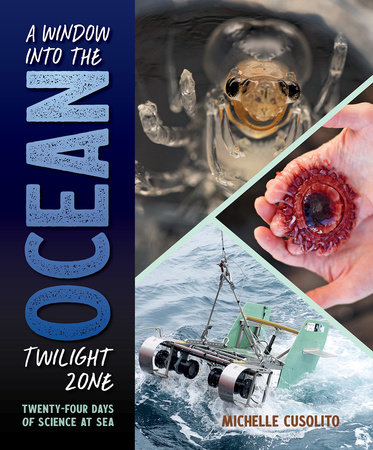
A Window into the Ocean Twilight Zone by Michelle Cusolito


A Window into the Ocean Twilight: Twenty-Four Days of Science at Sea

by Michelle Cusolito

The author goes on a breathtaking real-life adventure with scientists from Woods Hole Oceanographic Institution to study the twilight zone of the ocean using new technologies. Learn details of day-to-day living on a research ship, and all about the animals and the sea.


The Lost Forest: An Unexpected Discovery beneath the Waves


The Lost Forest: An Unexpected Discovery Beneath the Waves

by Jennifer Swanson

An entire cypress forest was found hiding under the ocean in the Gulf of Mexico. This book speaks about the discovery, about how the forest came to be there, and about the scientists trying to uncover the secrets the forest may tell us – from life-saving medicines to climate change.


Life in Hot Water: Wildlife at the Bottom of the Ocean See more


Life in Hot Water: Wildlife at the Bottom of the Ocean

by Mary Batten and Thomas Gonzalez

All about the creatures that live at the bottom of the ocean in permanent darkness and have evolved to thrive in scalding water that gushes from hydrothermal vents.


Marine Biology: Cool Women Who Dive

by Karen Bush Gibson and Lena Chandhok

Marine biology is the study of animal life in saltwater environments. The study includes the tiniest microscopic plankton to the large blue whale! This book takes a look at three women who have this career for a living:  Natalie Arnoldi, Ashanti Johnson, and Lauren Mullineaux. With engaging information and links to primary sources, this book will get readers excited to explore and study the world’s oceans. Dive in and learn more about the ocean!


Eugenie Clark Book for Curious Kids: Diving into the Fascinating Life of the Shark Lady (Great Minds for Curious Kids)

by Eric Lylani

Eugenie Clark is known as the ‘shark lady’; there’s no one better to help readers discover the secrets of the sea! Learn about marine biology, ocean conservation and sharks through the stories of Eugenie’s life and work. Discover her observations and find out how her legacy continues to inspire new marine biologists.


Seashells & Beachcombing for Kids: An Introduction to Beach Life of the Atlantic, Gulf, and Pacific Coasts (Simple Introductions to Science)

by Stephanie Panlasigui and Erika Zambello

Kids young and old are fascinated by the beach and the seashells they find. This book is all they’ll need to learn a bit more about the oceans and their inhabitants. From different beach habitats to beach etiquette, this book is full of great information for aspiring beachcombers as well as fun family activities.


The Forest in the Sea: Seaweed Solutions to Planetary Problems (Books for a Better Earth)

by Anita Sanchez (Author)

Seaweed a climate change hero? You bet, and this book will explain all about it. From a tour of a seaweed forest to activities and recipes, readers will discover how amazing seaweed is. Seaweed can reduce methane emissions, play a role in biofuels as well as medicine, in addition to its role providing a home for marine life. Be prepared to be amazed at what seaweed can do with this fun and inspiring book.


Shruthi Rao is an author. Her home on the web is https://shruthi-rao.com


Susan Summers is a wildlife enthusiast and an author. Contact her at: https://susan-inez-summers.weebly.com/


Revitalizing the Culture of Reading

Picture a 12-year-old. It’s 8 p.m. on a school night. Homework is finished, responsibilities have been fulfilled, and it’s wind-down time. What will they choose to do with this time? According to current surveys and sales records, it’s unlikely that this young person will be picking up a book to read.

Boy reading a book

“Is There a Reading Recession?”  This is the title of a recent article shared on the Scholastic Blog. It echoes the concerns expressed in a previous Mixed-Up Files post about “The Middle Grade Slump.” A documented decrease in middle grade book sales is a symptom. The real issue is the sharp decline in the amount of reading that kids up to the age of 18 engage in for pleasure.


Maybe reading for pleasure is a thing of the past. It’s a hobby. There are other hobbies. Reading is just a skill-set learned in school, right? Wrong. The benefits of reading for pleasure are broad and well-documented. Reading for pleasure builds empathy, social adjustment, and self-esteem. Research has shown that reading for pleasure boosts academic achievement and is associated with overall success in life.


However, according to a National Literacy Trust survey, children’s engagement and enjoyment in reading are the lowest they’ve been in two decades. What can be done to reverse this trend? We need to revitalize the culture of reading, and it’s up to adults to lead the way. 


Parents

Parent reading to baby

Parents are the most important stakeholders in creating a culture of reading. From the earliest ages, before children have even developed language, books should be shared. Sharing a book between parent and child enriches children in multiple ways. It builds vocabulary, introduces children to concepts of print, and creates a positive emotional climate around reading. As children age, even if they can’t remember these shared experiences, they are stronger readers who maintain the positive feelings developed in that early emotional context. 


Even when children begin to read independently, it’s important to continue to read TO the big kids. When adults read aloud, they model prosody, which is the rhythm and intonation we use to be expressive with language. They model respect for the act of reading and appreciation for books. Children’s vocabulary and comprehension skills are built through listening, and the positive emotional climate around the act of reading is nurtured and sustained.


Visiting libraries and bookstores sends an unspoken message that books have value and that reading is part of your family culture. Parents are the most crucial influences in creating a culture of reading, and by reading to, reading with, and reading alongside children, parents demonstrate a dedication to and appreciation for reading.


Teachers and Schools

Teacher reading to class

As a veteran teacher, I can personally attest to the importance of classroom libraries, shared read-alouds, and a dedicated time for daily individual reading. However, increased demands on instructional time creates overburdened schedules, and current concerns over book challenges have created a culture of fear in many schools.


Most educators understand that teaching reading skills must go hand-in-hand with fostering reading engagement. Literacy-rich environments are necessary in order for students to develop as readers. But teachers can’t do this alone. Parents and administrators must support immersive literary atmospheres in classrooms. 


Classroom libraries should be well-stocked with a diverse selection of genres and reading levels so that students can identify their own preferences as readers. Virtual and in-person author visits generate great hype around books and should be scheduled throughout the year. Grants, partnerships with independent bookstores, and relationships with businesses and community organizations can help fund author events. 


Finally, teachers who develop a positive climate around books are those who model a love of reading. They read aloud to students daily and build connection and community through literature. They talk about reading, discuss books they love, and provide recommendations based on students’ individual interests and preferences.


Librarians and Booksellers

shelves with books, red seats, people reading

Let’s create some hype around books! The July 8, 2024 issue of Publisher’s Weekly showcased the activities of some forward-thinking booksellers who have been successful at revitalizing reading among young patrons. Subscription boxes, themed dinners, and author visits have all proven effective in engaging young readers in the pleasure of reading.


Big box stores are now selling kids’ books, and the accessibility of literature at the same place where families might be shopping for clothing, school supplies, hardware, or groceries deserves attention. These stores should be encouraged to provide a wide variety of books for every age and type of reader. 


Libraries can (and usually do) engage in programming designed to inspire a love of reading. Book clubs, community reads, and thematic events can draw young readers in and help them connect with literature. Reading aloud to the youngest readers while also providing a safe space for teen readers is a true balancing act. As showcased at the recent ALA conference, librarians are heroes, whether or not they wear capes.


It’s Time for Action

Let’s return to that 12-year-old. Maybe it’s laughable to assume that there’s any downtime. Between extracurricular activities, often-excessive amounts of homework, and the lure of ever-present electronics, even if there is downtime, why would a kid choose to read? Our culture has changed…but it’s not the kids who changed it.


The benefits of reading for pleasure are well-documented, and the trend away from reading for pleasure is not shifting toward the positive. It’s time to reverse the trend. A cultural revitalization that includes an appreciation for books and a habit of reading for pleasure is needed, and it’s up to the adults to make it happen.