
Posts Tagged Author Interview

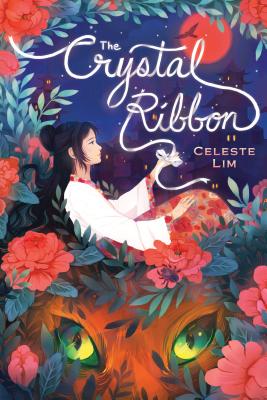
Interview with Celeste Lim, author of The Crystal Ribbon

In a story set in medieval China, Celeste Lim brings a young girl of exceptional heart together with the animal spirits of ancient myth to overcome a dark fate. Wed at age eleven to a three-year-old,  Jing’s life seems like a dismal sentence, and yet it is full of surprise and adventure.  In the interest of full disclosure, Celeste began weaving her tale while in my class at Manhattanville College’s Graduate Program in Creative Writing. From the first evening she read aloud, her writing voice captivated  me and I felt certain that her tale was destined for publication. And now that it’s here, I get to interview her!

Would you tell us a little about your writing background and early writing experience?

Growing up in Malaysia exposed me to a myriad of languages at a young age. We learned Bahasa Malaysia, our national language, in class; English was a compulsory subject as well because we were colonized by the British; and I went to a Chinese school because of my heritage. Therefore, what I has been exposed to growing up taught me that English books were written for and about Western people; Chinese books were written for and about Chinese people; Malay books for and about Malay people, and so on. So naturally, when I attempted to write my first English novel at age seventeen, I wrote a story about three fair-skinned, red-haired sisters who live in New York City, a place I’d only ever read about in books and saw on TV. That manuscript has been sitting in a hidden folder on my computer ever since.

How did you come to write Jing’s story?

Your first class focused on writing from our unique reservoir of seminal experience. I remember how groundbreaking it felt to me to realize that I was actually allowed to write about what I knew in a language that was supposedly foreign to my culture. That was a huge turning point in my writing journey and was also how Jing’s story was conceived.

The Crystal Ribbon’s magical creatures or jing, are important elements in the story. Could you explain more about them here? Did the jing characters spark your imaginyation as a child? Do you have a favorite jing?

This is one of my favorite things to talk about! Just like beings such as fairies and mermaids, jing are mythical creatures that sprung from the lips of storytellers, and since then have consistently appeared in ancient and medieval Chinese literature. The existence of jing came from the Taoist idea that through enough spiritual training, anything is able to attain a higher level of existence. Jing are non-human creatures that, after a hundred years of spiritual training, have attained the ability to speak, and a human level of consciousness and intelligence.

Because these ideas are so much a part of our mainstream religion, as a child I took them for granted, being more intrigued by gnomes and fairies. But now I do actually have a favorite jing–the huli jing, or fox jing! Other than being a very handsome creature, it feels like a very complex character, having the potential to be equal parts good and evil, which is why I chose it to be my character Jing’s unlikely friend.

Although Jing’s world contains magical helpmates, she couldn’t escape being sold into marriage at age eleven. At the hands of her three-year-old husband’s family, she suffers many cruelties. Were these scenes difficult to write? Explain how you approached them.

The novel actually started out as a third-person narrative. As a person living almost a thousand years later, I found it difficult to write in a way that helped me connect intimately to those experiences. But when my editor suggested I switch to first person, the barrier seemed to disappear. First person is not my writing strength, but in this point of view, I was forced to experience everything as Jing.  I found that the words in these scenes came easier and sounded more authentic, raw, and immediate.

Although The Crystal Ribbon is set in medieval China, Jing could be a role model for girls today. What qualities do you think serve her best?

I’ll name two of the traits that I admire in Jing, resilience and introspection. I believe her resilience stems from hope, something that she carefully preserved and did not let her hardships extinguish. Initially, her hope might be that things will eventually change for the better on their own, but I think it is her introspection, her constant self-examination, that allowed Jing to discover the strength to change the course of her life.

Having a first book published can be both thrilling and daunting. Since this is your first experience with having a book published, what surprised you about the process?

It was surprisingly less stressful than I anticipated! I am admittedly a bit of a Hermione Granger when it comes to things I’m unfamiliar with. I remember researching and reading up tons about the publishing process and hearing many anecdotes of bad publishing experiences from fellow authors. But fortunately, I have a good working relationship with my editor. I believe that is a huge reason why I feel safe and reassured in her hands.

Interview and Giveaway with Sarah Jean Horwitz – Author of The Wingsnatchers: Carmer and Grit Book One

Today we welcome Sarah Jean Horwitz, whose debut middle grade novel, The Wingsnatchers:  Carmer and Grit Book One, comes out April 25th from Algonquin Young Readers.

The Wingsnatchers:  Carmer and Grit Book One is a stunning debut about a magician’s apprentice and a one-winged princess who must vanquish the mechanical monsters that stalk the streets and threaten the faerie kingdom.

Aspiring inventor and magician’s apprentice Felix Carmer III would rather be tinkering with his latest experiments than sawing girls in half on stage, but with Antoine the Amazifier’s show a tomato’s throw away from going under, Carmer is determined to win the cash prize in the biggest magic competition in Skemantis. When fate throws Carmer across the path of fiery, flightless faerie princess Grit (do not call her Grettifrida), they strike a deal. If Carmer will help Grit investigate a string of faerie disappearances, she’ll use her very real magic to give his mechanical illusions a much-needed boost against the competition. But Carmer and Grit soon discover they’re not the only duo trying to pair magic with machine – and the combination can be deadly.

The Wingsnatchers is such a wonderful middle grade read. What are your favorite things about middle-grade fiction (as a reader and as a writer)?

One of the things I love about middle grade fiction – and fantasy in particular – is the unadulterated sense of magic and wonder. I don’t mean to say that the middle grade fictional universe is an uncomplicated one; on the contrary, this is the age when most kids are getting quite acquainted with the complexity of their own worlds, and the best stories know this. But there is an absence of outright cynicism, and that’s always a refreshing pond to dive into for a little while – both as a reader and a writer.

What inspired you to write The Wingsnatchers?

I knew for some time that I wanted to write a faerie-centric urban fantasy, but I never really had an idea with teeth to it until one day – as early as 2011, I think – a very specific image fell into my head: a boy in a shabby top hat and a faerie with a mechanical wing sitting on the brim. I was still in school at the time and working on other projects, so I put the two of them on the back burner, but I think I knew, even then, that this was the story to stick with. I just had to know more about them.

One of the things I love most about The Wingsnatchers is the world-building. Both the steampunk world of Carmer and the fairy kingdom of Grit come to life on the page in vivid detail. Can you tell us a little bit about your process in creating such a colorful and lively fantasy world?

Despite how integral the steampunk aesthetic is to the book now, it happened mostly by accident! The story is set (super!) roughly in an alternate 1880’s-1890’s, but that wasn’t always the case. When I started, it was way earlier – think mid-to-late 1700’s – and that wasn’t sitting quite right. Then, when my research into the Industrial Revolution went a bit too far down the rabbit hole and well into the 1800’s, I came across the early history of electric lighting – which, of course, became a central element of the plot and the story world. Building a Victorian-inspired setting from there, especially with a focus on the stage magic and vaudeville scenes, was just plain fun.

I was also, obviously, heavily inspired by Boston and its public parks. My personal map of the Oldtown Arboretum in the book is literally a traced-over and heavily rearranged version of the Arnold Arboretum in Jamaica Plain in Boston. I would walk by the Boston Public Garden at night and imagine the globes of the streetlamps powered by faerie lights. I love this city and its unique blend of old and new so much. I hope the fictional Skemantis is a fitting tribute.

Also, some of the coolest elements of the story world actually exist! The Moto-Manse, for example, is based on a Burning Man exhibition I found on Pinterest called the Neverwas Haul. It’s a thing!

Carmer and Grit are such wonderful heroes – and so perfect together. What drew you to writing these characters and what are your favorite things about each of them?

Thank you! Carmer and Grit were inspired by some of my favorite mystery-solving duos – all the way back from the original Holmes and Watson to today’s Joan and Sherlock on the show Elementary, Sam and Dean Winchester from Supernatural, and even Hiccup and Toothless from How to Train Your Dragon. I’m a firm believer in “platonic soulmates” – the one person out there who gets you, man, even if on paper, you may not have much in common. Carmer and Grit literally come from different worlds, but that doesn’t stop them from being a great team. In fact, it makes them better! I wanted to write a story about friends whose differences bring out the best in each other.

I love Carmer’s wry sense of humor and his determination to do the right thing, even if it’s uncomfortable or disadvantageous to him personally. I love Grit’s passion and impulsiveness – even when it gets her into trouble – and her frankness. I wish I could be as no-nonsense as she is!

There are so many interesting secondary characters in the book – from automata cats, to talking puppets, to the wonderful Antoine the Amazifier. Do you have a favorite?

The cats are my favorite, because my best friend hates them. Ha! Okay, let me explain: I was always convinced they were fun and creepy and different, even if they were pretty ridiculous, and she was like, “No, girl, just no,” but I kept them anyway. And I trust her opinion more than anyone’s in the world, but I kept them in anyway. And then not only did the book get published, but those creepy cats made it all the way to the cover! So that will be forever entertaining to me.

Your steampunk world is full of magic and science. Did you do any research while writing The Wingsnatchers? If so, what did you learn?

I did quite a bit of research! And then a lot of it got chucked out the window in service of the story, because magic is cool and I wanted to let magic be cool. Carmer would most definitely not approve. My major areas of research were the history of electric light and Victorian era stage magic and magicians. I obviously wasn’t concerned with writing a true historical fantasy, but I did try to play off the general “look and feel” and some of the driving social anxieties of the time.

The Wingsnatchers is Book One in the Carmer and Grit series. Can you give us any hints about what’s coming next and do you have any book recommendations for fans while we wait impatiently for the book two?

Well, I joked in my debut author group the other day that I was torn between two titles for book two: “Youths Flying Airships and Making Questionable Decisions” or “Everyone is a Little Bit Traumatized From the Events of Book One.” Does that count as a hint?

If you haven’t read it already, I highly recommend the wonderful The Girl Who Drank the Moon by Kelly Barnhill, which just won the Newbery Medal. It is the perfect blend of magical and honest and complex-but-not-cynical.

Sarah Jean Horowitz author of The Wingsnatchers: Carmer and Grit Book OneSarah Jean Horwitz is the author of the middle grade fantasy novel CARMER AND GRIT, BOOK ONE: THE WINGSNATCHERS and a member of the Boston Teen Author Festival organizing team. She loves storytelling in all its forms and holds a B.A. in Visual & Media Arts with a concentration in screenwriting from Emerson College. You can find her reading, writing, and occasionally dancing around like a loon throughout the Boston, MA area.


You can reach Sarah through her website or at one of these social media links:

Twitter: @sunshinejhwitz

Instagram: @sunshinejh

Facebook: sarahjeanbooks

Website: www.sarahjeanhorwitz.com

Sarah is giving away one Advanced Reader Copy of The Wingsnatchers:  Carmer and Grit Book One (US entries only, please).

a Rafflecopter giveaway

Patricia Bailey is the author of  the  middle-grade historical novel The Tragically True Adventures of Kit Donovan (April 2017). She blogs here and at her website patriciabaileyauthorcom.

Save

Save

Save

Save

Save

Save

Save

Save

Save

Save

Save

Save

Save

Save

Save

Save

Save

Save

Save

Interview and Giveaway with Science Author Patricia Newman

I’m so excited to welcome Author Patricia Newman to the MUF blog today. She writes SCIENCE books!  YAY!

Patricia (middle) is shown here with Lilian Carswell (L) and Brent Hughes (R).  Photo credit:  Elise Newman Montanino


Author Patricia Newman has written several titles that connect young readers to scientific concepts, including Sea Otter Heroes: The Predators That Saved an Ecosystem, a Junior Library Guild Selection and recipient of a starred Kirkus review; Plastic, Ahoy! Investigating the Great Pacific Garbage Patch, a Green Earth Book Award winner; Ebola: Fears and Facts, a Booklist Editors’ Choice selection; and the upcoming fall 2017 release, Zoo Scientists to the Rescue. In her free time, she enjoys nature walks, the feel of dirt between her fingers in the garden, and traveling. She lives in Northern California with her husband.

Patricia is here to share her newest book,

Sea Otters: The Predators that Saved an Ecosystem (Millbrook Press, 2017)


Why do you write science books? 

I like the way science connects to nearly all aspects of our world. For instance, in Sea Otter Heroes: The Predators That Saved an Ecosystem I show kids how saving endangered predators can benefit our air, our water, and our food supply. In my opinion, for kids to be successful in the 21st century, they will need to become global citizens who look at the bigger picture. Science can help us do that.


How do you choose your subjects for your books?

In the case of Sea Otter Heroes, the subject chose me. I was invited to the David Smith Conservation Research Fellows Retreat in April 2015 by Chelsea Rochman, one of the scientists that I featured in Plastic, Ahoy! Investigating the Great Pacific Garbage Patch. She thought her colleagues might be interested in learning more about communicating their research to children.


I conducted a day-long writing workshop, and somewhere in the middle, marine biologist Brent Hughes and his mentor Lilian Carswell (the Southern Sea Otter Recovery Coordinator with US Fish and Wildlife) approached me to see if I would be interested in writing about Brent’s sea otter discovery. He explained to me that he’d discovered a trophic cascade in which sea otters, the apex predator in an estuary off Monterey Bay, restored the natural food chain and healed the ecosystem so it could perform functions that benefit us. The more I spoke with Brent and Lilian, the more I liked the idea. Everyone thinks sea otters are adorable, and every kid knows about food chains, but Brent had found an amazing twist that most kids wouldn’t know about.


You seem drawn to eco-friendly topics. Is that something that you are passionate about? 

Yes, without a doubt. We have only one planet. It sustains us in so many ways. The ocean produces nearly 75% of our oxygen, it feeds us, and it entertains us. In a world where concrete is king, I think kids (and adults) benefit from getting closer to nature. In the current political climate, I want to persuade kids to love nature before they are corrupted by “alternative facts.” Caring is key because we protect what we love.


Tell us a little about how you do your research. How much time do you spend? What type of sources do you look for?

Nonfiction requires digging, and like my colleagues I dig through scientific journals, online sources, books, magazines, and newspapers. I also interview scientists conducting amazing research, and if I’m lucky I take a field trip to visit their labs. For Sea Otter Heroes, I spent a day on Brent’s research boat enjoying the sun on my face and the crisp ocean breeze, watching pelicans dive and sea otters crack open crabs with a rock. There are definitely worse jobs!


Why is back matter useful for readers?

As a researcher, I love back matter because it contains all sorts of gems. But for kids, I hope it extends the reading experience. When a novel or a fictional series ends, we have to say good-bye to beloved characters, but nonfiction science back matter lays more research, more videos, and more books within a child’s reach and encourages continued inquiry—the basis of all science.


Anything that you are working on that you would care to share? Other books that we can look for from you soon?

Photographer Annie Crawley (from Plastic, Ahoy!) and I team up again for Zoo Scientists to the Rescue (Millbrook Press, Fall 2017). We had a great time with this book, traveling to three different zoos, getting up close and personal with the animals, and fighting a fierce Colorado blizzard. The book features three endangered species—orangutans, black-footed ferrets, and black rhinos—and shows how zoos protect them and their wild habitats. Annie and I are excited to introduce our readers to the three scientists that we interviewed. The two women and one man are amazing role models for kids.

For fall 2018, think elephants.


Do you do school and/or Skype visits? Why do you think these are helpful to students?

I visit schools in person or virtually every year. Author visits motivate kids to apply themselves to reading and writing. We introduce them to a variety of literature—some of which is bound to pique their interest. Authors also show kids what real revision looks like and that writing takes perseverance. I tell students that writing is the hardest job I’ve ever had, but even in the face of rejection I refuse to give up on myself. What child who shares a piece of writing with me or asks about writer’s block or struggles to put ideas on paper wouldn’t benefit from believing in him/herself?

If you want to learn more about Patricia’s books or just drop her a line, you can find her on Twitter @PatriciaNewman  or visit her website at http://www.patriciamnewman.com/  to check out some of her other amazing science books:  


It’s Time for a Giveaway!!    Patricia’s publisher, Millbrook Press/Lerner, has generously donated a copy of her Sea Otter Heroes book. For a chance to win, leave a comment below about your favorite animal!


Jennifer Swanson is an award-winning author of over 25+ science books for kids. Visit her at her favorite place to explore the world around her www.JenniferSwansonBooks.com