Blog

Hurricane Season with Author Nicole Melleby & a Giveaway!

It’s always exciting to share upcoming releases and hear directly from their authors. Today, we’re visited by middle grade author Nicole Melleby and her debut novel HURRICANE SEASON. “This debut novel—about taking risks and facing danger, about love and art, and about growing up and coming out—will make its way straight into your heart.”

Fig, a sixth grader, wants more than anything to see the world as her father does. The once-renowned pianist, who hasn’t composed a song in years and has unpredictable good and bad days, is something of a mystery to Fig. Though she’s a science and math nerd, she tries taking an art class just to be closer to him, to experience life the way an artist does. But then Fig’s dad shows up at school, disoriented and desperately searching for Fig. Not only has the class not brought Fig closer to understanding him, it has brought social services to their door.

Diving into books about Van Gogh to understand the madness of artists, calling on her best friend for advice, and turning to a new neighbor for support, Fig continues to try everything she can think of to understand her father, to save him from himself, and to find space in her life to discover who she is even as the walls are falling down around her.

Nicole Melleby’s Hurricane Season is a stunning novel about a girl struggling to be a kid as pressing adult concerns weigh on her. It’s also about taking risks and facing danger, about love and art, and about coming of age and coming out. And more than anything else, it is a story of the healing power of love—and the limits of that power.

Hi Nicole! We’re thrilled you’ve stopped by. Tell me,  how did you begin writing?

When I was eight, I saw the Nickelodeon movie Harriet the Spy. I was obsessed, I loved everything about it, but I especially loved the main character, Harriet, and the way she always carried around a notebook to write things in. I used to beg my parents to buy me marble composition notebooks just like the one Harriet had every time they went to a store that carried them, and I would fill those notebooks up with everything. I started off by taking notes about the people around me much like Harriet did while spying, and from there I started writing stories instead. I’ve been writing stories ever since.

The movie also gave me this quote, which I’ve kept in mind ever since, and speaks to why I keep writing: “You know what? You’re an individual, and that makes people nervous. And it’s going to keep making people nervous for the rest of your life.”

Interesting quote, and an important one for kids to remember. Thanks for sharing it here!

Your main character Fig’s growth is pivotal as readers venture toward the climax of her story. How did you decide to show this internal growth and understanding of her father and their relationship?

I knew from the start I wanted to do two things with Fig and her father’s relationship: I wanted to show that, regardless of his mental illness and limitations because of it, Fig’s dad is a loving, wonderful father. They love each other; the mental illness doesn’t get in the way of that. And I wanted to have a scene where a young daughter comes out to her father and it’s a non-issue. Fig’s dad doesn’t make a big deal about Fig’s sexuality. He accepts it, full stop.

With those things in mind, I knew that Fig’s growth had to center more around her understanding of her father’s mental illness more than their actual relationship, along with the avenues of help available to them, and how to accept the help provided to her. Throughout the novel, Fig finds comfort in learning about Vincent van Gogh, whose story is all too relatable in how it reminds her of her father. While Van Gogh helps Fig understand how serious mental illness is and how important it is to seek help, she also has to learn that her dad is not Van Gogh—mental illness isn’t one size fits all, and Fig and her dad have to learn together how to deal with their own circumstances.

What was the hardest part about writing Finola (Fig)?

For me, getting inside Fig’s head wasn’t hard—I don’t know what it says about me that my natural voice is that of an eleven-year-old. What was hard was making sure I took the time and did the research to do Fig justice. What would school look like for Fig, how ostracized would she feel because of her lack of cellphone and her dad’s limitations? It’s been many many (many) years since I was in sixth grade. What’s different now that I needed to be cognizant of while developing Fig? What would social service visits be like for her and her dad? What responsibilities would the adults around her have in reporting the strange behavior her dad exhibited? What parts of Vincent van Gogh’s life would really resonate with her (and what parts were maybe too mature for the story I’m trying to tell)? How would an eleven-year-old in 2019 react to the flutters in her stomach from a first crush on another girl?

Much differently than I would have in the year 2000, I’m guessing, and it was important to remember that while I was writing. I’m not writing about my childhood—I’m writing about today’s middle grade readers’ experiences.

This is a very good point to keep in mind for any writer reading this.

As the rawness of mental illness is strongly threaded throughout Hurricane Season, what suggestions can you give to educators on how to breach this subject using Fig’s journey?

My first suggestion is always that educators don’t shy away from discussing mental illness. It exists in so many people and families, and it’s nothing to be ashamed of or to hide away and whisper quietly about. Books like HURRICANE SEASON and Tae Keller’s THE SCIENCE OF UNBREAKABLE THINGS and Cindy Baldwin’s WHERE THE WATERMELONS GROW that show kids dealing with mental illness in their lives in a raw and real way I think is a good way to open up conversations with kids.

I also tried to show that both medications and therapy are useful and sometimes necessary, and I think being able to read about a young character experiencing both helps to put both of those into a context that becomes less scary and unknown.

What do you hope readers gain from reading this book?

I think a lot about the books I read when I was younger, and what characters meant the most to me. Who were the characters that were around when I needed them? Which characters gave me comfort, and why? What do I wish I had been able to read about but didn’t get the chance to growing up that could have been life changing?

With HURRICANE SEASON, I wanted to write a story for readers who needed a character like Fig: someone who is carrying the weight of the world on her shoulders and who is struggling with her love for her father and what his mental illness means for both of them, but is also going through the all too real pains of growing up. I hope that readers find a companion in Fig. I hope they see someone they can relate to, who maybe can be there for them in ways that characters were there for me when I was younger—whether it be a reader struggling with mental illness, or sexuality, or just the beginnings of a first crush or the struggles of sixth grade.

I also hope they gain a love and understanding for Vincent van Gogh!

Can I just say how much I love that you included work from Vincent van Gogh. #love

What do you see as the biggest challenge facing new writers in the constantly evolving publishing world?

With social media right at our fingertips, it’s ridiculously easy to see who sold what book how quickly, who is getting starred review after starred review, who gets to go to the big conferences, who gets to be on the most lists, and so on and so forth. Between that and having Goodreads reviews and Amazon stats a click away, it’s easy to get caught up in your own head about what defines success and whether or not your rejections or disappointments equal failure. Jealousy is human nature, and we’re all going to compare ourselves to others from time to time. The challenge is keeping your head up and focusing on your own path. I think it’s important to just try and remember (which I’ll admit is sometimes easier said than done!) that there are a million different paths in publishing, and most of it is subjective. Give it your all, be resilient, but keep your eyes on your own paper.

Also, protip: When I get a rejection, I sing a silly little children’s song that makes myself feel better. Mostly because by the time I’m done singing it, I’m not taking myself so seriously anymore, and I usually end up giggling.

Nobody loves me, everybody hates me, I should just go eat worms. Worms, worms, worms!

Haha! I’m definitely going to try that!

Care to share what readers can expect from you next?

Yes! You can expect another Algonquin Young Readers middle grade book from me out in 2020—a story about a soap opera loving Catholic school girl with a complicated relationship with her mother and her first crush on a girl.

Fantastic! We’ll be looking for it. Thank you for sharing yourself with our family of readers. All the best to you always, and stop by anytime.

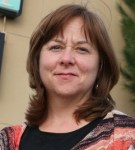
Nicole Melleby is a born-and-bred Jersey girl with a passion for storytelling. She studied creative writing at Fairleigh Dickinson University and currently teaches creative writing and literature courses with a handful of local universities. When she’s not writing, she can be found browsing the shelves at her local comic shop or watching soap operas with a cup of tea. Find Nicole on Twitter and Hurricane Season here.


Enter to WIN your very own copy of HURRICANE SEASON!

Giveaway winner will be announced via Twitter on May 14th.

a Rafflecopter giveaway

STEM Tuesday — Epic Achievements and Fantastic Failures– Book List


Great things can happen even if there are blunders and mishaps along the way. The pathway to great discoveries is always fascinating. This month we are delving into some epic achievements and fantastic failures with some terrific STEM titles that will challenge your thinking.


Support Independent Bookstores - Visit IndieBound.org The Wright Brothers: Nose-Diving into History by Erik Slader and Ben Thompson; illustrated by Tim Foley

How could countless crashes lead to such an important success? Erik Slader and Ben Thompson explore the Wright brother’s hard-earned path to an engineering breakthrough that gave humans wings.


Support Independent Bookstores - Visit IndieBound.org The Wright Brothers for Kids: How They Invented the Airplane, 21 Activities Exploring the Science and History of Flight by Mary Kay Carson

Pair this title with the Wright Brothers Epic Fails title above to compare how the same story can be told in different ways. Carson’s activities give young readers a great introduction to the science of flight with some hands-on investigation.


Support Independent Bookstores - Visit IndieBound.org The Book of Massively Epic Engineering Disasters: 33 Thrilling Experiments Based on History’s Greatest Blunders by Sean Connolly

This title focuses on the E in STEM. Why did the Titanic sink? Why does the Leaning Tower of Pisa lean? What is the fatal design flaw in the Sherman tank? Connolly explains each disaster, and then includes an experiment using household items to reinforce the science and hands-on inquiry.


Support Independent Bookstores - Visit IndieBound.org Google It! A History of Google: How Two Students’ Mission to Organize the Internet Changed the World by Anna Crowley Redding

This book explores how two Stanford college students developed the most influential and innovative ideas for organizing information on the world wide web. Want to know more about it — Google it!


Space is a popular topic for young readers. We’ve included four very different titles that describe the challenges of outer space travel.

Support Independent Bookstores - Visit IndieBound.org Countdown: 2979 Days to the Moon by Suzanne Slade and Thomas Gonzales

Countdown tells the true story of the American effort to land the first man on the moon. Told in free verse, it is a great addition to a classroom library poetry/verse STEM collection. It is also an NSTA Outstanding Science Trade Book.


Support Independent Bookstores - Visit IndieBound.org Rocket to the Moon  by Don Brown

In this first book of the new graphic novel series, Big Ideas that Changed the World, Don Brown brings his signature award-winning style to a big subject, discussing the people and decisions that went into creating the moon landing in 1969. You’ll be sure to want to check out the upcoming titles in this new series.


Support Independent Bookstores - Visit IndieBound.org

The Race to Space: Countdown to Liftoff by Erik Slader and Ben Thompson; illustrated by Tim Foley 

In book two of Slader and Thompson’s noteworthy Epic Fails series, we read about the failures that made up the race to be the first to explore outer space. Readers might enjoy pairing this with the above title.


Support Independent Bookstores - Visit IndieBound.org Moon Mission: The Epic 400-Year Journey to Apollo 11 by Sigmund Brouwer

Readers relive every step of the nearly-disastrous Apollo 11 moon landing through the astronauts’ point of view. Told in 11 different episodes, each episode includes the technological advances that made the mission possible.


STEM Tuesday book lists prepared by:

Nancy Castaldo has written books about our planet for over 20 years including, THE STORY OF SEEDS: From Mendel’s Garden to Your Plate, and How There’s More of Less To Eat Around The World, which earned the Green Earth Book Award, Junior Library Guild Selection, and other honors. Nancy’s research has taken her all over the world from the Galapagos to Russia.  She strives to inform, inspire, and empower her readers. Nancy also serves as the Regional Advisor of the Eastern NY SCBWI region. Her 2018 multi-starred title is BACK FROM THE BRINK: Saving Animals from Extinction. Visit her at www.nancycastaldo.com


Patricia Newman writes middle-grade nonfiction that inspires kids to seek connections between science, literacy, and the environment. The recipient of a Sibert Honor for Sea Otter Heroes, an NSTA Outstanding Science Trade Book for Eavesdropping on Elephants, and the Green Earth Book Award for Plastic, Ahoy!, her books have received starred reviews, been honored as Junior Library Guild Selections, and included on Bank Street College’s Best Books lists. During author visits, she demonstrates how young readers can be the voice of change. Visit her at www.patriciamnewman.com.


Recapping the TENT Program for Jewish Children’s Literature.

Hello Mixed-Up Filers!

How are you all doing? It’s been a little over a month since we were last together, and we have soooo much to catch up on! So, instead of continuing with the pleasantries, how about we get right to it?

Anyway, this past week, I was fortunate enough to have been one of the invited authors to the TENT program for Jewish Children’s Literature. The retreat is sponsored by PJ Library and takes place in the Yiddish Book Center in Amherst, Massachusetts.

Other authors and illustrators included in this program were: Sarah Aronson, Nancy Churnin, Paula Cohen-Martin, Nancy Cote, Meira Drazin, Donna Gephart, Ari Goelman, Alison Goldberg, Megan Hoyt, Sarah Klinger, Elisabeth Kushner, Yael Levy, Varda Livney, Sherri Mandell, Tamar Meir, Susan Meyer, Suri Rosen, Vesper Stamper, and Elaine Vickers.

Besides us, there were also some returning alumni from last year’s trip: Evelyn Krieger, Joanne Levy, Erica Perl, and Alan Silberberg.

Honestly, it was humbling to be surrounded by that much talent. And like any program with writers, discussions led to our chosen field, and that may have been one of the best experiences. First off, to get to meet in person, others who you have respected or admired from afar, and also just to get to hear their experiences. You get to see that you aren’t alone. We celebrated successes and also got to understand that the things you’re going through aren’t isolated cases. It helps having a support system of your peers, and I’ll say that this group was incredibly supportive.

Still, the main focus of the program is to get artists to create Jewish stories. Now, as anyone who knows me can tell you, I’ve been a huge advocate for the need for Jewish books for kids. With antisemitism seemingly escalating daily, it’s important for Jews to be represented in kidlit. First, it’s important for Jewish kids to see themselves, but it’s also important for non-Jews to see them as well. This weeklong retreat was all about that.

The first day we arrived, we hit the ground running with a tour of the Yiddish Book Center, and getting to hear Aaron Lansky, the founder of the center, talk about the history of the center and how he’s rescued over a million Yiddish books from around the world. There were so many fascinating and historical items, you really didn’t know where to look first. We also heard from Sue Macy and Stacy Innerst, the author and illustrator of the upcoming book about Lansky, The Book Rescuer: How a Mensch from Massachusetts Saved Yiddish Literature for Generations to Come. The book comes out in October, and I can’t wait for all of you to read it.

We spent a couple of sessions with Miriam Udel to discuss the history of Yiddish literature, which was fascinating. And also, three days were spent on workshops with people from within the industry. I was in the middle grade workshop, so I was lucky enough to be part of a group of seven authors led by Kendra Levin, an Editorial Director from Viking Children’s Books. It was a supportive environment, and the feedback in these workshops was in-depth and extremely helpful.

Tuesday night, we were all taken to the home of Harold Grinspoon and Diane Troderman, who graciously hosted us for dinner and to discuss Jewish books. It was a great discussion, and by the way, the food was delicious!


One of the main highlights was getting to go to the Eric Carle Museum and getting a peek behind-the-scenes at artwork which isn’t always on display to the public. Such incredible pieces that can only be shown every so often. And I must say, that caterpillar car was incredibly cool.

The last couple of days, we had discussions with author Marjorie Ingall, from Tablet Magazine, about the importance of diversity and Jewish books. She was amazing and so well-versed on the issue.

The last full night, we had a cocktail event at the Rich Michelson Gallery. Each piece of art was more incredible than the last. I kind of loved the Dr. Seuss display. There were also surprise appearances by Jane Yolen and Barbara McClintock.


As always, with these types of things, it’s sad when it’s over. You’ve made so many new friends, that you hate to say goodbye. But the good thing is, you’re definitely inspired. At least, I know I am. This was a great group and I’m sure we’ll all keep in touch and push each other. Hopefully, the end result of all of this will be a contribution of plenty of Jewish stories for many future generations of kids to enjoy.

If you have the opportunity, I’d definitely recommend applying for this retreat next year. It was well worth it in both a creative atmosphere and for a worthwhile mission. And who knows, maybe you’ll get to see me there as well, as part of returning alumni! (Hint, hint!)

So, thanks to the Yiddish Book Center. Thanks to PJ Library. And thanks to all the authors and illustrators who participated in this, to make it a fulfilling and inspirational week!

Well, that’s it for now my Mixed-Up friends! According to the hundreds of texts I’ve received, Dorian Cirrone wants coffee, and it’s my turn to bring it to her.

So, until next time . . .


Jonathan