Posts Tagged writing tips

Middle Grade Voice: Speaking the Joyous/Painful/Ironic/Perfect Truth

Happy almost-summer to everyone! I love writing May posts for From the Mixed-Up Files of Middle Grade Authors because it calls to mind the excitement and fulfillment of the end of the school year. For teachers, parents, students, public or school librarians, and MG writers alike, the advent of summer is a time heady with the potential adventure, change, and insights of the coming months. New, thrilling stories are practically a guarantee. Whether you read them, write them, offer them to readers, or watch them inspire your own kids on breezy summer days, middle grade works can add a lot to  your summer season.

We often discuss on this site how various elements of a story impact readers in different ways. For example, a historical setting teaches readers about an era or event. Sci-fi and fantasy genre scenarios engage the imagination in a rigorous workout. A coming-of-age theme offers a hook almost all readers can relate to. Another important, impactful fiction factor is voice.

Voice is an element of fiction that can impact readers in several ways. So much more than point of view or perspective, a character’s voice ticks many boxes: It indirectly characterizes. It engages readers and controls the mood and pace. And it delivers thematic messages about life in ways that connect to our experiences and emotions—in other words, the truth.

Strong voice is particularly effective in MG fiction. There’s this interesting paradox that occurs with MG characters in “voicey” works: Though their world view may be limited by young age and lack of independence and experience, MG characters are often highly effective at revealing the truth. They might comment as an afterthought or make a passing observance… and ironically, that offhand remark is both significant and revelatory. Or, they share a just-learned lesson in their coming-of-age, but as it is communicated by their voice, additional ideas and truths are conveyed.

Summer, with its reduced emphasis on structured lessons, is the perfect time to think about this somewhat nebulous story trait. Gathered below are some examples of voice in MG fiction, a few writing projects for students experimenting with voice in their own writing, and (for writers of MG) a brief list of tips for “turning up” your story’s voice.

Middle Grade Voice Examples

Strong voice can seem like a you-know-it-when-you-read-it element. For practice in recognizing voice, study some examples before assigning yourself a search-and-find mission in some favorite and some brand-new titles. Here are a few handy examples of MG voice:

  • Jessica Vitalis’s self-assured protagonist Fud in Coyote Queen:

“That doesn’t mean I sat around crying about how things were, because I didn’t. And I certainly didn’t think twice about magic. I was too practical for that.”

  • Jennifer L. Holm’s witty main character Beans in Full of Beans:

“When someone says they’re gonna help you, they’re just waiting to stick their hand in your pocket and take your last penny. I should know. I got relatives.”

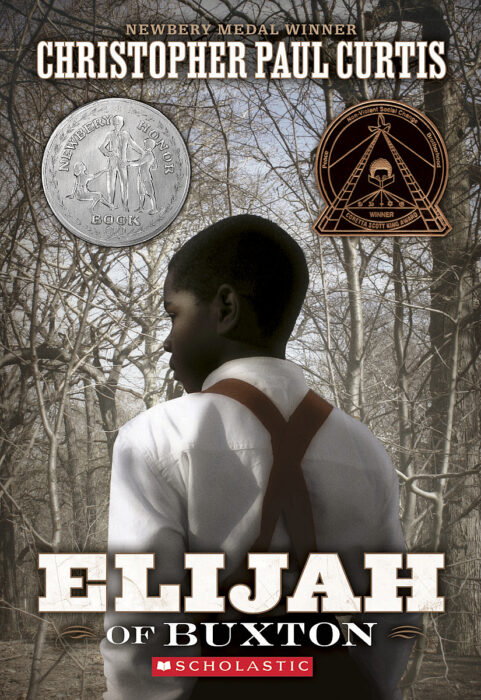
  • Any characters from Christopher Paul Curtis. Here’s Elijah speaking certain truth in Elijah of Buxton

“But classroom learning just don’t work the same as when something happens to you personal.”

Voice Activities in the Classroom

As the school year winds down, consider having your MG students experiment with the concept of voice in their own writing. You might begin by having readers search for examples in novels they read throughout the year. Introduce the idea of voice with some focusing questions: What line or lines have vocabulary, word choice, and phrasing that tell you right away what kind of a person this character is? What line would be spoken only by this protagonist? Where is a question or an exclamatory remark that highlights the voice?

With some examples at their side, students can then try their hand at voice by writing a real-time scene from the viewpoint of a selected, existing protagonist.  Writers already may be savvy with writing from a character’s perspective; try to direct their focus on the voice of the character through word choice, vocabulary, cadence, pace, and sentence length. For a scenario that also boosts excitement for the end of the school year, students might place their protagonist in a “summer vacation” scenario.

How Writers of MG Achieve Voice

These are some common strategies for practicing and assessing voice in your MG writing.

  • While middle grade characters certainly keep secrets and remain private about some things, they typically are more open with emotion than teen characters.
  • Defy stereotypes. Offer your characters traits that conflict with common assumptions.
  • Focus on the foundational blocks of a good story: themes, plot, detail, description, characterization. Voice is the conveyance system that communicates the story to the reader in the most effective, most “hearable” way.
  • Don’t allow the writer’s goals for sharing pithy truths to become the character’s goals. The character’s goal is to pursue their objective and resolve their conflict.
  • Stick with on-level vocabulary choices.
  • Who are your beta readers? Have a few middle graders in the mix to comment on MG characters’ believability.

Thanks for reading, and have a story-filled summer!

Interview with New York Times bestselling author, Liz Kessler

Today, I’m thrilled to welcome MG superstar Liz Kessler to the Mixed-Up Files! In addition to being the author of the wildly popular Emily Windsnap series—which has been translated into 25 languages, appeared on the New York Times bestsellers list, and has sold millions of copiesLiz has penned the Phillipa Fisher series, several MG stand-alones, two YA novels, and books for early readers. Liz’s latest MG novel, Code Name Kingfisher, hailed by School Library Journal as “overpoweringly emotional; an intense story, gorgeously told,” is out from Aladdin on May 7.

But before we chat with Liz…

Code Name Kingfisher: A Summary

When Liv finds a box hidden in her grandmother’s attic, saved from her childhood in Nazi-occupied Holland, circa 1943, she unearths a trove of family secrets—including the extraordinary story of her great-aunt Hannie, a Jewish undercover agent in the Dutch resistance. It’s a tale of bravery, betrayal, and daring defiance, and Liv wants to know more—starting with why her grandmother has kept Hannie a secret for so many years…

Interview with Liz Kessler

Melissa: Hi, Liz! It’s a pleasure to have you join us today. Before we begin, I must tell you how much I adored Code Name Kingfisher. I stayed up until the wee hours reading it and was sobbing by the end. It’s such a powerful book!

Liz: Thank you!

Melissa: Also, I also have a confession to make. My daughter, Chloe—who’s now 24—loved the Emily Windsnapseries so much, she went through a period of writing her homework assignments in British English! Her teachers were very confused. 🙂 

Liz: I have found it fascinating over the years of working with both UK and US editors to discover all the ways in which our languages both align and vary!

Pulled from the Headlines

Melissa: Your latest novel, Code Name Kingfisher, is inspired by true-life events: the story of two sisters, Truus and Freddie Oversteegen, and their friend Hannie Schaft. Can you give us some historical background? Also, what was your impetus to tell this particular story?

Liz: I was working on the research for my novel, When The World Was Ours, and in the course of my research I went to Amsterdam and discovered a lot about people in Holland who joined the Resistance movement during the war. Then I heard a program about these three girls and was keen to find out more. I read all about them and was so drawn to their story. I have always written about strong young women (as your daughter will tell you, because Emily Windsnap was the first of them!) and felt very inspired by these three.

Melissa: Your novel alternates between present-day England and Nazi-occupied Holland, circa 1942. It’s also told from four different perspectives: thirteen-year-old Liv, who’s getting bullied at school; Mila, 12, and Hannie, 15—two Jewish sisters who have assumed new identities and are living with a non-Jewish family in Amsterdam; and Willem, a neighbor boy with secrets of his own. How were you able to get inside each character’s head in such a genuine, authentic way? It’s not an easy feat to pull off!

Liz: Thank you for saying this. I’m glad that I pulled it off in a way that you found genuine and authentic. I think for me, the important thing is to know my characters as well as I possibly can. I spend a lot of time imagining what they are like, picturing them, planning and plotting their stories, and when I am writing, I just find that I naturally get inside their heads and try to experience the story from their point of view. It’s how I’ve always done it, and I think being someone who is quite a high-level over empathizer helps!

Lessons in Drafting

Melissa: As above, your novel is told from four different perspectives, past and present. What was your drafting technique like? Did you write each character’s narrative arc from start to finish and then weave the stories together? Or did you start with one character and then move on to the next one… and the next one?

Liz: I actually didn’t do either of these! I am quite an extreme planner. I plan and plan and plan and don’t start writing a word of the book until I have a chapter by chapter breakdown that works. So it was in the planning stage that I worked out how I wanted the story to unfold, who was the person to tell each part of the story, how the present and past narratives would work together, reflecting on each other and interweaving around each other. The planning was a lot of work with this book, particularly given the different viewpoints AND past and present settings. But once the groundwork of planning is done, it makes the writing easier!

It’s All in the Research

Melissa: Since a good portion of the novel takes place during World War II, in Nazi-occupied Holland, what sort of research did you do in order to ensure authenticity?

Liz: I spent several days in Amsterdam, visiting museums: in particular, the Anne Frank House and the Dutch Resistance Museum. I bought as many books as I could find on the subject, I scoured websites. And then when I’d completed a first draft, I found a couple of experts on Holland during the war who helped me to ensure I had gotten my facts right.

Writing about WWII

Melissa: As a follow-up, this is not your first middle-grade novel to be set in Nazi-occupied Europe. When the World Was Ours (Aladdin, 2022), which was also inspired by a true story, takes place in Vienna, in 1936. What impels you to write about this period in history? What makes it meaningful to you?

Liz: When The World Was Ours was inspired by an incident in my dad’s childhood that led to him being able to get away from the Nazis in 1939. I had wanted to write a book inspired by his experiences for many years. I am not a history fan normally, but these books have been about exploring issues that are always close to my heart: social justice, love, family and the power of kindness.

The Complexity of Secret Keeping

Melissa: An important theme in Code Name Kingfisher is secret keeping. Liv doesn’t tell her parents that she’s being bullied at school, and Liv’s grandmother never talks about her beloved sister, Hannie. She also had to keep her Jewish identity a secret when she was hiding from the Nazis. What is it about secret keeping that’s so complex and emotionally draining?

Liz: I’m actually not sure how to answer this one as I am not a big secret keeper myself. I am much more of an open book than any of these characters! But I think that when we allow ourselves to live freely and authentically, we are likely to be much happier in our lives. Living with secrets is the opposite of that, and will undoubtedly lead to living with an element of weight and stress.

Bullying and Human Persecution

Melissa: In Code Name Kingfisher, Liv is bullied by her classmates for no particular reason; the Jews were persecuted during WWII, just for being Jewish. What were you trying to say about the nature of bullying and human persecution in general?

Liz: With both of these books, I hope to show how easily people can be led into bullying or cruel behavior. How sometimes it’s about our own self-preservation – hoping that if we side with the persecutor we won’t be seen as weak and run the risk of being the bully’s next victim. I want young people to read these books and make links for themselves between current times and the fascism of World War Two. I hope to start conversations about kindness and strength and standing up for others. Beyond that, it’s up to the readers to draw their own conclusions and figure out for themselves where they choose to stand.

Liz’s Writing Routine

Melissa: Switching gears, let’s talk about your writing routine. Do you have a specific time of the day when you like to write? Any particular writing rituals?

Liz: I don’t really have rituals. I usually prefer to work in the mornings. I set targets with my work, rather than setting particular timings. I also love to be flexible so I can sometimes write all day and sometimes take the day off if the sun’s shining and the outside world is calling!

Melissa: What are you working on now, Liz? Also, are there any more Emily Windsnap books on the horizon?

Liz: Funny you should ask. I have just completed the final edit of a tenth Emily Windsnap book!

Lightning Round!

And finally, no MUF interview is complete without a lightning round, so…

Preferred writing snack? Used to be chocolate, but I went cold turkey a month ago so I guess it will have to be fruit.

Plotter or Pantser? Major plotter!

Superpower? The superpower I have is empathy. The one I’d like to have is the ability to time travel.

Favorite place on earth? My home. I’m never happier than when I’m with my wife and my dog.

If you were stranded on a desert island with only three things, what would they be?Notebook, pen and some form of music.

Melissa: Thank you for chatting with us, Liz. It was a pleasure to learn more about you and your book, and I’m sure MUF readers will agree!

Liz: Thank you for having me. It’s been fun chatting with you!

About Liz

Liz Kessler has written over twenty books for children and young adults. Most of these are middle- grade books featuring mermaids, fairies, time travel, and superpowers. She also writes Early Readers about Poppy the Pirate Dog and Jenny the Pony, as well as two YA books about teenagers coming of age, falling in love, and discovering their identity. Learn more about Liz on her website.

Melissa Roske is a writer of middle-grade fiction. Before spending her days with imaginary people, she interviewed real ones as a journalist in Europe. In London she landed a job as an advice columnist for Just Seventeen magazine. Upon returning to her native New York, Melissa contributed to several books and magazines, selected jokes for Reader’s Digest (just the funny ones), and received certification as a life coach. In addition to her debut novel Kat Greene Comes Clean (Charlesbridge), Melissa’s short story “Grandma Merle’s Last Wish” appears in the Jewish middle-grade anthology, Coming of Age: 13 B’Nai Mitzvah Stories (Albert Whitman). Learn more about Melissa on her Website and follow her on  TwitterFacebook, and Instagram.

STEM Tuesday — Astronomy/ Eclipse — Author Interview

Welcome to STEM Tuesday: Author Interview, a repeating feature for the last Tuesday of every month. Go Science-Tech-Engineering-Math!

This month’s featured STEM author is Meg Thacher, author of Sky Gazing: a guide to the Moon, Sun, planets, stars, eclipses, constellations (Storey Publishing, 2020). Meg teaches astronomy at Smith College and is the academic director for Smith’s Summer Science & Engineering Program for high school girls. Plus, she writes for kids!

Sky Gazing is a fun and fascinating tour of our solar system, with many extra bonus points for its glow-in-the-dark cover! spread from SKY GAZING

Andi Diehn: The format of your book is slightly unusual – it’s big! Why did your publisher decide to go big with this one? What is it about the content that lends itself to taking up a lot of “space” on the page? (pun intended)
Meg Thacher: I think the size (11 by 11 inches), which is similar to many picture books, signals that there will be a lot of illustrations. This large size is not unusual for Storey Publishing’s kids’ books. They publish a lot of how-to books: Backpack Explorer, Cooking Class (Deanna Cook), Cardboard Box Engineering (Jonathan Adolph). All of them, including Sky Gazing, have pages large enough to accommodate diagrams and instructions. Sky Gazing is a book about observing the sky from wherever you are, day or night, with the naked eye. But it also has information on the What causes the Moon’s phases? How does the Sun move through the sky at different times of year? What are the shapes that people all over the world saw in the stars, and what are the stories they told about them? It’s hard to do that that well without illustrations.

Andi: I like how you weave in history, not just science – why is it important for readers to think about astronomy’s role in exploration and culture?

Meg: Astronomy is the oldest science. People started out telling stories about what was happening into the sky, which inspired them to observe these phenomena closely, which in turn helped them to discover the reasons behind them. So those first storytellers were also scientists. It was important to me that readers understand that everyone, everywhere on Earth looked at the sky. No matter who you are, your ancestors were astronomers. And you can be, too!

Andi: I LOVE the hands-on activities! Why include these in the book? spread from SKY GAZING

Meg: This is partly a Storey thing and partly a me thing. Reading about astronomy is fun, but doing activities makes the ideas and concepts more “sticky”. We can read about the path of the Sun through the sky, but if we put a stick in the ground and watch its shadow for a day, we’ll remember it better. We’ll understand the connections between the Sun and shadows, and even deepen that understanding by making a connection to how shadows help us tell time. I use activities in my teaching all the time.

Andi: Your book encompasses your topics from the microscopic examination to a macro view – such as the section on the sun, which includes a discussion of fusion. Did you ever think, when you were writing, whoa, this is way too much for a kid’s book?

Meg: Absolutely! And that’s why there are so many text features. The book is written for kids in grades 4 to 9, which encompasses a huge range of scientific knowledge. I was very careful to check in with the NGSS (Next Generation Science Standards) so that I knew what content was age appropriate. The main text should be comprehensible to a fourth grader, but I wanted to have something for the ninth graders, too. So there are sidebars for them that go into more depth. The fourth graders can skip those without losing the general explanation. Photos and diagrams and pictures illustrate concepts in the text, so that readers have a visual representation of the text. One of my favorite features is the graphic novel sequences. For example, there’s a detailed text description of how the Moon was formed on one page, and a series of panels on the facing page, complete with collisions and explosions. One is engaging, and one provides detail.

Andi: In your book, astronomy is super accessible – you have lots of suggestion for how readers can observe the skies above them, even without telescopes or other equipment. Why is that important to include?

spread from SKY GAZING

Meg: I wanted to make astronomy accessible to everyone. Astronomy can be a really expensive hobby if you buy a telescope. Or very frustrating if you buy a cheap one. The sky is up there for all of us to observe—you don’t have to go to a lab or hike through the jungle to get your data. There’s so much to see, no matter who you are or where you live, with your eyes alone. And if you want to go a little deeper, the absolute cheapest or oldest binoculars will help you do that.

Andi: You’re a college professor – when writing this book for younger students, what did you focus on that might be different from your work with older students?

Meg: Actually, I teach a lot of the same things to both audiences. The courses I teach to my college students are focused on observation, with telescopes and the naked eye. The two main things I do differently when writing for a younger audience are to make sure that the topics are developmentally appropriate and that the material is fun and relevant for kids.

Andi: Your tattoo book is so fun! How did that project come about?! Temporary tattoo book

Meg: My publisher again. Storey has a series called Tattoos That Teach. Topics include butterflies, sharks, dinosaurs, and woodland creatures. Astronomy was an obvious fit, so they hired me to come up with a list of astronomical objects and write the blurbs, and they hired Angela Rizza for the pictures. She’s an illustrator and a tattoo artist!


Andi: Is there anything I didn’t ask about your book that you’d like to mention?

Meg: Yes – how it looks! This is down to the illustrator, Hannah Bailey, and the book designer, Jessica Armstrong. When I turned in my manuscript, I included hundreds of diagrams and pictures. I would find them on the web or in books, or make a rough sketch, and these two turned it into a work of art. When I saw the “first pages”—the initial version of the text and illustration, laid out as it would be in the book—I was blown away. From photos and illustrations to page placement and color choices, this book is just gorgeous. It would be a very different book if I was the only involved in its creation.


_____________

Meg Thacher teaches astronomy and writes about science. She loves to teach kids and adults about the wonders of the universe. She’s written 30 articles for kids’ magazines: feature articles, interviews and scientist profiles, DIY science activities, and humor. Her first book, Sky Gazing, teaches kids how to observe the sky, night or day, from wherever they are. For more information, check out her website: www.megthacher.com.


Andi Diehn has written 17 nonfiction books plus a picture book on mental health called MAMA’S DAYS from Reycraft Books. She works as aAndi Diehn children’s book editor and marketer at Nomad Press and visits schools and libraries around the country to talk about science, writing, poetry, mental wellness, and anything else kids want to know! Andi also works as a bookseller at her local indie in Vermont – The Norwich Bookstore – and lives in rural New Hampshire with her husband, three sons, and too many pets.