Posts Tagged Middle Grade

Author Spotlight: Tricia Springstubb + a GIVEAWAY

Today, I’m excited to shine the Author Spotlight on children’s author, Tricia Springstubb! Tricia’s latest MG novel, How to tell a True Story, was praised by Kirkus as “A sincere and humane narrative that probes human complexity.” It released April 1 from Margaret Ferguson Books and is a 2025 Junior Library Guild Gold Standard Selection. Learn more and connect with Tricia at https://www.triciaspringstubb.com/

Interview with Tricia

Welcome, Tricia! Thank you so much for being a guest on the Mixed-up Files! 
I absolutely loved How to Tell a True Story. It’s such an impactful book that will be sure to spark many important conversations about honesty, ethics, and whether it’s ever okay to lie to protect those you love. Can you tell me a little about the inspiration behind it?
I started to think about this book years ago when I attended a school assembly where a student whose house had been destroyed by fire was presented with a collection of brand new books. It was a lovely, generous gift, such a heart-tugging moment, and of course the child said thank you. Afterwards, though, I found myself wondering: what if she didn’t really want all those books? What if she secretly wished she’d been given toys or games instead, but she had to act grateful?

Mind you–I had no reason to believe that was the case! But a writer’s brain is a devious place. I began thinking about how complicated the acts of giving and receiving are. How kindness is always well-intentioned, but how, often, we expect something in return. I started making notes for a story about a girl whose community comes together to help her and her family after a fire, and all the complications that could arise from that.

About How to tell a True Story

You do such a great job maintaining an element of mystery in the story about what exactly happened the night of the fire. Was it difficult to craft this novel? What was your biggest challenge in writing it?
I love to read mysteries but have always failed miserably when I tried to write one. (I’m also really bad at telling jokes too–I always manage to give away the punch line!) How To Tell a True Story was different, because though it revolves around a dark secret, it’s a book that asks as many questions as it answers. Is the truth black and white? What makes a hero? If kindness is a gift, can we change our minds and take it back? How does social media affect the way we see and present ourselves?

It was hard to keep the story taut and suspenseful while making room for all these questions. Also, research is never my favorite part of writing, but to describe the fire, the burn treatments, and the legal aftermath, I had to do a lot of reading and interviews. I’m so grateful those details ring true.

You describe the experience of surviving a devastating event so authentically. It is such a difficult topic, and you handled it with grace, care, and sensitivity. I’m always interested in hearing how authors make tough topics accessible to young readers and would love to hear your thoughts on this.
I’m a ridiculously hopeful person—probably both my biggest strength and weakness. Also probably why I write for young readers. No matter how deep their troubles, most kids stay alive to possibility. Their friends, their crushes, their dreams of what they might do and who they might be—all that beckons to them. I love that! I try to honor it in my stories.

Characters

Along with Amber, I enjoyed your other characters a lot too. I thought Amber’s relationships with her peers were so real and relatable. Do you have a favorite secondary character? Who and why?
I love Amber’s friends!  Please don’t make me choose among them!  I will say that my editor found Mariah unlikeable and pushed me to make her nicer, but I like her exactly the way she is. And of course I love Clancy, Amber’s goofy sister. All my main characters seem to have little comic sidekicks–in my last book, Looking for True, it was Spider and Sophie, who adore potty jokes.

Takeaways

What do you hope readers take away from this story?
I hope they’ll have a great reading experience, meaning they won’t want to put the book down! Beyond that, I hope they’ll think about the questions I mention above, and about the notion of kindness. Kids are constantly urged to Be Kind and Choose Kind. Of course in the best of all worlds, humankind is both human and kind! But as Amber discovers, many things are easier to say than to act on. Most of us can be kind to people we feel sorry for, but it’s hard–very hard–to be kind to people we don’t like, to people we feel have betrayed us. I hope readers will think about what Max, Amber’s classmate (and nemesis), says, “If only some people deserve kindness, then it’s just a reward.”

Writing Process

Will you tell us a little about your writing process? Are you a plotter or pantser? Where/when do you prefer to write?
To be honest, Sydney, I always dread this question! My process is so messy, I’m not sure it even deserves the word. Mostly, I start with a situation, a setting or a character that intrigues me, then write my way into the story, following where it beckons. Obviously, I do a LOT of revision, but I really enjoy going back over drafts and finding the clues I’ve left myself. One of my favorite writing quotes is from Flannery O’Connor:  “Like the old lady, I don’t know so well what I think until I see what I say; then I have to say it again.”

Influences

What are some current books that have influenced you as a kidlit writer?
I read everything Kate DiCamillo writes. She is so deft–a great lesson for a blabbermouth-writer like me–and I love her dark sense of humor. When The Horn Book said Looking for True is “Because of Winn-Dixie for a new generation”, I about died.
Anne Tyler doesn’t write for kids, but she’s been a hero of mine for decades. Her quirky characters are so specific yet universal. Also, she just published her 25th novel at the age of 83–I’d love to follow in those footsteps.

Advice

What is your advice for aspiring writers?
As anyone reading this probably already knows, the writing life can be hard. I recently got a rejection that really stung!  But I don’t know anything better to do with my one wild and precious life than to keep trying to see through other eyes and walk in other shoes–in other words, tell stories. Read, observe, question, open your heart!

What’s Next

Can you give us some insights into what you’ll be working on next?
I have a fantasy novel out on submission. This is a HUGE departure for me, so who knows what will become of it. I’m also working on a new project. Like How to Tell a True Story, it falls into the category of Young Teen Lit, that space between true middle grade and true young adult. So far, all I know is it centers on A Big, Complicated Crush.

And for the lightning round:

Coffee or tea? Coffee! More coffee!
Sunrise or sunset? Sunset (only because I like to sleep in)
Favorite dessert: I eat ice cream every single day.
Superpower: I crave the superpower that would let me infiltrate the hearts and minds of those in power right now.
Favorite music: I’m bad at favorites questions, but today I’ll go with Motown!
Favorite book from childhood: Again, so bad at favorites, but I’ll pick Little Women. I’ll never forget my shock and grief when Beth died—my first experience of how enormously powerful a book can be.
Thanks again, Tricia! It was so much fun to learn about you, your writing journey, and your amazing novel! Learn more about Tricia on her website and follow her on Instagram.

For a chance to win a signed copy of How to Tell a True Story, comment on the blog!  (Giveaway ends April 11, 2025 MIDNIGHT EST.) U.S. only, please. 


Meet Katie Monson, Literary Agent

Katie Monson

Katie MonsonKatie Monson loves kids, and she also loves books. For 12 years, Katie was a self-employed childcare provider, watching children in her home and enjoying the privilege of being home to raise her children. But recently, she decided to massively change up her life and find a new path that still allowed her to work from home and be with her kids. That new path led her to SBR Media. 

SBR Media is a literary agency for all genres. It was established in April 2016 by Stephanie Phillips. Today, SBR Media has 11 agents representing over 300 clients. As one of those agents, Katie Monson is known to be self-motivated, organized, and ready to represent clients and help lead them to success. We’re grateful she took the time to share a little bit about herself and her work with our MUF readers.

Welcome, Katie! Your path to becoming an agent is fascinating and not all that typical. What led you to the world of books and publishing? 

I’ve always had a passion for reading, ever since I was a little girl. Over the years, I developed a strong interest in reading indie romance books, which naturally led to blogging, beta reading, and editing small manuscripts for authors. 

It sounds like agenting was a natural fit. Now that you’ve been in this role for a while, what do you find to be the best and worst parts of being an agent?

The best part about being an agent is working with my authors and making their dreams come true!

The worst part is how I cannot possibly take on all the manuscripts that I read. I would love to be able to help everyone but it’s just not possible. Sending the rejection letters and knowing how the author is going to feel is the worst.

Here at MUF, we’re all about middle grade. As an agent who represents this category of work, what do you love most about middle grade novels?

I love middle grade novels because they are multifaceted. They can be for pure entertainment, but while they are being enjoyed, there can also be underlying themes that help kids navigate through life and challenges they may face. Middle grade books can help make kids feel less alone and know that what they are going through is normal!

Which middle-grade book(s) influenced you most as a child?

I loved the Wayside School books!  They were so funny to me, and I still remember them to this day. I shared them with my own kids, and they loved them too!

What are some of your favorite current middle grade novels?

I really love any of Raina Telgemeier books!  My kids loved them too!

Which genres/themes/subjects are you drawn to/not drawn to?

I am not a big sci-fi and fantasy reader, so I lack the experience needed to represent these. I love themes of being true to yourself, being a great friend/person, subtle lesson-teaching (not being in your face about it). I also love when a novel explains big feelings!

What do you look for in a query, and what types of queries do you hope to find?

A query needs to be brief and engaging. I want to be drawn in so quickly that I can’t wait to get my hands on the manuscript. Don’t give away too much, but don’t be vague either.  

I’m on the hunt for another middle grade to add to my list. I’m looking for an engaging plot with a twist no one sees coming. I want to keep the kids reading on their toes (as well as the editor we are pitching to).  

What are the top reasons you pass on a submission?

There are many reasons why but the top ones I would pass on are:

  • Word count is not where it needs to be
  • Not an exciting query that makes me NEED to read more
  • I couldn’t connect with the writing/story/characters

Do you ever participate in pitch parties, and if so, what do you love about them?

I participate in events when I find the time! LOL! I love to see how authors are able to explain their entire manuscript in such a short amount of words. I love these events so much that I have even set up a pop-up event of my own! 

That sounds interesting! Can you tell us a little more about this pop-up event?

YES!  I will randomly set up my own personal pop-up pitch event.  I ask for a brief description of their manuscript (I usually have these open to all authors) and a mood board if they have one.  From there, if I like their post then I have them contact me for more information on how to submit to me.  

We know you’re closed to submissions right now, but can you give us an idea of when you’ll reopen?

The plan is this spring for a week. This is a really busy season for me, so I am unsure of the exact time, but it will most likely be sometime in May. My best advice is to watch my socials! 

You can check out my Manuscript Wish List here: https://www.manuscriptwishlist.com/mswl-post/katie-monson/

My Instagram handle is https://www.instagram.com/litagentkatiem/ and you can follow me on X at https://twitter.com/

Before you go, we’d love to learn about your life outside of work. What are your favorite things to do that have nothing to do with being an agent?

I love to get lost in a good book. What agent wouldn’t love reading for pleasure? (Although, it’s harder to come by these days!) I also love traveling! Seeing the mountains in Tennessee and the beaches in Florida are two of my most favorite things. And I love spending time with my family. 

So, when I’m not reading, sitting by the pool, or complaining about the cold Rochester winters, you can probably find me traveling to the beaches of Florida, the Great Smoky Mountains in Tennessee, and spending time with my husband and four children in Rochester, New York.

Books, beaches, mountains, and family – that sounds great! Thanks so much for joining us, Katie. It’s been a pleasure getting to know you, and we’ll be watching for you to open for submissions. 

Author Spotlight: Rosanne Parry + a GIVEAWAY

Author Spotlight: Rosanne Parry + a GIVEAWAY                                                            

Today, I’m excited to shine the Author Spotlight on children’s author and fellow MUF member Rosanne Parry! Rosanne’s latest MG novel, A Wolf Called Fire, praised by Kirkus as “an exciting and thoughtful portrait inspired by a real animal who succeeded by being different,” was out February 4 from Greenwillow Books and is a 2025 Junior Library Guild Gold Standard Selection and a #1 Indie Best Seller.

Interview with Rosanne

Welcome, Rosanne! Congratulations on the release of your beautiful new novel! It’s a pleasure to highlight the work of a fellow MUF member. A Wolf Called Fire is such a wonderful addition to the Voice of the Wilderness Series. Can you tell us a little background about what inspired these books?

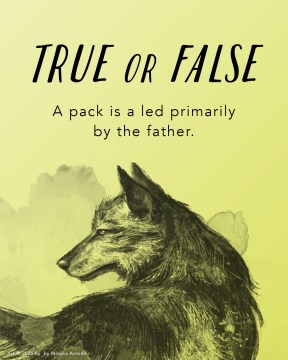
Over the years I’ve gotten many letters from young readers who loved A Wolf Called Wander and were very worried about what happened to the brother he loved so much. So I was happy to return to the world of my wolf pack in the Wallowa Mountains. And there is much more research now about the dynamics of how wolf packs are lead and what kind of wolf grows up to be the alpha. So I wanted to explore how a wolf pup who starts out his life as the omega pup goes on to become a leader.

Point of View

It is so interesting that this story was inspired by a real wolf who became such an extraordinary pack leader, and I was amazed at how you were able to truly capture the point of view of an animal. I’d love to hear about your process and how you manage to write from this perspective so effectively. 

The work of reading fiction is to step outside of the self for a time and live as the fictional character does. So the work of the writer of fiction is to describe that fictional life and world with accuracy and detail that is not just vivid but accessible to the reader.

I have to reach out toward the wolf and ask myself what does this environment feel like. What color is the dirt and how does it feel under my feet and what does it smell like and what does the smell of this particular patch of dirt I’m standing on tell me about the world I need to survive in.

And then I also have to reach toward that child reader and ask myself what words will make this particular wilderness come to life. Because my reader has almost certainly never been to the backcountry of the Eagle Cap Wilderness and probably has not spent any time at all in the wilderness. So how can I choose words that will make them feel a part of that wilderness experience. It takes a lot of research and a lot of time spent in the actual settings of the story.

Voice

You describe the natural world so vividly through all the senses. Your writing is beautiful and lyrical. What advice do you have to new writers as they strive to find their voices?

I would encourage new writers to think of their voice as not so much something external to quest after, as though you might, at last, arrive at the Tree of Symbolism and pluck your own voice from among its fruits. Your voice has always resided within. So it’s more an enterprise of listening deeply to yourself and asking yourself what you hope to communicate in a particular story. And then thinking what a story needs in terms of tone and structure. Your own voice is already there. It’s more a matter of being humble enough to recognize it and proud enough not to let the editing process knock off all the interesting edges.

Characters

Along with Warm, the book includes many other memorable characters. Do you have a favorite secondary character? Who and why?

I really enjoyed writing Snow and Pounce in this story. Both are female wolves with plenty of leadership qualities who find themselves is a pack they don’t like. The one gathers her courage and leaves her pack. But the other quietly forms alliances within the pack she hates and in the end forms a new pack with them.

Back Matter

With its wonderful educational content, this book is sure to be a huge hit with teachers, and the exciting, fast-paced story and beautiful illustrations throughout will be so appealing to kids. Your back matter is very interesting and an excellent supplement. Young readers are going to absolutely adore learning about the real wolf behind the story, as well as the map of Warm’s journey and the pictures of the animal tracks. I love all you say about how kids can make a difference. How did you decide what to include in the back matter? 

When the first Voice of the Wilderness book was written I could not find an American publisher for it, so it was the British publisher Andersen Press who took it on. I had a meeting with them in London when we were at the beginning of the editing process. A British audience knows so little about the American wilderness that we talked at length about how to make the text accessible to them. Illustrations were my editor’s idea. I asked for the back matter to make the book work for teachers who also have to teach map reading and ecosystems and natural history and human history. They agreed that teachers need every bit of support we can offer, and so they set the standard for the books that followed. I’m grateful that Greenwillow has stuck with the format because the price of paper is rising and absolutely every page counts.

What was your biggest challenge in writing this story?

Greenwillow was very keen to have FIRE come out in 2025–their 50th anniversary year. And my approach to writing is not a speedy one. Honestly, the biggest challenge was getting the story researched and written in time to have it so beautifully illustrated and designed. It was a huge team effort. Much gratitude to the illustrator, Mónica Armiño, art director Sylvie Le Floc’h, and editor Virginia Duncan.

Writing Process

Will you tell us a little about your writing process? Where/when do you prefer to write?

I love to write outside when it’s warm enough for that. My treehouse is a favorite spot, but the truth is I can write almost anywhere and I often have to make due perching in whatever space is available. Research is probably the most defining aspect of my writing. I do a lot of it and it requires a fair amount of camping at the moment. Fortunately I love that!

Takeaways

What do you hope readers take away from this story?

Literacy is my primary objective. Because it’s a relatively short book, it’s often a 7 or 8 or 9 year olds first middle grade novel that they have read on their own, and they are a better reader by the time they get to the end of it. I want my reader to feel empowered to read ever more complex and challenging books and newspapers. I want them to care about the wilderness and believe that they have something to say in the defense of land and creatures who cannot speak for themselves.

Influences

What are some current books that have influenced you as a kidlit writer?

I really enjoy books that test the limits and try something new. Virginia Euwer Wolff is a long time friend and mentor. She’s also one of the first YA authors to write in verse. Her Make Lemonade was a game changing read for me.

I have heaps of admiration for Brian Selznick who pioneered an alternating text and sequential illustration story that stands apart from all the rest and makes me think about story in new ways every single time. If you haven’t read The Invention of Hugo Cabret, you are in for a treat.

I’m also a big fan of the graphic novel Little Monarchs by Jonathan Case. It’s a climate future story about a middle school girl and her scientist guardian who are traveling a west coast almost devoid of humans. The story alone is fabulous but the author included non-fiction touches large and small that I very much appreciated. There are pages of the main character’s homework which provide useful back story and fun facts. There are directions on how to tie knots or get into a backpacker’s hammock or navigate by stars. Every new setting has the GPS coordinates in case you wanted to find the place for yourself. A real innovation — blending traditional graphic novel panels with the finest in illustrated nonfiction.

Can you give us some insights into what you’ll be working on next?

My next Voice of the Wilderness novel will be about ravens.

And for the lightning round:

Coffee or tea? Cocoa

Sunrise or sunset? Sunset

Favorite place to travel: The homeward journey has always been my favorite.

Favorite dessert: Ice cream

Superpower: Moral Courage and Compassion are the superpowers we most need.

Favorite music: When I was writing A Wolf Called Fire I listened to a lot of classical pieces by Vivaldi and Respighi. They made me think of the forest.

Favorite book from childhood:  A Wizard of Earthsea by Ursula LeGuin

Thanks again, Rosanne! It was so much fun to learn about you and get a behind the scenes look at your amazing novel! Learn more about Rosanne on her website and follow her on Instagram.

Bio

Rosanne grew up in Oregon loving its wild places and fabulous libraries.  She’s the author of the bestselling Voice of the Wilderness novels and nonfiction picture books. Her newest is A Wolf Called Fire. Rosanne sells books at Annie Blooms, and writes in a treehouse in her backyard.

For a chance to win a signed copy of A Wolf Called Fire, comment on the blog!  (Giveaway ends March 17, 2025 MIDNIGHT EST.) U.S. only, please.