Posts Tagged interview

STEM Tuesday — Digging Up History/Archeology — Interview with Author Kerrie Logan Hollihan

Welcome to STEM Tuesday: Author Interview & Book Giveaway, a repeating feature for the fourth Tuesday of every month. Go Science-Tech-Engineering-Math!

Today we’re interviewing Kerrie Logan Hollihan, author of MUMMIES EXPOSED! The highly-praised first installment in a new Creepy and True series published by Abrams. The book received starred reviews from Kirkus, School Library Journal, and Booklist. Wow!

Mary Kay Carson: Tell us a bit about your new book.

Kerrie Logan Hollihan: Mummies Exposed! takes an in-depth look at human bodies that were preserved either with intent or by Mother Nature. (Some call the latter “serendipitous” mummies but “natural” is a friendlier term for my middle grade readers.)  I tell their stories of discovery—and, thanks in part to STEM research—at least part of the stories of the dead themselves: ten children, women, and men across space and time, explaining why these people (like us) were mummified or how their bodies survived the process of decay.

MKC: Did your exhaustive research led to some interesting finds?

Kerrie: The best surprise I share with my readers is this: There is always something new to discover about something old! For instance, here I am writing about King Tutankhamun when along comes a New York Times story reporting that the blade in one of Tut’s daggers is composed of metal from a meteorite. That fresh fact would merit a quick revision before the book went to press. Stuff like that happened frequently during the more than three years I spent researching for various proposals and eventually writing the book. I like to say it nearly made a mummy out of me!

MKC: Do you choose to specifically write STEM books?

Kerrie: STEM writing found me in the course of thinking about something or someone I wanted to learn about. When I was in a master’s program in journalism at Northwestern University, I took a science writing class that led me to lots of interesting spots to learn—and ask questions about—astronomy, portland cement, nuclear physics, medications, and how to claw your way out of quicksand. I discovered then that I like to learn about the history of science. The key component to science writing, I learned, is to ask questions…lots of them…find answers, and then interpret these for the reader at a number of levels: general readership, science magazines, and best for me, young readers.

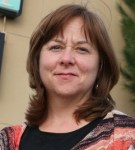
Kerrie Hollihan channels her inner sixth grader (who read Compton’s Encyclopedia for fun) to write award-winning nonfiction for young people. Kerrie belongs to the well-regarded nonfiction author group iNK Think Tank and its interactive partner, Authors on Call, and blogs at Hands on Books: Nonfiction for Kids with Fun Activities. Find Kerrie online at www.kerriehollihan.com.

MKC: What approach or angle did you take to writing this book?

Kerrie: In my heart, I’m still a sixth-grade girl who read the encyclopedia for fun. That’s who I target when I write for young people. As it turns out, older people can learn a few things from my books as well if they sit down and read my work. For Mummies Exposed!, I identified which mummies to include, according to availability of information, reliability of sources, and appropriateness for middle grade kids.

Some chapters were far tougher to write, because I had to explain (or gloss) key terms such as anthropology and archaeology, not to mention how they differ! There was quite a bit of science research to explain, as well—DNA and CT scans, aerobic and anaerobic bacteria, tuberculosis, and so on. It took well over a year to research and write the book. I worked chapter by chapter, researching each as I went along. I think you’d say Mummies Exposed! is mostly narrative nonfiction, but I also included bits that are expository, too.

MKC: What are you working on now?

Kerrie: I’m wrapping up final edits in my next book for Abrams Books for Young Readers, Ghosts Aghast! It’s more STEAM than STEM. After we started work on Mummies Exposed!, Abrams suggested a series to me: “Creepy and True.”  Abrams suggested the ghost title, to be followed by a third book (which I’d proposed initially) which we are calling Bones! Think King Richard III buried in a parking lot in England, and a young woman who was cannibalized—posthumously—in the Jamestown Colony. Lots of intriguing STEM info to locate, read, and explain to my readers.

Win a FREE copy of Mummies Exposed!

Enter the giveaway by leaving a comment below. The randomly-chosen winner will be contacted via email and asked to provide a mailing address (within the U.S. only) to receive the book.

Good luck!

Your host is Mary Kay Carson, author of The Tornado Scientist, Alexander Graham Bell for Kids, Mission to Pluto, Weird Animals, and other nonfiction books for kids. @marykaycarson

Interview with Jess Redman, debut author of The Miraculous

There were times when I had to set The Miraculous aside as author Jess Redman’s prose addressed death, grief and the belief that joy exists in the midst of, and often as a result of loss.

We meet eleven-year-old Wunder on the eve before his little eight-day old sister’s funeral. Wunder is a self-proclaimed miracologist. As in, he records stories about residents of his little town with miraculous outcomes. But after the loss of his baby sister, Wunder doesn’t believe in miracles any longer.

Faye, a cape-wearing mascara-making-raccoon-eyes member of Wunder’s Unexplainable and Inexplicable Phenomenon Society swoops into his life. Together they discover a mysterious woman (who just might be a witch) living in an abandoned house near the cemetery. The old woman asks Wunder and Faye for help. She sends them on a mission that leads them to adventure, healing, friendship and a renewed belief in miracles.

Ultimately, Jess Redman’s debut offers “Because there can be miracles even in the midst of unfathomable sadness and anger, even in the depths of grief and confusion. And these, these are the hidden ones, the ones we must search for.”

Jess Redman is a therapist and an adjunct professor of psychology. She currently lives in Florida with her husband, two young children, and an old cat named Soul Pie. The Miraculous is her debut novel.

To learn more about Jess, visit her website, www.jessredman.com

JKR: Thank you so much Jess for your time. I understand you are a fan of the Mixed-Up Files of Middle Grade Authors! Welcome!

The Miraculous openly addresses death and grief. What have you learned through your experiences as a therapist that you felt were really important for young children to understand through your book?

JR: As a therapist, I think that the middle-grade years—ages 9 to 13—are a very special time. These are the years when kids are beginning to look out and beyond for the first time, years when they are starting to ask big questions and to develop a more nuanced understanding of emotions and life—and death.

By this age, most kids know someone who has died, even if it isn’t a family member or close friend. Yet, many adults are hesitant to discuss grief, and death is frequently seen as scary, forbidden, too intense, and too painful to even bring up. But kids are thinking about and worrying about and trying to figure out these topics anyway.

With The Miraculous, I wanted to tell the story of one young person’s thoughts and feelings and experiences coping with death. I wanted it to be an honest and open look at how the main character, Wunder, moves through grief, while still telling a story full of mystery and magic.

It was important to me that young readers hear that there are many ways to grieve and many ways to express emotions and that their questions, no matter how big or overwhelming, are valid and important. It was also important to me that the story show the power of friendship and community in coping with loss.

JKR: You offered that after sending out ARCs to readers that it was suggested that The Miraculous might help both children working through grief as well as adults. How does this make you feel?

JR: When I wrote The Miraculous, I was very aware of my young audience. I wanted to tell a story that was honest about grief and loss but was also gentle and hopeful and magical. The book has only been in the world for a few weeks, but already I have heard from young readers who have experienced losses of many kinds and who have connected with the story, and that brings me so much joy. When I do school or library visits, young readers will talk with me about their losses because The Miraculous opens the door for that conversation, and it’s an honor to hear those stories.

But what I feel about The Miraculous is what I feel about many middle-grade stories: they are for everyone. Since ARCs started going out, I’ve also heard from many adult readers who have lost siblings, parents, and spouses, and from those who have lost precious children, from devastating miscarriages to the unexpected death of an adult child. It has been an incredible privilege to hear these stories as well and to know that The Miraculous has contributed healing and hope. Adults, I believe, also need stories about grief and loss that are gentle and hopeful and magical.

So to the adult readers of this story who have lost a loved one, I want to say:

I see you.

You are not alone.

And yes, this story is for you too.

JKR: As a bereaved parent, I could so relate to topics including “the wrong things people say but they really just don’t know how to say I’m sorry,” and how we all grieve differently. I can only imagine that children, especially those who have experienced death within their circles, will relate to these passages as well. Can you offer anything on this?

JR: One of my best friends lost her father when we were nine. It was one of the first deaths I really understood, and I remember vividly my own uncertainty when I watched my friend board the bus on her first day back at school. How would she behave? Would she cry? What would I say? How would I comfort her?

I think it’s so important for kids to learn that grieving, like many emotional experiences, is a complex and individual process. There isn’t a wrong way to grieve, and in The Miraculous, characters grieve in many different ways.

I think it’s also important that kids learn how to support a friend who is grieving. In The Miraculous, Wunder’s parents do not talk to him very much about his sister’s death. His best friends don’t know what to say, so they don’t say anything. Wunder’s loss is compounded by these additional losses until he finds support in new, unexpected places.

To be able to accept someone else’s emotions, to say, “I’m so sorry this has happened” and then to sit with them and allow them to feel without trying to change or fix or explain—that can be really hard. Hard for kids, hard for adults. Yet, it’s what we so often need when we’re hurting.

JKR: I love the term miracologist. How did you come up with this?

JR: When I first started thinking about Wunder, I knew that he would be someone who believed in impossible and magical things, but I wasn’t sure how that would work out on the page exactly. It slowly came to me that what Wunder really believed in was miracles—miracles of all types, from the everyday miracle of sunrise to the inexplicable miracle of a loved one healed from an illness. I love stories that are infused with a little bit of magic, and I love characters that have quirks and unusual hobbies, so miracle-collecting was perfect. And who better to collect and study miracles than a miracologist?  Although I, like Wunder in the first chapter of the story, did try terms like miracler and miraclist before settling on miracologist.

You address friendships, and the challenges one faces as being both an older friend to someone who has experienced loss, as well as a new friend. Can you expand on this theme?

Yes, themes of friendship and community are very important in this story. Wunder has two best friends. Neither are sure how to respond when Wunder returns to school after his sister’s death. Tomas acts as if nothing has happened, while Davy is too nervous to say anything at all. Wunder is left feeling more isolated and confused.

Then he meets a new friend, Faye, who has just lost her grandfather. Faye isn’t the most cuddly, touchy-feely of souls, but she talks to Wunder about his sister. She acknowledges his sadness. As the book progresses, Wunder and Faye’s friendship deepens. It is a friendship forged in mutual vulnerability and shared emotional experiences, which is something I see happen often for clients who are in the midst of loss.

In the end, Wunder’s old relationships shift and change too. Having relationships, old or new, where you can safely and fully express your emotions is so important to mental health, and I hope kids see that in Wunder’s relationships with his friends.

JKR: Finally, what was the greatest takeaway that you hope your readers will experience through reading of Wunder’s journey?

JR:In the story, Faye says something to Wunder that I think sums up the message of the story: “Sometimes the brightest miracles are hidden in the darkest moments…but you have to search for them. You can’t be afraid of the dark.”

I don’t believe in glossing over sadness or just looking on the bright side or forcing ourselves to see the silver lining. But I do believe that we can find joy and meaning and deep relationships and new purpose after and even within great loss. I believe that our pain can be transformative. I believe that there is always light, no matter how dark the darkness. The path to that light is very personal and cannot be rushed or forced, but I believe we can get there, and that we can help one another along.

I understand you have another work coming out next spring. Can you share a bit about your next book?

My second middle-grade book, QUINTESSENCE, comes out on July 28, 2020. In the story, 12-year-old Alma Lucas moves to a new town. She’s lonely and friendless and she begins experiencing panic attacks. And then she sees a star—a star that looks like a child—fall into her backyard. With help from her school Astronomy Club and a mysterious shopkeeper, she goes on a sometimes-magical quest to get the star home—and to find home within herself.

It’s a story I’m so excited about, full of science and mystery and, of course, light and dark. It’s here on Goodreads: https://www.goodreads.com/book/show/46223313-quintessence

JKR: Is there anything else you care to add?

If you’ve read The Miraculous, thank you so much! It has meant so much to me to have this story that holds so much of my heart out in the world and to know that it’s being read.

JKR: Thank you so much Jess for your time!  Jess has kindly offered a copy of The Miraculous to one lucky reader. For a chance to win,  enter using the Rafflecopter widget below.(For U.S. readers only please!) The winner will be announced August 30. Good luck!

 
a Rafflecopter giveaway

Interview with Stephanie Lurie, Editorial Director of the Rick Riordan Presents imprint at Disney-Hyperion!

Hello Mixed-Up Filers!

Are we in for a treat! A few years ago, I was fortunate enough to meet Stephanie Lurie at a Florida SCBWI conference, as well as take a workshop she was giving. Besides being extremely informative, she couldn’t have been nicer.

If you don’t know her, she’s the Editorial Director of the Rick Riordan Presents imprint at Disney-Hyperion, and I’m thrilled to feature her in the Editor Spotlight!

Hi Stephanie, thanks for joining us today!

JR: You’ve had a long, successful career in publishing. Could you tell us a little bit about your path to becoming an editor, and eventually working for Disney-Hyperion?

SL: Being a children’s book editor was a career choice I made very early on. When I was fifteen, a local bookstore owner asked me to review a book a townsperson had written for young adults. As I read the book, I thought, “Too bad this woman doesn’t know how kids really think.” It was an “aha!” moment for me: I could help authors make their books stronger. I’m not even sure how I knew such a job existed. . . .

I went on to be a creative writing major at Oberlin College, and during the first semester of my senior year, I had an internship for college credit at Dodd, Mead and Company in New York (a publishing house that was ultimately acquired by Thomas Nelson Books). My experience working for a children’s book editor at Dodd, Mead proved to me that I had found my calling. Dodd, Mead offered me a job after college–for a whopping $8,000 a year!–in sales promotion and customer service. I learned a lot, but I wanted to get back to children’s editorial. I jumped over to Little, Brown, where I grew up from editorial assistant to senior editor over twelve years. After that I ran the imprint Simon & Schuster Books for Young Readers for six years. My next stint was as president and publisher of Dutton Children’s books at Penguin. In my ninth year there, a friend of mine who was working at Disney Hyperion talked me into applying for an editorial director job by saying, “How would you like to do what you are doing at Dutton but not have any other imprints competing for marketing and publicity attention?” That sounded pretty good to me, and over the past decade there I have enjoyed being part of a boutique publisher within a huge entertainment company.


JR: That’s some exciting journey! What was the first book you worked on?

SL: I had a generous boss at Little, Brown who allowed me to “cut my teeth” on manuscripts by their top authors at the time, such as Lois Duncan, Ellen Conford, and Matt Christopher. One of the first authors I acquired was Neal Shusterman, who has gone on to be a New York Times bestseller and a National Book Award winner with other editors.

JR: When you first saw The Lightning Thief, what about it appealed to you so much?

SL: Rick Riordan’s first middle grade novel, The Lightning Thief, was acquired at auction before my time at Disney. Rick chose to go with Miramax Books, which eventually became part of Disney-Hyperion. Jennifer Besser (now at Macmillan) edited the Percy Jackson and the Olympians series. I took over as Rick’s editor after she left, picking up on the Kane Chronicles trilogy. I was amazed by how he made ancient Egyptian mythology relevant to modern readers with exciting adventure, relatable characters, a healthy dose of humor, and a breakneck pace. He makes it look easy.

JR: What’s changed in publishing between the time you started and now?

SL: What hasn’t? I’m so old (How old are you?), I pre-date office computers! Yes, we had to type on Selectrics, using carbon paper. The biggest changes have come from: corporate buy-outs of family-owned companies, which necessitated more attention to the bottom line; the rise of chain bookstores; the Harry Potter phenomenon, which brought hardcover fiction back from the brink of death; the importance of social media in author promotion; Amazon’s dominance; and today, more focus on diversity.

JR: I grew up doing all my reports on typewriters. Slightly easier now. And by the way, I could’ve sworn I heard Gene Rayburn say the “I’m so old” part before you answered (How old are you?) But back to the interview. Disney has recently acquired a lot of new properties. Does that mean anything for the publishing division?

SL: Disney now encompasses several premiere brands, such as Pixar, Marvel, Star Wars, and Fox Entertainment. We can publish against all of these brands, from straight movie tie-ins to extension books that tell new stories based on the characters from the movies. It also means that there is more opportunity for intercompany synergy for authors writing their own IP (intellectual property).

JR: What do you enjoy the most about your job?

SL: I’m having a blast helping Rick curate the Rick Riordan Presents line of middle grade fiction by under-represented authors who want to write stories about their own cultures’ folklore and mythology. I send him submissions to consider, acquire the projects we agree on, edit the manuscripts, and collaborate with my colleagues on book design and promotion.

JR: All that sounds like a tremendous amount of fun. What sort of books do you look for?

SL: For Rick Riordan Presents, we want the same qualities that make Rick’s own books so popular, because the imprint was created to satisfy his fans’ craving for adventure based on mythology. We look for a funny, snarky teenage voice; a fast pace; an exciting, high-stakes plot; and a likeable but flawed protagonist who grows over the course of the story.

JR: The kinds of books I love! Are you very hands-on with your authors?

SL: I’ve always enjoyed helping writers bring out their story by asking pointed questions and making suggestions to improve logic, flow, and clarity. For the Rick Riordan Presents authors, my guidance may be a bit more involved, because there is a certain flavor we are trying to achieve while retaining the author’s own voice. It’s a delicate balance.

JR: What’s the state of publishing right now, in particular, Middle Grade? 

SL: It can be difficult for a book—any book—to break out in this time when there is so much entertainment content for consumers to choose from and there are fewer retail outlets for print. Amazon is grabbing more and more market share, but the online site doesn’t encourage browsing. Buyers who shop there usually go already knowing what they want. This is part of the reason best-selling authors remain best-selling authors and new authors have trouble competing. Authors need to partner more with their publisher on promotion as a result.

JR: Probably more important than ever for authors to get involved in the promotion process. What advice can you give to authors?

SL: The best way to learn to write is to read, read, read, and write, write, write.

Remember that you are communicating with an audience and not just writing to satisfy your own ego.

A good concept isn’t enough by itself. Write the entire manuscript.

You may have to land a literary agent before you can land a publishing deal.

Choosing an agent and editor/publisher is like choosing any partner. Make sure there is good chemistry between you.

Be open to feedback but stand up for what is important to you.

Don’t expect the publication of your book to satisfy all your desires or change your life.

Writing the book is only 50% of the work; promotion after publication is the other 50%.

School visits are still one of the best ways to build word-of-mouth.

Support other authors on your way up, and they will (should) do the same for you.


JR: All of that is outstanding advice. In my experience, many authors have been extremely supportive of each other. I think strong relationships are extremely important in that regard. I read that Harriet the Spy was one of your favorite childhood books. I have a few friends who wholeheartedly agree with you. What did you love about it and what other books were among your favorites?

SL: I loved how honest Harriet the Spy was about a kid’s real life—I believe it was one of the first contemporary middle grade novels ever published. To this day I enjoy books in which a well-meaning main character makes a big mistake that causes them humiliation, e.g. The Truth About Jellyfish by Ali Benjamin. As a kid I also enjoyed animal-based fantasies such as Stuart Little and The Trumpet of the Swan by E.B. White, and The Mouse and the Motorcycle by Beverly Cleary. High fantasies such as The Chronicles of Narnia and Lord of the Rings stood out, too.

JR: The Narnia books were also among my favorites as a child. Speaking of childhood, what’s one thing from your childhood that you wish could come back?

SL: My fun-loving dad. He taught me to always remain a kid at heart.

JR: Okay, that answer hit me. If there’s one thing I could wish for from then, it would also be to see my dad. How can people follow you on social media?

SL: For publishing news and comments, Twitter is probably the best bet: @SOLurie.

JR: Before we go, is there anything else that you’d like to add?

SL: Thank you for inviting me to answer these questions. I greatly admire authors—both aspiring and published—and wish everyone a fulfilling journey. Your book could be the one that makes a reluctant reader a forever reader, changes a kid’s perspective, and inspires someone else to be a writer.

JR: Extremely true. Thank you again for taking the time to speak with us today!


Well, that’s it for now, Mixed-Up Filers. I’d like to once again thank Stephanie Lurie for joining us! And if you ever see her listed to speak at a conference, I strongly suggest you go listen!

Until next time . . .