Posts Tagged diversity

A Second Life for the Hannah West books by Linda Johns (And a Giveaway)

Have you ever searched for a well-loved book, only to find that it was out of print? Several years ago, former librarian and bookseller Nancy Pearl decided to do something about that by giving a few of her favorite books a second life.

The former Executive Director of the Washington Center for the Book, regular commentator on NPR’s “Morning Edition,” and author of Book Lust to Go, Book Crush, and more, created Book Lust Rediscoveries, a series of reprints for adults. Out of that program, grew Book Crush Rediscoveries, specifically for kids.

This month we’re celebrating the rediscovery of books by our own MUF contributor, Linda Johns: Hannah West: Sleuth in Training and Hannah West: Sleuth on the Trail.

613wsVC+8gL._SX331_BO1,204,203,200_


513N93MUmkL._AC_UL320_SR214,320_


First, here’s a little bit about Nancy Pearl’s Book Crush Rediscoveries:

MUF: Why did you feel there was a need for such a series of reprints?

NP: I’ve always felt that there were so many wonderful books (both for adults and children) that have gone out of print and I wanted new generations of readers to discover them and enjoy them as much as I had.

MUF: How many books have been given a second life through Book Crush Rediscoveries?

NP: There will be eleven books total. The last one, coming out this September, is Bonny Becker’s The Christmas Crocodile, which is wonderfully illustrated by David Small.

MUF: How many books do you do per year?

NP: Unfortunately, the publication of Bonny’s book brings the project to an end. It’s a bigger job than you might think to do reprints of older titles, because first you have to find who owns the copyright and then track them down. It takes the skills of a detective to do this, involving reading everything from obituaries to Facebook posts. One of my former students at the University of Michigan tracked down eleven of the twelve authors for the adult series—he was terrific at it. I ended up doing most of the searching for the children’s series. I remember trying to find the heirs of Carol Ryrie Brink (author of Caddie Woodlawn as well as the three books I wanted to reprint). This involved calling a county museum in Idaho in the hope that they happened to have some contact information for her heirs. And then you have to hope that they’re interested in having the book reprinted—the authors of at least two of the books I wanted to reprint didn’t want to be part of the project for various reasons.

MUF: What made you decide that a book needed to be back in print?

NP: Really, my only criteria for what books to include were how much I loved them—how much I loved reading them to my own daughters and granddaughters (using my own, well-read copies) and, years ago, recommending them to children when I was a children’s librarian.

Thank you so much, Nancy, for dropping by and for your contribution to literature for adults and children.

Click here to find the eleven titles in the Nancy Pearl Book Crush Rediscoveries series.

Now let’s hear from Linda Johns on the rediscovery of Hannah West:

MUF: First, congratulations that your Hannah West books are back in print. How long had they been out of print?

LJ: Thank you! There were four books in the series, first published by Penguin’s Puffin/Sleuth imprint. They’ve been out of print for three to four years. Nancy Pearl’s Book Crush Rediscoveries program (Two Lions Publishing) bundled two titles into one book (there are now two books, rather than four) and gave them new titles and cover art to differentiate them from the originals.

MUF: Your books are about a girl detective. What were your influences when writing them?

LJ: I’m a big mystery lover (my all-time favorite is The Westing Game by Ellen Raskin), and I’m also completely in love with my town (Seattle) and its many distinct neighborhoods. I wanted to find a plot structure that would allow my character, Hannah, to explore new neighborhoods and solve a mystery or two along the way. Combining those two elements led to making Hannah and her mom professional house sitters.

MUF: Was the character of Hannah based on anyone in particular?

LJ: I based the character of Hannah on one of my favorite girls, who happens to have been born in China and adopted by an American family. I didn’t know of any books at that time with a main character who was Chinese-born and adopted as a baby and brought to the US. In fact, there were very few books that represented the people I know and see every day. We have obviously been in need of more diversity in children’s books, and I’m happy to see that the #WeNeedDiverseBooks campaign is bringing that message to a large audience.

MUF: Did you have to make any changes in the novels to reflect modern day technology or anything else?

LJ: We left the novels as they were, with another round of copy editing and proofreading. They were published pre-iPhone era, but Hannah does have a cell phone for emergencies since she’s a latch-key kid, and she moves so often. Lack of technology in a story makes crime solving a bit more difficult for the detective—and a lot more fun for the writer.

MUF: What has Nancy Pearl’s Book Crush Rediscoveries publishing program meant to you as a writer and a librarian?

LJ: This is just one more way—a quite substantial way—that the wonderful Nancy Pearl advocates for readers. It isn’t a gimmick or bestseller status that will connect a reader with a book; it’s getting the right book at the right time. A book needs to be in print and available for that book match to occur.

Thanks so much , Linda, for taking the time out to tell us about your books. Readers can learn more about Linda, her books, and her book recommendations here.

GIVEAWAY!!

Linda is offering one lucky reader, who leaves a comment, a chance to win signed paperbacks of Hannah West: Sleuth in Training and Hannah West: Sleuth on the Trail. Comment before Tuesday, January 26, 2016, at midnight to be eligible for the raffle.

Dorian Cirrone has written several books for children and teens. Her middle-grade novel, The First Last Day, which takes place on the New Jersey Shore, will be published in June 2016 by S&S/Aladdin. You can find her on Facebook and on Twitter as @DorianCirrone. She gives writing tips and does occasional giveaways on her blog at: http://doriancirrone.com/welcome/blog/




Books with Biracial Characters


images-3In the US census between 2000 and 2010 people identifying as more than one race increased by 32%. It is, by most methods of calculation, the fastest growing racial group in the county and one that also needs representation in children’s books.

I didn’t set out to write a book about a biracial child, but I grew up in a neighborhood that seemed outwardly monocultural. As I got to know my classmates and their families over time, I learned that my neighborhood was far more diverse than it appeared. Several friends spent part of  the year living in the Middle East. I regularly babysat for a family with white and Native Alaskan parents.  One of my childhood friends spent every summer in Japan with his grandparents. He was fluent in Japanese and English, passionate about martial arts, and sometimes misunderstood by classmates who found his pride in his grandparent’s culture silly. He bore a strong resemblance to his American father and I remember watching him, and other biracial classmates, navigate the balance between body language, speech patterns and cultural convictions that set them apart and the convenience of looking white enough to blend in.

In writing a story with a biracial character  and thinking through my childhood experiences with an adult’s perspective I’ve found that biracial characters are magnets for conflict in ways that make them useful for story-making though not easy in the actually living of the biracial experience. Here are some avenues of conflict you might explore if you are considering writing biracial or bicultural characters.

1. “But you don’t look Indian!” I actually heard someone say this to an accomplished Native American author recently and she responded with what I felt was the perfect balance of firm resolve and compassion. It’s a terrible thing to say to someone–essentially, “you are not who you are.” That comment, and a dozen equally offensive variations, confront biracial people regularly. The relentless explaining of your identity is soul-wearying and makes a great plot point because even the most confident and well-nurtured biracial person can develop doubts of ever find a place where they belong.

images-22. “Shouldn’t you be more_____?” Is another phrase a biracial person frequently hears. Many minorities feel a pressure to behave in the expected mold of their culture, the intellectual Jew or the violin playing Korean child or the athletic black teenager, for example. imagesIt is hard enough to live up to the imagined-by-outsiders standard of one community, let alone trying to meet the expectations of two or even several. images-1The burden of living up to an impossible standard makes for great internal conflict in a story.


3. For many biracial people the aspect of their racial and cultural identity that comes to the fore varies with circumstance. So a family might choose to emphasize the heritage that blends most readily with the community at hand. Or the most advantageous one. For example, if the local schools are substandard, and a Jewish day school with better resources is available, then a family might choose to identify more strongly as Jewish and become more observant than they might have otherwise.  For the biracial child this can feel like  playing favorites with one parent over another or one set of grandparents over another. The tension between wanting the advantage the easy racial identity provides and wanting to see justice done for the disadvantaged racial identity is great food for complex story telling

4. I had a fascinating conversation with Pico Iyer a few summers ago about raising biracial and bicultural children. He’s found that both his own kids and those he knows from his many travels are masters of observation and highly attuned to cultural nuance. Not that the insights they have are unavailable to others who take the time to be attentive and make connections, but that the connections others overlook are blindingly obvious to a biracial or bicultural child. A keenly observant child always makes for a more interesting viewpoint character and the kind of observations readily available to the child who straddles a number of cultural groups is particularly valuable.

5. And here’s the tough part (at least from my perspective as a bicultural but not Unknownbiracial person). Often what white people do to acknowledge and respect cultures other than their own is so awkwardly done that it makes matters worse rather then better. The dressing up as pilgrims and indians in one glaring example. Here’s another. I recently heard hip-hop poet Merlyn Hepworth perform a poem about his 8 year old self and the school fiesta. He is Mexican-American and grew up in Idaho, a state well known for active white supremacist groups. Nonetheless, his 2nd grade teacher wanted to  broaden her students’ world view, so they had a class fiesta. Young Merlyn, all excited, asked his abuela to make tortillas, his favorite food. So she did and on fiesta day he brought them all fresh and warm, with the delicious little scorch marks that hand-made tortillas have. He set this treasure on the table alongside an array of Ortega products, Fritos, salsa in a jar, and chips with melted cheddar cheese. His whole class and teacher and school principal came to the table to eat and not one person would touch his grandmother’s tortillas. And for the first time in his young life Merlyn was ashamed to eat them himself. And so the whole event had the opposite effect from the one the teacher intended. She had wanted to celebrate Merlyn’s culture and ended up making him feel ashamed in a way he  hadn’t before and might not have ever been if he hadn’t brought real Mexican food to a pretend fiesta.

Here are just a few stories with biracial characters you might enjoy.

Misad51C5YsK3BLL._SX338_BO1,204,203,200_ventures of the Family Fletcher by Dana Levy9780688173975


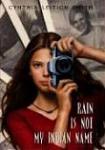
Rain is not my Indian Name
by Cynthia Leitich Smith

Unusual Chickens for the Exceptional Poultry Farmer by Kelly Jones

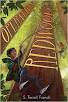
Operation Redwood 9780385755528by S. Terrell FrenchUnknown

Shadows of Sherwood by Kekla Magoon51Q-2FElUvL._SX329_BO1,204,203,200_

I’d love to hear about books that you felt did a good job of representing the biracial experience.  Let me know what books I should be highlighting and I’ll add them to this post and ask the buyer to get them for my bookstore.

Lemony Snicket’s Particularly Unfortunate Event

Last week at the National Book Awards, Jacqueline Woodson, who is African American, won for Best Young People’s Literature. Immediately afterward, Daniel Handler, who is Lemony Snicket, made a watermelon joke.

A video is here, and this transcript was made by David Perry:

Woodson: Thank you for your love of books, and thank you for changing the world.

[music]

Handler: I told you! I told Jackie she was going to win. And I said that if she won, I would tell all of you something I learned about her this summer, which is that Jackie Woodson is allergic to watermelon. Just let that sink in your mind.

And I said you have to put that in a book. And she said, you put that in a book.

And I said I am only writing a book about a black girl who is allergic to watermelon if I get a blurb from you, Cornell West, Toni Morisson, and Barack Obama saying, “This guy’s ok! This guy’s fine!”

Alright

[cackle]

Alright, we’ll talk about it later.

I first learned of this alleged joke by following a Twitter link to a Horn Books blog entry by Roger Sutton titled, “Being a White Guy in Children’s Books.”

Sutton touches on issues of diversity and male privilege in children’s publishing, but also suggests: that Handler is guilty of “overreach,” as if there were some less objectionable version of this particular joke; that Handler mistakenly thought he was “cool enough” to pull off such a joke, as if another humorist might have had better luck at it; and that Sutton, or any other white male, can’t complain too much because they could have easily “fallen into the same trap.”

I strongly disagree with all three of these implications.

First, take a look at the structure of Handler’s joke. At its core is an observation that’s only ironic or amusing to someone who buys into an infamously offensive racial stereotype, and which anyway has nothing to do with Woodson’s literary accomplishments. This was not a risky joke that hovered just beyond Handler’s comedic reach, as Sutton implies. This was an unfunny statement that would have been equally inappropriate to the venue no matter how Handler could have told it.

Is Sutton at least right that the joke might have worked in a different context if only Handler were “cool” enough to pull it off? I don’t know whether Sutton is using “cool” as that Fonzie-in-a-leather-jacket mix of confidence and style that lets some people get away with breaking the rules, or as a euphemism for…something else.

Either way, let’s assume a “cool” comedian like Chris Rock were able to make a successful joke about Jacqueline Woodson’s watermelon allergy. So what? That would be entirely irrelevant because Daniel Handler is not Chris Rock, and because the National Book Awards are not an HBO comedy special.

So if it’s not the joke that failed, or the insufficient “coolness” of the joke teller, then what exactly is the trap that Sutton thinks Handler fell into?

I’d like to posit that this was a classic example of filter-fail.

We all have thoughts we would never say out loud—and I mean all of us humans, not just white males like Daniel Handler, Roger Sutton, and myself. Our senses of humor are built over a lifetime, based on personal experience, and influenced by the society we live in, largely beyond our conscious control. Once you hear a racist joke, it can never be unheard. Luckily, our brains come equipped with filters. When we know a joke is wrong, hurtful, offensive, and unfunny, we can choose not to pass it along to other people.

Handler’s contextual disclaimer emphasized how aware he was that a watermelon joke would be too toxic for him to write into a book, so it’s mind-boggling that he would opt instead to say it out loud to an auditorium full of people—not as an off-the-cuff remark that reached too far and fell flat, but as a story that took months of planning and reflection beforehand.

On the basis of a private conversation that we have no other record of, Handler believed he had Woodson’s permission to tell a racist joke about her, and that such permission would keep anyone else from being offended. No matter how cool you might be, there is no way to ever pull that off.

If Daniel Handler’s internal filters had been working properly, telling him which jokes can be shared with others and which should be smothered, none of us would ever need to know that Lemony Snicket is amused by such things as watermelon allergies among people of color.

But now we do.

Is Sutton right to worry that he himself might suffer a filter-fail under similar circumstances? Or that this is in any way a problem exclusive to white males? Is it wrong for him to empathize with Handler? Is it wrong for me not to?

I am holding Handler to a higher standard than other people, not because of Handler’s gender or skin color, but because he is a professional humorist who writes for children. I also write humor for children, and only wish I could do it half as well as Handler can. He has long been an idol and role model for me, especially in the way he has developed his literary voice and professional persona. I want to do what he does.

But while I can see myself making any number of embarrassing gaffes if I were given a microphone in a public setting, I can’t imagine ever joking about Jacqueline Woodson’s watermelon allergy, or finding humor in such a situation.

It’s personally horrifying for me to think that a watermelon joke could come from the same quirky wit that has produced books that have made me laugh out loud. I won’t be able to read those books quite the same way as before.

And for me, that’s just from the second-hand offense I feel on behalf of other people, a tiny fraction of the outrage and betrayal expressed by Nikky Finney and other commentators who experience racism in their daily lives, and who reasonably expected a literary awards presentation to be a safe zone.

To Handler’s credit, he owned up to his filter-fail in a series of tweets and pledged $10,000 to the We Need Diverse Books campaign, with additional matching funds of up to $100,000. Not that he can pay, buy, or donate his way to forgiveness, but it is refreshing to have at least some attempt at restitution.

We need diverse voices so that our children internalize actual viewpoints instead of ugly stereotypes. That way they can grow up to tell jokes about all the great stories they’ve read, rather than the hateful old jokes of the past.