Posts Tagged diversity

WNDMG Author Interview: Pablo Cartaya

Let’s give a warm welcome to Pablo Cartaya for joining us at the Mixed-Up Files blog. Pablo is an internationally acclaimed author, screenwriter, speaker, and educator. His work has been featured in the New York Times, Washington Post, NBC, and on Oprah’s Booklist. Thank you so much for joining us! It’s a pleasure to have you. Let’s talk about your books and writing!

Pablo! You have had some of the coolest jobs! Umm, Ricky Martin’s body double, for one? When do you find the time to write? Seriously, do you have a daily schedule, or is it buckle down because the book is due, or somewhere in between?

I’ve had some pretty fun, wild jobs (movie equipment truck driver, Spanish dubbing actor, hand model), there’ve been a lot of odd jobs. I think when you endeavor to work in a creative field, you have to figure out any way to keep working to support the dream you have to be a creative. I’ve learned over many years of working odd jobs that if I wanted to dedicate time to my craft, I had to compartmentalize myself and the responsibilities I had. I don’t really do daily schedules per se, but I do have “assignments” that I know I have to complete. Those assignments could be book deadlines, answering interview questions (which, by the way, thank you!), or any number of speaking gigs I may have. And I’ve learned to put each “assignment” into a category, and I set out to check them off one by one. That way, the amount of work never feels overwhelming. Can it get overwhelming even with this compartmentalized structure? Oh, for sure. But the guideline helps!


Speaking of writing schedules, let’s talk about how you write. You write all of your drafts in longhand. Do you just get the draft out, or do you also edit as you go in longhand? Once you type it into the computer, are you working in Word, or do you use a program like Scrivener?

I like the tactile process of writing longhand. Is it an efficient way to write when there are deadlines and loads of planning to do to organize a novel? Probably not. But I think artists need to find the way of working that suits them and go with that. I love the way a pen glides across a paper. I love doodles and scribbles and seeing words crossed out. Because of time constraints, I don’t try to write an entire draft longhand anymore, but I do begin every story I write with a pen and a pad. Then, I open Word and begin drafting what I call my messy draft. I actually call it something else, but this is a family blog. I don’t worry about that draft being perfect. I just need it to be on my computer. My long-time editor said to me once, “The purpose of a first draft is to merely exist.” I think that was a nice way of saying my draft was total garbage, but the idea stuck with me. I don’t need the draft to be perfect. I just need it to exist. From there, the revisions are where I uncover all the things I’m trying to say in the story. I love the art of discovering the story.


Having had all of these exciting life experiences, how many of them come into play when you’re writing? How much of your life shows up on the page?

There aren’t always direct life experiences that show up on the page. But there are amalgamations of feelings, family history, experiences, and things that I read that inspire the questions I’m trying to answer when I write a story. I read a great deal. Newspapers, magazines, books. Loads of books. I believe that’s a great way to understand what you like, what you’re questioning, and what you want to learn more about. From there, feelings take a central role in the process, and I guide my writing from that space. Then, my editor comes in and tells me to clean everything up. Haha.


Did you always want to be a writer? You have so many credits as a performer. Was that your first choice? How did you land your first credit as a professional writer?

I always wanted to be a storyteller. And that has taken many forms throughout my life. I played sports up to college and loved the drama and excitement of competition. As an actor, I was always drawn to the interiority of a role I was playing. Even if it was an extra in a commercial. I wanted to know the character’s story. Writing was a natural progression of that love of storytelling. I took a break from acting when my daughter was born. And I co-wrote a picture book with a pastry chef friend called Tina Cocolina: Queen of the Cupcakes. When the book came out, I visited schools and gave interactive performances, and loved how the kids responded to not only the book but the performance. After graduate school, I turned my focus to writing books about the middle-grade years and began to travel the country talking to middle schoolers about those books. But I did it in a performative way that spoke to the storytelling aspects of writing and being inspired by life’s experiences. Now I travel everywhere talking to kids, educators, and parents in communities all over the world about the power of storytelling. I’ve gotten to blend the performance side of me with the writing to be the kind of storyteller I always hoped to be. I even get to play ball sometimes with kids when I visit a school. It’s pretty dope.


Let’s talk about your latest book, A Hero’s Guide to Summer Vacation (Penguin May 2025). How did the idea for the book come about?

Remember my editor’s kind words about the purpose of a first draft is to merely exist? Yeah, well, the first draft of A Hero’s Guide to Summer Vacation had that kind of first draft. To be honest, it wasn’t good. I turned it in May 2020, and it didn’t have my very best work in it. Then, draft after draft, I kept dealing with many personal tragedies, and I just couldn’t find my way to finishing. But I was on a contract, and I had to deliver something. So, I started collecting all the iterations of drafts I had started and stopped, and tried to understand what I was trying to say with the variations of the story I was attempting to finish. I gave myself a guidepost (using the Hero’s Journey) to help frame the story. And then I began using different narrators to help guide the story along. Adding a road trip gave me a clear start and stop to work with. Gonzalo, the thirteen-year-old main character, starts in Mendocino, California, and has to drive cross-country with his ornery and very famous children’s book author grandfather, Alberto, down to Miami, Florida. By keeping them in a confined space like an old car with no air-conditioning, I was able to dive into what the characters were trying to tell me. From there, I discovered the characters were using their art to try and give a voice to their grief. And as my main character, Gonzalo, travels across the country, he discovers his own voice and becomes the hero of his own story. It wasn’t a straight line to get to the end, but we got there. Like any good road trip.


How much did the book change from inception to finished draft?

Like I mentioned above, the book changed quite a bit, but also didn’t really change at all. It became a journey. The variations of drafts became foundational pieces to the story that was ultimately trying to be told. I’m eternally grateful to my editor and the team at Kokila for their patience and faith in me to get it done.


What do you love about writing for middle graders (as opposed to YA or picture books)?

I love the blunt honesty of middle graders. They are emotional, rowdy, hilarious, and don’t suffer fools. I respect the heck out of them. I love the littles (the picture book ages). And I admire the YA readers tremendously. But there’s something about middle graders that I just love. Probably because I remember what it was like to be in middle school. I want to talk to them and write stories for them in a way I would’ve wanted someone doing for me at that age.


What advice would you give to those wanting to write for middle graders?

If you’re an adult writing for middle graders, keep your adult voice out of the story. Kids can tell when someone is trying to talk down to them. Be honest. Be respectful. Have a little fun. Don’t take yourself too seriously, but treat your story with respect.


What are you working on now? What big adventures do you have planned next?

Oh, I CANNOT WAIT to tell you!!! It’s gonna be super cool. Check back in with me in a bit. 😊


Bonus Question: What’s the most memorable comment you’ve received about your work?

I’ve received so many wonderful comments over the years. I’m grateful to every educator, parent, and kid who has ever honored me with reading or hearing and connecting with my stories. One time, my son’s principal called me into the office. She was crying while holding one of my books. The office staff was looking like, what the heck is happening? The principal approached and stretched out the book towards me, then said, “Thank you for this.” Then she said, and I’m paraphrasing, something like, “Our family used your book as a way to finally say goodbye to our grandmother.” It was very special. During one of my school visits, an educator said after a presentation, “He speaks middle school.” Heck yeah, I do. And I think one of my favorites is a kid standing up in the middle of one of my talks and saying, “Pero, like, why is your story exactly like mine??” I love my job.

Interview with Alexandra Alessandri about her Latest Book GROW UP, LUCHY ZAPATA

It is my extreme pleasure to welcome Alexandra Alessandri to the Mixed Up Files today.

Q&A With Writer Alexandra Alessandri: Diversity, Equity & Inclusion in Literature & Language Arts Education

Alexandra Alessandri

Alexandra Alessandri is the award-winning author of several books for children, including Isabel and Her Colores go to School, The Enchanted Life of Valentina Mejía, and Lupita’s Hurricane Palomitas. The daughter of Colombian immigrants, she is also an educator and a poet. She lives in Florida with her husband and son and today, she’s here to tell us about her latest book GROW UP, LUCY ZAPATA.

About the Book and Characters:

Luchy and Cami’s friendship is central to the story. What inspired you to explore the ups and downs of a long-time friendship during such a pivotal time as middle school?

The inspiration for Luchy and Cami’s friendship began as my son finished fifth grade and embarked on his middle school journey. I was revising another project, but as I lived through those moments with him, navigating the messy feelings of excitement, fear, and anticipation, I couldn’t help but see the seeds of a story. Later, as he went through a friendship breakup, I remembered my own painful one, and the seeds were planted. Like Luchy and Cami, my friend and I had been BFFs since we were two, and like Luchy, I was ditched for the “cool” kids when she finally came to my school. As I thought about our middle school experiences three decades apart, I couldn’t help but reflect on the changes that come during this transition from elementary to middle school, especially when there’s a new school or when there’s a shift in personal circumstances. Slowly, as I wrote down what I was remembering and witnessing, from who-likes-whom and soccer tryouts to teachers and friendships, the ups and downs of Luchy and Cami’s relationship came into clear focus.

NOT COOL ENOUGH

Middle Schoolers Judge If Adults Are Cool - YouTube

The story touches on the idea of feeling “too immature” or “not cool enough.” How do you think this resonates with young readers, especially those navigating new social dynamics in middle school?

I think young readers are especially keen at feeling the push-pull that comes with growing up, and they’ll hopefully connect with Luchy, Cami, and Mateo’s journey because it’ll feel real to them. They, too, are juggling the desire to grow up with the fear of letting go of their childhood. As students move on to middle school and enter new social dynamics there, there’s a stronger urge to fit in. The fear of their peers perceiving them as “too immature” or “not cool enough” rises, in part because we have this innate desire to belong. And in showing three middle school characters who are “growing up” in different ways and at different rates, I’m hoping that young readers will recognize their own realities and know that it’s okay to grow up at your own pace.

On Diversity and Cultural Identity:

As a Colombian American author, how did your own experiences influence the way you portrayed

Is It Colombia or Columbia?

Luchy’s and Cami’s cultural backgrounds?

I knew early on that I wanted to explore the various ways we might connect to our culture, but specifically, the ways Colombian Americans might experience this part of their identity. Often, I write protagonists who share my cultural heritage, but as I dove into Luchy’s story, I decided both she and Cami would be Colombian American. It’s what would make their families connect, as often happens to those living in the diaspora. The city Luchy’s and Cami’s families come from is Manizales, my dad’s birthplace, and this part of the backstory was inspired by a real event, where I met someone as an adult who was from Manizales and who knew my uncle.

However, as I wrote, I discovered that despite their shared connection to the motherland, they experienced their identity quite differently, and this stemmed, in part, from comparing my own first-gen experience to my son’s second-gen one. In some ways, I’m most like Cami, having grown up speaking fluent Spanish and visiting Colombia often so there was never a question of whether I was truly Colombian—even if sometimes I didn’t feel enough of a Colombian because I wasn’t born there, a sentiment that Luchy feels keenly. My son, on the other hand, is more like Luchy; he doesn’t speak Spanish, but he still connects to this part of his culture in other ways, like through music, food, and soccer.

Incorporating Colmbian Culture into the Story

In what ways did you incorporate Colombian culture into the story, and how do you hope it will resonate with both Colombian American readers and those from different backgrounds?

Columbia University in the City of New York

I focused on including details that Luchy would’ve felt drawn to—like the food and fruit juices her abui makes, which are staples in many Colombian households, as well as the art and colors found in Colombia’s murals peppered throughout cities like Medellín and Cartagena. The murals described actually exist, and I was lucky to visit them during my last trip there. Luchy’s nickname for Mateo, Tigre, is also a nod toward Colombia’s Ramadel Falcao, a soccer star that she would’ve watched with her papi. In those moments, connected to those other elements of her identity as foodie, artist, and athlete, she would find that she’s not as far removed from her culture as she might think. Also, as a big fan of renowned Colombian author Gabriel García Márquez and magical realism, I left a few nuggets in Luchy’s art project, the one that ultimately leads to her epiphany about Colombia, and Mami’s scrapbooks and Luchy’s research take her to some beautiful and wonderous landscapes of Colombia. My hope is that those who are Colombian American might immediately recognize their own story in these pages while those from different backgrounds might discover a different story about Colombia and Colombian Americans.


Writing for Middle Graders:

The Importance of Middle School ...

Middle school can be such a transformative time. What drew you to write about this age group, and how do you hope your book will impact readers going through similar experiences?


One of the things I love about writing for this age group is just how much change happens in a few short years—physically, emotionally, socially, and intellectually. Young readers are expanding their circles, figuring out who they are in relation to their families, their peers, and their communities. They’re learning what they love, and don’t love, and what they feel passionate about. It’s a wonderful time of transformation—of metamórfosis like Abui says. One of the recurring feedback I’ve been receiving about Luchy’s story is how real it is—and I love it! In these pages, I hope Luchy, Cami, and Mateo will become my readers’ friends, that in following Luchy in her attempts at salvaging her friendship with Cami, they might find hope that even if things don’t work out the way we want, it’ll still be okay. And hope, in the end, is what keeps us going.

Friendship

Friendship is such a key theme in the book. How did you approach writing the evolving dynamics between Luchy, Cami, and Mateo?

6 ways to help your child thrive socially in middle school - Phyllis Fagell


To discover and understand the evolving dynamics between Luchy, Cami, and Mateo, I did a lot of freewriting and brainstorming exercises from each of their different perspectives. I wanted characters who leapt off the page, who felt real and familiar and who each had their own struggles and conflicts, and to do that, I had to spend time with each character individually, separate from Luchy. I sat with the characters and got to know them, their families, their fears, and desires. The more time I spent with each character, the more I discovered what made them tick, what their vulnerabilities and strengths were—and this helped create the evolving dynamics between the three.

Take Away Message

If there’s one message you hope readers take away from Luchy’s story, what would it be?

Key Takeaways Written By Man In The Note Stock Photo - Download Image Now - Key, Take Out Food, Sign - iStock

That they are enough just the way they are, and that the way they experience their identity is valid and real. Don’t let anyone tell you otherwise.

What’s Next?

Can you share what’s next for you as an author? Are there any new projects on the horizon?

Colorful Kaleidoscope Seamless Pattern Decorative Hexagon Ornament Geometric Design Element Rainbow Wallpaper Fabric Paper Furniture Print Abstract Flower Or Star Psychedelic Style Stock Photo - Download Image Now - iStock

Up next, I have a short story titled “Kaleidscope,” about a girl who emerges from grief and battles with fibromyalgia to discover how to love herself again, in the anthology All the Love Under the Vast Sky, a collection of short stories in verse surrounding the theme of love—look for it on January 14, 2025! I also have picture book coming in 2026 about an anxious girl nicknamed “Pajarito” and the nightly walks with her mami, as Pajarito wonders if she’ll ever feel brave enough to fly out on her own. Like with my current books, these two are also deeply inspired by my lived experiences, including my own journey with fibromyalgia.

Connect with Alexandra

You can connect with Alexandra and learn more about all her wonderful books here.

More Than Mysteries

You don’t have to be a super sleuth to discover these recently published mysteries written by diverse authors. Readers will be intrigued trying to puzzle out whodunit in these page-turning stories. Yes, they will encounter clues, red herrings and action packed scenes, but, most importantly, they will be thrilled to meet relatable young detectives who will inspire them to care about the questions they are seeking to answer. What stands out about these titles is that they are layered with bigger questions – such as injustices in Black History, or the unresolved lives of supernatural spirits, class prejudices in resort towns, the difficulties of true friendship, or ethics in celebrity TV shows. Without a doubt, readers will be entertained.

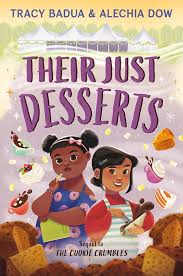
THEIR JUST DESSERTS


Their Just Desserts by Tracy Badua

Laila is thrilled to be on the TV set of a kid’s bake show, while her best friend Lucy, inspiring journalist, would rather be investigating a news story. Both best friends are determined to solve the mystery of the stolen jewels to help their friend, whose father has been accused of this crime. The girls strong personalities, and friendship difficulties, matched with the delicious baking scenes and excitement of the investigation are captivating.


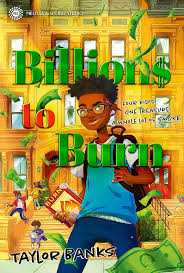
Billions to Burn

Billions to Burn by Taylor Banks

Clever puzzles, high jinx, and treasure maps, fuel Zeus’s cross country quest to find his grandfather. Along the way he and his three friends are chased by scary henchmen but also are presented with opportunities to learn about the Harlem Renaissance and other aspects of the injustices to Blacks in American History. The inclusion of these thought provoking themes are layered in a natural and fascinating way. The action escalates, and ends with a cliff hanger. Keep your eyes open for a sequel.


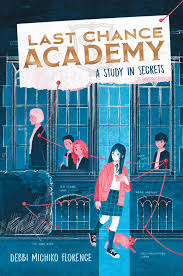
A STUDY IN SECRET

A Study in Secrets by Debbi Michiko Florence

Megumi ‘Meg’ Mizuno is an unwilling student at Leland Chase aka The Last Chance Academy. After her mother’s death two years ago, she has spiraled academically, and longs to spend more time with her busy and distracted father. When a silver envelope is slipped under her door she sees the chance to solve a scavenger hunt and win the luxury vacation prize that would bring her closer to her father. Meg, who has had difficulties making friends in the past, finds she needs to begin trusting her classmates, or else lose any chance of winning the hunt. The private school, shrouded in secrets, is the perfect backdrop for this series opener – as is the unexpected ending.


Blood in the Water by Tiffany D. Jackson

Kaylani is trying to make the best of her summer visiting her family’s hoity-toity friends. It shouldn’t be too hard, after all Martha’s Vineyard is full of beaches, kids her age and interesting Black History. When a young boy dies a shocking death, Kaylani is thrown into the role of detective. As Kaylani uncovers clues she’s confronted with secrets about her own life. Plot twists and emotional turns will keep readers on the edge of their seats.


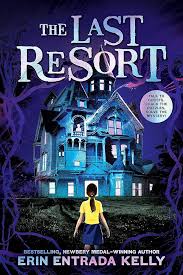
THE LAST RESORT

Last Resort by Erin Entrada Kelly

Lila has never met her Grandpa Clem, and is not to thrilled when her parents uproot her to spend time at his Inn to sort things out after his death. On arrival, she begins to see and communicate with ghosts, who tell her that her grandfather was murdered. With the help of a boy next door, Lila sets out to find the truth so she can release the spirits and allow them to pass to the other world. This spine chilling spooky mystery includes interactive elements. Using a QR code, readers can connect with the ghosts and conduct investigations of their own.


Opal Watson: Private Eye by Brittany J.Thurman

Opal’s a confident detective who has solved many a case for her friends and family. Now that she’s moved to the Crescent, the new apartment building that her dad is managing in Chicago, she’s confronted with a super challenging mystery. When her best friend and neighbor, Madison hears a strange noise in her bathroom, Opal investigates and finds a much bigger mystery – one that may threaten the existence of the entire building. She and a reluctant partner are assigned a video project about The Great Migration, and discover more surprising secrets about their building.


Jen Kraar
Jen Kraar grew up chasing lizards in India, making up stories about the residents of the spirit houses in Thailand, and riding retired racehorses in Singapore. On occasion she would visit the Met in NYC, and, like Claudia and Jamie, dream of splashing among the muse statues in the cafeteria’s fountain. Jen explores themes of finding home in the middle grade novels and picture books she writes. Now, as a Manager at Pittsburgh’s beloved City of Asylum Bookstore, she builds a diverse collection of books, talks about kid lit with customers young and old, and reads every middle grade ARC (advanced reading copy) she can get her hands on. When Jen is not reading or writing she is baking scones, knitting while viewing French detective shows with her partner, or visiting her daughters in Brooklyn and Durham.