
Posts Tagged contemporary realistic middle-grade fiction

Support local booksellers with these new releases!

Now more than ever we need to support our local book sellers and children’s book authors. And, we need to keep fueling the minds of the middle-grade readers in our lives. What better way than to purchase these up-and-coming releases geared toward this awesome age group.  Note that each has a link to click on to an independent book seller near you. My favorite local book store, Gathering Volumes in Perrysburg, Ohio, was more than happy to take my order over the phone last week and ship out a gift to my niece. There are some great reads on this list! Happy shopping!

Greystone Secrets #2: The Deceivers by Margaret Peterson Haddix, HarperCollins Publishers, April 7

Support Independent Bookstores - Visit IndieBound.org
Shop your local indie bookstore

The second book in the Greystone Secrets series from the master of plot twists, Margaret Peterson Haddix—perfect for fans of A Wrinkle in Time and The City of Ember!

Until their mother vanished, the Greystone kids—Chess, Emma, and Finn—knew nothing about the other world.

Everything is different there. It’s a mirror image, except things are wrong. Evil. Their mother tried to fix it, but she and an ally got trapped there along with Ms. Morales, their friend Natalie’s mom.

Now the four kids—brave Chess, smart Emma, kind Finn, and savvy Natalie—are determined to rescue everyone.

To do so, they have to go back: into the other world, where even telling the truth can be illegal.

But in such a terrifying place, Chess doubts he can ever be brave enough. Despite all her brains, Emma can’t seem to break the code. With everything spiraling out of control, Finn has to pretend he’s okay.

And for Natalie, the lies of the other world include some she wishes were actually true. What if she’s gotten so used to lying she no longer knows what to believe?

The second book in the Greystone Secrets series, The Deceivers, by bestselling author Margaret Peterson Haddix, continues the twisty and suspenseful story of the Greystone kids and examines the power of the truth—or a lie—to alter lives, society, and even an entire reality.

The Big, Fun Kids Cookbook, Hearst Home Books, April 7

Support Independent Bookstores - Visit IndieBound.org

Shop your local indie bookstore
It’s the ultimate kids cookbook from America’s #1 food magazine: 150+ fun, easy recipes for young cooks, plus bonus games and food trivia!

The Big, Fun Kids Cookbook from Food Network Magazine gives young food lovers everything they need to succeed in the kitchen. Each recipe is totally foolproof and easy to follow, with color photos and tips to help beginners get excited about cooking. The book includes recipes for breakfast, lunch, dinner, snacks and dessert—all from the trusted chefs in Food Network’s test kitchen.

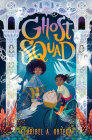
Ghost Squad by Claribel Ortega, Scholastic, April 7
Support Independent Bookstores - Visit IndieBound.org
Shop your local indie bookstore
Coco meets Stranger Things with a hint of Ghostbusters in this action-packed supernatural fantasy.

For Lucely Luna, ghosts are more than just the family business.

Shortly before Halloween, Lucely and her best friend, Syd, cast a spell that accidentally awakens malicious spirits, wreaking havoc throughout St. Augustine. Together, they must join forces with Syd’s witch grandmother, Babette, and her tubby tabby, Chunk, to fight the haunting head-on and reverse the curse to save the town and Lucely’s firefly spirits before it’s too late.

With the family dynamics of Coco and action-packed adventure of Ghostbusters, Claribel A. Ortega delivers both a thrillingly spooky and delightfully sweet debut novel.

Kate the Chemist: The Big Book of Experiments, by Kate Biberdorf, Penguin Young Readers Group, April 14

Support Independent Bookstores - Visit IndieBound.org

Shop your local indie bookstore

Packed with 25 incredible science experiments kids can do at home, Kate the Chemist introduces young scientists to the fascinating world of STEM!

Have you ever wondered how to make a volcano explode? Or why dropping dry ice in soap bubbles forms neon brains?

With 25 kid-friendly science experiments, and stunning full-color photographs, Kate the Chemist’s big book of experiments, shows kids just how fun—and easy—it is to be a scientist. Learn how to make slime, fake tattoos, edible snot, and more! Experiments include step-by-step instructions, an ingredients list, full color photographs, a messiness factor rating, and a note from Kate.

Create future engineers, scientists, and inventors, and introduce your child to the world of STEM with Kate the Chemist: The Big Book of Experiments!

And, last but not least, this title came out last month, but wanted to shed some light on this great story!

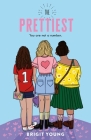
The Prettiest by Brigit Young, Roaring Brook Press, April 14
Support Independent Bookstores - Visit IndieBound.org

Shop your local indie bookstore

A must-read for young feminists, The Prettiest is an incisive, empowering novel by Brigit Young about fighting back against sexism and objectification.

THE PRETTIEST: It’s the last thing Eve Hoffmann expected to be, the only thing Sophie Kane wants to be, and something Nessa Flores-Brady knows she’ll never be . . . until a list appears online, ranking the top fifty prettiest girls in the eighth grade.

Eve is disgusted by the way her body is suddenly being objectified by everyone around her.

Sophie is sick of the bullying she’s endured after being relegated to number two.

And Nessa is tired of everyone else trying to tell her who she is.

It’s time for a takedown. As the three girls band together, they begin to stand up not just for themselves, but for one another, too.

Thomas Jefferson and the Tripoli Pirates by Brian Kilmeade and Don Yeager, Penguin Young Readers Group, April 21

Support Independent Bookstores - Visit IndieBound.org
Shop your local indie bookstore
A page-turning middle-grade adaptation of the New York Times bestseller about how a newly independent nation was challenged by foreign powers and what happened when America’s third president decided to stand up to intimidation.

When Thomas Jefferson became president in 1801, America was deeply in debt and needed its economy to grow quickly, but its merchant ships were under attack. Pirates from North Africa routinely captured American sailors and held them as captives demanding ransom and tribute far beyond what the new country could afford.

Jefferson found it impossible to negotiate a truce, and decided to move beyond diplomacy. He sent the U.S. Navy and Marines to blockade Tripoli—launching the Barbary Wars and beginning America’s journey toward future superpower status.

This vivid and accessible young readers adaptation of the New York Times bestseller features an exclusive new introduction, extensive back matter, and eye-catching art throughout. Chronicling a crucial moment in American history, this historical thriller will excite and inspire the next generation of patriots.

Echo Mountain by Lauren Wolk, Penguin Young Readers Group, April 21

Support Independent Bookstores - Visit IndieBound.org

Shop your local indie bookstore
The Newbery Honor–winning author of Wolf Hollow and Beyond the Bright Sea returns with the story of an unforgettable young heroine in Depression-era Maine.

“Brilliant.” –Lynda Mullaly Hunt, bestselling author of Fish in a Tree

When the Great Depression takes almost everything they own, Ellie’s family is forced to leave their home in town and start over in the untamed forests of nearby Echo Mountain. Ellie has found a welcome freedom, and a love of the natural world, in her new life on the mountain. But there is little joy, even for Ellie, as her family struggles with the aftermath of an accident that has left her father in a coma. An accident unfairly blamed on Ellie.

Determined to help her father, Ellie will make her way to the top of the mountain in search of the healing secrets of a woman known only as “the hag.” But the hag, and the mountain, still have many untold stories left to reveal and, with them, a fresh chance at happiness.

Echo Mountain is celebration of finding your own path and becoming your truest self. Newbery Honor– and Scott O’Dell Award–winning author Lauren Wolk weaves a stunning tale of resilience, persistence, and friendship across three generations of families, set against the rough and ragged beauty of the mountain they all call home.

Ways to Make Sunshine by Renee Watson, Bloombury USA, April 28

Support Independent Bookstores - Visit IndieBound.org
Shop your local indie bookstore
From Newbery Honor and Coretta Scott King Author Award winner Renée Watson comes the first book in a young middle grade series about Ryan Hart, a girl who is pure spirit, kindness, and sunshine.

Ryan Hart has a lot on her mind—school, self-image, and especially family. Her dad finally has a new job, but money is tight. That means some changes, like selling their second car and moving into a new (old) house. But Ryan is a girl who knows how to make sunshine out of setbacks. As her brother says when he raps about her, she’s got the talent that matters most: it’s a talent that can’t be seen, she’s nice, not mean!

Ryan is all about trying to see the best in people, to be a good daughter, a good sister, a good friend. But even if her life isn’t everything she would wish for, when her big brother is infuriating, her parents don’t quite understand, and the unexpected happens, she always finds a way forward, with grace and wit. And plenty of sunshine.

Acclaimed author Renée Watson writes her own version of Ramona Quimby, one starring a Black girl and her family, in this start to a charming new series.

Living the Confidence Code: Real Girls, Real Stories, Real Confidence by Katty Kay, Claire Shipman and JillEllyn Riley, HarperCollins Publishers, April 28.

Support Independent Bookstores - Visit IndieBound.org
Shop your local indie bookstore
New from the New York Times, USA Today, and Wall Street Journal bestselling authors of The Confidence Code for Girls!

The best way to understand confidence is to see it in action. That’s why bestselling authors Katty Kay, Claire Shipman, and JillEllyn Riley have collected 30 true stories of real girls, pursuing their passions, struggling and stumbling, but along the way figuring out how to build their own special brand of confidence.

From Bali to Brazil, South Africa to Seattle, Australia to Afghanistan, these girls took risks, doubted themselves, and sometimes failed. But they also hung in there when things got hard. Along the way they discovered what matters to them: everything from protesting contaminated water to championing inclusive books to the accessibility of girls’ basketball shoes, and so much more.

Different goals, different stories, different personalities, all illustrating the multitude of ways to be confident in the world.

Packed with photos, graphic novel strips, and engaging interviews, Living the Confidence Code proves that no matter who you are, or how old you are, nothing is out of reach when you decide to try. Join this growing global community of powerful girls and imagine—what would you like to do, once you tap into your confidence? How will you write your story?

Hunger Winter: A World War II Novel by Rob Currie, Tyndale Publishers

Support Independent Bookstores - Visit IndieBound.org
Shop your local indie bookstore

The thrilling story of one boy’s quest to find his father and protect his younger sister during the great Dutch famine of World War II.
“Sometimes you have to take a chance, because it’s the only chance you have.”

Thirteen-year-old Dirk has been the man of the house since his papa disappeared while fighting against the Nazis with the Dutch Resistance. When the Gestapo arrests Dirk’s older sister, who is also a Resistance fighter, Dirk fears that he and his little sister, Anna, might be next.

With only pockets full of food and his sister asleep in his arms, Dirk runs away to find his father. As Dirk leads Anna across the war-torn Netherlands, from farmyards to work camps, he must rely on his wits and his father’s teaching to find his way.

Middle Grade Student-Produced Book Trailers

***When I thought about sharing this middle grade learning project with you all just a few weeks ago, I really wasn’t thinking I’d be opening with the following paragraph. Hopefully, everyone is weathering necessary school closings as best we can. Teachers, librarians, and parents have such a critical role to play in our world’s response to this pandemic; let’s keep teaching our kids that we all learn amazing lessons from books, both fiction and non-fiction, and that sharing good stories benefits all learners. I hope this book trailer project idea might work for your classroom situation in the coming weeks, whether you’re face-to-face with your kids or working remotely with them.***

In school? Teaching from home? Need an extra project idea to supplement your kids’ online academics? Whether you are a middle grade teacher, a librarian, or a homeschooling parent, it may be a good time to try a project that employs a little freedom and a lot of creativity: middle grade student-produced book trailers.

Student-produced book trailers are a fantastic way to inspire readership of new books, incorporate technology into learning, employ writing skills, and practice project planning and organization. If your school is in session, this is the kind of project that will energize your students despite the springtime sluggishness that tends to set in around now, or to regain the attention of those who’ve grown hard to hook. Or, if your school is among the many closing for several weeks and suddenly implementing online learning, your readers may need a project with wide parameters to which they can bring a highly individualized amount of knowledge and expertise.

A book trailer project addresses multiple areas of standards for learning, as well: reading, writing, speaking, listening, technology…and depending on the content of the book for which the trailer is produced, possibly history, science, world studies/cultures, and others!

Here’s a step-by-step that worked with my students recently:

  1. Ask students to think about movie trailers out there right now, and trailers they can recall from recent years. Students’ contributions  can be listed on the board, in the virtual classroom collaboration space, or on a group email. Have the class brainstorm and share characteristics that made those movie trailers memorable.
  2. Introduce the concept of a book trailer via discussion or info sheet. Depending on ages and interests, some students may not realize the wealth of beautiful book trailers available online that pique attention and provide visuals for a new book or series. Professionally-created book trailers by authors and publishers employ graphics, video, animation, words, music, and dialogue to craft cinema-worthy advertisements, and you can share wonderful examples with a few links.
  3. You will also find many student-produced book trailers, created for the classroom or out of fandom. Watching a variety of both professional and student-produced trailers will give you a clearer idea of the capabilities of your readers, and will allow you to generate a list of required or suggested elements for their student-produced trailers. For example:
  • Book choice (class novel, or independent read?)
  • Video footage, with or without dialogue
  • Still images, saved and cited with source, or taken by the student photographer
  • Labels, captions, and hooks written by the student
  • Quotes from the text, with chapter and page cited
  • Author info
  • An image of the book cover with author’s name
  • Music
  • Voice over
  • Reviews, either borrowed and cited or collected from classmates
  • “Coming Soon” list of similar titles or other titles by the author
  • Color, style, length, pace of the trailer
  • Questions or statements to hook the potential reader
  • Revelation of a certain number of plot points and characters…but don’t reveal the ending!
  1. What about books with characters, situations, or settings that students can’t portray in actual video footage, for whatever reason? Instead of live actors, students might try models or toys for a stop-motion process. Just as effective as costumed actors, isolating symbolic props in interesting scenes or lighting for close-up shots can be mysterious and thought-provoking. There are many more components to a book trailer than the video footage, so if your students don’t have the resources, scrap that part.
  2. Technically speaking…. On what software or web-based design program can your students produce the book trailer? If your students have dedicated laptops, they may have video-producing software at their fingertips. My students made excellent trailers using their laptop camera for video, then easily imported the segments into the video editor. Special effects and music made the video-making experience fun and frustration-free. For those with no laptop or software, kids who have hand-held gadgets (phone, tablet, iPod) will probably already be quite adept at recording video segments and emailing them to themselves for use. iMovie offers templates and tutorials as do free accounts on Animoto, Powtoon, and other web-based presentation programs. A slideshow book trailer is another great option for still images, original text, and presentation effects.

Once book trailers are completed and edited, you can think about ways to use these great middle grade projects in the future: library contests, summer reading program activities, back-to-school night for new students, or homeschool network or coop project sharing.

Thanks as always for reading, and I hope a book trailer project might work for your readers!

American as Paneer Pie: Interview with Author Supriya Kelkar

I’m thrilled to get the chance to talk to Supriya Kelkar about her upcoming book AMERICAN AS PANEER PIE. Get your pre-orders and library requests in now because you are going to want to read this novel as soon as you possibly can. 🙂


Support Independent Bookstores - Visit IndieBound.orgWill you tell us a little about your upcoming book, AMERICAN AS PANEER PIE?

As the only Indian American kid in her small town, Lekha Divekar feels like she has two versions of herself: Home Lekha, who loves watching Bollywood movies and eating Indian food, and School Lekha, who pins her hair over her bindi birthmark and avoids confrontation at all costs, especially when someone teases her for being Indian.

When a girl Lekha’s age moves in across the street, Lekha is excited to hear that her name is Avantika and she’s Desi, too! Finally, there will be someone else around who gets it. But as soon as Avantika speaks, Lekha realizes she has an accent. She’s new to this country, and not at all like Lekha.

To Lekha’s surprise, Avantika does not feel the same way as Lekha about having two separate lives or about the bullying at school. Avantika doesn’t take the bullying quietly. And she proudly displays her culture no matter where she is: at home or at school.

When a racist incident rocks Lekha’s community, Lekha realizes she must make a choice: continue to remain silent or find her voice before it’s too late.


You tackle a lot of big issues in this novel, including racism, micro and macro aggression, and allyship, as well as dilemmas such as friendship pressures, team expectations, and discovering your own way of expressing yourself. How did you balance it all – both in the early stages and editing stages of writing this novel?

This was one of those rare writer moments for me where strangely a lot of things fell into place very neatly while drafting this book, like a puzzle I could solve, even though normally I’m really awful at puzzles! I think because I felt these issues so profoundly, and because so much of Lekha’s experience comes from my life, it somehow came together after I forced myself to really dig deep and go back to memories I had buried. During the editing stages, I was really lucky to have super smart notes from my brilliant editor at Aladdin/Simon & Schuster, Jennifer Ung, that pushed me to look even further into all of these issues and create even more connections to those themes.


One of the things I really loved about this book was the parents. All of them were so engaged, involved, and accessible (even when the kids would prefer them not to be). Would you talk a little about how you created the parents to be so three dimensional, believable, and key to the story and why you thought that was important?

Thank you! I am so glad you found them to be that way! I thought it was really important for the parents to be realistic, caring, flawed people because when I was a kid, I didn’t really realize my parents were individuals who had their own hopes, dreams, and fears. I wanted Lekha to come to that realization a lot earlier than I did so I made sure to try to make them as real as possible. I also thought it was important because racism affects people of all ages and we are constantly evolving and growing and challenging our own prejudices, even as adults.


One of the things that really stood out to me was how you managed to give the reader many entry points into the immigrant experience. As the daughter of an immigrant, I could relate to a number of Lekha’s struggles (Halloween! Sleepovers! Dress!). Are there some aspects of that experience you feel are universal? If readers could come away from this novel with one realization about the immigrant experience, what would you like it to be?

Yes! And now I’m having a flashback to a fight with my mom about a sleepover at a new friend’s house, ha! I think that struggle of wanting to carve out your own identity and independence as a middle schooler while occasionally butting heads with your parents who may want you to do things differently is definitely universal.

I also think sometimes some people overlook immigrants and the immigrant experience, discounting them and othering them, when only one type of story is told about them by nationalistic people and racist, influential people in power. I would hope readers would come away from this novel realizing nobody should be treated as less than.


Oh my gosh, the food! You describe so many amazing dishes in the novel. How much fun was it to write with such attention and care about food? Which of the dishes you mention in the book are your favorites?

It was so fun! I think it was the first time I had ever described so much food in a book. As someone who was teased any time I brought Indian food to school until I no longer brought it, it felt really great and almost powerful to be able to take such pride in describing the Indian dishes in great detail when decades earlier, I would have been mortified to even say their names at school. Samosas with chincha chutney, and mattar paneer are some of my favorite dishes mentioned in the book.


In the acknowledgements you mention that this is the “book of [your] heart. Would you be willing to talk a little bit about that?

This was the most personal book I have ever written. Like Lekha, I grew up in a small town in Michigan that didn’t value diversity. We were taught to not talk about race and to not see color, all while racist incidents were going on all around us. Like Lekha, the words used in the racist incident that rocks her small town were words that have been shouted at me. Like Lekha, I was also guilty of othering Indian-Americans who had recently immigrated here. And like Lekha, I had a deep pride and love for my culture at home and in spaces within the Indian-American community, and an overwhelming sense of shame about it when I was being bullied or othered for it at school.

Writing the book helped me fully embrace who I was as a child and who I am now. It also helped me have a really deep appreciation for everything my parents and our family friends went through when they first arrived in this country. The lines Maya’s grandfather mentions at Thanksgiving that were said to him when he arrived from India in the 1960s and knocked on someone’s door were words that were actually said to my dad when he came here for his Ph.D. in the 1960s.

It felt therapeutic to let out a lot of the microaggressions, othering, and racist incidents that had hurt me as a child but I didn’t really talk about back then because talking about it meant acknowledging I was different or less than. And it felt empowering to say what I wanted to say about these incidents as a kid through Lekha, and to help her find her voice earlier than I had found mine, to speak out against hatred and speak up for what is right.

It’s a book that comes from my heart, one that I would have loved to have had as a kid, and I hope it becomes a beacon of hope for kids who need it.


You write screenplays and picture books in addition to Middle Grade. Can you tell us how your writing process changes depending on the project (if it does) and how you balance so many different forms?

I actually plot novels the same way I write screenplays. I start with character journals, getting to know each character while writing a journal entry from their point of view. I then use the Blake Snyder Beat Sheet to get my important beats down. And then I work on a detailed outline using the three-act structure I was taught to use in my college screenwriting classes. For picture books, I usually just write the story, without trying to outline or do character journals. I find I get the characters’ personalities while writing the actual manuscript for picture books.

One thing I did struggle with when I first made the change from screenwriting to writing novels, (and I probably still have issues with it today), is that in screenwriting, you’re taught to not waste time describing the set or clothing or physical reactions unless they help the plot or are needed for the flow of the script because the script isn’t the final product, a movie is. And a set designer and costume designer and actors and director will be handling the way the set looks, or the clothing, or the physical reactions. So when I had to actually pause to describe all of these things in a novel, it took/(takes) me a while to get it right. I enjoy switching between the forms. It helps keep the creativity flowing. Sometimes I even write a script version of a novel I’m drafting and I’m able to get ideas for the novel from it.


You are also a talented visual artist. (I’m a huge fan of your mixed media/collages). Would you like to talk about how you started doing your art and how it helps or informs your writing?

Thank you so much! I’ve been drawing and painting for as long as I can remember but I started making mixed media/collage art about ten years ago. I started feeling bad about recycling the gorgeous wedding invitations from India that I had been saving over the years any time we would get one in the mail. That’s when I decided instead of getting rid of them, I’d start making mixed media and cut paper collages with them. Lately, whenever I’ve been really stuck with writer’s block, I’ve been making a collage at night. I work on them from about 9pm to midnight and then by the morning, or maybe after another day if it is a more involved collage, I’m able to come up with a solution for what I’m stuck on oftentimes. I think switching up your creative outlet can be really helpful when you feel stuck.


Is there a question you wished I asked, but didn’t?
Does paneer pie taste good? (The answer is a huge yes!)


Can you tell us what’s next for you?

Up next is STRONG AS FIRE, FIERCE AS FLAME, (Tu Books, fall 2020), historical fiction set in 1857 India that challenges who we center in stories and “classics.” In spring 2021 I have a picture book called BINDU’S BINDIS (Sterling) about a young girl who loves to match the shape of her bindis to her grandmother’s. And after that comes THAT THING ABOUT BOLLYWOOD (Aladdin/Simon and Schuster, 2021) about a Bollywood-loving girl who isn’t good at expressing herself, who suddenly gets a magical condition after her parents announce their separation, that causes her to break out into Bollywood song-and-dance numbers to express herself in the most obvious way possible.


Supriya Kelkar - American as Paneer PieSupriya grew up in the Midwest, where she learned Hindi as a child by watching three Hindi movies a week. Winner of the New Visions Award for her middle grade novel AHIMSA, (Tu Books, 2017), Supriya is a screenwriter who has worked on the writing teams for several Hindi films, including Lage Raho Munnabhai and Eklavya: The Royal Guard, India’s entry into the 2007 Academy Awards. She was an associate producer on the Hollywood feature, Broken Horses. Supriya’s books include AHIMSA, THE MANY COLORS OF HARPREET SINGH (Sterling, 2019), AMERICAN AS PANEER PIE (Aladdin/Simon & Schuster, 2020) STRONG AS FIRE, FIERCE AS FLAME (Tu Books, 2020), BINDU’S BINDIS (Sterling, 2021), and THAT THING ABOUT BOLLYWOOD (Aladdin/Simon and Schuster, 2021). Supriya is represented by Kathleen Rushall at the Andrea Brown Literary Agency, and Kim Yau at Paradigm for film/TV rights.

Follow Supriya on Twitter @supriyakelkar_, on Instagram @Supriya.Kelkar, and on Flipgrid.


You can learn more about Supriya and her work (including some of her art) at her website. AMERICAN AS PANEER PIE releases May 12, 2020 and is available for pre-order now. Just follow the link. (Shop your local indie bookstore)