 Today, author Daphne Benedis-Grab chats about her latest middle-grade novel, I KNOW YOUR SECRET—out from Scholastic tomorrow, December 7–and shares her writing secrets. She also tells us all about her role as a public-school librarian (spoiler alert: she loves it) AND and there’s a chance to win a copy of Daphne’s book if you enter the giveaway. Scroll down for details! 👇👇👇
Summary of I Know Your Secret

The email arrives Sunday night: Do exactly what I say, when I say it, or I will reveal your secret.
On Monday morning, seventh graders Owen, Gemma, Ally, and Todd, who have nothing in common and barely know each other, must work together and follow the instructions of an anonymous blackmailer. None of them want to go along with the blackmailer’s instructions, but each of them have a secret they must protect at all costs.
Set during a single day of school, the students race against the clock to complete a disquieting set of tasks, with fast-paced chapters detailing each moment of the day interspersed with a later interview-style recording made by the quartet.
Interview with Daphne Benedis-Grab
MR: Welcome to the Mixed-Up Files, Daphne! Thanks for joining us today.
DBG: I am completely delighted to be here! I am a longtime fan of Mixed-Up Files.
Book Inspiration

MR: First, I need to tell you how much I enjoyed I Know Your Secret—so much so, I gobbled it up in one sitting. What was the impetus for writing it?
DBG: It makes my heart sing to hear this! I wanted to write a book that was hard to put down, and I was inspired by Lois Duncan to try and write such a book. When I was growing up, her thrillers kept me up all night–even the second (and third) readings. So, two-and-a-half years ago, when I began a graduate program to become a school librarian and suddenly found it hard to write stories, I realized I needed to create a story idea I’d find so fun that it would always pull me back in–even after long days with my kiddos, and my homework. I thought about what I’d loved when I was middle-grade age, and that was when I decided I wanted to try my hand at writing a thriller. My goal was to work on a story that was hard to put down while writing it—and that readers would find it hard to put down, too!
Dancing Dialogue

MR: As above, your novel is fun to read and incredibly fast-paced, with loads of twists and turns along the way. What is the secret to writing a book that kids (and MG-loving adults 🙂) can’t put down?
DBG: Thank you so much for that! I think writing a story that is fun to work on every day, that has bits of dialogue dancing in your head when you are on the subway or washing dishes and that makes you happy to think about, is my secret. Another element that makes a book un-put-downable to me is characters who struggle with real things, who are flawed and feel different but come to see that those flaws help them grow—and that those differences are what make them gloriously unique and essential to the world. So, working to create such characters is writing secret number two.
Multiple narrators: Owen, Todd, Ally, and Gemma

MR: The book is written from the perspective of four seventh-grade characters: Owen, Todd, Ally, and Gemma. Each has a secret, and each is terrified of having his or her secret exposed. How did you come up with these four characters? And how were you able to make their voices distinct?
DBG: I discovered when writing a previous MG novel, The Angel Tree, that I love creating books with multiple narrators. As humans when an event takes place, we tend to think we see all sides of it; that our narrative is the narrative. This is in fact almost never true. Any event has multiple perspectives, elements we may not see, and a past leading up to it that we are completely unaware of. With multiple narrators, I can show different sides of the same story so that readers see the complexity of any given event or person.
Talking about Todd…
Todd came to me first; he’s seen by the other characters (and everyone at his school) as a violent kid who lashes out with little provocation. We see this version of the narrative from Gemma, Owen, and Ally—but then we learn Todd’s story: what he is dealing with, why his fuse is so short, and how desperately he needs help. The readers get to see this early on, and then have the satisfaction of the other characters slowly coming to see it too—and seeing how learning Todd’s story changes their narratives and reshapes everything. I started with each character thinking they know the whole story but come to see how much is actually missing, both in their perceptions of each other and the bigger story at play: who is blackmailing them, and why. When they are finally honest with each other, they are able to understand each other as nuanced, complex, and vulnerable beings.
…and Ally, and Owen, and Gemma
Todd is inspired by a boy I knew in elementary school who I always thought was misunderstood and pigeonholed unfairly. I wish I’d done something about it then, and maybe having him in this book is my way of apologizing. Ally is made up of my love of animals as well as grief I have experienced in my life (Ally lost her parents twice: first her birth parents and then the parents who adopted her). Owen is my goofy, silly, over-eager but well intended side. And Gemma is who I wanted to be when I was in middle school: grounded, confident, and never afraid to speak up. Each of them having their own story helped their voices stay distinct. And then there’s that bigger story: who is behind the sinister messages, and why. But that stays secret until you read the book!
Shh…It’s a Secret

MR: Speaking of secrets, the theme of secret keeping—hence, the title—is equally important. What is it about secrets that fills most of us with anxiety and dread? Also, what were you trying to say about secrets in general?
DBG: Ages ago I took a psychology class where we read an article about how evil grows in hidden darkness. The point was that the secrets we hide inside ourselves don’t shrink or disappear; they grow bigger and stronger inside us, revealing feelings that don’t serve us like isolation and shame. The thought of being exposed can be terrifying, but when we share secrets with people we trust, the power those secrets hold over us withers in the bright of day. Quite often we discover we are not alone, either in the feelings or experience, and that the people who care about us will still care about us, and do all they can to help us through.
Stamping Out Bullying

MR: Bullying is another important theme in your book. Although I’d like to think most schools are aware of the problem—and address it as best they can—it’s clearly a prevalent and ongoing problem. While doing research for the book, did you come across any anti-bullying strategies in schools that seemed particularly effective?
DBG: This is such a good and important question! What can be especially challenging about bullying is that it happens in those liminal times when teachers are distracted. And that makes fear of payback for telling an adult very real. Because of that, I find the most effective strategies to be community based. Schools that value, teach, and embody inclusion tend to have fewer incidents of kids being bullied. Schools that educate about bullying, compassion, and teaching kids to be allies, are also places that have less bullying. I may be biased, but I think schools with libraries and librarians are in the best position to foster these kinds of communities. Few things cultivate compassion, inclusion, and allyship like books! {For another MG author’s insight on bullying, check out Melissa Roske’s interview with Helen Rutter here.}
Inspiration Behind Daphne’s Books


MR: Turning back to books and writing, I Know Your Secret is your fifth published middle-grade novel, and you’ve written a YA novel too. You’ve also published short stories. Where do you get your ideas and inspiration for your various projects? Is there a secret sauce you can share with Mixed-Up Files readers?
DBG: Ha, that question is wonderful! But I’m worried my answer may not be all that helpful to others, because I have a brain that does not turn off. I am always thinking, mulling things over, going off on thought tangents, wondering endlessly about everything… And the way I make sense of it all is by creating narratives. If a headline or a student’s actions or an exchange I overhear on the subway baffle me, I create a narrative to help me understand it. I also create narratives imaging how something that has happened—either in my life or the world or a book or movie—might have gone differently. And some of those many narratives are seeds of books!
The Writing Librarian

MR: In addition to being a children’s book author, you are a public-school librarian. How do you juggle your writing career with your day job? What does your writing routine look like? Do you have any particular writing rituals?
DBG: Honestly, I am still figuring that out. My kids are seniors in high school, so I try to be with them as much as possible—which leaves less time for other things. But I absolutely love being a librarian. I love my school. I love my administration. And I love, love, love my students! Work makes me very happy, even when it’s hard. And being happy makes me a better, more engaged writer. Plus, my students influence my writing, which is motivating as well. I try to write at least a little every day. I am more productive, and able to go deeper into my story, when writing is a habit: a muscle I use regularly.
My first draft ritual is to reread whatever I wrote the day before, and polish it a bit before breaking new ground. This is a less intimidating place to start, and it gets me back into the characters. I will also confess to another secret ritual: No matter how little time I have to write, I cannot start until I’ve messed around on the internet a bit—checking my socials and reading the latest Entertainment Weekly stories. I’d probably have written twice as many books if I’d managed to drop this particular ritual!
What’s Next for Daphne

MR: What are you working on now, Daphne? Enquiring minds want to know!
DBG: Details are still a secret, but I am writing a follow-up middle-grade thriller set in Snow Valley, where I Know Your Secret takes place. More to come soon!
Lightning Round!
MR: Finally, no MUF interview is complete without a lightning round, Daphne, so…
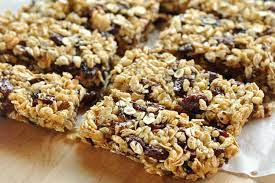
Preferred writing snacks?
Dark chocolate and granola bars.
Coffee or tea?
I like tea a lot but adore my coffee!
Cat or dog?
Forever a cat lady (but like dogs a lot too).

Favorite mystery novel?
For the past five years or so that spot has been held by Kate Milford’s Greenglass House. The atmosphere is deliciously spooky, the plotting excellent, the characters realistic, and the main character, Milo, is adopted, which I love to see in books because my kids are adopted.
Zombie apocalypse: Yea or nay?

It’s coming.
Superpower?
Teleportation. I love to travel but am not a big fan of airplanes. I wouldn’t mind a faster commute to work either!
Favorite place on earth?
Provincetown, Cape Cod, Massachusetts. As with the books of Lois Duncan, it has been a lifelong love affair. My parents started taking me when I was six months old (there was an unfortunate sand-eating incident, but otherwise it was a smooth trip), and we started bringing our kids when they were three.

If you were stranded on a desert island with only three things, what would they be?
Dark chocolate, an e-reader with an undying battery, and sunscreen (redheads burn super easily).

MR: Thank you for chatting with us, Daphne—and congratulations on the publication of I Know Your Secret. I thoroughly enjoyed it, and I know MUF readers will too!
DBG: Thank you so much for having me. This has been a thrill!
And now…
A GIVEAWAY!
For a chance to win a copy of I KNOW YOUR SECRET, comment on the blog–and, if you’re on Twitter, on the Mixed-Up Files Twitter account, for an extra chance to win! Giveaway ends on Wednesday, December 8, at midnight EST. U.S. only, please.
About the Author
Daphne Benedis-Grab is the author of middle-grade books including Clementine for Christmas and The Angel Tree, and young-adult books including The Girl in the Wall. Her short stories have appeared in American Girl magazine. She earned an MFA at The New School and a School Media Library Specialist degree from the Palmer School of Library and Information Science. She lives in New York City with her husband, kids, and cat, and spends her days writing and being the librarian at PS32 in Brooklyn. Learn more about Daphne on her website and follow her on Facebook, Twitter and Instagram.
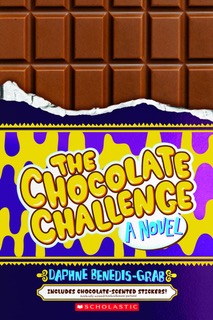


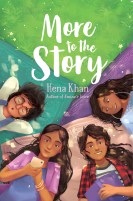 Hena Khan’s More to the Story is inspired by Louisa May Alcott’s Little Women. In More to the Story, a modern American Muslim family faces challenges that compare to the March family’s conflicts of a century-and-a-half ago in Alcott’s classic.
 Mayhem features Indian American protagonist Mimi who uses both culinary skill and magic to solve the mysterious goings-on in her household and town. For the Elizabethan classic, consider an introductory adaptation like this comics-style version if your middle graders aren’t ready for Shakespearean verse. This author also wrote Much Ado About Baseball, a companion piece to Midsummer Mayhem which Kirkus calls an “homage” to the bard’s Much Ado About Nothing.
 Lou Kuenzler’s Finding Black Beauty is a spin on the story of Anna Sewell’s classic Black Beauty, retold from the perspective of groom Josephine who masquerades as a boy in order to find the horse she loves when they become separated.
 well.
well.

 Enter SORRY FOR YOUR LOSS, a new middle grade novel by Joanne Levy, about a girl whose family runs a funeral home. Besides being a brilliant idea, Joanne pulls it off with just the right balance between heartfelt, moving, sad, funny and respectful, as the main character Evie must navigate a friendship with Oren whose parents have just been killed in a horrific car accident. I’m so honored and excited to welcome Joanne to our blog.
