Posts Tagged contemporary realistic middle-grade fiction

Judy Blume: The Author, the Legend… The MOVIE!

Judy Blume, author

Are You There God? It’s Me, Margaret was the first book I bought with my own money. Later, Judy signed it for me at a meet-and-greet at Eeyore’s, the iconic and sadly, now defunct children’s bookstore on the Upper West Side of Manhattan.

“To Melissa,” she inscribed. “Love, Judy Blume.” Yes, Judy had written “Love” in my book. This was more valuable than my collection of Bonne Bell Lip Smackers and Wacky Packages combined.

Margaret: The OG

I read Margaret obsessively, for months. Soon, my once-pristine paperback felt apart (above, left) and I retired it to my bookshelf, only to be brought out for special occasions, like birthdays, or to impress my friends. I purchased a new Margaret (this time, my mom paid for it), and when that copy fell apart, I bought another. And another. And then another…

I Must… I Must… I Must Increase My…

As a voracious reader with an underdeveloped body and an overactive imagination, Are You There God? It’s Me, Margaret—which was published in 1970, when books weren’t banned for using words like “menstruation,” “masturbation,” and “wet dreams”—had an enormous impact on me. I could relate to Margaret’s yearning for breasts, and for her period, and for her desire to impress the girls in Nancy Wheeler’s secret club, the Four PTS’s. And who could begrudge Margaret’s crush on Philip Leroy? Sure, Jay Hassler was nicer, and he had clean fingernails, but Philip Leroy was hot.

Margaret Simon, Movie Star

With that in mind, you can imagine my reluctance to see the movie version of Margaret. I knew it couldn’t possibly be as good as the book, but I was too curious not to go. Plus, my 23-year-old daughter, an avid Margaret fan too, gamely agreed to go with me. So, off we went.

I was grateful to see how closely the movie hewed to the book, especially its 1970s setting, updated and enhanced by a more inclusive and diverse cast. Abby Ryder Fortson, the 15-year-old star, brings Margaret to life, with a perfect combination of moxie and self-reflection, and Kathy Bates, whose incomparable comic timing makes Margaret’s grandma, Sylvia Simon, sparkle like a Swarovski crystal, gives a standout performance as well. Other notables include Elle Graham as alpha girl Nancy Wheeler; Isol Young, as the misunderstood Laura Danker; and Amari Alexis Price as Margaret’s effervescent pal, Janie.

But the best part of the movie…?

The cameo of Judy Blume walking her dog, along with real-life husband, George Cooper. I could have watched that all day. 😀 (For more on Melissa’s admiration for Judy Blume, check Are You There Judy? It’s Me Melissa.)

Kidlit Authors ❤️ Judy Blume

I asked MUF contributors and other children’s authors—including bestselling author and illustrator Debbie Ridpath Ohi, who illustrated the fabulous Simon & Schuster Judy Blume book-cover reissues (see above, and below)—to share their admiration for the Queen of Kidlit.  Here’s what they had to say…

Debbie Ridpath Ohi

“While I was growing up, reading Are You There God? It’s Me, Margaret helped me realize that I wasn’t the only one thinking these crazy thoughts, and that everything was going to be okay.”

Debbie Ridpath Ohi, illustrator of the Simon & Schuster Judy Blume book-cover reissues and award-winning author and illustrator. Learn more about Debbie on her website and follow her on Twitter and Instagram.

(For more on Debbie’s experience illustrating the Judy Blume cover reissues, click here.)

Beth McMullen

“I saw the movie with a group of friends, and we agreed it felt like a surreal trippy visit to the 1970s that felt faithful to the book. I had completely forgotten about the religious exploration part of the book, which reminded me how much that resonated with my young self. I grew up in a very small, very Christian town and I was a weirdo transplant from New York City who was raised in a non-religious household.

Looking back now, I release how strange it was to identify as ‘not’ something, rather than as something, and how often I was called upon to defend my lack of religious affiliation in this community. Most middle-grade authors I’ve met have, at some point, felt like they were on the outside looking in, and this was certainly my experience around religion when I was young.”

–Beth McMullen, MUF member and author of the Mrs. Smith’s Spy School for Girls series,  Lola Benko: Treasure Hunter series, Secret of the Storm series, and others. Find Beth on LinkTree and check out the Writers with Wrinkles podcast, which she co-hosts with MUF member Lisa Schmid.

Tonya Duncan Ellis

“Judy Blume was like that Big Sis who knew everyone’s secrets. I’ve read all of her books for tweens and teens, and they definitely influenced me as I wrote The Snitch and other books in my Sophie Washington series. Beloved characters like Fudge, Margaret, and Sheila the Great stay with me as an adult and played a huge role in making me a reader and book lover!”

Tonya Duncan Ellis, author of the Sophie Washington series. Learn more about Tonya on her website and follow her on Twitter and Instagram.

Chris Baron

“Like most kidlit writers, when I hear the name Judy Blume–I smile. I also think of Blubber, and the sharp white curves of the lettering on the cover. I watched that book spin on the fifth-grade book carousel while Mrs. Goldberg taught us math problems. I wanted to read it but was told the subject matter was a little ‘too much’ for me. But one day, I tucked it beneath The Lion The Witch and the Wardrobe. I Immediately identified with Linda [aka ‘Blubber,’ the character bullied for her weight] for her demeanor and size, and the truthful and brave way Blume wrote this story. I felt like it had been written for me.

Whenever I read any of Judy Blume’s books, I still feel connected to Blubber. In my deepest writerly dreams, I hope that I can write books like this–with honest, memorable characters whose focused and relational stories are as intimate as a Sunday afternoon with friends, and as universal as the questions they make us ask about ourselves.”

Chris Baron, author of All of Me, The Magical Imperfect, and The Gray (out 6/13). Visit Chris on his website and follow him on Twitter and Instagram.

Heather Murphy Capps

“I can’t understate the influence Judy Blume had on my life as a young person. My BFF in grades 3-7 was Michelle, and we read Are You There God? It’s Me Margaret together– multiple times. Feeling deeply connected with Margaret’s narrative, we helped each other figure out how to use maxi pads, monitored our (seemingly slow-motion) progression toward puberty, and cheered each other on as we checked off those all-important development milestones. (“We must, we must, we must increase our bust!”) I think Margaret contributed to the foundation of that friendship, which was a fundamentally important part of my life during those years. (Sadly, we lost touch.)

As a writer, Judy Blume’s work serves as mentor text—a running tutorial every time I craft or edit character arc and emotional resonance. Blume’s work is timeless, and her influence on the MG space is one I will always appreciate, honor, and hope to emulate.”

Heather Murphy Capps, MUF member and debut author of Indigo and Ida. Learn more about Heather on her website and follow her on Twitter and Instagram.

Sally J. Pla

“I just finished watching the Judy Blume documentary (I loved it, of course). What moved me most was when Judy got choked up and cried, remembering one word in one book: The F word. It appears once, at a critical moment, in Here’s to You, Rachel Robinson. Her editor told her it would cause banning, but he supported whatever decision she made about leaving it in or taking it out. Judy resolved not to take it out. Because censoring herself wouldn’t be true to the story, true to the character, true to her readers or herself. And in recalling this decision, she broke down in tears. Those tears moved me so much. Such a small thing: one word. Such a big, important thing: artistic integrity. This loyalty to her vision, and to her readers’ real lives, will always stay with me.”
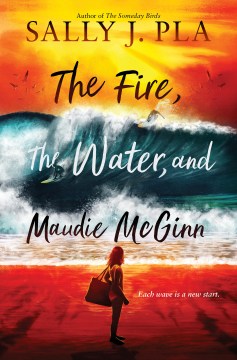
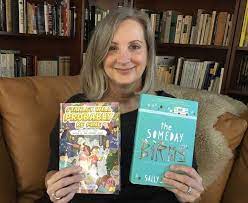
–Sally J. Pla, author of The Someday Birds; Stanley Will (Probably) Be Fine, and the forthcoming The Fire, the Water, and Maudie McGee; creator/editor of A Novel Mind. Find  Sally on Linktree.

Mae Respicio

“Judy Blume’s books took me through girlhood with glimpses of love, friendship, and periods… Are You There God? It’s Me, Margaret was such a heart book for me that I was specifically asked by my beloved elementary-school librarian, Mr. Reilly, to take a break from checking it out so that other kids could have a chance to read it. And as a middle-grade author who writes about everyday kids in their everyday worlds, her books were one of my very first inspirations.”
Mae Respicio, author of How to Win a Slime War, Any Day with You, and The House That Lou Built. Learn more about Mae on her website, and follow her on Twitter and Instagram.

Carol Weston

“So many girls identify with Margaret. Me, I identified with Judy. My first book was Girltalk: All the Stuff Your Sister Never Told You, and Newsweek once called me a “Teen Dear Abby.” But I didn’t want to be Dear Abby, I wanted to be Judy Blume. I wanted to write fiction. I was over 40 when I finally made the leap.Did it help that I heard Judy speak at Marymount College? I think so. Her beloved father, like mine, had died too young, and she choked up talking about her grief. Getting rejections was hard too, but she persevered. She was so real and so radiant. So generous. I was starstruck. Still am.

I love the new movie, of course, and also the new documentary. Judy said she went to a therapist because it was such a responsibility to recieve so much mail from girls. I’ve been an advice columnist at Girls’ Life since 1994 and have sometimes felt buried in letters. I appreciated Judy’s therapist’s advice: “You can’t save everyone.” True. But I love that Judy hasn’t given up on trying. I’m a fan. Forever!”
–Carol Weston, author of Speed of Life, Girltalk, the Ava and Pip series, and more. Learn more about Carol on her website and follow her on Twitter and Instagram.

Mindy Alyse Weiss

“I remember how much I LOVED Are You There God? It’s Me, Margaret, and how relatable yet shocking it was, in the best possible way. Judy really changed kidlit! The novel that made the biggest impact on me as a kid was Tales of a Fourth Grade Nothing. Later, while getting my degree in elementary education, I saw the magic of reading it aloud—and of course I read it to my daughters. My oldest was in kindergarten, the youngest in preschool, and they sat, mesmerized, begging me to read another chapter or two before stopping for the night.”

–Mindy Alyse Weiss, Mixed-Up Files contributor, MG author, and host of #PBParty and co-host of #PBFest. Learn more about Mindy on her website and follow her on Twitter and Instagram.

Faran Fagen

“I enjoyed reading Judy Blume’s book growing up, because I felt like she spoke to me. I actually met her in Key West, at her bookstore. She was so nice, and took a whole bunch of pictures with me and then signed her new book, which I bought for my wife. As far as the documentary, I couldn’t stop watching it, and I plan to watch it again. The most striking takeaway was that no matter how famous she got, or how much her life changed, Judy always took the time to connect with children—her readers—and put them first.”

Faran Fagen, Mixed-Up Files contributor, teacher, journalist and MG author. Find Faran on Facebook and Twitter.

Kellye Crocker

“Judy Blume has had a tremendous impact on me, both as a lifelong reader and writer. She told the truth to young people. That’s powerful and an incredible gift. Many of novels I read as a kid painted a false, saccharine picture of what life was supposed to look like, so I distinctly remember the shock I felt at reading Are You There God? It’s Me, Margaret. Here were girls like me, worrying about periods, boys, fitting in, and existential questions like: ‘Does God exist?’ and ‘Will I ever need a bra?’ (My mom refused to take me shopping for one until a boy in my fifth-grade class drew a picture of me with two dots on my chest. Deeply mortifying! But I’m…fine… Really! Um…I mean, mostly.)

Judy Blume’s books are funny and entertaining, and I devoured them all. But they were so much more. Validating. Informative. It was as if Judy showed us a secret world that other adults pretended didn’t exist—like what happens to boys during puberty. (No one told me!) I still remember someone’s well-loved copy of Forever being passed around the middle-school bus—with certain passages marked, of course. (They didn’t tell me about that, either!)

Judy was one of the first authors to write truly realistic fiction for and about young people, and she paved the way for other authors, and for me. She’s also fought tirelessly against censorship and the folks who believe they have the right to decide what other people’s kids should read. Judy Blume is a national treasure!”

–Kellye Crocker, debut author of My Dad’s Girlfriend and Other Anxieties. Learn more about Kellye on her website and follow her on Twitter and Instagram.

Wendy McLeod Macknight

“I was in grade six—small for my age and two years away from getting my period—when I heard rumblings about a BOOK. And not just any book, a book written by a female author who KNEW what it meant to be twelve years old and feeling less than. Are You There God, It’s Me, Margaret was being passed from girl to girl like a sacred text, but I couldn’t wait: I used my savings to buy my own copy and devoured it in one sitting. Then promptly reread it. It was the first book I’d ever read that addressed the inner lives of young girls. Judy Blume got us. She KNEW. She UNDERSTOOD. We were no longer alone.

She became my patron saint, her work a beacon of safety and understanding as I navigated the choppy seas of middle school. I’m not sure Judy Blume made me want to be a writer, but I do know this: Judy Blume made me believe things would be okay. And honestly? That was everything.”

Wendy McLeod MacKnight, author of The Frame-Up, The Copycat, and It’s a Mystery, Pig Face! Follow Wendy on Twitter, Facebook, and Instagram.

Rosanne Parry

“I saw a preview of the movie a few weeks ago, and I was really touched by it. I was happily surprised to see that they kept the early Seventies setting. Even nicer to see all the glory and agony of girl friendships played out so beautifully, without cellphones, cyber bullying, or the continuous drumbeat of gun menace that children face today.”

Rosanne Parry, Mixed-Up Files contributor and New York Times bestselling author of A Wolf Called Wander, A Whale of the Wild, and the upcoming A Horse Named Sky. Learn more about Rosanne via her website and follow her on Twitter and Instagram.

Agent Spotlight: Molly Ker Hawn of The Bent Agency

Molly Ker Hawn, Managing Director and Literary Agent at The Bent Agency

Hi, everyone! I’m so excited to welcome Molly Ker Hawn of The Bent Agency to our Agent Spotlight here on The Mixed Up Files. Molly leads the London office of TBA and works with authors from all over the world — including Angie Thomas, Hilary McKay, Dhonielle Clayton, Casey Lyall, Stephanie Burgis, Meera Trehan, and many more—selling directly to publishers in the US, the UK, Canada, and Australia. I’m also lucky enough to call her my agent, and she graciously agreed to answer some questions about querying, author-agent relationships and the publishing world today. Thank you, Molly!

MD: Lately I’ve been spending a lot of time listening to the podcast The Sh*t No One Tells You About Writing, where each episode begins with the agents critiquing query letters listeners have sent in for feedback. What are you looking for in a query letter? Other than NOT addressing you as “Dear Sir” or “Dear Agent”, how important is the personalization part of the query letter for you? 

MKH: I know writers really agonize over query letters, so I’m pretty forgiving when I’m reading them. A hook-y pitch is most important to me, and maybe a line or two of bio. It doesn’t have to be long. You don’t have to convince me that you’re interesting; I’m trying to evaluate your book, not you. Personalization is less important  – I don’t need to be flattered or to be convinced that I’m The One. If there’s a particular reason they’re querying me, then I’m glad to hear it, and it’s always nice to hear that someone enjoyed a book I represented (and why), but there’s no need to scrabble around for a connection that isn’t genuinely there. 

MD: My query to you was the old fashioned way: a cold query with no connections. What percentage of your clients would you say have come to you that way?

MKH: That’s such a good question! I think a lot of people assume that you need an ‘in’ to find representation, but most of my clients have come to me via out-of-the-blue queries. There is nothing – nothing – like the feeling of reading a submission from someone I’ve never heard of and feeling that zing of recognition that they’ve written something special.

MD: Something that’s not often talked about is that sometimes a writer’s first agent is not their forever agent. My understanding is that before querying a new agent one must no longer be with a previous agent. What other etiquette is important to know when looking for a new agent? How should the author handle putting information about it in a query letter? Have your clients who’ve previously had other agents come to you through recommendations or through the slush pile?

MKH: I think most agents would agree that it’s bad form to approach a new agent before you’ve parted ways with your current one. I personally am uncomfortable with it. Once you’ve formally terminated your agreement, you can say in your query that you were previously represented by [name] — you might as well say who your old agent was, because potential agents are likely to ferret that out anyway via Publishers Marketplace or Twitter or some other online source. The important thing that agents will want to know is whether your current project has been submitted to publishers by your former agent.

In the last couple of years I’ve started working with a few writers who’ve had previous representation, but not even all of those came with a personal referral. It’s lovely when they do, because a recommendation from a current client is the kind of praise I value most. It’s not at all necessary, though.

MD: In the UK, it’s uncommon to see middle grade novels in hardcover. In the US recently there was a lot of brouhaha on social media about Barnes & Noble no longer stocking a majority of hardcover middle grade novels. Have you seen this hurting newer North American MG releases? Have you seen this changing how publishers are buying middle grade novels—and going about their sales and marketing of them?

MKH: I know that many children’s writers saw B&N’s shift to stocking fewer hardcovers as a targeted attack on MG, but we’ve been watching their overall buying practices change for a while now. And when you look specifically at MG, B&N has reported returning about 80% of the hardcovers they bought in from publishers. You don’t need an MBA to see that the status quo wasn’t sustainable. 

I’m starting to see more publishers plan to release new MG simultaneously in hardcover and paperback – that’s an interesting solution. A lot of libraries will be happy to keep buying the hardcovers, and the retailers can have the editions that they think they can sell. I don’t love the effect this has on advances and royalty earnings, of course – a paperback sale earns less than a hardcover sale. But I want there to continue to be a wide range of children’s books published for a diverse audience, and some experimentation is going to be necessary to make that happen.

MD: What are you loving about being a children’s book agent these days?

MKH: The same things I’ve loved since I started: the thrill of discovery, the sense of satisfaction I get from helping books I care about find an audience, the camaraderie of the children’s book industry, the satisfaction of effectively advocating for authors and making them as much money as I can. And I love working with my team at TBA. We have such a good time, and we’re constantly learning from each other. I’m very lucky.

MD: Where can people find out about what kind of projects you’re looking for and how to query you?

MKH: I’ve got detailed information here and I keep it up to date. I read all my queries myself and respond to all of them, as long as spam filters don’t get in the way.  

Thank you again to Molly for this fabulous interview!


Children’s Books to Honor Arab American Heritage Month

In honor of Arab American Heritage month, I wanted to offer a half dozen children’s books that shed a spotlight on Arab Americans as well as an understanding of the Arab world. In particular, the books selected are geared towards elementary school children and focus on various experiences of Arab American migration as well as a celebration of the achievements of Arab women. A diversity of Arab American faiths is also represented.

1) The Turtle of Oman by Naomi Shihab Nye

This moving middle grade novel shines a light on the struggles of moving (in this case from Oman to Ann Arbor, Michigan) and leaving behind family and friends. It is ultimately a warm tribute to the love between a boy and his grandfather. The exploration of what it means to feels like to relocate are handled with nuance and levity.

Aref’s father had checked a large blue suitcase. He’d been urging Aref to get rid of extra possessions for weeks now, so Aref wouldn’t try to pack too much. But Aref didn’t like letting go of his things.

–from The Turtle of Oman

2) Spell it Like Samar by Shifa Safadi and illustrated by Saliha Caliskan

When Samar moves the United States from Syria, she confronts new challenges. While at first Samar is intimidated by Jenna, a class bully, as well as her new surroundings, she learns to stand up for herself. An uplifting story about the importance of persistence and resilience. And as a bonus, it’s by MUF member Shifa Safadi!

Samar’s face turned red. “I can’t do it, Ms. Bryan!” she said. In Syria, she had been the best student in her class. But here, it felt like she was the worst.
–from Spell it Like Samar

3) Farah Rocks Fifth Grade by Susan Muaddi Darraj and illustrated by Ruaida Mannaa

This is the first in a series of chapter books about 10 year-old Farrah Hajjar, a Palestinian American who deals with sibling relationships (her brother Samir has special needs), and stands up to bullying. The family is part of a tight knit community that goes to St. Jude’s Orthodox Church and supports Farah’s journey to attend a magnet school. Throughout the narrative, it is evident that Farah loves learning.

Even though I don’t like the word gifted, I’m thrilled about going to Magnet.
–from Farah Rocks Fifth Grade

4) Other Words for Home by Jasmine Warga

The story of Jude’s relocation from Syria to Cincinnati is poignant and relatable. The novel-in-verse, which was awarded a Newbery Honor in 2021, is accessible and beautiful. It also will challenge stereotypical ideas of Syria.

But our city does not look like Aleppo, before, or after./ It is not sprawling and noisy with buildings/pressed up against/one another/like they are crammed together in an elevator/with no room to breathe. 
–from Other Words for Home 


5) Muslim Girls Rise: Inspirational Champions of Our Time by Saira Mir and Aaliya Jaleel

This compilation of 21st century Muslim women who are leaders is inspirational. Nineteen women are profiled in this upper elementary picture book, from Amani Al-Khatahbeh, the creator of the website, Muslim Gir,l to NASA’s Hiba Rahmani Kuwait to Dalia Mogahed, an advisor to President Barack Obama.

Mogahed tells girls to be: “Be bold, be fearless and be confident, because you matter”

–from Muslim Girls Rise: Inspirational Champions of Our Time 

6) If You Were a Princess: True Stories of Brave Leaders Around the World by Hillary Homzie and illustrated by Udayana Lugo

I’m thrilled to include my newest release, a nonfiction picture book aimed at elementary school students. If You Were a Princess: True Stories of Brave Leaders Around the World features the stories of actual princesses who have made a difference in their community. Several princesses are from the Arab world, including Princess Alia of Jordan who established a wildlife sanctuary, Princess Rema of Saudi Arabia who has trekked up Mount Everest in honor of cancer patients (who is on the cover of the book) and Princess Nisreen el-Hashemite from Iraq, an MD/PHD researcher who worked at Harvard Medical school and established the International Day of Women and Girls in Science.

After Princess Haya of Jordan’s mother died, her father presented a young horse to the princess to help her heal. This gift inspired a passion for show jumping. Princess Haya became the first Arab woman to compete in the Olympics, and then served on the International Olympic Committee

–from If You Were a Princess: True Stories of Brave Leaders Around the World

Hillary Homzie is the author of the Ellie May chapter book series (Charlesbridge, 2018), Apple Pie Promises (Sky Pony/Swirl, 2018), Pumpkin Spice Secrets (Sky Pony/Swirl, 2017), Queen of Likes (Simon & Schuster MIX 2016), The Hot List (Simon & Schuster MIX 2011) and Things Are Gonna Be Ugly (Simon & Schuster, 2009) as well as the Alien Clones From Outer Space (Simon & Schuster Aladdin 2002) chapter book series. She’s also a contributor to the Kate the Chemist middle grade series (Philomel Books/Penguin Random House). And her nonfiction picture book, If You Were a Princess: True Stories of Brave Leaders From Around the World is a look at historical and current princesses from many diverse lands who have made their mark (Simon & Schuster, August 2022). During the year, Hillary teaches at Sonoma State University. In the summer, she teaches in the graduate program in children’s literature, writing and illustration at Hollins University. She also is an instructor for the Children’s Book Academy.

She can be found at hillaryhomzie.com and on Instagram, her Facebook page as well as on Twitter