
Posts Tagged Author Interview

STEM Tuesday Field Work — Interview with Loree Griffin Burns

Welcome to STEM Tuesday: Author Interview & Book Giveaway, a repeating feature for the fourth Tuesday of every month. Go Science-Tech-Engineering-Math!

Today we’re interviewing author Loree Griffin Burns who wrote this month’s featured book about real-life scientific field work, Life on Surtsey: Iceland’s Upstart Island.

The book takes place on an Icelandic island that’s only decades old. Readers join the scientists studying this new patch of land and the plants and animals that are colonizing it. Loree Griffin Burns earned science degrees from Worcester Polytechnic Institute and the University of Massachusetts. Since then she’s been writing books and articles that celebrate our natural world and the people who study it. To research these stories, she’s beachcombed on both coasts, cruised the Pacific Ocean in search of plastic, surveyed birds in Central Park, stung herself with a honey bee, visited the Mexican wintering grounds of the monarch butterfly (on horseback!) and lived on a Costa Rican butterfly farm. Her latest book, Life on Surtsey: Iceland’s Upstart Island was named a 2017 best children’s nonfiction title by both Kirkus Reviews and School Library Journal. Loree lives with her husband and three nearly-grown children in central Massachusetts.

 Mary Kay Carson: How did this book come about?

Loree Griffin Burns: In the spring of 2014, I had the opportunity to travel with my husband to Iceland. While we were there, we took a day-trip to the island of Heimaey, which is the largest of an archipelago off the southwestern coast of the country. It poured rain the entire time we were on Heimaey, so we toured by bus instead of on foot. At one point, as we rounded the southern end of the island, our bus driver pulled to the side of the road and pointed out to sea. “You see that island?” he asked. “The furthest one out?” We squinted through rain-soaked bus windows to see the rock he was talking about. “That’s Surtsey,” he said, “and I stood on the very spot this bus is parked, when I was a boy, and watched as it was born.” I knew the moment he said this that I’d just heard something incredibly special. I took out a notebook and started taking notes on everything he said from that moment on, including the fact that Surtsey was closed to all but the Icelandic scientists studying its transformation from a seething hunk of lava to an island that supported living, breathing organisms. As soon as I was home again, I began to research Surtsey’s story and became convinced it was the perfect subject for a ‘Scientists in the Field’ book. Once I’d convinced my editor of it too, I wrote to the Surtsey Research Society, the organization that controls access to the island as a research site, and pitched the idea the them. I was thrilled when they sent back an invitation to join an expedition the following summer.

MKC: Would you like to share a favorite part of spending time in the field researching this book?

Loree: I spent one working week, Monday through Friday, on Surtsey, as part of an expedition that included ten other scientists. Eight of those were Icelandic, and one was a Polish botanist who was living and working in Iceland at the time. Our team consisted of three women and seven men. Some of my favorite moments were getting to know the people I was with. As you’ll see when you read the book, I spent the most time with entomologists Erling Ólafsson and Matthais Alfredsson. But I got to know some other fascinating people, too. One of my favorite mornings was the one I spent with Lovisa Ásbjörnsdóttir, a geologist who has spent a lot of time on Surtsey. We hiked Austurbunki and Westurbunki together, mountains formed from Surtsey’s two volcanic cones, and spent several delightful hours sharing our work, our homelands, and what drew us each to Surtsey. Another highlight that didn’t make it into the book was my exploration inside the island. Underneath the hard lava crust of Surtsey is a network of lava tubes—tunnels through which molten lava once flowed but which now snake, empty and exploreable, underground. When botanist Paweł Wąsowicz first mentioned them to me, I didn’t believe him. And once I realized they existed, I was very nervous about checking them out. But I did, and it was an unforgettable experience.

Purchase a copy of  Life of Surtsey

MKC: Do you have a STEM background?

Loree: I do. I spent my twenties in a research lab studying the expression of genes in yeast cells and earning a PhD in biochemistry. So, science has been part of my life for a long time. I tell kids all the time that for me, science is not a subject, or a career, but a way of looking at the world, a way of asking questions about how it works, and then figuring out how to find the answers.

MKC: Could you give us a peek into your process by sharing how you’re tackling a current project?

Loree: I recently finished a picture book manuscript for older readers about fruit flies and how scientists came to realize they are a useful organism for studying DNA. I know. I know. It doesn’t sound like proper picture book material, does it? But it really is! The focus is entirely on the flies themselves, their bodies, their life cycles, their strange and adorable (!) laboratory habits, their easy to manipulate DNA. I think the right illustrator could have a great time with this book. (If you know one, send them my way.) While I try to find the perfect publishing home for the fruit fly book, I am working on another insect book: The Moth Ball. Coming from Charlesbridge in 2020, this book is an invitation into the nighttime exploits of the lesser-loved cousin of the butterfly: the moth. Right now, I’m reading up on moths and moth identification, and sketching out ideas for how best to structure a book that will excite readers about studying the moths in their own neighborhoods. The second spring finally arrives here in New England, photographer Ellen Harasimowicz and I will start calling moths into our own yards, using black lights and special sugar baits, and we’ll begin recording every moment for our book. We’re both pretty excited! What you can see from these two examples is that my bookmaking process involves a lot more than just writing. I spend a lot of time researching my subjects, by reading the words of other writers and by having my own first-hand experiences with the topic. I also spend time getting my finished manuscripts into the hands of publishers who can help me bring them to readers. This variety is one of the things I like about making books.

MKC: Any recommendations for readers who loved Life on Surtsey?

Loree: Nonfiction books are my passion, and titles I’ve loved lately include: Isaac the Alchemist: Secrets of Isaac Newton, Reveal’d by Mary Losure; The Girl Who Drew Butterflies: How Maria Merian’s Art Changed Science by Joyce Sidman; Finding Wonders: Three Girls Who Changed Science by Jeannine Atkins; Seeing into Tomorrow: Haiku by Richard Wright, Illustrated by Nina Crews.

More about Life on Surtsey:

Win a FREE copy of  Life of SurtseyEnter the giveaway by leaving a comment below. The randomly-chosen winner will be contacted via email and asked to provide a mailing address (within the U.S. only) to receive the book.

Good luck!
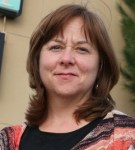
Your host this week is Mary Kay Carson, fellow nature geek, science nerd, and author of Mission to Pluto and other nonfiction books for kids.


SaveSave

A triple Book Birthday for Mixed Up Files Author Michelle Houts

It’s always a treat to feature the book birthdays of Mixed Up Files members and especially today when we are celebrating a new series from our long time contributor Michelle Houts, the author of the novels The Beef Princess of Practical County, Practical County Drama Queen, and Winterfrost; the biography Kammie on First; and the picture book When Grandma Gatewood Took a Hike. Michelle has headed off into new territory again with a young middle grade series for 1-3rd grade readers. It’s called Lucy’s Lab and here are her first three covers. Nuts About Science and Solids, Liquids, Guess Who’s Got Gas, came out last fall and the newest title is The Colossal Fossil Fiasco. 

1) Were you a science loving kid? What inspired you to make science the focus of your series?


I wanted very much to be a science-minded girl in the 70s. In fact, I begged for a Chemistry Kit, and got one the likes of which would never be legally sold these days! It had all kinds of chemicals and glass beakers and tubes in it! The sad part is that I don’t remember doing a lot with it. It wasn’t that I lack interest. I lacked confidence. In recent years, I have seen how important it is to build girls’ confidence in Science, Technology, Engineering, and Math. So, initially, as a writer of middle-grade novels, I set out to write a middle-grade science girls series. I thought of it as: The Babysitter’s Club meets Bill Nye the Science Guy.

Okay, interrupting this interview to say–how is that not a thing? Please write this series! I know, you’re busy. I’ll write it with you! Or ask our fellow science writer extraordinaire Jennifer Swanson. We could do this!

Michelle here, jumping back in to say, NO WORRIES! My hope is that Lucy will grow into that series for which she was originally intended. I mean, she can’t stay in second grade forever, right? So, ideally, someday that amazing middle-grade series will exist – with Lucy at the center! Back to you, Rosanne!

And also I can’t resist sharing a picture of my science girls and their project on on fermentation that involved home-brewed rootbeer using champagne yeast.
And now back to our scheduled interview.

2) You’ve written stand alone titles before and for older readers. What prompted you to switch to series writing for a younger audience?

My idea for that middle-grade series was quickly derailed by my other job. In my non-writing life, I was a Speech-Language Pathologist.  As a school-based SLP, I worked with second graders. I heard their stories, listened to their interests, and quickly realized that girls identify as science-minded (or not!) long before the middle grades. By seven years old, many girls I met had already decided that math and science were “hard” or “for boys” or “gross.” I knew then that my science series needed to target grades 1 – 3. 

 (Did I mention that the art for this series is done by the truly fabulous Elizabeth Zetchel!)
3) Do you have a favorite research story?
So far, my favorite topic in the series to research has been fossils. Lucy’s Lab Book #1 is about Habitats and Book #2 is about States of Matter, both of which I felt I had a decent knowledge of.  But Book #3 is about Fossils, and I found myself fascinated by all the research, digging deeper (no pun intended!) than I needed to simply because it was so interesting. When I discovered that one of the most famous nearly-intact fossils every found was named “Lucy,” I couldn’t believe the coincidence! 
You know I had wondered when I first saw the series if she would be a paleontologist because of the Lucy fossil. I’ve also heard that a surprising number of great fossils finds have been made by children.
4) Do you have a fact checker at your publishing house?
There isn’t anyone whose sole job it is to check facts, but my amazing editor, Alison Weiss, is a master at asking questions and she’ll look up anything that seems not quite right. I feel a lot of responsibility to make sure I have my facts straight before I turn in a manuscript. 
Shout out to the wonderful Sky Pony Press who publishes your books, and from this bookseller’s perspective, is doing a great job of promoting it to indie bookstores.
5)How far ahead do you plan the series and do you have science topics picked out for future books? Do you have a larger character arc for Lucy across several books or do you take them one book at a time?
As of this moment, there are three books in the Lucy’s Lab series, but more are proposed, and, yes, each has a science topic I’ve hand-picked for the first – third grade reader.  I do have thoughts about how Lucy, her sidekick and cousin Cora, and her classmates grow over the course an entire series.  Stay tuned for more news on this subject! 🙂
The cousin relationship was the other thing I loved about this book. Most kids have cousins they love and very few books have a cousin relationship.
Congratulations on your beautiful series from all of us at The Mixed Up Files. I hope we see lots more of Lucy and her lab in the future.

A Possibility of Whales with Author Karen Rivers

Are you up for a pre-book birthday celebration?

Great! Because I have the amazing Karen Rivers here to chat about her upcoming release A POSSIBILITY OF WHALES. Her book birthday is in six days.

Here’s a peek into Karen’s book.

The heartfelt story of a girl who–thanks to her friends, her famous single dad, and an unexpected encounter with a whale–learns the true meaning of family.

Twelve-year-old Natalia Rose Baleine Gallagher loves possibilities: the possibility that she’ll see whales on the beach near her new home, the possibility that the trans-gender boy she just met will become her new best friend, the possibility that the paparazzi hounding her celebrity father won’t force them to move again. Most of all, Nat dreams of the possibility that her faraway mother misses her, loves her, and is just waiting for Nat to find her.

But how can Nat find her mother if she doesn’t even know who she is? She abandoned Nat as a baby, and Nat’s dad refuses to talk about it. Nat knows she shouldn’t need a mom, but she still feels like something is missing, and her questions lead her on a journey of self-discovery that will change her life forever.

In her unique, poignant narrative voice, Karen Rivers tells a heartwarming story about family, friendship, and growing up, perfect for readers of Katherine Applegate and Rebecca Stead.

***

Hi Karen! It’s wonderful to have you visit us. Did you always want to be a children’s author and what’s been your biggest surprise from doing so?

No, absolutely not. I honestly don’t think I would have thought it was possible. I didn’t even entertain the idea, although I was always writing. (It’s a bit of a mystery to me now, why I thought of authors as some realm of human beings so far above me that I didn’t even consider it.) I wanted to be a vet.  At certain points, I thought about acting, about law, about medicine, but I didn’t really consider writing as a possibility until after I’d written a book and sold it (it was an adult book that I don’t think I started believing it would ever be anything) and only THEN did it occur to me that I could go back to my first love, which was the books that mattered the most to me in my life, which were the books that I read when I was in middle school and in high school.

The mere blurb of A Possibility of Whales made my heart flutter. What was it like writing this poignant story?

I loved writing every word of this book. I had wanted to write a book that was a nod to ARE YOU THERE GOD, IT’S ME, MARGARET, a book that was about puberty and that transitional feeling of being in-between childhood and adulthood, being uncertain and even afraid of what the physical changes mean. That was my starting point. But when I dug deeper, I thought about my own kids, and how hard it has been for my son to be the boy-child of a single mother as he navigates puberty, so I wanted to give my character a single dad. I love Nat’s dad, who was loosely inspired by The Rock (with a touch of Matthew McConaughey thrown in). I love their relationship, their tiny family, the way they are a unit, but also the way that he can’t be a mother to her, he can’t be everything she needs. I loved exploring the ways that she found what she needed with her friendship with Harry and with The Bird. I loved bringing Harry to life, giving him a voice to be himself and not just a token character. His story is also rich and full and he has so much to say. And of course, I love the whales, both literally and symbolically. It all came together in my head in this complete piece and every day I got to spend with these characters was a joy.

I love the family aspect of this story!

Nat is a hopeful soul, but she has a lot going on. How did you use her sense of hope, yet spotlight her internal conflicts without dousing her positive outlook? And what can your young readers learn from this?

At certain points, Nat has a choice where she could allow the rejection and loneliness to take over, and she always manages to reach the lifeboat before she sinks. I think that kids instinctively do this, certainly not consciously, especially if they do – like Nat – have an adult who is 100% on their side. I think it’s harder for kids who don’t have a parent like Nat’s dad, who are not getting that kind of love and support from at least one person. My son’s therapist is always reassuring me that it just takes one. Kids need ONE person who is an anchor in their life, who creates the scaffolding for them to safely be themselves. I hate to think of teaching young readers a lesson, it somehow becomes didactic if I’m conscious of it, but what I’m always trying to do in my books (all of them) is to take a character who may, on the surface, seem like they are not OK or they are not going to be OK, and at the end have them realize – not from something external, but from something internal – that they ARE OK. I feel like readers at this age are all struggling with that question, “Am I OK? Am I going to be OK?” And I want to speak directly to all of them and to say through my books, through my characters, “YES. You are OK. You will be OK. You’ve got this.”

What aspect of Nat’s story do you think children of this age will relate to most?

I think the idea of feeling like you want to pump the brakes as puberty starts to loom is pretty widespread. In ARE YOU THERE GOD, the kids all seemed to want to rush towards puberty, to be the first. But amongst my kids and their friends, I see something different. I think life moves so fast now that kids are in less of a hurry to get to adulthood. Maybe we aren’t selling it well. But I think the mixed feelings about physical changes are top of mind to a lot of kids. I also think that kids will love Nat’s dad. I wrote him as a kind of idealized dad, a dream dad. 

Any advice to parents who read this book with their children on how to start a heartfelt discussion about some of the issues Nat deals with?

My best and only advice to parents is always to just create space where you can truly listen to what your kids are trying to tell you. So many times, we go into these conversations armed with what we think are the right things to say because we want to get it right, and we forget to really listen, to truly hear what they are saying. Make space! Don’t assume anything.

So, what do you see and what can your fans expect next on your horizon?

I have so many books in various stages of production right now! My next middle grade with Algonquin is called NAKED MOLE RAT SAVES THE WORLD and it’s about a kid who has a really unusual “superpower” and has to use it to, well, save the world (in the small picture, that is). It’s another book with a single parent, a kid who feels ‘different’ and about the way we seek and find our people and our place in a world that doesn’t always seem to understand us; it’s about expectations and figuring out how to be who you are.

Thank you for sharing your thoughts with us, Karen! Wishing the all the best in the future.

***

Karen Rivers grew up in British Columbia, where she takes loads of photos, goes on lots of walks, and writes books. She believes that stories are all secret passages to alternate worlds where we can be safe to explore the unsafe, the unsettling or the unfair hands some people have been dealt.  She also believes in you. Find Karen on her Website and Twitter.

Want to own your very own copy of A Possibility of Whales? Enter our giveaway! (*Winner will be announced via Twitter on March 14th.)

a Rafflecopter giveaway