Posts Tagged Author Interview

STEM Tuesday– Mixing Science and Poetry/Verse — Interview with Author Leslie Bulion

Welcome to STEM Tuesday: Author Interview & Book Giveaway, a repeating feature for the fourth Tuesday of every month. Go Science-Tech-Engineering-Math!

Today we’re interviewing Leslie Bulion about her new book Superlative Birds. This fascinating and brilliantly-illustrated book of fun and friendly bird poems is layered with facts and humor. It’s already garnered multiple starred reviews, including Kirkus who says, “With characteristic humor and carefully crafted language, poet Bulion offers readers amazing facts about birds of our world…. These engaging poems read aloud beautifully…. Excellent resources for further bird study complete this delightful offering.” There’s a terrific downloadable free Teaching Guide for the book, too.

Mary Kay Carson: How did this book come about? 

Leslie Bulion: I read about the turkey vulture’s remarkable sense of smell and wrote a poem about it that was included in Sylvia Vardell and Janet Wong’s terrific Poetry Friday Anthology series. The turkey vulture’s superlative ability made me wonder about other bird-world “bests.” Each of my collections is organized around a theme and that’s how the theme for this collection hatched, complete with its ready-made, rhythmic, rhyming title: Su-per-la-tive Birds!

Superlative Birds celebrates bird “world record-holders”  through poems written in different poetic forms accompanied by short, narrative notes. While introducing these remarkable birds, readers explore all of the special attributes that help define birds: wings, eggs, nests, and beaks, as well as migration, song, and other important characteristics of birdness. A chickadee “spokesbird” challenges readers to find those attributes belonging only to birds (hint: not those I just mentioned!).

MKC: Why use poetry in a book about birds?

Leslie: In 2003 I attended a summer class at Cornell Adult University called “The Way Bugs Work.” We looked under rocks, swept nets through the field, and examined critters in the lab. I kept a science journal, scribbling notes and sketching bugs. I began to imagine insects as cool little adaptation stories. I’d written poems since elementary school and wondered if writing in the spare, elegantly small space of a poem could be a creative way to tell a cool science story. Those adaptation-themed stories metamorphosed into my first science poetry collection, Hey There, Stink Bug! (Charlesbridge 2006). My fourth collection, Leaf Litter Critters (Peachtree 2018) hatched from a bunch of sketches in that same summer science journal! Leaf Litter Critters takes an ecosystems approach, moving readers through trophic levels from primary decomposer to top predator in a “who-eats-who” of the decomposer food web.

MKC: To whom do you write–what imagined audience–while drafting?

Leslie: In creating my science poetry collections I hope the music and imagination space of poetry, the accompanying short narrative notes, and the addition of visual, narrative and resource-rich backmatter make these explorations of science and nature appealing and accessible to readers with a variety of learning styles. There’s a back-and-forth interplay between the poems, the illustrations, and narrative notes that can work for readers of many ages. At heart I’m still a fourth-grade kid who looks under rocks, sifts through sand, scans the trees and the sky, writes poems, reads and imagines. I would love for readers to find joy and wonder in these ideas and activities, too.

Leslie Bulion has been playing with the music of poetry since the fourth grade and has been a hands-on observer of the natural world from the moment she could peer under a rock. Leslie’s graduate studies in oceanography and years as a school social worker inform her science poetry collections: Superlative Birds, Leaf Litter Critters, At the Sea Floor Café, Random Body Parts, and Hey There, Stink Bug. www.lesliebulion.com.

MKC: Do you have a STEM background?

Leslie: I have graduate degrees in biological oceanography and social work, and worked as a medical social worker and a school social worker. I like to think my somewhat circuitous route has led me to my current work as a science communicator for young readers.

MKC: Could you give us a peek into your process? Do you write the poems first?

Leslie: When I was ready to explore the wild world of birds, I started by reading widely—nonfiction books and articles about birds, as well as fiction and memoir. This was the full-immersion, beginning stage of my research. There are a gazillion bird books. I didn’t read them all! I always include an element of hands-on learning when researching a book. For Superlative Birds I took a week-long class at the fascinating Cornell Lab of Ornithology. I had been interested in birds for a long time, but that week hooked me on birding—a fully sensory, mind and soul-expanding, moving meditation I do on my own and with friends. I love to record and share my citizen scientist observations in the ebird.org app on my phone.

I have a habit of tucking articles and notes into idea files for future projects—my super-fun “to-do” list. Those files give me a bit of a head start when I’m ready to work on a new project. Since I had decided to use superlatives to highlight the attributes we associate with birds, some amazing birds I’d read about did not make the cut. I read more specifically about the birds I did select. I took lots of notes, both for science concept and with an ear to language. After I finished most of my research (there’s always more!) I tackled the poems one-by-one. I considered how the form of each poem might enhance its subject. I worked on a poem (with many, many revisions, and more research), then the accompanying science note (ditto), then the poetry note. After those were finished, I created a rough plan for potential back matter. I worked very closely and joyfully with Robert Meganck on both Leaf Litter Critters and Superlative Birds, and we’re having a blast working on our upcoming Amphibian Acrobats (Peachtree 2020).

Win a FREE copy of Superlative Birds

Enter the giveaway by leaving a comment below. The randomly-chosen winner will be contacted via email and asked to provide a mailing address (within the U.S. only) to receive the book.

Good luck!
Your host is Mary Kay Carson, author of Alexander Graham Bell for Kids, Mission to Pluto, Weird Animals, and other nonfiction books for kids. @marykaycarson

Interview with Bone, Main Character of Lingering Echoes by Author Angie Smibert & a Giveaway!

I am a huge history buff. I also love all things spooky, otherworldly, and magical. Oh, and book series. So you can imagine my excitement when I heard about this book, LINGERING ECHOES by Angie Smibert. It’s the second book in her middle grade Ghost of Ordinary Objects series, set in the 1940’s that centers around a girl who can see stories in objects. How interesting!

Wouldn’t it be neat to chat with this girl?

Well, we’re in luck. Bone, Lingering Echoes’ main character, is here to visit with you!

Hi Bone! It’s wonderful to have you here. Before we begin, let’s share the book with our readers.

Support Independent Bookstores - Visit IndieBound.orgTwelve-year-old Bone uses her Gift, which allows her to see the stories in everyday objects, to try to figure out why her best friend, Will Kincaid, suddenly lost his voice at age five. This supernatural historical mystery is the second title in the acclaimed and emotionally resonant Ghosts of Ordinary Objects series.

In a southern Virginia coal-mining town in October 1942, Bone Phillips is learning to control her Gift: Bone can see the history of a significant object when she touches it. When her best friend, Will Kincaid, asks Bone to “read” the history of his daddy’s jelly jar–the jelly jar that was buried alongside his father during the mine cave-in that killed him–Bone is afraid. Even before Bone touches it, she can feel that the jar has its own strange power. With her mother dead, her father gone to war, and Aunt Mattie’s assault looming over Bone, she can’t bear the idea of losing Will too. As Will’s obsession with the jelly jar becomes dangerous, Bone struggles to understand the truth behind the jar and save him Featuring a beautiful, compelling voice, this novel weaves a story of mystery, family, and ultimately, love.

Okay, Bone. You’re up! Tell us about yourself and what an average day is like for you.

I’m 12 years old. Daddy and me live in the boardinghouse in Big Vein; only Daddy is off to war.

Oh, Wow.

Uncle Junior is living there now—for the duration, he likes to say. Mrs. Price and Miss Johnson live there, too. She’s my teacher. She slips me the National Geographic to read when she’s done with it.

My day is none too exciting. I walk to school up the mine road, sometimes stopping at the parsonage to pick up my cousin, Ruby. At school, I sit at the back with the rest of the seventh grade. Not too many of us left. All sorts of folks have left on account of the war. Or like my best friend Will, they’ve gone down the mines to work. At lunch, I usually get asked to tell a story, like Stingy Jack or Ashpet. I know just about all of the stories from hereabouts.

After supper, Will usually stops by—unless he obsessing about that dad blame jelly jar again. (Don’t worry. I help him figure out the mystery.)

I can’t wait to hear more about that. What was it like when you first discovered you had this Gift?

Well, it about knocked the breath plumb out of me. I touched this arrow head Ruby and me found down by the river. And, wham, all of a sudden, I’m seeing that arrow strike a deer.

Oh my goodness! #yucky

That poor deer stumbled into the river and… Let’s just say I saw and felt it die.

?

Of course, this is your second journey seeing stories within items, so you’ve already gotten your feet wet. But could you ever have imagined that your friend Will’s jelly jar was more than a simple story? Were you more frightened or curious about it?

I could feel right away that jar was different, like it had its own gift or power. It pulled at me. And it was so powerful I could see things without even touching it. So yes, it scared me—but I was curious, too. I didn’t touch it, though, until I felt like I had to—to help Will.

Will is lucky to have such a wonderful friend in you. And I want to say how sorry I am about your mother and that your father is off to war.

Daddy got himself drafted a couple months ago. He couldn’t say in his last letter where they were shipping him to. Uncle Junior thinks it’ll be North Africa or Italy. I keep having this nightmare about him wandering around lost in the woods—just like Stingy Jack. You know, the fellow the Jack O’Lanterns are named after.

Hmm . . . no, I don’t think I’ve heard this. Please, share.

Folks say he wanders the woods around Halloween with an ember from the coal fires of hell in his carved pumpkin.

Well, that explains a lot. Thank you. How would you describe friendship?

A friend is there for you through thick and thin. And you’re there for him or her, too. Even if he’s acting like an obsessed fool.

Can you share a story about you and Will?

He’s kind like one of those big rocks out in the middle of the river that I like to sun myself on. He’s always there, steady and strong, no matter how high the water is. He also listens to my stories—and is a lot smarter than folks give him credit for.

Sounds like you and Will have true friendship figured out. Thank you so much for stopping by to share your story with our readers. Looking forward to seeing what comes next for you!

Smibert is the author of the middle grade historical fantasy series, Ghosts of Ordinary Objects, which includes Bone’s Gift (2018), Lingering Echoes (2019), and The Truce (2020). She’s also written three young adult science fiction novels: Memento Nora, The Forgetting Curve, and The Meme Plague. In addition to numerous short stories, she’s published over two dozen science/technology books for kids. Smibert teaches young adult and speculative fiction for Southern New Hampshire University’s creative writing M.F.A. program as well as professional writing for Indiana University East. Before doing all this, she was a science writer and web developer at NASA’s Kennedy Space Center. She lives in Roanoke with a goofy dog (named after a telescope) and two bickering cats (named after Tennessee Williams characters), and puts her vast store of useless knowledge to work at the weekly pub quiz. For more on Angie, follow her on social media: Website | Twitter | Facebook | Instagram

Be sure to check out BONE’S GIFT, book one of Bone’s story.

Support Independent Bookstores - Visit IndieBound.orgIn this supernatural historical mystery, twelve-year-old Bone possesses a Gift that allows her to see the stories in everyday objects. When she receives a note that says her mother’s Gift killed her, Bone seeks to unravel the mysteries of her mother’s death, the schisms in her family, and the Gifts themselves.

In a southern Virginia coal-mining town in 1942, Bone Phillips has just reached the age when most members of her family discover their Gift. Bone has a Gift that disturbs her; she can sense stories when she touches an object that was important to someone. She sees both sad and happy–the death of a deer in an arrowhead, the pain of a beating in a baseball cap, and the sense of joy in a fiddle. There are also stories woven into her dead mama’s butter-yellow sweater–stories Bone yearns for and fears. When Bone receives a note that says her mama’s Gift is what killed her, Bone tries to uncover the truth. Could Bone’s Gift do the same? Here is a beautifully resonant coming-of-age tale about learning to trust the power of your own story.

a Rafflecopter giveaway

The giveaway winner will be announced on Friday, April 19th via Twitter! Good luck!!!


STEM Tuesday — NSTA Linking Literacy Special Edition & Contest Winners


Hello STEM Tuesday Readers! I am delighted to welcome Carrie Launius to the STEM Tuesday blog. Carrie is one of the teachers that is spearheading the brand new Linking Literacy Event at the National NSTA event this year in St. Louis, MO. This is a brand new event offered at the National Science Teacher Association conference that allows teachers and trade authors to mix, mingle, and learn from each other.


I thought it might be fun to ask Carrie a few questions about how the Linking Literacy event was designed.


Hi Carrie. Thanks for joining us. What gave you the idea to create the Linking Literacy event at NSTA?

I have been in education for a long time as a classroom teacher, science coordinator, and an assistant superintendent of curriculum and instruction. I have been in districts that are very successful and other districts that struggle. Having this background and having the opportunity to work closely with E. Wendy Saul, Ph.D., truly to “guru” of literacy and science, I believe the integration of literacy is valuable in all content areas. We often hear teachers say math and science go together while ELA and social studies go together. I think all contents support each other. We do not live our lives in silos nor do students live in them. I have had enormous success, especially with lower socio-economic students enriching science using high-quality trade books. With Dr. Christine Royce president of NSTA (Christine is a huge proponent of literacy integration and writes a monthly column “Teaching with Tradebooks” for NSTA), I approached her and asked if I could try to bring authors to the conference to talk about their books and how science trade books enhance science instruction. She 100 % supported the idea. She not only supported me, she worked closely with me to make the event happen.


Why is using trade children’s books about STEAM/STEM a great way to do this?

Margaret Anastas says, ” A good picture book tells a compelling story.” Using high-quality trade books opens the world of possibilities. Today, we are teaching students for careers that have not even been thought of, so why not allow them the opportunity to use both convergent and divergent thinking and the opportunity to wonder, hope and dream? Where else besides a book can one really understand the thinking stance of a character? Television and movies don’t do this. Students use so many skills while reading nonfiction books way beyond learning to read. Good nonfiction trade books push readers to think in a new way, to imagine what they have never been able to before and helps them make sense of the crazy world around them.


You are also the one who helped to create the NSTA’s Best STEM book award. What was the drive to do that? How is it different from the Outstanding Trade Science Book Award that NSTA gives?

At one time I was working with Dr. Saul and writing for a non-profit, Springboard to Learning. My task was to create a STEM-based curriculum. As I always do with any writing, I look for books to enhance the curriculum. I tried to find books that were STEM-like. What I quickly found was that people called books “STEM Books” but I could see no rhyme or reason to why. Descriptions of books would say, “Great STEM Book!” So I decided to do research to find out just what that meant, I quickly found out it meant nothing. So I called the editor of NSTA, at that time, David Beacom and said, “You really need to have a Best STEM book Award. What you are calling STEM is not STEM!” He took me up on the idea and told me to start researching. I reached out to three colleagues – all amazing educator and fellow book enthusiasts, Wendy Saul, Christine Royce, and Juliana Texley. We spent many hours thinking about what exactly was a STEM book. Christine came up with the idea to look at what is NOT a STEM book. Wendy coined the phrase, “Inviting readers to examine someone’s thinking stance.” Juliana was NSTA president at that time. She pulled together other groups to look at what I wrote, then shared with my “posse” then with the group. We came up with clear criteria and we started the award.
OSTB and BSB are very different. Content, content, content, is what makes an OSTB book great. Thinking is what makes a BSB great. Identifying a STEM book is much more subtle. While the criteria for OSTB is very black and white, BSB is truly gray. BSB does not have to be nonfiction, it does not have to have perfect pictures but it does need to show innovation, inventing, creating or change.


Do you see Linking Literacy events at future NSTA Events?

It is my hope that Linking Literacy will become a part of NSTA Conferences. I hope every author takes a Sharpie and saves the dates April 2 -5, 2020, Boston. Linking Literacy is to support teachers, but more importantly to support kids. I have already asked (begged) Wendy, Christine, and Juliana to consider staying on this journey with me and working to create more experiences by growing the event in Boston and beyond.


Anything else you want to add?

I would be remiss if I did not tell you how amazing and supportive NSTA staff has been in making this happen. They have allowed us to bend the rules just to make a difference for teachers. Delores, Dayna, Jason, Kim and Kim- thanks for all you do!

If you haven’t considered going to the NSTA event, you should! It’s going to be EPIC.  Click Here for  information about the National Science Teacher Association conference and how to register for it. 

Besides, if you decide to go, you will be able to meet a few of the STEM Tuesday bloggers who are featured authors there:

Heather Montgomery, Jodi Wheeler-Toppen, Patricia Newman, Carolyn DeCristofano, Mary Kay Carson,  and me (Jennifer Swanson)

********************************************************************

And now, the winners of the STEM Tuesday Search Party Contest…. (drum roll please….)

STEM TUESDAY SEARCH PARTY PRIZE WINNERS!

(A HUGE “Thank You” to all who entered and deep gratitude to the wonderful STEM authors who donated books!)

Amy M. O’Quinn (Winner – Nancy Furstinger)

MARIE CURIE FOR KIDS


Sarah Albee (Winner – Anitha Kuppuswamy)

POISON: DEADLY DEEDS, PERILOUS PROFESSIONS, AND MURDEROUS MEDICINES


Natascha Biebow  (Winner – Summer Tobald)

THE CRAYON MAN: THE TRUE STORY OF THE INVENTION OF THE CRAYOLA CRAYON


Nikole Brooks Bethea (Winner – Eric)

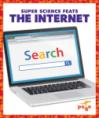
SUPER SCIENCE FEATS (4-book Series from Pogo Books published by Jump!)

THE FIRST FLIGHT, THE MOON LANDING, THE INTERNET, CELL PHONES


Donna Janell Bowman (Winner – Suzanne Larsen)

STEP RIGHT UP: HOW DOC AND JIM KEY TAUGHT THE WORLD ABOUT KINDNESS, illustrated by Daniel Minter (Lee and Low, 2016)

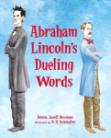
ABRAHAM LINCOLN’S DUELING WORDS, illustrated by S.D. Schindler (Peachtree, 2018)


Susan M Latta (Winner – Beth)

BOLD WOMEN OF MEDICINE: 21 STORIES OF ASTOUNDING DISCOVERIES, DARING SURGERIES, AND HEALING BREAKTHROUGHS.


Janet Slingerland(Winner – Joan Swanson)

EXPLORE ATOMS AND MOLECULES! With 25 Great Projects


Miranda Paul (Winner – Rani)

Donating TWO prize packages:

Book Set #1 (plus a set of water stickers and a set of new baby stickers!)

WATER IS WATER

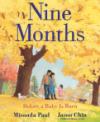
NINE MONTHS (Advance F&G copy only) 


Book set #2 (plus a few bookmarks!)

I AM FARMER: GROWING AN ENVIRONMENTAL MOVEMENT IN CAMEROON

ONE PLASTIC BAG: ISATOU CEESAY AND THE RECYCLING WOMEN OF THE GAMBIA

Kate Narita (Winner – Heather Macchi)

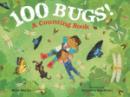
100 BUGS!


Laurie Wallmark (Winner – T Dionne)

(Author of Hedy Lamarr’s Double Life, Grace Hopper: Queen of Computer Code, and Ada Byron Lovelace and the Thinking Machine)

  • A classroom prize pack of:
    * bookmarks
    * stickers
    * STEM-related word searches
    * pencils

Dianne White (Winner – Rebecca Smith)

WHO EATS ORANGE?, illustrated by Robin Page (Beach Lane/S&S, 2018)


(The STEM TUESDAY Mary Kay & Jen Bundle Winner – Mandy Davis)

Mary Kay Carson

MISSION TO PLUTO


Jennifer Swanson

A 3-pack of:

ASTRONAUT-AQUANAUT

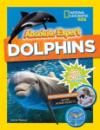
ABSOLUTE EXPERT: DOLPHINS

ZOOLOGY: COOL WOMEN WHO WORK WITH ANIMALS