Posts Tagged Author Interview

WNDMG Author Interview with Megan E. Freeman

WNDMG Author Interview with Megan E. Freeman

Globe reading a book being held up by different colored hands representing diversity.

It always amazes me when I can pick up a book and discover something I’ve not been introduced to before. Away by Megan E Freeman is a great example of that! Her story introduces readers to scenarios that get us pondering: what would we do in such a situation?

I had the esteemed pleasure of sitting down to interview Megan. Here’s the inside scoop on both the author and her book…


KATE: Our Mixed-Up-Files readers would love the inside scoop on Away – your companion novel to Alone. Can you tell us a bit about the premise?

MEGAN: When an imminent threat alert causes a midnight evacuation in Colorado, four kids relocated to the same shelter become unlikely friends. After they stumble onto evidence casting doubt on the legitimacy of the evacuation, they begin an investigation that causes them to question everything and everyone around them. Through a series of covert and courageous efforts, the friends uncover the facts behind the “imminent threat” and must decide how—and if—they can expose the truth.


KATE: This is a multiple POV book – with each of the 4 characters quite literally written differently. Harmony is written in prose, Grandin in verse, Teddy in screenwriter script, and Ashanti in italicized verse. This change in style is new to me and rather exciting to see. How did you come up with this? And how did you know who to bring to page when?

MEGAN: There was a lot of trial and error! I knew I wanted to give each character their own point of view, so I started by thinking about what each of them was passionate about, and I let those interests inform the formatting for their voices. Some days I worked exclusively on one character and then slotted the pages into the manuscript later. Other days I worked on multiple voices in sequence. One nice thing about writing in Scrivener is how easy it is to move and rearrange pages, and I did a lot of rearranging. 


KATE: Let’s talk setting. Your characters meet at an evacuation center. I can’t help but think of Covid and being isolated from the world at that time. In Away, however, isolation is an understatement. Talk about some of the creative ways you took to build a somewhat normal life for your characters all the while shutting them off from the outside world.

MEGAN: I read a lot about the Japanese Internment Camps during World War II, and while I was drafting, my local museum had a timely exhibit of Ansel Adams’ photographs from Manzanar. It was extraordinary to see pictures of people holding concerts, playing baseball, and publishing newspapers. The human spirit is resilient, and even when faced with unimaginable injustices, people still find ways to carve out small comforts and little pieces of normalcy.


KATE: In the beginning, the 4 characters start off by documenting daily life at the center. As the book progresses, they uncover facts behind the cause of the evacuation and decide to expose the truth. I love how these kids tackle an adult situation. And in doing so, you keep the characters acting and thinking via “kid brain” aka how they interpret what adults have said. How did you nail that MG voice?

MEGAN: Oh gosh, I honestly have no idea. I invented characters, dropped them into a conundrum together, and then listened. I know that sounds kind of woo-woo and I wish I could explain it better than that, but it really is all about listening.


KATE: With multiple towns being evacuated, readers meet more than just 4 characters. When choosing who to add to your storyline, were any of them a surprise addition as you fleshed out the plot?

MEGAN: At first, I didn’t see Ashanti as such an immediate presence in the story. I knew she would be an Easter egg for ALONE readers, and in early drafts, she didn’t appear until the other kids arrived at the camp and Teddy’s grandma went to the medical clinic. But some young beta readers told me they wanted more from her, and I did, too. So I revised the early chapters to bring her into the story from the very beginning, and she really stepped into the spotlight. 


KATE: It’s often fun to read about the baddies of a book and how they put the protagonist in a corner. But with multiple POVs, Away’s baddie had to be something larger than a singular antagonist. How fun or difficult was it for you to write about a system working against its citizens?

MEGAN: It was so hard! Because—and I know the book will get criticism for this—I had to try to create a massive conspiracy of unprecedented scale while still allowing readers to suspend their disbelief. Not everyone will be able to accept the premise, and I get that. But honestly, all the extraordinary things that happen in AWAY have parallels in historical and current events. And I’m totally sympathetic to readers who will find the conspiracy implausible. It’s hard to conceive of the inconceivable. Until it’s not. 

KATE: I adore how Teddy references movies. As an example, he writes: “How do we expose the wizard? Where’s Toto when you need him?” Such a fun nod to the Wizard of Oz (for more reason than one when readers finish the book). I’m curious if the Wizard of Oz is your favorite book or movie and how other writers have shaped your journey to publication.

MEGAN: My first book, ALONE, was inspired by Scott O’Dell’s book Island of the Blue Dolphins, and throughout that book I enjoyed making allusions to Karana, his main character. For AWAY, I wanted to find another literary classic to weave into the story. Since my characters’ entire goal is to get home again, The Wizard of Oz was perfect. It’s a wonderful book, and the fact that it exists in different formats (book, film, stage play) was helpful in making connections to my different characters. Not to mention that the four characters in The Wizard of Oz become proxies for each of the kids in AWAY, right down to the dog.


KATE: What type of research did you have to do when creating the story world and cast of characters? I was super intrigued by Ashanti’s knowledge of mythology and science, mostly because these are not my areas of expertise. Are these aspects of your own interests which you’ve woven into the story?

MEGAN: I spent a lot of time researching, and I definitely wove my own interests into the story, along with the interests of friends and family. My husband grew up on a ranch and informed a lot of Grandin’s scenes, and my brother is a huge film buff who was very helpful with Teddy’s sections. I’ve always loved Greek mythology and I used to teach Ovid, but I had to research many of the goddesses Ashanti references. I watched videos on medical procedures (including how to use a cast saw), and a journalist friend consulted on Harmony’s pages. Another friend who is a former Army officer taught me a lot about military camps and jargon, and I went down the rabbit hole researching state and federal emergency response systems. I learned a lot!


KATE: Away is such an amazing companion novel to Alone. Without revealing spoilers, can you describe your writing process: in organizing your books, did you have the ending for book two in mind when you set out to write book one? And, can you give us an example of something you cut, changed, or reworked from draft to publication?

MEGAN: When I wrote ALONE, it never occurred to me that there would be another book. As far as I was concerned, it was a stand-alone story. But at every school visit, readers wanted to know more about the evacuation and the “imminent threat” that caused everyone to leave. After many of these conversations, I knew I needed to write a companion novel, and that’s where the idea for AWAY came from. Originally, I imagined the conspiracy on an even larger scale, involving the federal government and multiple states. But in talking with my editor, we realized it worked better to keep it contained to Colorado, limited to state and local governments. It was also helpful to fictionalize all the locations so that I had the artistic freedom to manipulate the setting. I did the same thing in ALONE, and it made logistics easier to puzzle out.


KATE: Thank you for taking the time to share the inside scoop on Away. Is there to be another evacuation you can hint at? Perhaps a new project in the works?

MEGAN: I just sold my first YA novel and it has yet to be officially announced, but I’m really excited about it. It’s completely different from the AWAY and ALONE books, and it’s set both in California and Norway, where I lived as a teen. It’s coming in 2026, and I’ll have more news about that soon. And I’m playing with ideas for a third book in the ALONE/AWAY universe. In ALONE there are three girls, Maddie, Ashanti, and Emma, who are supposed to attend the ill-fated sleepover. Now that Maddie and Ashanti each have their own books, it seems like there may need to be one more for Emma…we’ll see!


KATE: Where can readers best find you if they want to reach out?

MEGAN: I’m on lots of socials, and readers can also contact me directly through my website: www.MeganEFreeman.com


And….no MUF interview is complete without a lightning round, so…


Favorite place to write? my home office in Northern Colorado

Dark chocolate or milk chocolate? dark

Superpower? teaching

Rollerblades or bike? bike

Dream job when you were a kid? author 🙂

House pet? a goofy yellow labrador named Cowboy

Favorite piece of advice for writers? Find a trusted reader who loves everything you write and makes you want to write more!

Interview with James Ponti, bestselling author of City Spies: London Calling!

Cover of CITY SPIES: LONDON CALLING by James Ponti

Fresh off the release of his stellar THE SHERLOCK SOCIETY, James Ponti is back with the highly anticipated next thriller in the CITY SPIES series: LONDON CALLING. As always, the book is filled with action, adventure, humor, and heart. James was kind enough to speak with From the Mixed Up Files of Middle Grade Authors about his new novel, his approach to writing distinct characters, and a favorite book (with an ironic twist!).

This interview has been edited for length and clarity.

London Calling takes a storyline that’s been building in the background of the first five books – with Mother and Clementine and Cairo and Annie – and brings it to the forefront. What was it like to tackle that storyline head-on?

There’s a couple things going into play with that. I know there are going to be at least eight books in the series, and there might be more. I thought – I have these ongoing stories, and I thought about readers – maybe some who’ve been with me the whole time, and they’re aging into different books. Perhaps I need to give them some resolution. But I don’t want to make the series feel like it’s over either. So what was interesting was trying to figure out how to wrap up some things and answer some big questions and at the same time create some new questions. So we have kind of a fresh start in the next book.

Everywhere I went where people were into the books, they would always ask me – is Clementine good or bad? And I told them, you know…I haven’t really fully decided – because what I didn’t want was for it to be an obvious one way or the other kind of thing. But I thought they deserved to have an answer to that question.

So in the last year, when I went out for either MISSSION MANHATTAN or if I was out for THE SHERLOCK SOCIETY, when kids would ask that I’d say, you’re going to find out in February!

I was drawn into the book from the get-go. The first chapter has such a great action sequence with Annie her best friend, but you also did such an incredible job revealing her character. How do you make sure you’re doing both of those things?

That was for me a really big challenge. I knew I wanted the book to start with [Annie] because we haven’t met her, and we don’t know what we think about her – although we have no reason to think she’s bad. Unlike Clementine, she’s never done anything to make you question her goodness or badness or which side she’s on – she’s just a character we don’t know about. And I wanted to get to know her, but also – I like to start the books with a big…I want them to suck you in. Hopefully!

One time I went on Goodreads, which is a mistake [laughs]. And this kid wrote – and I thank this kid a lot – because this kid wrote about the first book: I really like this book, but boy did it take forever to get started. And that gnawed at me for years. So the next book starts with like, hijackers landing on the ship about to take it hostage. I wrote that and I’m like, is that soon enough for you? Like talking to this kid out loud at my computer [laughs]. So you know, I like the book to really start with like something that’s going to grab you, hopefully.

The challenge is: how do we have that and not have it be empty action? How do we get to know this character during the action? …[T]he only way I’m going to get to know her character is if she has a friend to talk to. That became key.

…[T]hose [story] necessities led to me try to think: what’s her personality like? What kind of relationship does she have with her mother? And then – where I can break up the action with dialogue or with her thinking of an internal monologue to try to show her personality?

This is Book Six, and all the main characters have established traits about each of them, but you’re still revealing new things. How do you find that balance?

The first thing about the characters is – I started with five of them, and now there’s six – and what I did is: I took my five biggest problems as a middle schooler, and I gave each kid one of those problems. So that in a way, they would be five variations of me in middle school. And why I wanted to do that was because I wanted to never favor one over the other. I never wanted to be more vested or identify more with one of the other, and so I started with that. Then there’s other thing that is really backward… So I’m going to give you longer answer you want but hopefully it all makes sense. [laughs]

I went to see the DEAD POET’S SOCIETY with my mom back when that movie came out. I don’t know you’re familiar with it, but halfway through the movie, those kids – even though a lot of them now become actors we recognize – were all unknowns. All the kids have basically the same haircut, and they all wore matching uniforms. And halfway through the movie, my mom turned to me and she says: I can’t tell them apart. I don’t know who’s who. And that’s stuck with me forever as a writer thinking – how frustrating for a reader. To get confused with characters.

And I knew – here, I’m going throw five kids at you. And how am I going to make it work so you’re going to be able to keep track of them well? And that’s why I came with the idea, if I named them after the cities from – that gives you a little more tangible hold. It’s not Tom and Bob and Larry. It’s Paris. Oh, he’s the one for France – so I know his backstory instantly every time I see Paris, if I remember [he’s] the one that came from France.

So I made a list of 150 cities that I thought would be good character names. And I just scanned that list, and I said, I want one from each continent. So I had the names of the characters first.

You also have the profiles in the back of the book, so if you’re reading you can always flip back-and-forth. I think that is fantastic. How did those come about?

I’m not smart enough to come up with that. [laughs]. Actually, I got a call from my editor for the first book who said – someone in the sales meeting asked, wouldn’t it be neat if we had [character profiles]? I said, that would be great. You could go back and you could check.

And it was great – we got the artist to do solo shots of them all so they felt a little more real. Because it wasn’t just the ones on the cover. It’s like they each have their own yearbook picture. So I had to spend a lot of time trying come up with those. That’s actually the hardest part of the book to me is writing the dust in the back. Then they wanted to run the same one [for the second book]. I said no, we have to change it.

It forces us to really flesh them out – and also, I want to change how we do it. So one is them by themselves. In one of them they write about each other.

One of my favorite sections of the book is where the villain, Le Fantôme, quotes from The Little Prince that, “all grown-ups were once children, but only a few of them remember it.” He then says that he reads that book every year. To close, do you have a book that you find yourself re-reading like Le Fantôme?

…I was the worst reader growing up. I was terrible at it and was a really slow reader. Very frustrated by it, which is why I first started in television writing. I never thought I could write a book because it was such a struggle for me to get through. Ironically, the one book that got through to me is FROM THE MIXED-UP FILES OF MRS. BASIL E. FRANKWEILER.

It is my North Star, and I love it. There’s a funny story about it – so it’s the book that for whatever reason I got hooked on.

I grew up in a beach town in Florida outside of Jacksonville. We’re talking 30,000 people in four communities side by side. And when my first book came out, I said – I want to send a copy to Elaine Konigsburg and say to her: thank you for writing your book because without your book I know I would not have written this book. And so I tried to track down where she lived, and it turned out my whole life, she lived in my hometown. I had no idea.

I wish I knew that as a kid because I think [writing] would’ve seemed more attainable if I thought someone who lived here did it as opposed to – oh, you have to be in New York in Chicago or Los Angeles you have to have it you know XY&Z kind of things to check off the boxes…so the closest thing would be From the Mixed-Up Files!

James Ponti is the New York Times bestselling author of four middle grade book series: The Sherlock Society following a group of young detectives; City Spies, about an unlikely squad of five kids from around the world who form an elite MI6 Spy Team; the Edgar Award–winning Framed! series, about a pair of tweens who solve mysteries in Washington, DC; and the Dead City trilogy, about a secret society that polices the undead living beneath Manhattan. His books have appeared on more than fifteen different state award lists, and he is the founder of a writers group known as the Renegades of Middle Grade. James is also an Emmy–nominated television writer and producer who has worked for many networks including Nickelodeon, Disney Channel, PBS, History, and Spike TV, as well as NBC Sports. He lives with his family in Orlando, Florida. Find out more at JamesPonti.com.


CITY SPIES: LONDON CALLING releases February 4 and is available at bookstores everywhere.

You can see more purchase options at: Simon & Schuster.

Author Spotlight: Thomas Wheeler

During my seven-plus years as a Mixed-Up Files contributor, I’ve read dozens (and dozens) of middle-grade novels. But never in my reading life have I encountered a book of such inventiveness and mind-blowing creativity that I needed my heart rate to return to normal when reaching “The End.”

In short, my mind was blown.

I’m talking, of course, about Thomas Wheeler’s MG debut, The Doomsday Vault, the first installment in the Everwhen School of Time Travel series. Lauded by Kirkus as a “…hilarious time-travel romp (that) bursts with creativity and heartfelt messages,” the book is out now from Simon & Schuster.

But first, a bit about the author:

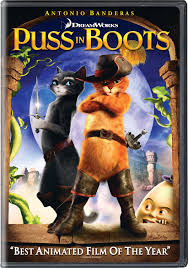
Thomas Wheeler is a screenwriter, producer, showrunner, and the author of The Arcanum. He was the executive producer and creator of Empire for ABC and The Cape for NBC. In feature animation he wrote the Academy Award–nominated Puss in Boots, as well as The Lego Ninjago Movie. Together with Frank Miller, he is cocreator and executive producer of Cursed, based upon the YA novel of the same name.

About the Doomsday Vault

MR: A hearty welcome to the Mixed-Up Files, Thomas! (Or do you prefer Tom? I don’t want to be presumptuous.) As I stated in the intro, The Doomsday Vault blew me away. It was like an acid trip, but in the best way possible. 🙂 Can you give our readers a brief summary?

TW: Hey there, Melissa! Thanks for having me, and Tom or Thomas works for me. I also answer to ‘Hey you!’ And so appreciate the trippy review! Now then, a summary? Let’s see… A famous phrase from the Everwhen school charter states: “No child should be denied an education simply by virtue of the time they were born into.”

Everwhen is both a school of time travel and a time machine itself that allows special students from throughout the time stream to learn about exotic sciences from the past and future and apply them to our planet’s most pressing issues. Our first adventure follows a trio of students: a young English boy from the 1800s named Bertie Wells, a prodigal mathematician from 2025 named Zoe Fuentes, and a young inventor from the middle ages named Millie Da Vinci (and yes, her big brother is Leonardo!) as they get to know their new school, deal with a missing headmaster and try to crack the mystery of the Doomsday Vault. It’s a story about that moment where inspiration meets imagination and the miracles that can result.

Character Study

MR: As you said, the book is set in a time-traveling boarding school, where the protagonist Bertie Wells—the future H.G. Wells, of The Time Machine fame—encounters legendary figures from past and future eras, including Genghis Khan, King Arthur, Franklin D. Roosevelt, Steve Jobs, and more. His schoolmates are from different historical eras as well. How did you go about choosing which figures to feature, and why? 

TW: Well, I knew I wanted Bertie Wells from the earliest stages because of who he grows up to be and how that would tie so importantly to the ending (no spoilers!) ((actually, spoilers are fine…)) H.G. Wells is also a historical figure who represents that perfect bridge between the worlds of science and imagination. As for Millie Da Vinci, I drew inspiration from my own kids and their big brother/little sister dynamic. I like characters with a chip on their shoulder, and I figured growing up in the shadow of Leonardo Da Vinci might make even the most brilliant scientist a touch defensive. And I knew I wanted a trio of friends from not only different times but different backgrounds and cultures.

At the same time, it was important our present day was represented, which brought me to Zoe. In the initial stages of writing Everwhen, my daughter was a slime-making-lunatic, and I marveled at all of the wild ingredients that were going into her creations; and so, of course, being my weird self, I imagined it coming to life and causing all sorts of issues. Zoe’s journey took the longest to unfold in my mind and went through a lot of revisions, but it was worth the effort. Each character’s journey cooks differently. Overall, this felt like a great way to illustrate that despite our differences there is far more that unites us than divides us, and kids all tend to worry about the same things: Am I good enough? Am I valuable? Do people like me? I figured the same worries applied, even if you were born in the 1300s.

World Building: Breaking the Rules

MR: What advice would you give to writers in terms of world building? 

TW: I don’t have any one approach that works every time. For some context, I spend a lot of my life screenwriting in fantasy worlds and jousting with studio executives who are ALWAYS hammering you on the ‘rules.’ They want the ‘rules’ for everything, and it can really suck the fun out of a story. I don’t think readers care about the rules as much as studio executives (actually, I’m certain of it). So for Everwhen, I just wanted to throw caution to the wind and let my inner science nerd unleash. My spirit animal for this novel was the late, great Douglas Adams, who wasn’t a big rules guy himself yet managed to conjure the most imaginative and thrilling worlds.

Also, I think tone matters. Everwhen obviously flirts with chaos and absurdities that allow for more latitude than, say, the world-building of Game of Thrones, which aims for a grounded realism. One practical strategy I use in my world-building is to simply ask myself fifty questions and FORCE myself to answer them. They can be about anything: geography, religion, how does this work, how does that work, what’s the history, who founded this world, mythology, ghost stories, types of buildings, and on and on and on. It’s labor intensive but also freeing.

First of all, you’ll make terrific discoveries about your world when you try to objectively answer these questions. Try not to contradict yourself but otherwise have fun. This is why it’s different from making the ‘rules’! This exercise should be all about invention. When you get into your story, you’ll find a lot of the architecture and infrastructure has been built in advance, and it will give your world a deeper sense of place and dimension, and your characters will have a history to draw upon that will give them additional layers as well.

Gerbil Piping and Primordial Black Holes

MR: In addition to the historical luminaries mentioned above, you’ve included several off-the-wall characters, including Skippy the Cockroach who has an IQ of 378 and “sociopathic tendencies”; Zelda, who’s dating a brain she keeps in a jar (aka “Jar Brain”); and Raul, Bertie’s flirtatious roommate who greets female schoolmates with: “Nice boots.” (:)) There are also vindictive ghosts, mechanical monsters, sentient mold spores, and lots and lots of slime. Tom—and I mean this sincerely: How does your mind work?

TW: Ha! I don’t know. It’s scary in there. Lots of gerbil piping and primordial black holes floating around.

H.G. Wells, Jack the Ripper, and Time After Time

MR: As above, we discover that Bertie is the future H.G. Wells, whose groundbreaking 1895 novel The Time Machine is the inspiration behind your book. I’m guessing you were a huge H.G. Wells fan as a kid?

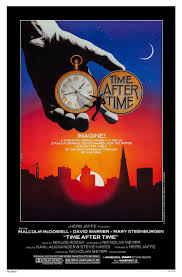
TW: I think my first exposure to H.G. Wells was this super scary time-travel thriller called Time After Time, where H.G. Wells (played by Malcolm McDowell) chases Jack the Ripper to modern-day San Francisco. Such a cool idea, but I was WAY too young to see this movie and my dad dragged me out of there, because I was terrified (and probably crying). But maybe H.G. burrowed into my imagination then? Of course, through the years I’ve come to appreciate his magnificent genius as an author and prescience as a futurist. And how do you tell a time travel school story without H.G. Wells??

MR: While we’re on the subject of Bertie, at school he forms a close bond with two of his classmates, Zoe Fuentes, a Harvard-obsessed math genius from 2025, and Amelia “Millie” Da Vinci, Leonardo’s inventive but overlooked little sister. What were you trying to say about the nature of friendship, especially in trying—and highly unusual—circumstances?

TW: Like I said, I don’t care where you’re from, and I don’t care WHEN you’re from; inside we all worry about the same things. And while we try to present this certain face to the world, our true friends love us for our imperfections. They see us at our worst, at our silliest, and at our most anxious. Friends pick us up when we fall.

MR: Another important theme in your book is feeling “less than.” Bertie feels inferior because of his poor grades, clumsy blunders, and fractured relationship with his dad. Zoe feels “less than” because she was ostracized in middle school, and Millie feels overshadowed by her famous brother. What’s the takeaway here?

TW: I think it’s hard to be creative in any realm, and in any endeavor, and not have to wrestle with this feeling from time to time. It comes with the territory. I deal with this theme in my own creative life. I see it with my kids, and my friends and peers.

Bertie, Zoe, and Millie are all creators in their own way and, for various reasons, feel outside pressure that gives them doubts. In the novel, they support each other in their inventive pursuits, in ways no one else in their lives ever has. Millie encourages Bertie’s imagination, Zoe and Bertie support Millie’s invention of Gurgy, and Bertie counsels Zoe on the necessity of failure to achieve great things. They really need each other, and grow to rely on each other, as they navigate the mayhem of Everwhen. We all need that. We all need each other to accomplish great things.

Funnily enough, just as I was writing this, my daughter texted me about doubts she’s having concerning a writing project she’s working on. I gently encouraged her to keep moving forward with it. Her idea is a great one, but she got scared–and that’s so normal. What I tell my kids is that if you feel ‘fear’ during the creative process, then you’re probably on the right track. But it’s difficult to do this work in a vacuum. We need people we trust to encourage us, support us, and guide us.

It’s About Time

MR: One more theme to unpack: the construct of time. To steal a quote from the book: “Time is not fixed. It’s not a straight line. Time is more like a clay we can mold.” Can you elaborate?

TW: (checks notes) I have no idea. Kidding! Although I think you may be quoting Dr. Kind there, and he has some rather controversial ideas about the use of time travel.

I don’t know about you, but I’ve spent many a night before bed pondering, ‘What would have happened if I had done X? Or if I’d chosen Y? Or if I’d turned left instead of right? If I’d said this instead of that.’ There is no more bewitching power than the power to travel through time and ‘fix’ things. At Everwhen, the professors deal with this temptation in a very real and explicit way, and so do the students. At the end of the day, we are the sum total of our choices. I thought it was interesting to watch kids wrestle with that moral dilemma, and to be tempted by that moral dilemma. And then to see the results of what happens when you DO try to fix things. In a school where the past, present and future all co-exist, it creates fascinating problems for your characters to contend with.

The Secret of Success

MR: Switching gears, like Leonardo Da Vinci you’re a true Renaissance man, having written and produced critically acclaimed films for Hollywood, and for TV. You’ve also written two best-selling novels, and now, a middle-grade book. What’s the secret to having such a successful and varied career?

TW: I have an amazing partner in life; my wife, Christina. Her wisdom and guidance through the years has been invaluable. My family is my secret weapon. I would add that I like to embrace new creative challenges. If I haven’t done something before, then I’m intrigued. If it gives me that ‘fear’ we were talking about earlier, so much the better.

Bringing Your A-Game to Kids

MR: As a follow-up, what made you turn your attention to writing for a younger audience? Was it something you always wanted to do, or did your kids talk you into it? Also, were there any specific challenges you faced?

TW: True, this is my first middle-grade-novel, but I’ve been writing for families in feature animation since Puss in Boots, and what I’ve found is that kids are the smartest audience of all. I feel an obligation to bring my A-game when I’m writing for a family audience. There is a misconception in Hollywood that younger audiences can’t handle emotional complexity; that you have to simplify things, soften things. But I totally disagree. Kids love big stakes, big problems, and big emotions. Publishers and studios tend to scissor up the audience into ages, etc., but hopefully adults and kids alike can enjoy the happy chaos of Everwhen.

Hooray for Hollywood!

MR: Rumor has it that The Doomsday Vault has been optioned by Paramount and you’ll be writing the script. Can you tell us more about the project? Also: will you have a cameo? (It’s only fair.)

TW: Lol, we’ll see! Maybe I can play Jar Brain! What I can say is that we have an amazing creative team, with producers Lorenzo Di Bonaventura and Mark Vahradian (Transformers), and Scott Mosier (Illumination’s The Grinch) attached to direct. Fingers crossed!

Write This Way…

MR: What does your writing routine look like, Tom? Do you have any particular rituals?

TW: Comfort is important. I have a new favorite cozy sweater that has turned into my Linus blanket. I am also surrounded by WAY too many toys. It’s bordering on a hoarder situation. After coffee and a little hanging out with my wife, I’ll write from 10 a.m. to 6 p.m. every day, with a little gym and dog walking mixed in. If I’m writing a screenplay, a good day is four to six pages; a great day is any more than that. Novels are a different animal.

When writing Everwhen, I just tried to empty my brain onto the page. I wanted the reader to find something new and incredible or ridiculous or funny around every corner, so those pages came a bit slower. But I love these characters and this world, so it was a joy to come to work every day. My general feeling about writing is your job is to open the shop every day, and your customers are your ideas. Some days you’ll have a lot of customers, some days it’s kind of quiet. Either way, the shop has to stay open.

MR: What’s your best piece of writing advice?

TW: No matter what genre or tone you’re writing in, always try to bleed on the page. Bring something honest and specific and meaningful from your life into the work. It will give your writing a more specific voice. 

Up Next in Everwhen

MR: When can we expect the next installment in the Everwhen School of Time Travel series? And how many books are planned?

TW: It will be a minute before we see the sequel because I have a few feature obligations, but I’m quite excited to introduce some new characters from the future that I expect will be reader favorites. Still tinkering with the plot. Hopefully, by summertime I can get into the main writing. No plans beyond the sequel at the moment, but if there is demand there are endless stories to tell in the Everwhen universe!

Lightning Round!

MR: Finally, no MUF interview is complete without a lightning round, so…

Preferred writing snack?

I’m not a writing snacker because I get sleepy. I might have a banana or a protein bar, so I’m pretty hungry by dinner!

Coffee or tea?

Coffee. Peet’s. 2% milk.

Plotter or Pantser?

I am embarrassed to admit that I had to look up ‘pantser.’ But I’ll say this: Every writer should work from an outline. Screenplays are structure. Novels offer a little bit more freedom, but you can get a real sinking feeling if you start wandering around the middle of a novel without a map. It may feel like eating your vegetables, but an outline will spare you a lot of pain. In reality, I probably drift somewhere in the middle, although I’ve had the greatest success from working off a very detailed outline. (Sorry, that was not a lightning round answer!)

If you could hop into a time machine, where would you go?

Oof. To be honest, I’d go back and spend a few more minutes with my mom, who passed a few years ago. The less loaded and equally honest answer is that I’d like to go spend a few days as a dinosaur field biologist.

Superpower? (Besides avoiding black holes)

Flight, or the ability to make people less mean online.

Favorite place on earth?

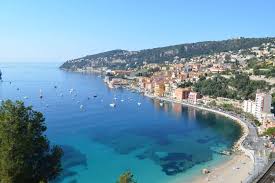
The south of France does not suck.

If you were stranded on a desert island with only three things, what would they be?

  • A popcorn maker.
  • My wife (we need a vacay!)
  • Fritz, our Yorkie.

MR: Thanks so much for taking the time to chat with me today, Tom. Wishing you much success with the Everwhen School of Time Travel series!

TW: Melissa, it was an absolute pleasure! Thank you so much for inviting me!