Posts Tagged Author Interview

Author Jodi Kendall – Interview & Book Giveaway

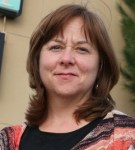
I recently had the opportunity to chat with author Jodi Kendall about her debut middle-grade novel, The Unlikely Story of a Pig in the City, which releases on October 3rd. Read on for a glimpse into the inspiration for Jodi’s story . . . and for a chance to win a signed copy!

The Unlikely Story of a Pig in the CityT. P.: Thanks, Jodi, for stopping by MUF to chat about The Unlikely Story of a Pig in the City. Our interview is quite fitting for two reasons. First, I live in the city. And second, my daughter is convinced she wants a pet pig. I let her scoop the cat’s litter box instead.

Anyway, since I haven’t seen many pigs in the city, I’ve got to know—where did you get the inspiration for your city-dwelling porcine pal?

JODI: I grew up in a big city in the Midwest. When I was thirteen years old, my college-aged brother showed up one holiday season with a surprise piglet in his arms! He had saved a runt from certain death at a nearby farm. Her name was Ellie, and she was a typical farm breed that grew big and fast. Ellie lived inside our house for six months. As you might imagine, we had quite our share of pig adventures! While the main plot of The Unlikely Story of a Pig in the City is loosely inspired by this childhood experience, the book is a work of fiction.

T. P.: Wow! That brings to mind two different questions. First of all, exactly how big did Ellie the pig get during her 6 months in your house?

JODI: I had to call my dad to answer this one! He thinks Ellie was about 180 pounds when she finally moved out. Here are a few pictures.

Author Jodi Kendall with Ellie

This is thirteen-year-old me bathing her, and another one when she had grown really big… From the snow out front, I’m guessing it was maybe a month or two before she left our family in April. (I remember because it was my Mom’s 50th birthday and, while us kids all loved Ellie, Mom said that her leaving our house was the best present she ever got!) We had this small room attached to our kitchen – we called it the dinette – where Ellie stayed when we were at school. But when we were home, we let her out, and she roamed our house and explored around the yard, too.

Ellie the Pig

T. P.: As for the second question your real-life-pig-in-the-city experience brings to mind, what’s one event in your novel that was inspired by something that actually happened with Ellie?

JODI: There’s a scene when Hamlet the pig bullies her way into the kitchen, figures out how to open the fridge with her snout, makes a huge mess on the floor, and the main character’s little sister, Amelia, is standing on the kitchen countertop swatting at the hefty pig’s rump with a fly swatter trying to get her to back away. That’s a true story! Pigs are highly intelligent animals and motivated by food. Our pet pig, Ellie, also bit into aluminum cans with her teeth to make it spray soda everywhere (she liked the taste). Ellie learned how to open lower cabinet doors, and she knew there was food inside cans. While she couldn’t open soup cans with her teeth, she did peel off the labels. At one point we had 2-3 dozen cans of unknown content because she tore off all the labeling!

T. P.: It looks like 180 pounds worth of pet pig provided plenty of inspiration! Now let’s go to the flipside of real-life inspiration. What’s a favorite pig-focused scene or event in your story that sprang completely from your imagination?

JODI: There’s a scene in which Hamlet the pig escapes the family’s tiny city townhouse backyard by jumping over the fence into the neighbor’s adjacent property – and this is a very ornery neighbor who is NOT a fan of chaos, noise, or the Shilling family. It was a fun action scene to write (that leads to some consequences and character growth, too).

[SMOOTH SEGUE ALERT #1!]

T. P.: Speaking of characters. . . . As the author, I’m sure you love Josie (the story’s protagonist) and Hamlet the pig; otherwise, you’d never have told their story! Aside from them, who’s your favorite character in the story? What makes that character stand out to you?

JODI: Hands-down, Josie’s college-aged brother – the oldest of the five Shilling kids – Tom. He’s hilarious, confident, and always breaks the tension in the family with a good one-liner. His character was a blast to write!

[SMOOTH SEGUE ALERT #2!]

T. P.: Speaking of writing. . . . What’s next for you? Do you have another project in the works?

JODI: I just finished up the sequel to The Unlikely Story of a Pig in the City, which is very exciting. It will publish in Fall 2018. We’ve been secretive about the content, title, and cover art, so interested readers will just have to wait and hear the news. 🙂 But I’m currently working on a new book proposal, a third book that’s unrelated to my first two middle grade novels. And you can bet that there’s an animal adventure involved!

T. P.: A hush-hush sequel??? I can’t believe you’re going to keep us in suspense like this, Jodi! Regardless, I sure do appreciate you taking the time to come visit us here at the Mixed-Up Files. Now, as we anxiously await details about your next novel, I suppose we could offer our readers a chance to win a copy of your current one. . . .

*  *  *  *  *

Want a chance to win a SIGNED copy of The Unlikely Story of a Pig in the City by Jodi Kendall plus some bonus swag? Entry is easy. Just comment below by answering one simple question:

If YOU could live in a city with any farm animal, what animal would it be?

You can also earn BONUS entries by sharing this post on Facebook, Tweeting about the giveaway, visiting Jodi’s website, signing up for Jodi’s author e-newsletter, and/or following her on Instagram. Entries will be accepted through the day of the novel’s official release—Tuesday, October 3rd.

a Rafflecopter giveaway


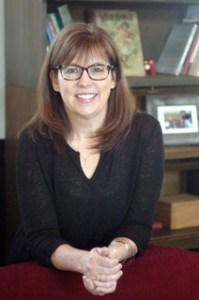
Children's author Jodi KendallTo learn more about Jodi Kendall and her writing, visit www.jodikendall.com. You can even download free bonus resources for The Unlikely Story of a Pig in the City, including an in-depth Classroom Curriculum Guide.


Happy Book Birthday Michele Weber Hurwitz

The Mixed Up Files’ own Michele Weber Hurwitz has a book birthday! Her newest MG novel Ethan Marcus Stands Up comes out this week from Simon and Schuster/Aladdin.

Here’s the gist of the story.

Perennial good kid Ethan Marcus has just done the unthinkable: refuse to stay seated during class. He’s not causing a riot; he’s not wandering around; he’s just super fidgety and sick of sitting. But the rules aren’t designed for Ethan, so he is given two afternoons of Reflection—McNutt Junior High’s answer to detention. The science teacher who oversees Reflection suggests that Ethan channel his energy into the school’s Invention Day event. Ethan doubts his ability to make anything competition-worthy; that’s his sister’ Erin’s department. But then Ethan gets a brilliant idea and recruits his best friend Brian to help.

Enter Romanov, the resident tech whiz, who refuses to give them tips, which causes Erin to be furious at her formally slacker now traitor brother, because Romanov won Invention Day last year. Meanwhile, Erin’s friend Zoe is steering clear of Erin’s drama for the first time ever after realizing that she may be crushing on Ethan. Brian has bigger things to worry about though, and loner kid Wesley may know more than others realize. Narrated by five seventh-graders, discover what really happens after one fidgety kid decides to take a stand against sitting down.

Congratulations Michele! This was such a fun read! It totally reminded me of my middle grade justice warrior self.  MG readers range from 8 to 13 years old, spanning the range of late elementary through middle school. Why choose characters from the upper end of this range, in the 7th grade?

Kids are able to move around more in earlier grades but as they get older, they’re expected to sit for long hours in class. But just because they’re older doesn’t mean they have any more patience for sitting! In fact, in the preteen years, kids may even be more fidgety as their bodies are typically undergoing a big growth spurt. I remember when my son was in eighth grade, he needed to move around while he studied for a test, usually throwing and catching a ball at the same time. This was actually what sparked my initial idea for the story. He once told me that when he’s moving, his brain “works better.” I thought, of course it does, that makes perfect sense! So, seventh grade seemed like a natural fit for this story about literally standing up for a cause you believe in.

I totally relate to Ethan’s need to move. I’m a long way from middle school but I can’t stand to sit still either. One of the things I loved about being a teacher is that you’re always on your feet and on the go. I think if I’d worked in an office all these years I’d have been murdered by my colleagues for spinning in the office chairs! ? School science fairs are a staple of the elementary and middle school experience. Why did you decide to branch out into the Invention Day?

There were several middle grade books with science fair themes, and the growing popularity of maker fairs and the whole maker movement, where kids can create anything, not just work on a science experiment, felt like an exciting, fresher backdrop for the story.

One thing I’ve noticed working at Annie Bloom’s in Portland this year is a proliferation of non-fiction maker books for kids. I’d totally pair your story with this one from the Smithsonian! Of course I have to ask, did you really make a prototype of a clip-on standing desk like Ethan does? And what is your workspace like? Do you stand? Walking desk? Combo?

I didn’t make a standing desk prototype like Ethan does in the book although that would’ve been fun. And my model would’ve turned out worse than what Ethan cobbles together because I have a very challenged mechanical aptitude. As for my workspace, I generally write on a desktop and those long hours of sitting really get to me. I take frequent standing breaks and I have this sort of makeshift platform for my keyboard so I can stand and type when I want to. I remember when I was a kid, getting that sort of brain soup dazed feeling in school – Ethan calls it “scomas” (school comas). I never did stand up to protest, though!

I have a standing desk too, a former woodworking bench, it even has a vice on the end should I need to get a grip! I’ve written one novel in two points of view and found it really tricky. Why five POV characters? And how did you keep track of them all?  How did you choose which character was perfect for that particular scene?

I’m so excited about this book because it’s different than my two previous middle grade novels which both had one girl narrator. This is my first book in multiple points of view but it felt natural and necessary for the telling of this story. I wrote several drafts where Ethan was the only narrator and it didn’t feel like it was working. When I added the other POVs, it clicked. The back-and-forth narration between the kids feels almost like comments on social media posts – everyone has an opinion and their own version of what “really happened.” I chose to have the five characters all narrate because they were so interconnected – Ethan, his sister Erin, their best friends Brian and Zoe, plus the outcast kid, Wesley, who knows more than everyone realizes and is an integral part of the plot. As I wrote, it seemed like each character popped up exactly when it was their time to talk.

It was satisfying to see Ethan and Erin’s combative sibling relationship evolve through the story. Not to give away the ending, but I love how they realize their differences can work for them, not against them. Did you draw on your relationship with your own siblings, or your kids?

I have two younger brothers who are insanely competitive with each other but mostly, I drew from my two older kids’ relationship. They have similar personalities to laid back, easy going Ethan and organized, perfectionist Erin. There are times (in real life and in the book) they can’t deal with each other, and other times they realize how much more they can accomplish as a team if they put aside their differences.

I love the message of empowerment in Ethan Marcus Stands Up because it’s subtle. Yes, you should stand up for things you believe in. Yes, anybody can do it. But real change is hard and not especially linear. And often requires collaboration with others. Did you have a particularly empowering experience as a young person in advocating for a cause?

I love how Ethan changes things (or tries to) in a roundabout way. All he wants to do in the beginning of the story is be able to stand up in class when he’s fidgety, but that goes against his language arts teacher’s class rules. It takes a kind-hearted science teacher to suggest that he can solve his problem through inventing his own solution. The story becomes much more than just about standing and sitting as Ethan digs deep and finds a resolve within himself. I was a quiet, shy kid so I didn’t really stand up and advocate for a cause but I do remember going “on strike” one day and not doing my household chores. That did not go over well with my parents.

What do you think kids will love most about this book?

It’s an easy to read story, and the characters are very relatable. I think it’s interesting and eye-opening to hear each character’s perspective because we all see the world from our own lenses and can interpret a situation so differently than someone else.

You mention on your website that there will be a follow up book in 2018. Are you finished writing that one? Can you give us a preview?

In the sequel, which will be out in September 2018, Ethan and Erin are nominated by the science teacher to attend a prestigious invention camp with brilliant kids from around their state. They feel intimidated and aren’t sure if they’ll be able to measure up. But when they meet two new kids and form a team, they dream up something that just might rise to the top. Not without a lot of drama mixed in, of course.

How exciting to have a sequel already on the way! Congratulations. Can’t wait to share this book with our patrons at Annie Bloom’s bookstore. I hope you have a very happy book birthday!

Interview with Author Amy Stewart and a Wicked Bug Giveaway


Today we welcome New York Times bestselling author Amy Stewart and we are giving away a copy of her new book for middle-grade readers, Wicked Bugs: The Meanest, Deadliest, Grossest Bugs on Earth (Algonquin Books 2017).

Amy Stewart is the award-winning author of six books on the perils and pleasures of the natural world, including four New York Times bestsellers The Drunken Botanist, Wicked Bugs, Wicked Plants, and Flower Confidential. She is also the author of the Kopp Sisters series. Stewart and her husband own Eureka Books in Eureka, California. She is the recipient of a National Endowment for the Arts fellowship, the American Horticulture Society’s Book Award, and an International Association of Culinary Professionals Food Writing Award. 

 Illustrator Briony Morrow-Cribbs studied art at the Emily Carr Institute of Art and Design in Vancouver, British Columbia, and currently lives in Brattleboro, Vermont, where she owns and operates Twin Vixen Press

About Wicked Bugs Young Readers Edition: The Meanest, Deadliest, Grossest Bugs on Earth (Algonquin Books 2017):

Did you know there are zombie bugs that not only eat other bugs but also inhabit and control their bodies? There’s even a wasp that delivers a perfectly-placed sting in a cockroach’s brain and then leads the roach around by its antennae — like a dog on a leash. Scorpions glow in ultraviolet light. Lots of bugs dine on corpses. And if you want to know how much it hurts to get stung by a bullet ant (hint: it really, really hurts), you can consult the Schmidt Sting Pain Index. It ranks the pain produced by ants and other stinging creatures. How does it work? Dr. Schmidt, the scientist who created it, voluntarily subjected himself to the stings of 150 species.

 Organized into thematic categories (Everyday Dangers, Unwelcome Invaders, Destructive Pests, and Terrible Threats) and featuring full-color illustrations by Briony Morrow-CribbsWicked Bugs is an educational and creepy-cool guide to the worst of the worst of insects, arachnids, and other arthropods. This is the young readers adaptation of Amy Stewart’s bestselling book for adult readers.

 
First question: Why bugs?

Wicked Bugs is the sequel to Wicked Plants, a book I wrote in 2009 about deadly, dangerous, offensive, illegal, and otherwise horrible plants that have affected humans–mostly for the worst. It was my way of looking at the dark side of the plant world, and telling rather bone-chilling stories that don’t often get told about the surprisingly powerful world of plants!

Wicked Bugs seemed like a natural follow-up. In fact, as I was researching Wicked Plants, I kept running across interesting stories about venom, insect-transmitted diseases, and so forth in the medical literature. I just started keeping a list, and pretty soon, I had another collection of stories.

The irony is that people are very trusting of plants, assuming that anything green that grows out of the ground is all natural and therefore good for you. But I had no trouble rounding up a list of truly terrifying plants. Plants can’t run away and hide from predators, so they fight back in ways that can really inflict a lot of pain and suffering.

For Wicked Bugs, on the other hand, I actually had a hard time coming up with a list of insects, spiders, and so forth that we actually should worry about.  People are generally far more terrified of bugs than plants, but in fact, I had trouble filling a book with actually “wicked” bugs!

 In your introduction, you discuss your use of the word “bug.” Can you tell our readers about it?  How did you choose which critters to include?

 Entomologists will be quick to point out that they use the word “bug” to refer to a specific type of insect with piercing and sucking mouthparts. An aphid, therefore, is a “bug,” but an ant is not. This book covers all manner of slithering, creeping, and crawling creatures, from insects to spiders to worms. In that sense, I’m using the word “bug” in the more ancient sense, dating back to the 1620s, when it was used to refer to any sort of little insect-like creature.

How did you approach research for the book?

 I interviewed toxicologists, physicians, and entomologists. I read a lot of medical and scientific journals, scoured old newspapers, and did original, primary research to try to debunk myths and avoid repeating old, false information. Although this looks like a small, light-hearted book, I do quite a bit of research. For instance, I would never repeat a fact from a modern book along the lines of “the ancient Greeks used wasps for warfare.” I’d need to trace that to the source–and I don’t just mean a more authoritative Greek scholar, I mean the original source text, which, fortunately, has probably been digitized and can be found in a research library somewhere in the world. I’ve hired translators to translate 500 year-old German texts and even Egyptian hieroglyphics.

Tell us about the decision to publish a young readers’ edition of your 2011 New York Times best seller for adults, Wicked Bugs: The Louse That Conquered Napoleon’s Army & Other Diabolical Insects.

I do quite a lot of events around the country at science museums, botanical gardens, libraries, and so forth. At those events I will often meet teachers and parents who are really eager to find interesting science books for their kids and students. I confess that because I’m not a parent myself, I wasn’t aware of the changes that Common Core and other educational standards have brought to the classroom, but teachers and parents brought me up to date! They told me that literature and writing are being integrated into other subjects, like science and history. Because Wicked Bugs combines all of those things–science, history, and storytelling–it really fit the bill.

 How does this middle grade version differ from the adult version?

We had the text professionally edited to fit the right age and grade level, and we removed just a little bit of “adult’ content.  We also made it into a full-color edition by using hand-colored versions of Briony Morrow-Cribbs’ extraordinary copperplate etchings. As you might know, copper etchings were used to illustrate scientific books three hundred years ago. It’s almost a lost art today. But Briony took up the challenge, often working from real specimens at her university entomology department, wearing jeweler’s glasses to see every tiny detail.

If there was one single thing that you wanted young readers to get from Wicked Bugs, what would it be?

Honestly, I just want them to enjoy the book. I write for entertainment–to entertain myself, and to entertain readers.

 Do you have plans for any other books for young readers?

I very much hope that my publisher will want to do Wicked Plants! There are other books about bugs out there for this age group, but it seems to me that botany is a very underserved subject for young readers. There’s a definite Harry Potter vibe to Wicked Plants–poisons and potions and so forth–but it’s also an engaging look at botany and a good way into the subject. If anybody out there thinks Wicked Plants would make a good next book, please send me your thoughts!

You have published both fiction and nonfiction. Do you have a preference? How does your writing process differ?

Right now I’m writing a series of novels (Girl Waits with Gun, Lady Cop Makes Trouble, and Miss Kopp’s Midnight Confessions) [for adults] based on the true story of one of America’s first female deputy sheriffs and her sisters.

It’s great because the research is really the same, but the writing is very free, because I can make things up if I have to. Also, I’m no longer writing in my own voice, and I do get tired of the sound of Amy Stewart in my head all the time.  Now I’m writing in the voice of a woman who lived in the 1910s, and that’s a great challenge. There will be many more books in that series to come!

And now for the giveaway!

a Rafflecopter giveaway