
Blog

How to Pay Tribute to Your Favorite Authors When They Pass Away

Over the past year, my husband, Matt, a music lover, has been hit hard by the death of some of his favorite rockers. From David Bowie to Prince, I have watched him glued to the computer screen, watching these departed talented musicians. Seeing them play live brings them back for him. He relives and remembers the moments when he was first touched by their music. Our middle son, Ari, is a musician and the singer in the alt rock band Secure the Sun. I can’t tell you how many times my husband has asked my son to play a cover song of a recently departed singer. Ari, when he performs solo somewhere, will often accommodate my husband’s request, such as when he sang Purple Rain last April. Unfortunately, this is a harder task for his band as they play almost exclusively originals.
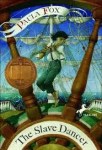
This past week, the multi-talented Paula Fox passed away. Fox, the author of over a dozen novels for children, won the Newbery medal for The Slave Dancer. Her other children’s books garnered the National Book award, the Newbery honor and the Hans Christian Andersen medal. Fox wrote about difficult subjects, including homelessness, disease and slavery. Her books were often controversial and sometimes removed from school libraries. She brought topics into the discourse that many thought had been inappropriate for children.

Additionally, over the past year, in the children’s lit world, we’ve seen the deaths of Richard Adams, the author of Watership Down (one of those books that’s hard to place in terms of category), Lois Duncan, author of beloved suspenseful YA novels, and Anna Dewdney, the best-selling author of the Llama Llama picture books. I’m sure I’ve left out many dearly departed children’s authors (and please comment and let me know who they are). The question becomes how to honor these authors?

Well, we can read them. We can recommend their books. However, unlike musicians, authors can’t perform a Llama Llama cover son–although there is certainly the fan fic option. And for readers and fans, we can still talk about their books. As authors we can also take some of the qualities that we loved in a beloved author and try to weave some of their spirit and passion into our own texts.

How do you honor beloved your favorite beloved authors who have passed?

Hillary Homzie is the author of the Queen of Likes (Simon & Schuster MIX 2016), The Hot List (Simon & Schuster MIX 2011) and Things Are Gonna Be Ugly (Simon & Schuster, 2009). She can be found at hillaryhomzie.com and on her Facebook page.

Girls Playing Sports!

Hello Mixed-Up Filers!

Hope all of you are well since my last post sometime last year! Missed all of you! But, I’m sure you had a great time with all of the wonderful new contributors we have. It’s fun to have new blood. What’s even better is, getting to haze them all with new and improved rituals. What’s even better than that is, with all of the members we have now, it relieves the stress of having to post every two months and spaces it out some more. I think my next post is scheduled for sometime in November of 2027! Please mark it on your calendars!

Anyway, let’s get back to me!

As the three of you, who regularly read my columns can attest to, I usually have a lot of trouble deciding what to come up with for my posts. This month is no exception.

Well, what I decided to do, is since my daughter plays travel softball, and this is the time of year when she’s just starting to get into the new season, I decided to list a few of the books we like, which feature girls playing sports! So, since Dorian Cirrone says I need to take up as little space as possible, just in case someone wants to post recipes or something, I’d better get to it!

First up on my list is, You Throw Like a Girl, by Rachele Alpine. The book is about twelve-year old, Gabby, who promises her dad she’ll play softball and promises her mom that she’ll be in the beauty pageant. So . . . she winds up having to do both! First lesson to remember, though, is to remember to NEVER pick anything over softball! Even though, Gabby has to play baseball, since there is no girls’ softball team that year. It’s a fun book, and anything which has girls playing baseball and softball is good with me.

The next book in our girls’ sports list is, The Kid from Diamond Street: The Extraordinary Story of Baseball Legend Edith Houghton, by Audrey Vernick. This is a true story about Edith Houghton, a young girl who played baseball in the 1920’s. My daughter enjoys reading anything about girls in sports, and she loves it even more if the stories are real. This was a fascinating book and we enjoyed it quite a bit. The only knock on it is, the author is a big Yankee fan, which is a HUGE social faux pas and never to be allowed under ANY circumstances. Still, we’ll forgive her, since we enjoyed the book.

Finally, we have The Kicks books by Alex Morgan. You can honestly jump into any of The Kicks books and enjoy them. They’re all about a twelve-year old girl named, Devin, and her experiences playing soccer and making friends. All my kids played and loved soccer, so this is a fun series for them to read. This is for when you want a short break from softball or baseball books, I’ll allow you to jump into soccer.

What are some of your favorite books about girls playing sports? Let me know in the comments section, since I’m always looking for new titles!

And by the way, if three or more people comment, Dorian promised that next time, I can actually sit with the rest of the Mixed-Up Files staff at our monthly meeting. Well, sit with isn’t exactly right, but I don’t have to leave the room this time.

Until next time!

Jonathan

The True Value of Sensitivity Readers

Sensitivity readers used in the publishing of multicultural books have been in the social media conversation recently.   A sensitivity reader, sometimes called a cultural consultant, reads a manuscript from a standpoint of membership in a racial, ethnic, linguistic, or spiritual community and evaluates the story for authenticity and makes revision recommendations.
It’s all very Captain Obvious that writers should be checking their cultural research and using a member of that culture to do so. But it’s easy to overlook the deeper value of a sensitivity reader when we employ them only at the end of the process, and only when we are writing outside our racial or religious culture. I have used cultural consultants to help me understand the culture of military families and maritime professions. And I have used cultural consultants to help me more fully understand characters who share my own ethnicity and religion. Membership in the race, ethnicity, or religion of your characters doesn’t automatically
make you an authority on your characters particular situation. There are a multitude of life experiences and ways to live within every racial or ethnic group. Don’t short change yourself in the research just because you are writing from a home culture.
Here are three benefits to consulting a sensitivity reader early in the process of writing a book.
  1. Gain access to research materials 
The best thing you can ask at the beginning of a book research process is “what should I read, see, hear, taste, study, and visit in order to fully understand this aspect of the culture.” A good consultant will know. For example an early consultant for The Turn of the Tide suggested, since a trip to Japan was out of my budget and my questions were ecosystem specific, that I talk to the horticulturalist at the Japanese garden about the flora in my Japanese setting. I could have just read a field guide but seeing and hearing and smelling the trees made all the difference. I’ve made valuable personal connections through research consultants and I’ve gained access to unpublished research and off-display museum materials which did much to round out my understanding of a culture. And because I used a consultant early in the process, I could efficiently make the necessary changes.
  1. Embrace the need for substantial change in your story 
Sooner or later you will come across a topic in your research that stymies you. Written resources don’t mention the information you are looking for. People you interview give vague or wildly disparate information. Suggested contacts don’t return your queries. And sometimes a sensitivity reader will recommend explicitly that you leave an entire topic alone.
Listen. Seriously. Listen.
And change your story accordingly. It doesn’t mean you can’t write about a culture, but there are things within a culture that simply do not belong in your story. And your reader is not making this suggestion to make you fail. She is actually hoping you will succeed and trying her best to help you do so. It can feel like a defeat but really it’s an opportunity to reimagine your story in a way that will make it more respectful and also more robust in its narrative structure.
  1. Open your heart to a change in your world view. 
The joy and challenge of writing fiction is the opportunity to submerge yourself in another person’s experience. If you enter into that work wholeheartedly it can change you. If you have the assistance of a good consultant it can change you for the better. I had a real gem of a consultant for The Turn of The Tide. She is a Japanese language teacher and initially I just asked her to check the Japanese words to make sure I was using them correctly. But we ended up having a much longer conversation because my main character is biracial & she is raising biracial children. And she is from an area devastated by the 2011 earthquake and tsunami. She had much to say about the contemporary experience of Japanese American students and the impact of the tsunami not just on the land but upon the broader Japanese culture. I was truly touched by her words and have thought differently about Japanese culture and many global issues, particularly the impact of rising oceans on indigenous peoples in the Pacific, ever since. As for the story, I went back to the beginning with my biracial character and reexamined every bit of internal and external dialogue to make it more reflective of what I’d learned about the grief particular to a tsunami survivor. I didn’t need to change any major plot points but I did uncover the soul of the character in a way I hadn’t before.
So after all that work do I have a bullet proof story?
Nope!
And if you think using a sensitivity reader will exempt you from criticism for the cultural representation in your story, you are going to be disappointed. Because there is no single correct representation of a culture. If I had consulted with a different Japanese person I would have gained a different perspective and made different edits. In my opinion a writer is better served by letting go of the goal that nobody will ever be critical or offended by your story in favor of the goal of deeper, and more specific cultural understanding in order to write your characters and story bravely and whole heartedly.