Blog

All About Books: An Interview with Middle School Librarian Erin Wyatt

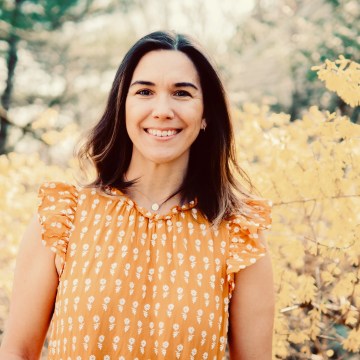
I thought it would be helpful to readers to get an inside perspective on middle grade books. What are middle schoolers reading? What holes are there in the market? And, with the holidays coming, what should you consider when buying a middle schooler a book as a gift? I wanted to utilize a great source to answer my questions: a middle-school librarian! Erin Wyatt is not only the librarian of my own children’s school here in Illinois, but we both used to work at the same school in our previous lives. I knew she could offer great insight to my questions for writers, parents, and teachers!

Hi Erin! I’m excited to pick your brain. Tell us a little about your background as a librarian and learning center director for a middle school.

I started my career in education as a high school English and social studies teacher where I spent four years in the classroom. I went to library school and have been working as a middle school librarian ever since. I have an MLIS (Masters of Library and Information Science) from Dominican University and a Ph.D. in information science from the University of North Texas. This is year 24 of my time working in libraries. It’s hard to believe it has been so many years. Being a school librarian is an amazing job!


What are the typical struggles middle schoolers have when choosing a book?

I think a lot of the struggles are the same for lots of people, kids and adults alike.

There are so many of choices of books that sometimes it proves an obstacle. At Highland, we’ve organized books by genre to make the library more browsable, utilized displays and rotating dynamic, face out shelving, and do lots of recommended reads.

There is sometimes a reluctance to try something new and a gravitation to the comfort of the familiar. Creating opportunities for students to recommend books to each other and doing things like low risk book tasting activities where students just spend a minute or two exploring a book to see if it is one they’d want to read can help connect students with new books and authors. During these types of activities students build their criteria to see what they are looking for in a book and strategies for looking at a book to see if it matches what they want and need in a read at that moment.


What is the most popular genre in your school’s library?

The most popular format the last few years has been graphic novels. Graphics are written in every genre, and there has been a lot of student demand for all kinds of graphics including nonfiction and manga.

The last couple years, there’s been a rise of popularity in students seeking out scary stories and mysteries. But certainly there is readership among all genres and my colleagues in the English Language Arts department encourage their students to read widely.


What books are very popular with this age group (at least at your library)?

I noticed the other day that our state readers’ choice shelves were nearly bare of the multiple copies the library owns of the books on the Readers’ Choice Lists for the state of Illinois. At Highland, we include the Illinois Caudill Young Readers’ Book Award Program nominees for grades 4-8, some of the books from the Bluestem list for readers in grades 3-5, and the Lincoln list for grades 9-12 in our yearly Readers’ Choice offerings.

When books are made into TV shows and movies, there is usually been a bump in demand. That’s certainly been the case this year for The Summer I Turned Pretty by Jenny Han.

I looked at our top 50 books circulated so far this year to help respond to this question. This year we’ve seen a Hunger Games resurgence. Certain authors have been popular like Kwame Alexander, Alan Gratz, Barbara Dee, and Stuart Gibbs.

Our all school read this fall was House Arrest by K.A. Holt. We were lucky enough to have Ms. Holt do an author visit. That is always impactful in terms of readers’ gravitating to an author’s books that they’ve had a chance to meet.


What is a book you often suggest?

Oh, this is a tough one as so much often depends on the reader too!

New Kid by Jerry Craft

Front Desk by Kelly Yang

Blackbird Girls by Anne Blankman was a wow from me from last year. Plus it is a genre (historical fiction) that I don’t always gravitate toward.

Legend by Marie Lu

Orbiting Jupiter by Gary D. Schmidt

I could really go on and on…


FOR WRITERS

What holes do you feel are still in the middle school market? 

There are so many great options being published. However, working in a middle school and thinking about 7thand 8th grader readers, it seems like there is a gap of books for those readers who are upper middle grade or lower YA.

As I try to build an inclusive collection of diverse books, there is an increasing number of stories from different perspectives and experiences in realistic fiction. However, in genre fiction (like fantasy, scifi, mystery, thriller), there is a need for more stories being published with characters who are Black, Indigenous, People of Color, LGBTQ+, disabled and the need for more stories in these genres being written by authors from historically marginalized groups.


What do you consider when looking at middle-grade books to purchase for your school library?

Lots of factors. First I consider the students at my school and the potential readers of the books. I think about the connection to other books and the ways those move or don’t move off the library shelves. I consider the subject, genre, and who’s voice is featured in the book. I think about the curriculum at the school. I look at book reviews and listen to student requests. Budget is also a factor because there are a finite number of resources to build and maintain our library collection.


When you’re reading through a middle-grade novel, is there anything that writers do that you feel may be a turn-off to middle schoolers? 

In book clubs, students often comment about the way the characters talk. When the voice doesn’t ring true to them, that’s usually seen as a problem with the book.

For many student readers short chapters and use of cliff-hangers are a hit to make them pick up a book and keep reading.


FOR PARENTS

How can parents help children who say they don’t like to read?

Read together and carve out time for reading, for both the parents and children. Having reading role models is important. Reading out loud or listening to books is a way to have that reading time together and create that culture and habit of reading in your family.

Having parents know and believe that listening to books IS reading. Graphic novels are REAL books. For some readers, these things might grow and sustain their interest in books and stories.

Parents can also help their students discover stories! They can connect to libraries and give their children access to materials to read whether those are physical books and reading material or linking to online resources.


I know as a parent, if I see a sports-related book, I assume my sporty son will like it, which, of course, isn’t the case. With the holidays approaching (books make great gifts!), any tips for picking out a book for someone else?

Books do make great gifts! We want to share stories that moved us with other people. I think it is so powerful when giving a book to someone to tell them why I gave that specific title to them.

When recommending books to people I think about ways to match their interests and what I know about them as readers to books by considering genre, style of writing, voice, format, main character, writer, and (for some) length. When buying books as gifts, I also consult gift guides, best of lists, and the work of other book people who share recommendations on social media or online.


FOR TEACHERS

Any suggestions for teachers wanting to bulk up their classroom libraries?

Talk to your librarian and build up that partnership! Both the classroom library, the school library, and the public library are important places for young readers to encounter books.

I would encourage teachers to think about voices that are not represented in their classroom libraries and make sure that all students in their classroom can see themselves in stories on the shelves.


Anything else you’d like to share with us?

In our recent author visit, I felt rockstar adjacent walking the halls with our visiting author. Thanks for writing and sharing your stories. It has an impact on your readers.


Thanks, Erin! It was really helpful to hear your answers as a writer, a teacher, AND a parent! (And I will definitely be putting a note on books I give as gifts, sharing why I thought it would be the perfect book.)

If you’d like to learn more about Erin and her library, check her out on Twitter:

Highland Middle School Library – @hlcD70

Erin Wyatt – @ejdwyatt

STEM Tuesday– The Science of Art– Author Interview with Karen Latchana Kenney

Welcome to STEM Tuesday: Author Interview, a repeating feature for the fourth Tuesday of every month. Go Science-Tech-Engineering-Math!

Today we’re interviewing Karen Latchana Kenney, author of FOLDING TECH: Using Origami and Nature to Revolutionize Technology. Booklist says, “From folded cranes to collapsible solar sails, this offering provides an enticing look at a unique STEAM crossover.”

Mary Kay Carson: How did you come to write Folding Tech?

Karen Latchana Kenney: My editor Domenica DiPiazza at Lerner Publishing approached me with this topic after watching the PBS documentary The Origami Revolution. I loved the idea of connecting art with technology and wanted to expand it even more. I had questions—what other influences could help engineers find new folding techniques? And why is folding technology so important—what is it used for?

I found that folding technology is important in space, due to the spatial and weight restrictions necessary for rockets to reach Earth’s escape velocity. So, to get large solar arrays needed to power telescopes into space, they had to be able to fold up compactly within a rocket’s body and then unfold efficiently (without direct human assistance) when in space. Another area where folding is important is inside the human body, where it is useful to have compact tools enter small wounds and then expand inside the body. Smaller wounds are not only more aesthetically desired, but they decrease healing time and possibilities for infections.

Folding Tech covers not only where folding technology is needed in our lives, but also the artistic and natural inspiration for new folding techniques and the mathematics behind different kinds of folds. I spoke with and researched mathematicians (like Tom Hull, professor at Western New England University), professional origamists (including Robert J. Lang, who’s worked on a foldable space telescope lens), software engineers, and entomologists. I also included folding activities for kids to try, such as the natural folding patterns created through a force folding technique developed by Biruta Kresling. It was especially fun to connect these ideas with developing technology, like deep-sea collection tools inspired by origami.

MKC: Anything special about the book you’d like us to know?

Karen: I really like the interactive nature of this book, with origami folding exercises to try and Lerner’s AR app. The app brings images to life, like NASA’s InSight Mars lander image in Chapter 5. It shows how the lander’s solar arrays unfold from their compact shape. It’s really cool!

MKC: Care to share a favorite research discovery from Folding Tech?

Karen: One of the most fascinating bits of research I found was related to the folding mechanisms of insect wings, particularly the study of ladybug wings. Beetles have these delicate and large wings compactly folded underneath hard elytra, which rapidly unfold (in less than 1/10th of a second!) when they want to take flight and escape predators. Because they are hidden under elytra, it was difficult to study their folded shapes and the ways they unfolded and then folded back again. The scientists could not take high-speed photographs or videos of the unfolding process.

source: Saito et al. (2017)

The solution came from someone not involved with the research—a secretary working with the researchers. She proposed replacing an elytron with a prosthetic made from UV-cured clear resin (commonly used in nail art). It worked, and the researchers were able to see and record how the wing unfolded and folded back again! They found that the wings’ veins stored energy like a spring when folded. That’s how the wings popped out so quickly to unfold. I love how a surprising idea from an unexpected source was key to solving this mystery. Here’s a diagram from the study that shows how ladybugs fold their wings.

MKC: Why do you choose to write STEM books?

Karen Latchana Kenney’s award-winning and star-reviewed books have been named a YALSA Quick Pick for Reluctant Readers, a 2015 Book of Note from the TriState Review Committee, a 2011 Editor’s Choice for School Library Connection, and Junior Library Guild selections. Visit her website or follow @KLatchanaKenney.

Karen: I love the curiosity and wonder inherent in working with STEM topics—the initial moment when scientists find the question they want to answer, the methodical experimentation and documentation they undergo to find clues to the mystery they want to solve, the collaboration across multiple disciplines needed to fully understand a problem, and often the surprising accidental discoveries scientists make when trying to find their answers.

Part of my interest in STEM is simply that I enjoy learning more about science and the natural world and writing about these topics helps me learn about unusual discoveries and scientific connections. I like seeing how concepts connect across multiple contexts—like the way ancient arts can influence space technology. Another big part of my interest in writing about STEM topics is my desire to promote respect and awe for the wonders of our world. I hope that my books will help kids have more respect for the environment and see what may have become mundane in the natural world in a new and exciting light. I hope these kinds of books initiate new questions that need to be solved by our future scientists.

… – . —  – ..- . … -.. .- -.– … – . —  – ..- . … -.. .- -.– … 

Your host is Mary Kay Carson, author of The River that Wolves Moved, Wildlife Ranger Action Guide, The Tornado ScientistAlexander Graham Bell for Kids, Mission to Pluto, and other nonfiction books for kids. @marykaycarson

Cover Reveal and Interview! The First Magnificent Summer

One of my most anticipated middle-grade books of 2023 is THE FIRST MAGNIFICENT SUMMER by R.L. Toalson, so I was thrilled when she agreed to an interview to celebrate the wonderful cover her book has received.

Here’s the description from Simon & Schuster:

Judy Blume meets Barbara Dee in this tender and empowering middle grade novel told in journal entries and poetry about a young writer on the verge of becoming a woman whose summer with her estranged father doesn’t turn out the way she’d hoped.

Twelve-year-old Victoria Reeves is all set for her “First Magnificent Summer with Dad,” even though it’s been more than two years since she last saw him. She’s ready to impress him with her wit, her maturity, and her smarts—at least until he shows up for the long road trip to Ohio with his new family, The Replacements, in tow.

But that’s not the only unpleasant surprise in store for Victoria. There are some smaller disappointments, like being forced to eat bologna even though it’s her least favorite food in the world. And then there’s having to sleep outside in a tent while The Replacements rest comfortably inside the family RV. But the worst thing Victoria grapples with is when she begins to suspect that part of the reason Dad always treats her as “less than” is for one simple reason: she’s female.

As Victoria captures every moment of her less than magnificent summer in her journal, she discovers that the odds are stacked against her in the contest-no-one-knows-is-a-contest: Not only does her wit begin to crumble around Dad’s multiple shaming jabs, but she gets her first period. And when Dad does the worst thing yet, she realizes she has a decision to make: will she let a man define her?

R.L. Toalson is the author of two other middle-grade novels: THE COLORS OF THE RAIN and THE WOODS, both published by the Yellow Jacket imprint of Little Bee Books. THE FIRST MAGNIFICENT SUMMER will be out from Simon & Schuster on May 30.

Samantha: Welcome to From the Mixed Up Files, R.L.! What inspired this book?

The First Magnificent Summer written by R.L. ToalsonR.L. Toalson: There is no simple answer to this question; it has several parts!

A story like this one has been sitting in the back of my mind for several years, but I was always afraid to pursue it. I had a similar experience to the one Victoria (the main character) has in the book—and it is not an easy story to tell. So I didn’t. For such a long time.

And then some questions started building in my head. Why is this the way things are? Why did I feel, as a young girl, like a man had the authority to define who I was and who I would one day be? Who else needs to hear this story?

That last question–who else needs to hear this story?–made me brave enough to pick up my pen (and it was a literal pen–I write all my stories longhand in a Yoobi composition book).

There’s a lot of me in this book. There’s a lot of what I wish I would have done and learned long before I actually did. There’s a lot of hope. And I guess that was the last step of the inspiration process: I wrote hope and love and healing into my own 12-year-old story, and out came Victoria and her journey to define herself.

Samantha: What was the most challenging part of writing it?

R.L. Toalson: Every story an author writes is different; I often feel, when I open my notebook to write, that I’m completely out of my depth for what this story requires. That was especially true for THE FIRST MAGNIFICENT SUMMER, proven by the many drafts that changed the structure of the story entirely. It started as a prose story. Then I wrote it as a novel in verse. Then I changed it back to prose. And then I experimented with journal entries. That structure stuck, because it felt right for the story. There’s still poetry and some humorous mini-essays that Victoria includes, but the main narrative is told through her own journal entries. Sometimes she breaks the fourth wall, which is fun.

It was also challenging to write in a consistently humorous way. I have experience writing humor, but mostly in essay form. Humor is really difficult to get right. You don’t want to rely on cliches and easy laughs; you want to mine for the unexpected, which takes quite a lot of work and energy. And the daily writing of humor gets a little tedious on the days you don’t feel much like laughing.

And it must be said that writing such a difficult-to-tell story, one that delved some of the depths of my own childhood story, took its toll on me emotionally. I have an amazing therapist who helped me through the tricky bits.

Lastly, I spent a lot of time and care writing the author’s note, so…even if you’re not the type who reads author’s note, read this one.

Samantha: I always read author’s notes, but will definitely be reading this one. What was the most fun part writing this story?

R.L. Toalson: I know I said the humor was one of the most challenging parts, but it was also one of the most fun parts about writing THE FIRST MAGNIFICENT SUMMER. As I’ve mentioned several times already, this is not an easy story. I felt like it needed humor to lighten places that felt heavy and that give readers important things to think about and consider. And those were some of my favorite places to write.

I also really, really love all the asides Victoria has throughout the narrative. She uses her humor and her melancholy and her personality to process through things that are happening in the narrative, and it was delightful to craft those asides. She has one called “Things I Like About Camping,” a poem comprised of multiple choice answers where she invites the reader to figure out whether (a), (b), (c) or (d) is what she likes about camping–and all of the choices are so sarcastic and grumpy, and then she has the last choice: (d) absolutely nothing. And you know that’s the right answer from all the other answers. It was so much fun to write. I hate camping, too. I empathize with Victoria. 🙂

Full jacket image for The First Magnificent Summer book written by R.L. Toalson

Samantha: Ahh, camping. And that brings us to the wonderful cover. Tell us about it.

R.L. Toalson: This cover was designed by Svetla Radioeva and is absolutely perfect and gorgeous and perfect (it deserves a repeat). Victoria is front-and-center, hiding away in a tent, with a notebook open on her lap. In the background’s tent opening, you can see her father with a little girl next to a grill and a camper, and from the two juxtaposed images you get the sense of her isolation. There are all sorts of little lovely details you’ll only notice if you look closely–like a package of Womanhood Supplies (Victoria’s name for period products) by her left foot. It’s delightful. I spent several long minutes noticing all the little details that make this cover so remarkable, and I really cannot have asked for a better representation of Victoria and her first magnificent summer.

Samantha: Yes, the details are fantastic. And I love that they included them on the whole jacket, not just the front. (Readers, check out the pic.) What else should we know about this book and you?

R.L. Toalson: As the mom of several boys, I have to mention that I don’t believe in books for girls and books for boys. Yes, this book has a female protagonist, and yes she starts her first period in the book, and it’s a big part of her story. But that doesn’t mean it’s not a book for boys, too (and don’t get me started on how if we just talked about periods more it wouldn’t be so taboo in the first place). Girls AND boys watch their parents divorce. Girls AND boys sometimes have a parent who leaves. Girls AND boys feel the hurt and confusion and instability that comes from that, and girls AND boys wonder if their parent left because of them. Girls AND boys need to know that they are magnificent just the way they are. And that’s what this book tries to communicate to its readers: Be your magnificent self.

So I hope boys won’t be afraid to read Victoria’s story, too. We all need to be reminded that we’re magnificent.

Samantha: I love that! And I can’t wait to read this MAGNIFICENT book.

Readers, check out R.L. Toalson’s other books on her website and pre-order THE FIRST MAGNIFICENT SUMMER.