
 Despite having been an English major in college, I don’t recall learning about archetypal story roles before my graduate writing program. When I finally read Christopher Vogler’s The Writer’s Journey for a grad class, it was like seeing through a suddenly-acquired magic spyglass that gave all stories a layer of extra interest and added meaning. Vogler establishes that his thoughts on character and plot archetypes stem from those put forth in the psychological and mythic studies of Carl Jung and Joseph Campbell. Vogler is able to take the archetypal theories of The Hero’s Journey (described in detail in Campbell’s The Hero with a Thousand Faces) and relate them to the craft of writing with popular story examples (from Star Wars to James Bond to Odysseus, and many others).
The general theory is that our story-brains are somewhat hardwired to recognize the ways in which characters fulfill certain roles, because the duties of these archetypal roles remain common over time, genre, length, style, and intended audience of stories. For example, a Mentor character in one story will have something in common with a Mentor character in another story, because their duty as a Mentor will be similar (to help some other character do something/go somewhere for some reason).
These character archetypes can be helpful to us as writers, as teachers, as librarians, and as parents of MG readers. For example:
- An understanding of archetypal roles can promote discussion of character traits among students in the lit classroom.
- Family read-aloud time (or movie night) gets a brain boost when we recognize an archetypal character role and make comparisons to characters in other films and stories we’ve shared together.
- Archetypal role descriptions and examples can help writers to analyze their own characters in works in progress.
 Below, I’ve listed some common character archetypes and given some examples from all sorts of MG fiction—recently published to modern classics, realistic to fantasy. Keep in mind that archetypal roles are not static, and that they are rarely “cast” by a writer in a simple, one-to-one list like parts in a play. Good writers and storytellers at all levels allow for an ebb and flow of character growth, change, and development; consequently, a character fulfilling the role of a Shadow in the beginning of the book might be recognized as a Mentor by the end.
This dynamic movement of archetypal roles might be especially notable and important in MG, where readers start grasping the complexities of human interaction perhaps for the first time.
Some common archetypal character roles in stories:
A Hero is usually our protagonist, though other characters can certainly step in and out of the Hero role. The Hero often experiences some kind of journey (physical, spiritual, emotional) and may or may not (but usually does) experience some kind of change as a result. Two key Hero elements are learning or practicing self-sacrifice in helping others, and learning or practicing the ability to take action. Hero and main character Chantel in Sage Blackwood’s Miss Ellicott’s School for the Magically Minded demonstrates this element of self-sacrifice as she puts herself in danger and works to secure safety for the younger girls at the school and all the people of Lightning Pass.
A Mentor is a character who serves to help, teach, train, or lead the Hero in some way as he or she makes the journey. A Mentor might “step in” and be the voice of the Hero’s true conscience when the Hero is conflicted and cannot “hear” his or her own heart. Mrs. Whatsit in A Wrinkle in Time serves many Mentor-duties for Hero Meg.
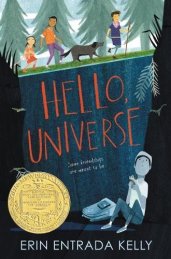 A Herald is a character who brings some kind of news to the Hero. Usually the news raises the stakes for the Hero—makes things more challenging, or changes the conflict in some unexpected way. Sometimes the Herald helps a character make a connection or see a clue, like when Lola texts Valencia in Hello, Universe by Erin Entrada Kelly. The message from Lola triggers Valencia’s deduction on the missing Virgil’s whereabouts, and launches a rescue mission.
A Threshold Guardian is a literal or figurative guard at a doorway or transition point, whom the Hero must get past in order to progress from one place in his or her journey to the next. Usually the Threshold Guardian serves as an obstacle, and might hold some truth or bit of info the hero needs. Stew Mitchum in Lemony Snicket’s Why Is This Night Different from All Other Nights? is a Threshold Guardian as he impedes young investigator Snicket’s progress in solving the case and in moving about the train.
A Shapeshifter is a character who isn’t necessarily the person he or she seems to be, or a character whom the Hero (or the reader) may not be able to trust. A Shapeshifter can surprise the Hero with unexpected actions, reveals, or switches of loyalty. Characters (and readers) of the Harry Potter series may not realize that Moaning Myrtle holds clues Harry needs several times in the series. Her sudden changes of emotion and her switch of interest in Harry to interest in Draco are Shapeshifter behaviors as well.
A Shadow is the antagonist, the villain, the “bad guy.” This character or group stands in the way of the Hero, works to defeat him or her, and often utilizes the Hero’s own flaws. In Natalie Babbitt’s Tuck Everlasting, the Man in the Yellow Suit is a Shadow force as he pursues the Tucks and plans to use Winnie for his own immoral gains.
A Trickster is often a funny sidekick character or a comedic relief character; sometimes this character’s sarcasm or verbal irony reveals truth, like a witty jester or a class clown. Examples of mythological tricksters can be seen in many cultures and backgrounds, such as Loki (Norse), Coyote (Native American), and Maui (Polynesian).
There are many other archetypes, and many, many variations on those listed here (for example, according to Vogler, there are anti-heroes, loner heroes, trickster heroes, willing and unwilling heroes, the hero group…). Mentors may not be good teachers, may be on their own journey, or may learn from other characters even as they teach. Shadows often have redeeming qualities and brilliant moments. And a character can fulfill two or more roles in a story; for example, a Threshold Guardian is often also a Herald of information.
Consequently, archetypal roles are not meant to serve as simple labels for the characterizations we see in stories, but instead, provide us with some vocabulary and ideas for use in thinking about and discussing the stories we read.
Thanks for reading and considering these theories on characterization! I’m interested in your thoughts on archetypes, and characters from MG who might fulfill these roles—please share in the comments!





 Does this door beg you to open it? Are you curious what’s behind it? When I came across this door in a hidden corner of the library in a Scottish castle, I was intrigued. I turned the handle, but… Alas, it was locked.

