Posts Tagged writing tips

EDITOR SPOTLIGHT: Taylor Norman of Neal Porter Books / Holiday House

We are thrilled to welcome Taylor Norman to the Editor/Agent Spotlight on The Mixed-up Files of Middle Grade Authors today.

Headshot of Editor Taylor Norman

Taylor Norman

Taylor Norman is Editorial Director of Neal Porter Books. NPB has recently ventured into publishing middle grade novels with the release of Scattergood by H.M.Bouwman. NPB picture books, edited by Taylor Norman, include Tumblebaby by Adam Rex/ illustrated by Audrey Helen Weber, and The Table by Winsome Bingham & Wiley Bevins /illustrated by Jason Griffin.

Prior to joining Neal Porter Books, Taylor spent 11 years at Chronicle Books, where her projects included Everything You Need for a Treehouse by Carter Higgins/illustrated by Emily Hughes, Nina LaCour’s 2023 Lambda Award-winning The Apartment House on Poppy Hill, and Shawn Harris’s 2022 Caldecott Honor book, Have You Ever Seen a Flower?

We are excited to hear all about her newest publishing path, editing and acquiring middle grade at Neal Porter Books. But first. . .

The Backstory

According to your website, thirteen-year-old Taylor had already decided she wanted to work in children’s publishing. Now that you’re living that dream job, in what ways does having grown up around booksellers (shoutout to Copperfield’s) continue to inform or influence your perspective as a children’s book editor? Also, what would you tell other thirteen-year-olds who might want to follow in your footsteps?

Oh, absolutely! Not only did I spend my high school years as a bookseller at Copperfield’s Books in Petaluma, California, my mom, Patty Norman, is the children’s events director there still. Her stories about any given day at the bookstore are my best contemporary research into what’s resonating with what kids (and parents and teachers). And I keep at the forefront of my mind my own experiences as a children’s bookseller. So much of the bookseller’s job is intuiting what a kid both wants and needs, and what book will unlock that feeling.

Most of us, whether kids or adults, aren’t very articulate about what we need or feel, so as a bookseller, or an editor, or a fellow person, you have to get good at reading between the lines, so to speak. The flood of success that came over me when I knew I’d found the just-right book for that extra-challenging kid—either someone who’d read everything or someone who was determined not to read anything—is the feeling I seek to give booksellers and parents with every book I publish: knowledge that buying this book for — or handing this book to — a kid will unlock something in its reader. Of course, I hope that the books I work on reach tons of kids, each in their own way—but I am anxious especially to publish books that might be the only book to reach a particular kid. To find those books I really channel everything I learned and remember from being a bookseller.

To other young people who want to be editors. . .

The biggest thing to consider is not just your ability to be a good reader—you know you are that—or why a book is successful—you will get good at articulating your reactions to a text. The biggest thing to know about this job is that it is all about helping a book become its best self. I feel more like a translator than anything else—it’s my job to figure out what an author is envisioning in their head, help that vision arrive on the page as close to its ideal version as possible, and then make sure the idea translates to another reader. It’s a funny act of intimacy between you and the author, and a simultaneous awareness of (and hope for) tens of thousands of future readers.

I don’t remember learning or thinking about the importance of the author relationship when I was a teenager planning to do this job, though it wouldn’t have turned me away—I love the collaborative partnership of editing as much as the work itself. But you have to have patience and a knack for figuring a person out, and while that aspect of the job is the biggest part of my every single day, it’s not immediately apparent in the abstract.

The Move to Middle Grade

What precipitated the decision to venture into middle grade novels at Neal Porter Books, and do you have a specific vision or criteria for this new list for middle grade readers? Historical fiction only? Character-driven stories? Will there be a specific number of MG books per year? (Asking for a LOT of “Mixed-Up” MG author friends here—haha.)

I always wanted to be a fiction editor and can’t conceive of a role I’d ever have in publishing that wouldn’t involve working on novels. Exactly what unites all the novels I work on is a bit harder to define. I don’t look for trends or types of books; I’m as susceptible to historical fiction as I am speculative fiction. It’s all dependent on the success of the writing.

I am extremely focused on high-quality writing and originality of voice, and the second I read a line in a book that sounds like something I’ve read before, my interest starts to wane. That said, writing “voicey” for the sake of standing out doesn’t work for me either—you can feel the effort behind it. Authenticity—which is to say, an authentically unique mind and way of both seeing the world and representing that world— is, then, what I’m after.

Searching for manuscripts by this requirement, I have to say, cuts out a lot of submissions. So there will be between 3-5 books for older readers every year; a mix of prose and graphic, and a mix of early readers, chapter books, and middle grade.

cover of the middle grade novel Scattergood.

More about Scattergood 

Congratulations on the publication of Scattergood by H.M. Bouwman, which released January 21st. How did you initially discover Bouwman’s manuscript, what made you want to acquire it, and were there many revisions from acquisitions to final draft?

Oh goodness! Heather and I have been on such a journey together. I first read Scattergood in 2013, I believe. I was an editorial assistant or assistant editor at the time. I absolutely fell in love with the book—it was the epitome of the novels I wanted to publish—but I wasn’t allowed to work on novels at the time, being so junior. I reluctantly let the agent know I was passing, but the book never left my mind. I found myself flashing on thoughts about it every few months, for the next ten years!

When I came to Neal Porter Books and was looking for the first novels for our list, back again came Scattergood into my head—the one that got away. But when I googled it, nothing came up. I wrote the agent, Tricia Lawrence, and she let me know she’d never sold the book! I reread it and was thrilled to see that the book was even better than I’d remembered. Coincidentally, as I was rereading it, I happened to run literally into the author, Heather, at NCTE—she was leaning on a table as I was walking by, which was a very odd experience—I had literally been reading the book on the plane to the conference and then there she was, its author. It was all very akin to one of us conjuring the other.

Anyway, as you can predict by now, I bought the book and Heather and I worked very closely on it, which were more acts of tightening and strengthening than any tectonic edits. Heather is an exceptional, transporting, emotionally deft writer, and I am as struck now, on my 30th read of the book, as I was over a decade ago.

Scattergood still epitomizes the novels I love most, the novels I think are most meaningful for kids: It’s a book that understands how hard it is to be young and a person figuring out how to be alive in the world; it’s a book that does not shy from showing its characters make tragic, awful, yet understandable mistakes—and have to contend with the ramifications thereof. It is a book that reminds us of the humanity and fallibility of all people, no matter who or when. And, it’s at once very exciting and propulsive, and wrenchingly authentic. That is, it doesn’t sacrifice plot for quality. The New York Times called the book “brave, beautiful,” “wise and heartbreaking” and also “shocking” and “blindsid[ing]” which I think confirms this unusual combination of traits. I am obviously biased, but I think Heather’s book is an absolute masterpiece. I am so excited for everyone to read it.

On Characters and Covers

What makes you want to root for a character from the beginning? If possible, can you give us an example from Scattergood?

I don’t need much to root for a character—just a grounding in their reality. I love plenty of books where I don’t like the character but root for them anyway, or root against the character while finding them lovable. There are a lot of different ways to make a main character compelling, and that’s more important to me than whether or how I root for them.

Can you tell us about the cover of Scattergood, minus any spoilers?

It’s extremely important to me that each book we publish looks as specific as its story is. The reality is that we all judge books by their covers, and the more trends a cover abides by, the less it catches a reader’s eye. Each novel on our list stands out not just from other middle grade novels, but from books for all ages. So there was no question in my mind, when we started thinking about the cover of Scattergood, that Angie Kang was the right artist. I knew Angie from our shared time at Chronicle Books, and the books we’d worked on together as editor/designer were among the most fulfilling novels I’ve ever watched come to life.

Subsequently, I’d read (and, devastatingly, lost!) Angie’s debut picture book, a work of absolute genius that comes out in March from Kokila, Our Lake. I was so impressed by Angie’s art, of course, but also the subtlety and power of her storytelling, the immense respect she had for her young reader, and her understanding and memory of what it felt like to be a kid. As soon as I read that book, I became determined to work with her in whatever capacity I could.

She thankfully said yes to the Scattergood project and proceeded to deliver about a dozen equally incredible options. Readers of the book will notice the many symbolic touches to the cover design, but young kids walking by without any idea of the book’s contents will be struck immediately by its beauty, intrigue, and specificity. We are very grateful to Angie for putting her unparalleled skill to work on behalf of Peggy and Scattergood.

BONUS: Editor Speed Dating

  1. Query/Pitch pet peeve: I really don’t like when agents reduce a book to its trendy genre (SEL, for example)—and like even less when the book is described via its trope—friends-to-lovers, chosen-one, etc. There are plenty of viable houses for books that adhere to a set of rigid expectations, but if a book can be described easily and familiarly, it is likely not one I’m going to respond to. If agents are sending artists to consider, please include images of the art in the email rather than (or in addition to) links. If all I see are agent pitch + links, I am unlikely to click through to see visuals.
  2. Please don’t send me anything spooky. I just don’t fall for that kind of thing.
  3. PB you could recite by heart: Jamberry by Bruce Degen, A Very Special House by Ruth Krauss, Two Little Trains by Margaret Wise Brown, Parade by Donald Crews
  4. Affirmation for 2025: One of my current favorite fictional characters is Doctor DeSoto’s wife, Mrs. DeSoto, in William Steig’s genius picture book. Mrs. DeSoto, who readers of the book will agree is the story’s actual hero, chooses a crucial moment in the plot to decide: “Let’s risk it.” I’m gonna go with that.

Endless thanks for joining on the Mixed-up blog today, Taylor.

Let’s ALL risk it, shall we?

Congratulations to Taylor Norman on her promotion to Editorial Director of Neal Porter Books!

To learn more about Taylor Norman and her work, follow her socials and check out her website:

Author Spotlight: Thomas Wheeler

During my seven-plus years as a Mixed-Up Files contributor, I’ve read dozens (and dozens) of middle-grade novels. But never in my reading life have I encountered a book of such inventiveness and mind-blowing creativity that I needed my heart rate to return to normal when reaching “The End.”

In short, my mind was blown.

I’m talking, of course, about Thomas Wheeler’s MG debut, The Doomsday Vault, the first installment in the Everwhen School of Time Travel series. Lauded by Kirkus as a “…hilarious time-travel romp (that) bursts with creativity and heartfelt messages,” the book is out now from Simon & Schuster.

But first, a bit about the author:

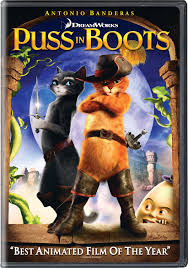
Thomas Wheeler is a screenwriter, producer, showrunner, and the author of The Arcanum. He was the executive producer and creator of Empire for ABC and The Cape for NBC. In feature animation he wrote the Academy Award–nominated Puss in Boots, as well as The Lego Ninjago Movie. Together with Frank Miller, he is cocreator and executive producer of Cursed, based upon the YA novel of the same name.

About the Doomsday Vault

MR: A hearty welcome to the Mixed-Up Files, Thomas! (Or do you prefer Tom? I don’t want to be presumptuous.) As I stated in the intro, The Doomsday Vault blew me away. It was like an acid trip, but in the best way possible. 🙂 Can you give our readers a brief summary?

TW: Hey there, Melissa! Thanks for having me, and Tom or Thomas works for me. I also answer to ‘Hey you!’ And so appreciate the trippy review! Now then, a summary? Let’s see… A famous phrase from the Everwhen school charter states: “No child should be denied an education simply by virtue of the time they were born into.”

Everwhen is both a school of time travel and a time machine itself that allows special students from throughout the time stream to learn about exotic sciences from the past and future and apply them to our planet’s most pressing issues. Our first adventure follows a trio of students: a young English boy from the 1800s named Bertie Wells, a prodigal mathematician from 2025 named Zoe Fuentes, and a young inventor from the middle ages named Millie Da Vinci (and yes, her big brother is Leonardo!) as they get to know their new school, deal with a missing headmaster and try to crack the mystery of the Doomsday Vault. It’s a story about that moment where inspiration meets imagination and the miracles that can result.

Character Study

MR: As you said, the book is set in a time-traveling boarding school, where the protagonist Bertie Wells—the future H.G. Wells, of The Time Machine fame—encounters legendary figures from past and future eras, including Genghis Khan, King Arthur, Franklin D. Roosevelt, Steve Jobs, and more. His schoolmates are from different historical eras as well. How did you go about choosing which figures to feature, and why? 

TW: Well, I knew I wanted Bertie Wells from the earliest stages because of who he grows up to be and how that would tie so importantly to the ending (no spoilers!) ((actually, spoilers are fine…)) H.G. Wells is also a historical figure who represents that perfect bridge between the worlds of science and imagination. As for Millie Da Vinci, I drew inspiration from my own kids and their big brother/little sister dynamic. I like characters with a chip on their shoulder, and I figured growing up in the shadow of Leonardo Da Vinci might make even the most brilliant scientist a touch defensive. And I knew I wanted a trio of friends from not only different times but different backgrounds and cultures.

At the same time, it was important our present day was represented, which brought me to Zoe. In the initial stages of writing Everwhen, my daughter was a slime-making-lunatic, and I marveled at all of the wild ingredients that were going into her creations; and so, of course, being my weird self, I imagined it coming to life and causing all sorts of issues. Zoe’s journey took the longest to unfold in my mind and went through a lot of revisions, but it was worth the effort. Each character’s journey cooks differently. Overall, this felt like a great way to illustrate that despite our differences there is far more that unites us than divides us, and kids all tend to worry about the same things: Am I good enough? Am I valuable? Do people like me? I figured the same worries applied, even if you were born in the 1300s.

World Building: Breaking the Rules

MR: What advice would you give to writers in terms of world building? 

TW: I don’t have any one approach that works every time. For some context, I spend a lot of my life screenwriting in fantasy worlds and jousting with studio executives who are ALWAYS hammering you on the ‘rules.’ They want the ‘rules’ for everything, and it can really suck the fun out of a story. I don’t think readers care about the rules as much as studio executives (actually, I’m certain of it). So for Everwhen, I just wanted to throw caution to the wind and let my inner science nerd unleash. My spirit animal for this novel was the late, great Douglas Adams, who wasn’t a big rules guy himself yet managed to conjure the most imaginative and thrilling worlds.

Also, I think tone matters. Everwhen obviously flirts with chaos and absurdities that allow for more latitude than, say, the world-building of Game of Thrones, which aims for a grounded realism. One practical strategy I use in my world-building is to simply ask myself fifty questions and FORCE myself to answer them. They can be about anything: geography, religion, how does this work, how does that work, what’s the history, who founded this world, mythology, ghost stories, types of buildings, and on and on and on. It’s labor intensive but also freeing.

First of all, you’ll make terrific discoveries about your world when you try to objectively answer these questions. Try not to contradict yourself but otherwise have fun. This is why it’s different from making the ‘rules’! This exercise should be all about invention. When you get into your story, you’ll find a lot of the architecture and infrastructure has been built in advance, and it will give your world a deeper sense of place and dimension, and your characters will have a history to draw upon that will give them additional layers as well.

Gerbil Piping and Primordial Black Holes

MR: In addition to the historical luminaries mentioned above, you’ve included several off-the-wall characters, including Skippy the Cockroach who has an IQ of 378 and “sociopathic tendencies”; Zelda, who’s dating a brain she keeps in a jar (aka “Jar Brain”); and Raul, Bertie’s flirtatious roommate who greets female schoolmates with: “Nice boots.” (:)) There are also vindictive ghosts, mechanical monsters, sentient mold spores, and lots and lots of slime. Tom—and I mean this sincerely: How does your mind work?

TW: Ha! I don’t know. It’s scary in there. Lots of gerbil piping and primordial black holes floating around.

H.G. Wells, Jack the Ripper, and Time After Time

MR: As above, we discover that Bertie is the future H.G. Wells, whose groundbreaking 1895 novel The Time Machine is the inspiration behind your book. I’m guessing you were a huge H.G. Wells fan as a kid?

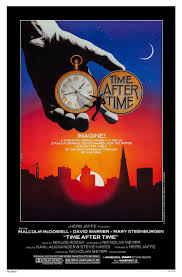
TW: I think my first exposure to H.G. Wells was this super scary time-travel thriller called Time After Time, where H.G. Wells (played by Malcolm McDowell) chases Jack the Ripper to modern-day San Francisco. Such a cool idea, but I was WAY too young to see this movie and my dad dragged me out of there, because I was terrified (and probably crying). But maybe H.G. burrowed into my imagination then? Of course, through the years I’ve come to appreciate his magnificent genius as an author and prescience as a futurist. And how do you tell a time travel school story without H.G. Wells??

MR: While we’re on the subject of Bertie, at school he forms a close bond with two of his classmates, Zoe Fuentes, a Harvard-obsessed math genius from 2025, and Amelia “Millie” Da Vinci, Leonardo’s inventive but overlooked little sister. What were you trying to say about the nature of friendship, especially in trying—and highly unusual—circumstances?

TW: Like I said, I don’t care where you’re from, and I don’t care WHEN you’re from; inside we all worry about the same things. And while we try to present this certain face to the world, our true friends love us for our imperfections. They see us at our worst, at our silliest, and at our most anxious. Friends pick us up when we fall.

MR: Another important theme in your book is feeling “less than.” Bertie feels inferior because of his poor grades, clumsy blunders, and fractured relationship with his dad. Zoe feels “less than” because she was ostracized in middle school, and Millie feels overshadowed by her famous brother. What’s the takeaway here?

TW: I think it’s hard to be creative in any realm, and in any endeavor, and not have to wrestle with this feeling from time to time. It comes with the territory. I deal with this theme in my own creative life. I see it with my kids, and my friends and peers.

Bertie, Zoe, and Millie are all creators in their own way and, for various reasons, feel outside pressure that gives them doubts. In the novel, they support each other in their inventive pursuits, in ways no one else in their lives ever has. Millie encourages Bertie’s imagination, Zoe and Bertie support Millie’s invention of Gurgy, and Bertie counsels Zoe on the necessity of failure to achieve great things. They really need each other, and grow to rely on each other, as they navigate the mayhem of Everwhen. We all need that. We all need each other to accomplish great things.

Funnily enough, just as I was writing this, my daughter texted me about doubts she’s having concerning a writing project she’s working on. I gently encouraged her to keep moving forward with it. Her idea is a great one, but she got scared–and that’s so normal. What I tell my kids is that if you feel ‘fear’ during the creative process, then you’re probably on the right track. But it’s difficult to do this work in a vacuum. We need people we trust to encourage us, support us, and guide us.

It’s About Time

MR: One more theme to unpack: the construct of time. To steal a quote from the book: “Time is not fixed. It’s not a straight line. Time is more like a clay we can mold.” Can you elaborate?

TW: (checks notes) I have no idea. Kidding! Although I think you may be quoting Dr. Kind there, and he has some rather controversial ideas about the use of time travel.

I don’t know about you, but I’ve spent many a night before bed pondering, ‘What would have happened if I had done X? Or if I’d chosen Y? Or if I’d turned left instead of right? If I’d said this instead of that.’ There is no more bewitching power than the power to travel through time and ‘fix’ things. At Everwhen, the professors deal with this temptation in a very real and explicit way, and so do the students. At the end of the day, we are the sum total of our choices. I thought it was interesting to watch kids wrestle with that moral dilemma, and to be tempted by that moral dilemma. And then to see the results of what happens when you DO try to fix things. In a school where the past, present and future all co-exist, it creates fascinating problems for your characters to contend with.

The Secret of Success

MR: Switching gears, like Leonardo Da Vinci you’re a true Renaissance man, having written and produced critically acclaimed films for Hollywood, and for TV. You’ve also written two best-selling novels, and now, a middle-grade book. What’s the secret to having such a successful and varied career?

TW: I have an amazing partner in life; my wife, Christina. Her wisdom and guidance through the years has been invaluable. My family is my secret weapon. I would add that I like to embrace new creative challenges. If I haven’t done something before, then I’m intrigued. If it gives me that ‘fear’ we were talking about earlier, so much the better.

Bringing Your A-Game to Kids

MR: As a follow-up, what made you turn your attention to writing for a younger audience? Was it something you always wanted to do, or did your kids talk you into it? Also, were there any specific challenges you faced?

TW: True, this is my first middle-grade-novel, but I’ve been writing for families in feature animation since Puss in Boots, and what I’ve found is that kids are the smartest audience of all. I feel an obligation to bring my A-game when I’m writing for a family audience. There is a misconception in Hollywood that younger audiences can’t handle emotional complexity; that you have to simplify things, soften things. But I totally disagree. Kids love big stakes, big problems, and big emotions. Publishers and studios tend to scissor up the audience into ages, etc., but hopefully adults and kids alike can enjoy the happy chaos of Everwhen.

Hooray for Hollywood!

MR: Rumor has it that The Doomsday Vault has been optioned by Paramount and you’ll be writing the script. Can you tell us more about the project? Also: will you have a cameo? (It’s only fair.)

TW: Lol, we’ll see! Maybe I can play Jar Brain! What I can say is that we have an amazing creative team, with producers Lorenzo Di Bonaventura and Mark Vahradian (Transformers), and Scott Mosier (Illumination’s The Grinch) attached to direct. Fingers crossed!

Write This Way…

MR: What does your writing routine look like, Tom? Do you have any particular rituals?

TW: Comfort is important. I have a new favorite cozy sweater that has turned into my Linus blanket. I am also surrounded by WAY too many toys. It’s bordering on a hoarder situation. After coffee and a little hanging out with my wife, I’ll write from 10 a.m. to 6 p.m. every day, with a little gym and dog walking mixed in. If I’m writing a screenplay, a good day is four to six pages; a great day is any more than that. Novels are a different animal.

When writing Everwhen, I just tried to empty my brain onto the page. I wanted the reader to find something new and incredible or ridiculous or funny around every corner, so those pages came a bit slower. But I love these characters and this world, so it was a joy to come to work every day. My general feeling about writing is your job is to open the shop every day, and your customers are your ideas. Some days you’ll have a lot of customers, some days it’s kind of quiet. Either way, the shop has to stay open.

MR: What’s your best piece of writing advice?

TW: No matter what genre or tone you’re writing in, always try to bleed on the page. Bring something honest and specific and meaningful from your life into the work. It will give your writing a more specific voice. 

Up Next in Everwhen

MR: When can we expect the next installment in the Everwhen School of Time Travel series? And how many books are planned?

TW: It will be a minute before we see the sequel because I have a few feature obligations, but I’m quite excited to introduce some new characters from the future that I expect will be reader favorites. Still tinkering with the plot. Hopefully, by summertime I can get into the main writing. No plans beyond the sequel at the moment, but if there is demand there are endless stories to tell in the Everwhen universe!

Lightning Round!

MR: Finally, no MUF interview is complete without a lightning round, so…

Preferred writing snack?

I’m not a writing snacker because I get sleepy. I might have a banana or a protein bar, so I’m pretty hungry by dinner!

Coffee or tea?

Coffee. Peet’s. 2% milk.

Plotter or Pantser?

I am embarrassed to admit that I had to look up ‘pantser.’ But I’ll say this: Every writer should work from an outline. Screenplays are structure. Novels offer a little bit more freedom, but you can get a real sinking feeling if you start wandering around the middle of a novel without a map. It may feel like eating your vegetables, but an outline will spare you a lot of pain. In reality, I probably drift somewhere in the middle, although I’ve had the greatest success from working off a very detailed outline. (Sorry, that was not a lightning round answer!)

If you could hop into a time machine, where would you go?

Oof. To be honest, I’d go back and spend a few more minutes with my mom, who passed a few years ago. The less loaded and equally honest answer is that I’d like to go spend a few days as a dinosaur field biologist.

Superpower? (Besides avoiding black holes)

Flight, or the ability to make people less mean online.

Favorite place on earth?

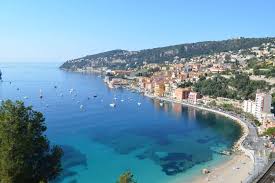
The south of France does not suck.

If you were stranded on a desert island with only three things, what would they be?

  • A popcorn maker.
  • My wife (we need a vacay!)
  • Fritz, our Yorkie.

MR: Thanks so much for taking the time to chat with me today, Tom. Wishing you much success with the Everwhen School of Time Travel series!

TW: Melissa, it was an absolute pleasure! Thank you so much for inviting me!

STEM Tuesday– Fossils– Author Interview

Welcome to STEM Tuesday: Author Interview, a repeating feature for the last Tuesday of every month. Go Science-Tech-Engineering-Math!

Today we’re interviewing Alison Pearce Stevens, author of Rhinos in Nebraska. Rhinos is the tale of a supervolcano, its aftermath, and the intrepid scientist who discovered one of the world’s greatest paleontology sites–an ancient Nebraska waterhole filled with the fossilized skeletons of hundreds of animals that look like they came straight out of Africa.

This book is a Junior Library Guild Gold Standard selection that’s won three Nebraska Book Awards!

Andi Diehn: Time as a character – there’s a lot of discussion of time in your book – the time that’s passed since ancient animals lived in Nebraska, the time it takes to turn bones into fossils, how time can change a landscape and make it hard to find the exact location where a fossil was found. Why is geological time an important concept for kids (and adults) to understand?

Alison Pearce Stevens: How often do we say we’re “running out of time” or “don’t have time” for something? I know I say it a lot. Time is this commodity that always seems to be in short supply, but our concept of time is limited by our (rather limited) experience. I think taking a step back to get some big-picture perspective can be really helpful. On a geologic time scale, we humans exist for the blink of an eye. Given that, maybe some of the issues we feel pressured about aren’t actually so pressing. I think temporal perspective-taking can help us prioritize what’s really important in our lives, so we can be more content with what we have and put our energy into bigger, truly pressing issues.

As a side note, time played a big role in how this book came to be. I was working at University of Nebraska State Museum on a series of exhibits about Nebraska’s past, present, and future, and one section focused on the Ashfall Fossil Beds. Now a state park, it’s the site of an ancient water hole filled with hundreds of skeletons of ancient animals, from camels and rhinos to crowned cranes and turtles. There were elephants around then, too. It looks like something you would find in modern-day Africa—but it’s in the middle of North America. One day, it hit me—twelve million years ago, those animals were running around in what’s now my backyard. It was kind of mind-blowing. That’s the moment I knew I had to write Rhinos in Nebraska.

Andi: I love the descriptions and discussions of tools – field notes, GPS, topographic map, scanning electron microscope. 

Alison: Field notes tie to any kind of journaling or record-keeping. Writing down what we see, feel, and experience gives us a way to track what’s happening in our lives, so we can gain some perspective on things as they play out—or simply have a record of them that we can refer back to. I track things like rainfall and bloom time and when I see migratory birds in my yard, and I regularly go back to see how those things have changed (a lot, it turns out).

If you’ve ever tried to catch them all in Pokémon Go, you’ve used GPS. It’s also essential for geocaching, if families have done that. GPS is how the map app in a phone or car knows where you are and tells you where to turn next.

Topographic maps are commonly used by hikers. They’re super useful when there are multiples trails, so you can tell which ones are steep or have lots of hills, and which ones provide a gentler hike.

If you look up SEM images, they are super cool—the detail on tiny things like pollen grains are beyond anything you’ve imagined.

Andi: I love this line about Mike Voorhies: “It was the best he could do at the time with the information he had available.” How does this quote reflect the scientific process?

Alison: To me, that line summarizes the scientific process. One of the main things I wanted readers to take away from the book was how we know about things that happened millions of years ago. I think people tend to think of science as a bunch of facts. We do have facts that are the outcome of scientific investigation. Barrel-bodied rhinos used to live in Nebraska, for example. We can say that with certainty after discovering their fossils, but answering other questions—like when the volcano that buried the Ashfall animals erupted—takes time and patience. Science is a process, and our ability to figure something out is limited by the available equipment and technology.

I like to think there are similarities between scientific investigation and the justice system. Both collect and analyze evidence and use it to reach a conclusion. I would certainly hope that if new evidence comes to light during (or after) a trial, the jurors or judge would be willing to reconsider the conclusions they had reached up to that point, and science is no different.

Andi: Convergent evolution – I love the idea that similar traits can evolve in organisms from different parts of the world. How might kids think about convergent evolution as it applies to organisms they’re familiar with?

Alison: Convergent evolution happens when different organisms living in different places come to share specific characteristics. It happens over time as certain traits help individuals survive and reproduce. The example I use in the book is hummingbirds and sunbirds, which live in Africa. Both have long, curved bills to drink nectar from trumpet-shaped flowers. Birds with longer bills would have been able to drink from tall flowers more easily, so they would have gotten more food. That means they can have more babies, all of which would also have long bills.

The appearance of falcons, hawks, and other birds of prey is actually an example of convergent evolution, as well. DNA evidence tells us that peregrine falcons are more closely related to parrots than hawks or eagles—but those sharp talons, forward-facing eyes, and curved beak help them hunt, so they’ve come to look more like hawks and eagles than their parrot cousins. Another example is eyesight, which evolved separately in vertebrates (animals with backbones) and squid and octopus. Even though we all have eyes, an octopus’s eye is structured differently than ours.

Andi: Details like fossilized seeds stuck in rhinos’ teeth are great! Also great that when the paleobotanists got involved, this was more evidence of a growing team. How does teamwork improve science?

Alison: Teamwork is essential for science, and that’s especially true when you’re studying something as vast as the Ashfall Fossil Beds. Scientists develop expertise in specific areas, so when they encounter something outside their area, they need to find another expert to weigh in. Mike Voorhies studied extinct mammals, so he needed other experts to help with plants, birds, and even dating the age of the volcanic ash. I think some of the best science comes from coordinated team efforts—when lots of people collaborate, you get more creative ideas about how to answer a question and a variety of approaches to call upon to collect the data you need. And collaboration is fun! If you’re part of a good team, you enjoy the work more than you would toiling away on your own.

Andi: There are many times when it seems like the team fails – why is that an important part of the story?

Alison: Every success comes on the heels of a series of failures. That’s a pretty standard story in science—and in life! The process of figuring something out isn’t always easy and usually requires some serious creativity (scientists have to be creative—they don’t get much credit for that!), so there are failures and false-starts and partial successes until they finally get an answer. And then the answer might not be what they expected—so they have to re-evaluate, ask new questions, and start the process of investigation all over again.

Andi: I love Matt Huynh’s illustrations – how do they help make the story accessible?

Alison: Matt’s illustrations are perfect for the book. His woodcuts bring these ancient animals to life in such an unusual way, and they help readers envision what North America might have looked like twelve million years ago. Although the animals were similar to modern African species, there were some key differences, and Matt’s illustrations show our ancient animals as they might have looked. Plus, they’re just fun.


Alison Pearce Stevens has an M.S. in zoology and Ph.D. in ecology, evolution, and behavior. She has researched and written hundreds of articles for Science News Explores, Highlights for Children, and ASK magazine, among others. Her book Rhinos in Nebraska (Henry Holt BYR) details the discovery and excavation of one of the world’s premier paleontology sites, and Animal Climate Heroes (Henry Holt BYR) showcases four incredible animals working to protect their ecosystems—and us. Both were Junior Library Guild Gold Standard Selections. She and her husband have three dogs, one of which would make a great detective dog.


Andi Diehn works as an editor for Nomad Press and has written many STEM books for kids!