

Welcome to STEM Tuesday: Author Interview & Book Giveaway, a repeating feature for the last Tuesday of every month. Go Science-Tech-Engineering-Math!
Today we’re interviewing Josh Funk, author of How to Code A Sandcastle. Its a delightfully, accessible picture book about a girl constantly thwarted in her attempts to build a sandcastle until she realizes she can design code for her a robot to accomplish the goal.
Josh Funk: Thanks so much for inviting me to join you for STEM Tuesday!
Christine Taylor-Butler: Josh, your bio page is hilarious. There’s so much of your personality there. The short bio. The very short bio (4 words) and your bio written by your cat (which is longer than your short bio). You don’t take yourself too seriously. Have you always been like this?
Josh: Hmm… (Josh thinks for a second) Yes. Definitely. I made up my own Garbage Pail Kids when I was in kindergarten with a neighbor (I thought up the names and he drew them). I was a huge They Might Be Giants fan throughout middle school and high school. And I was the kid who had every episode of The Simpsons on tape (in order, without commercials, btw) back before they were all on DVD and decades before streaming.
However, it took a while for me to come out of my shell. I was pretty shy and reserved (at least that’s how I saw myself) until the middle of high school. And even then, I still acted pretty average/normal/conforming throughout most of my life (studying a practical topic like computer science in college, getting a job to help support my family, etc).
But in short (like my short bio), deep down I have always been a big goofball.
CTB: How to Code A Sandcastle includes a foreword by Reshma Saujani, founder of Girls Who Code. That’s such a nice touch. But boys code too! For instance, your day job is as a software engineer. So this book is for every kid right?

Josh: Yes, of course, coding is for everyone. However, when I looked around my office a decade ago, and even think back to my programming classes in college at the turn of the century, a quick visual survey showed men outnumbered women about 20 to 1. So when I wrote How to Code a Sandcastle, the main character was always a girl (named Pearl, after the coding language PERL … and my grandmother).
And when my agent and I were shopping the book, my editor at Viking/Penguin (who had previously edited my book Dear Dragon, illustrated by Rodolfo Montalvo) told us of a yet-to-be announced partnership with Girls Who Code. They had plans to release some GWC chapter books, a nonfiction guide to coding, and some baby board books about coding (along with Reshma Saujani’s adult memoir).

Examples of books by Reshma Saujani


But my publisher had no plans for picture books … until they received mine.
My editor asked if it would be okay to share my manuscript with Reshma, to which I answered, “Of course!” And while I had interest from other publishers, I always knew that Girls Who Code’s mission aligned with one of the main reasons I had for writing the book the way that I did. So signing on with their program was a no-brainer.
Having said all that, of course the book is for all genders, just as coding is for all genders.
CTB: In How to Code a Sandcastle, Pearl and her robot, Pascal (also named after the coding language) use sequences, loops, and conditionals (which I call “if-then-else”) to get past the obstacles to building castles on a beach. So how did you get from software engineering in a heavy tech environment to writing children’s books? Most are not tech specific.
Josh: As a parent, I was reading a ton of books to my kids (who are now in high school and college). And I decided I wanted to try to write my own. So I did. And they were … terrible. The first picture book manuscript I wrote was so long that I fell asleep while reading it to my kids at bedtime.
But my wife suggested I take a class through the local adult education center taught by children’s book author Jane Sutton and she recommended I join SCBWI and it all sort of sprawled out from there. I started attending conferences, met the folks who founded The Writers’ Loft, and eventually, several years later, sold my first picture book through a slush pile submission (Lady Pancake & Sir French Toast, illustrated by Brendan Kearney) and signed with an agent shortly thereafter.
I also stopped playing fantasy football, which freed up a lot of my time (I was really into fantasy football).
CTB: Picture books are so spare. Every word counts. And yet you are able to break Pearl’s coding of her robot helper into specific problems to solve in the proper sequence in so few words.
Josh: Yes, it absolutely is. As is writing. In fact, there are lots of things that coding and writing have in common. How to Code a Sandcastle is not the first picture book manuscript I wrote when trying to meld ‘coding’ and ‘picture books’.
CTB: The robot’s first actions are wrong, so Pearl refines her code to be more specific and tries again. Many people forget trial and error is how real engineering works.
Josh: My first trial was about a sister and brother who get sucked into their computer screen and end up in a fantasy world (think Alice in Wonderland meets Tron or The Wizard of Oz meets The Matrix). They met witches named “Iffie & Elsie” and a pointer named Arnie and … none of my critique partners understood it. And it was also way too long for a picture book. So after four months of revising, I eventually put it to the side and started from scratch.
For my second trial, I realized that taking coding (a foreign concept to many) and a fantasy world that no one knew was too much to put in a single 40-page picture book. So I got rid of the fantasy world. I was always a big fan of the Sir Cumference series by Cindy Neuschwander and Wayne Geehan and saw it as a terrific way to introduce a potentially complicated topic (geometry) in picture book form by using a world kids might be familiar with (King Arthur and the Knights of the Round Table). So I thought that maybe I could similarly put coding into a fantasy world that people did know. King Arthur was obviously off the table and I already had written a series of picture books about fairy tales (illustrated by Edwardian Taylor), so fairy tales weren’t an option. So I tried Greek Myths. This attempt, however, was short-lived, as I realized most Greek Myths are about adult topics with lots of violence, death, and romance (especially between members of immediate families). That’s where trial #2 errored out.
For my third trial, I thought, “What if I take coding and put it in the real world?” And so I did. I wrote a story about a sister and brother who went to the local town fair that came through during the summer. The older sister saw everything through a lens of coding (the Ferris Wheel was a loop, the tickets they had for rides were like variables, etc) and the little brother was annoying (because that’s what little brothers are). But my critique partners still didn’t understand the coding parts. And they didn’t think the story was very good. So after another several months of revising, I put this one into the ever-growing error pile as well.
But I didn’t give up. I stepped back and thought about what you ultimately do with coding. You create apps. You make programs. You build websites. So I asked myself, “What do kids create, make, and build?” They create with blocks. They make snowmen. And they build sandcastles. Rather than ‘build’ a sandcastle, maybe we could ‘code’ a sandcastle. And that’s when everything clicked. My critique partners understood it … and they even noted that they actually thought they were learning something about coding.
And you know what? That previous attempt about the sister and brother at the fair wasn’t even wasted! Once I had written How to Code a Sandcastle and knew the format and pacing (and had seen some of Sara Palacios’s amazing illustrations), I took that earlier manuscript out, replaced the annoying little brother with a silly, goofy robot (Pascal), and rewrote the story into the sequel, How to Code a Rollercoaster.

Proving once again, that sometimes a failed experiment can lead to something great (I think there are some picture books about that).
Who knows, maybe one day I’ll write a middle grade story about a sister and brother who get sucked into their computer …
CTB: You are also introducing terminology in context. Such as creating a “loop” to keep from coding the same task over and over again. Or using “if-then-else” coding for decision making. The illustrations are such wonderful enhancements to the story. Did you have input or was the illustrator, Sara Palacios, able to grasp the concepts without direction?
 Josh: I don’t know how much Sara knows about coding, but as is often the case in the picture book world, I didn’t give much direction at all to Sara when illustrating. And as is also often the case, what Sara came up with was brilliant. The illustration of the loop in the beach blowup was an awesome surprise to see when I first saw the sketches – perfectly encapsulating the visual of a loop!
I did have notes about what failures there should be during the “if-then-else” sequence, as those were critical to the plot.
 But Sara was our top choice for illustrator and I am so thrilled that she was able to make time in her very busy schedule to work on these books. Side note – she was a superstar for getting it done in a very timely fashion. It was critical that this book come out before summer (as it was a beach-themed book), so if the book hit any delays, it would have had to be bumped an entire year (as they weren’t gonna release it October).
CTB: People might be surprised to learn you’re a musician and write your own music for your book trailers. Music is very similar to math and coding. There are rhythms and patterns. Do you think your background in those subjects helps you make deeper STEAM connections for your readers?
Josh: I very much believe in the connection between math and music. And I think it’s the perfect explanation for how math and science can be deeply connected to the arts. Music is an art form. But it’s also math in at least four plus dimensions (note/tone/pitch, tempo, volume, instrument, …).
Even when I write stories, I often think of them as solving a puzzle, needing all the right ingredients to work properly. They all need characters, conflict, plot, rising tension, satisfying conclusion, etc. Sometimes I like to add even more of a challenge by writing in rhyme, which needs a specific rhythm, which I also think comes from my musical background.
CTB: Speaking of rhyme, you use a lot of rhyme in other books but didn’t do it in the coding series. Was that a conscious choice?
Josh: Whenever I write a book I try to think about what charm I’m bringing to the book, or what clever aspect makes this book something only I could write. Often that charm comes from rhyming.
But for the coding series, the charm is the coding. The challenging part of writing these books was trying to figure out how to write a picture book about coding. It didn’t need the additional challenge of fitting that into a specific rhythm and rhyme scheme.
CTB: So what’s up next for you? Anything we should keep our eye out for?
Josh: This fall, Dear Unicorn, illustrated by Charles Santoso, will be released (9.19.23).

In Dear Unicorn, Connie (a human) and Nic (a unicorn) are matched as pen pals in a school project. Throughout the year they mail each other letters along with art they’ve created. Connie is a glass half-empty type, while Nic sees the glass completely full. Over time, these polar opposites become friends through letter-writing, which all leads up to the end of year pen pal art festival when their two classes will finally meet (of course, none of the students realize they’re writing to a different species). And I’ll pull from the publisher’s blurb here: “With Josh Funk’s signature laugh-out-loud humor and Charles Santoso’s explosively fun illustrations, Dear Unicorn is a celebration of new friends, art, and stepping outside your comfort zone.”
Also, a sixth Lady Pancake & Sir French Toast adventure is on its way in the fall of 2024, with a few more books in the pipeline.
Thanks so much again for inviting me to be part of STEM Tuesday. I had a blast chatting with you!
Note to reader. I learned coding during college. Back then it was Fortran IV and cardboard “batch” cards you had to punch and manually feed into a massive machine. Decades later one of my daughters gravitated to coding too while exploring film and multimedia in high school. She’s an artist but found it fun and good for stress release. Coding is like any other skill or language. It doesn’t have to lead to a career. For some people, coding is like a puzzle. It’s useful for learning logic, sequencing and problem solving. But when I was growing up books were dry informational texts. Do check out Josh’s work. There’s genius at work and his writing speaks to the child in us at every level. You might be surprised by how much you learn about the logic of coding (and many other subjects) along that journey.
Win a FREE copy of How To Code A Sandcastle.
Enter the giveaway by leaving a comment below. The randomly-chosen winner will be contacted via email and asked to provide a mailing address (within the U.S. only) to receive the book.
Good luck!

photo by Carter Hasegawa
Josh Funk is a software engineer and the author of books like the Lady Pancake & Sir French Toast series, the It’s Not a Fairy Tale series, the How to Code with Pearl and Pascal series, the A Story of Patience & Fortitude series, Dear Dragon, My Pet Feet, and more. For more information about Josh Funk, visit him at www.joshfunkbooks.com and on Twitter, Instagram, and Facebook at @joshfunkbooks.

Photo by Kecia Stovall
Your host is Christine Taylor-Butler, MIT nerd and author of Chelsea Clinton’s Save the . . . (Polar Bears, Tigers, Blue Whales), and many other nonfiction books for kids. She is also the author of the middle grade sci-fi series The Lost Tribes. Follow @ChristineTB on Twitter and/or @ChristineTaylorButler on Instagram


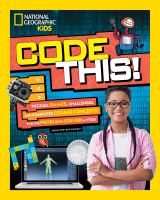


 Kids Get Coding
  Gamer Girls: 25 Women Who Built the Video Game Industry
  My Life as a Coder
  Girls Who Code: Learn to Code and Change the World
  Python for Kids, 2nd Edition: A Playful Introduction to Programming
 Callie Dean is a researcher, writer, and musician living in Shreveport, LA. She writes stories that spark curiosity and encourage kids to explore their world. For more information, please visit https://www.calliebdean.com.