Posts Tagged New Releases

STEM Tuesday — Pair Up! Comparing Nonfiction Titles — Booklist

This month, we take a look at pairs of books that focus on the same subject or theme. Readers can compare and contrast how authors have each approached these fascinating stories to craft their nonfiction middle grade books. In some cases authors have taken a different approach in organization and in others a different point of view. Reading both will provide more details and information on each topic, and also show that all authors find their own way into each story.

Support Independent Bookstores - Visit IndieBound.org Support Independent Bookstores - Visit IndieBound.org

Mary Mallon, known as Typhoid Mary, unwittingly spread the deadly disease as a cook. Read two nonfiction titles that tell this amazing story.

Fatal Fever: Tracking Down Typhoid Mary by Gail Jarrow tells the investigative story behind the tale. 

Terrible Typhoid Mary by Susan Campbell Bartoletti approaches the story as a biography. 


Support Independent Bookstores - Visit IndieBound.org Support Independent Bookstores - Visit IndieBound.org

The history of chocolate is important to both science and history. These two authors have provided books that delve into chocolate’s origins and its history as the confection we love.

Chocolate: Sweet Science & Dark Secrets of the World’s Favorite Treat by Kay Frydenborg 

The Book of Chocolate: The Amazing Story of the World’s Favorite Candy by HP Newquist


Support Independent Bookstores - Visit IndieBound.org Support Independent Bookstores - Visit IndieBound.org

If learning about scavengers (and the important part they play in the food chain) is up your alley, then these two new titles are for you.

Rotten:  Vultures, Beetles, Slime, and Nature’s Other Decomposers by Anita Sanchez will be released in January of 2019 and delves into all kinds of decomposers. 

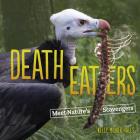
Death Eaters:  Meet Nature’s Scavengers by Kelly Milner Halls also focuses on decomposition and provides lots of interesting photos.   


Support Independent Bookstores - Visit IndieBound.org Support Independent Bookstores - Visit IndieBound.org Support Independent Bookstores - Visit IndieBound.orgThese three titles focus on our waste and where it ends up. Eco-justice readers will be inspired by all three.

Tracking Trash: Flotsam, Jetsam, and the Science of Ocean Motion by Loree Griffin Burns focuses on how ocean currents move debris around

Plastic, Ahoy! Investigating the Great Pacific Garbage Patch by Patricia Newman follows a team of scientists who study the Great Pacific Garbage Patch for the first time.

This Book Stinks! Gross Garbage, Rotten Rubbish, and the Science of Trash by Sarah Wassner Flynn dives deep into the cycle of trash.


Support Independent Bookstores - Visit IndieBound.org Support Independent Bookstores - Visit IndieBound.org

These two titles provide a look at how dogs use their perfect sniffers to help us.

Poop Detectives: Working Dogs in the Field by Ginger Wadsworth focuses on conservation canines.

Sniffer Dogs: How Dogs (and their Noses) Save the World by Nancy Castaldo introduces readers to all kinds of sniffer detection dogs. 


Support Independent Bookstores - Visit IndieBound.org Support Independent Bookstores - Visit IndieBound.org

Two great volcano titles for geology units.

Eruption: Volcanoes and the Science of Saving Lives by Elizabeth Rusch deals with the science of eruption. 

Life on Surtsey: Iceland’s Upstart Island by Loree Griffin Burns focuses on the aftermath. 


Support Independent Bookstores - Visit IndieBound.org Support Independent Bookstores - Visit IndieBound.org

Budding naturalists will love learning about how apes are studied in the wild with these two titles.

Gorilla Doctors: Saving Endangered Great Apes by Pamela S. Turner

Untamed: The Wild Life of Jane Goodall by Anita Silvey


STEM Tuesday book lists prepared by:

Nancy Castaldo has written books about our planet for over 20 years including her 2016 title, THE STORY OF SEEDS: From Mendel’s Garden to Your Plate, and How There’s More of Less To Eat Around The World, which earned the Green Earth Book Award and other honors. Nancy’s research has taken her all over the world from the Galapagos to Russia. She enjoys sharing her adventures, research, and writing tips. She strives to inform, inspire, and educate her readers. Nancy also serves as the Regional Advisor of the Eastern NY SCBWI region. Her 2018 title is BACK FROM THE BRINK: Saving Animals from Extinction. www.nancycastaldo.com

Patricia Newman writes middle-grade nonfiction that inspires kids to seek connections between science, literacy, and the environment. The recipient of  a Sibert Honor Award for Sea Otter Heroes and the Green Earth Book Award for Plastic, Ahoy!, her books have received starred reviews, been honored as Junior Library Guild Selections, and included on Bank Street College’s Best Books lists. New in 2018:  Eavesdropping on Elephants: How Listening Helps Conservation. During author visits, she demonstrates how her writing skills give a voice to our beleaguered environment. Visit her at www.patriciamnewman.com.


STEM Tuesday–Checking Your Health– Interview with Author Gail Jarrow

Welcome to STEM Tuesday: Author Interview & Book Giveaway, a repeating feature for the fourth Tuesday of every month. Go Science-Tech-Engineering-Math!

Today we’re interviewing Gail Jarrow about her Deadly Diseases Trilogy: Red Madness, Fatal Fever, and Bubonic Panic. Both Red Madness and Bubonic Panic are among this month’s featured health and medicine books. Gail is an author of nonfiction books for ages 8-18 about science and history (and the history of science). Her books have received many honors, including the YALSA Award Nomination for Excellence in Nonfiction, a Notable Social Studies Trade Book, Outstanding Science Trade Book, a NSTA Best STEM book, the Jefferson Cup Award, the Eureka! Gold Award, an Orbis Pictus Recommendation, as well as Kirkus Reviews and School Library Journal Best Books and VOYA Honor Book distinctions.


Mary Kay Carson: How did these books come about?

Gail Jarrow: It all started with a chance discovery in the Cornell University library stacks.  While researching scurvy for a magazine article, I spotted a shelved book on pellagra written by a Cornell professor I had met. Even though the book wasn’t about my topic, I took it home to read because I knew her. I was fascinated by this forgotten nutritional deficiency disease that had once affected millions of Americans, and I sensed it would make an interesting story for young readers. But pellagra turned out to be one of those ideas you file away until you can figure out how to approach the subject. I didn’t figure it out for a dozen years. After online databases made it easier to access old medical journals and hundreds of newspapers from the early twentieth century, I saw a way to write Red Madness as a medical mystery using the experiences of doctors and pellagra victims. As part of my pellagra research, I used U.S. Public Health Service reports from the early 1900s.  I came across many entries about typhoid fever and plague, two other epidemic diseases that the Public Health Service was trying to control then. That was how Fatal Fever and Bubonic Panic were born from Red Madness, completing the Deadly Diseases trilogy. It goes to show that new ideas can be hiding anywhere and it pays to be receptive to them.

MKC: I have to ask, which of three deadly diseases—plague, typhoid, or pellagra—would you least like to suffer from? 

Gail: These diseases all have nasty symptoms. But without question, I would NOT want to contract plague. It is the deadliest of the three. We have effective antibiotics for plague today, but the survival rate is decent only if you’re diagnosed early on. If you have pneumonic plague, your chances diminish drastically. Antibiotics work against typhoid, though scientists are seeing more antibiotic resistance. Yet even before we had those drugs, the majority of typhoid victims recovered. Pellagra is easily treated with diet change or niacin supplements.

MKC: These books were quite a journey through primary sources. Do you have a favorite finding?
Gail: Of all the intriguing information I uncovered, my favorite had to do with typhoid fever. I discovered that the epidemiologist who tracked down Typhoid Mary had—four years earlier—helped end a typhoid outbreak in Ithaca, New York, where I live. He determined that the likely source of that outbreak was a creek not far  from my house. Finding connections to your own life makes history and science come alive. When I write for young readers, I look for ways to connect the book’s content to their lives. For example, in Fatal Fever, I included specific details about the physical effects of typhoid on college students in Ithaca, some of whom died during the 1903 epidemic. I found these case studies among infirmary records and other local archival material. Because the victims were teens, I hoped this would help my readers relate to a disease they probably knew nothing about.

MKC: Any further reading recommendations for fans of the Deadly Diseases Trilogy?

Gail: To add a few to the STEM Tuesday Checking Your Health list: Suzanne Jurmain’s Secret of the Yellow Death deals with medical sleuthing. John Fleischman’s Phineas Gage: A Gruesome But True Story About Brain Science would grab young readers. I really enjoyed Poison by Sarah Albee and How They Croaked by Georgia Bragg, two books that use humor to explore medical topics.

Want to know more about Gail Jarrow and the Deadly Diseases Trilogy?


Win a FREE copy of BUBONIC PANIC: When Plague Invaded America!

Enter the giveaway by leaving a comment below. The randomly-chosen winner will be contacted via email and asked to provide a mailing address (within the U.S. only) to receive the book.

Good luck!

Your host this week is Mary Kay Carson, author of Mission to Pluto and other nonfiction books for kids. @marykaycarson


Interview with MG author Mary Winn Heider

I had the privilege of meeting and working with Mary Winn Heider at a Highlights Foundation workshop this spring. Mary Winn’s debut MG novel, The Mortification of Fovea Munson was released last month. This delightful story features talking heads in a cadaver lab, a Grandma who will leave you in stitches, losing friends and making new ones. Mary Winn took time from her busy book tour to offer insight into her writing and her work with the Barrel of Monkeys theater program in Chicago.

The setting of The Mortification of Fovea Munson is a cadaver lab. I know you worked briefly at a medical university lab. Can you tell us about that experience and how it played into your story? Did you meet any talking heads?  ?

Ha! I didn’t meet any talking heads, thankfully! I did meet the non-talking kind, despite the fact that my job was ostensibly just to be the receptionist. My responsibilities (like Fovea’s) definitely became a little more involved during my time there!

The lab itself was both very inspiring and very weird, which is sort of a sweet spot for me. On one hand, the stakes were super high: every day that I went to work, I found myself considering my own mortality. And my grandparents donated their bodies to science, so it felt somehow extra personal. On the other hand, the whole thing was really absurd—I was making signs to remind people not to wear flip-flops while they practiced surgeries. I was ordering body parts online. Minor spoiler: in the book, Fovea accidentally orders 600 legs. I totally did that. So there I was, at this intersection of super high stakes and total absurdity—and it felt so perfectly like my experience of middle school. Deadly serious. Completely bananas. Totally right.

And then aside from the ordering…er…snafu, I drew on the details of the real lab a lot, especially the day-to-day logistics. We’d order the parts, keep them frozen until they were needed, and plan ahead so they could thaw for however long they needed to thaw. There was a bit of a scandal with one of our suppliers at one point, and watching that play out helped me think through the ramifications of the (very different) trouble in the fictional lab.

I loved all the humor throughout especially the anatomical references, and the Grandma, oh my goodness, what a hoot! Tell us a little bit about your inspiration for the humor in your characters.

Well, broadly speaking, I wanted to have the most fun possible in this world that was (in theory, anyway) all about death and dying. Also, I’ll admit that once you start with the anatomy puns, it’s like you actually can’t stop—I don’t understand what force of nature that is, but it’s so real. So real.

Fovea initially struggles with her parents’ occupations, and yet, the plot involves Fovea trying to save them from ruin. I think it’s a perfect reflection of that awkward time in child/parent relationships. One minute a child doesn’t want anything to do with you, and the next they are defending you as a parent. You credit your parents as “being the coolest” in the acknowledgements. Did you ever experience the tug and pull in your relationship with yours?

For sure—I think maybe it’s impossible to avoid completely? And that that’s a really good thing. We test the waters of independence and maybe they’re a little intense or not intense enough, and then there are all sorts of feelings on both sides. But inch by inch, we grow up that way. My parents and I were lucky and didn’t have a lot of straight-up conflict—more like the occasional growing pains.

Fovea’s friendships are at the core of the story. Did you have an Em or Howe in your life?

The summer before sixth grade, I had a friendship that ended before I was ready. Every part of it was more nuanced (and less gross!)—but at heart, I’d say it was the same dance. I lost a friendship, found myself and found other friendships. Just…sans heads.

Your imagination is incredible! I found myself marveling at the solutions you provided for Fovea for the many challenges she came up against in helping Andy, Lake and McMullen. Especially the scene in making their way to the recording studio, which brought forth one of my fondest stories from my childhood. Care to offer any insights as to where you came up with such creative scenes?

Oh, I love that the trip to the studio managed to do that! That makes me so happy!

One of the things that I really dig about writing for this age is the constant negotiation between what middle schoolers can do on their own and what they can’t. So in some ways, it’s just about necessity being the mother of invention: in that scene, Fovea can’t drive, but she’s got to cover some serious ground to the studio.

And actually, early on, there was a very complicated subplot about getting to the studio (involving a kid with seven stepmothers who each had their own food truck—I’m rolling my eyes at myself even as I type this). A writer friend graciously clued me in that it was super distracting. So I cut the whole thing, and in the process, discovered Grandma Van, who adds so much more to the story. So I find when I try to be outrageous, I get in my own way. When I’m just problem-solving within some slightly oddly-shaped given circumstances, the internal logic of the story guides me. So I think I’m saying that I have nothing to do with it? That’s probably right.

I know you are a graduate of the Vermont College of Fine Arts Writing for Children and Young Adults. Did Fovea’s story originate while you were pursuing your master’s degree?

It did! I got the cadaver lab job toward the end of grad school. Then I realized I should be writing about the lab just in time for my last workshop at VCFA, so they got the first twenty pages. They were fantastic, and asked me all the questions I needed at that early generative stage.

I’d love to hear a bit about your writing process. Do you write every day? Where? Home? Coffee Shop? Cadaver lab? Theater?

All of the above! I try to write every day, although I don’t really succeed. But I’m generally doing the artist hustle, so I write wherever I can, which has definitely included at home, in coffee shops, at the cadaver lab, and backstage in theaters all over Chicago. Sometimes even in costume between shows. I have a harder time writing when I’m memorizing lines—my brain isn’t great at learning other people’s words and building my own sentences at the same time, but once a show is up and running, it gets a little easier.

Please tell us about your experiences with the Barrel of Monkeys theater program!

Yay! Barrel of Monkeys is the best. It’s a Chicago-based theater company. We go into Chicago Public Schools, teach six-week writing residencies, and then adapt what the kids have written and perform it for them in their own schools. The program gives the kids space to be expressive right at a time when they’re getting slammed hardest with state testing. And then we reflect back to them what creative rock stars they are by treating their work the way we’d treat professional writers’ work.

I’ve been in the company for about ten years—it’s made up of professional actors and educators all over the city. And the kids are endlessly inventive and inspiring. A month ago, I was in a show and got to play a reckless, heart-broken volcano, a metal-singing devotee of a potato chip god, a monster drawing come to life, and, as part of a reinterpretation of A Wrinkle in Time, played Mrs. Mild Sauce alongside Mrs. Ketchup and Mrs. Honey Mustard. The kids are where it’s at.

Finally, I know you’ve been involved in some interesting work situations in addition to your work at a cadaver lab. Are any of these roles playing a part in your next work?

I’ve had a pretty strange run of jobs, but at the moment, no! Well— none of my work as an adult, anyway—I’m currently drawing on my very influential time as second chair French horn at Hand Middle School.

Thank you so much for your time!

Thank YOU!