Posts Tagged middle-grade readers

Do You Think the World is Ready?

I don’t shock easily, but two recent incidents had me reeling.

The first happened during a creative writing workshop I ran for kids in Grades 4-6. At the start of the workshop, several kids mentioned which of my books they’d read. Then one girl raised her hand and shyly announced that she wanted to read my books, but her mom wouldn’t allow her. “She says they have bad words,” the girl reported.

I tried to seem blase. “Has your mom read any of my books?” I asked her.

“No,” the girl admitted.  “But she’s seen the covers.”

I assured her that I was always careful not to use “bad words”–and that it wasn’t fair to judge a book by its cover. But how a parent viewed any of my covers and decided the text contained inappropriate language  was a mystery to me. And the sad thing was, this girl was an enthusiastic writer who clearly craved access to all sorts of books.

The other incident occurred at the start of an elementary school’s Read Aloud Day. Because my books fall into the  upper elementary/ middle school category, I was assigned a fourth grade class, as was the local middle school principal.  As the two of us chatted before the program, he asked what books I had on the horizon.

I told him about my upcoming middle grade novels:  TRUTH OR DARE (Aladdin, S&S/Sept. 20, 2016), which is about a mom-less girl’s experience of puberty, and STAR-CROSSED (Aladdin/S&S, March 2017), which is about a girl who has a crush on the girl playing Juliet in the middle school production of Shakespeare’s play.

The principal’s face turned pink. He laughed nervously. “Oh,” he said. “Do you think the world is ready?”

I explained that all my books were wholesome, completely appropriate for tweens. I hoped he’d express enthusiasm, maybe even extend an invitation to the middle school, or say he’d mention the books to the school librarian.  But he didn’t do either. Instead, he changed the subject.

I’ve been thinking about  both of these incidents  a lot lately, in light of Kate Messner’s recent dis-invitation from a school uncomfortable with her newest MG, THE SEVENTH WISH. That book, which I deeply admire, is about a girl whose older sister has a heroin addiction– a topic the school decided was inappropriate for its students .

What scares me is not so much outright book-banning, because that happens in the bright light of day, and often leads to heightened interest in the banned book, anyway.  What I find even more troubling is “quiet censorship,” the sort of thing that happens when an adult decides the world, or a school, or a classroom, or a particular kid “isn’t ready” to read about certain topics. And so he doesn’t extend the invitation, or order the book–not because the book isn’t good, or isn’t written at the right level, but because the subject makes him nervous. It’s a type of book-banning–but because it happens under the radar, it’s difficult to detect.

When Kate Messner was disinvited from a school, she had an overt act, the revoked invitation, to react to, and she did so eloquently and effectively, both on her blog and behind a podium at ALA 2016. But many authors who tackle challenging subjects just won’t get the initial invitation, or their book simply won’t get ordered by the library.  So how do they even know they’ve been “quietly censored”? And how can they–or their readers–protest? After all, schools and libraries are free to make their own choices, as they should be.  If they choose not to order a certain book, who’s to say the choice was motivated by the book’s challenging or controversial subject, and not by the author’s writing style?

I keep coming back to the realization that kids are older than we think they are, older than we were when we were their age.  Girls are menstruating at younger ages, getting eating disorders at younger ages (this is the subject of my upcoming eighth novel STUFF I KNOW ABOUT YOU (Aladdin/S&S Sept. 2017).  The internet has exposed all of our kids to a cruel, violent, judgmental world. If we don’t allow kids to read MG novels that reflect the world they live in, one of two things will happen. Either kids will turn off reading realistic fiction altogether (and with the internet constantly beckoning, that’s a real concern)– or they will crash the gate, choosing, and perhaps sneaking, YAs that are too explicit and dark for their years.  As any parent of a teen knows, once a kid starts reading YA fiction, he/she seldom wants to discuss the edgier content with an adult. Isn’t it better to allow access to books specifically geared toward a MG sensibility–the way  THE SEVENTH WISH is?  And shouldn’t we as adults want to stay in the conversation–even when (or especially when) the conversation makes us nervous?

We can’t be in favor of diversity in kidlit without welcoming books that include all sorts of previously ignored characters: kids of color, LGBT kids, kids in nontraditional families, kids coping with a family member’s addiction, kids coping with mental illness (like Dunkin in Donna Gephart’s  beautiful LILY AND DUNKIN).  There’s nothing inherently “wrong” or “inappropriate” about these characters–they’re just kids on the basketball team, kids on the school bus, kids in the play. And they deserve to be represented, read about, identified with, empathized with.

The world is ready.

Barbara Dee’s next book, TRUTH OR DARE, will be published on September 20, 2016.

Writer’s Tools: Wisdom from a Third Grade classroom

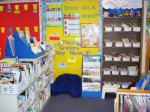
UnknownOne of the things I love about school visits it that I get to go to classrooms all over the country and meet wonderful students and teachers. There are some comforting universals to a grade school classroom: a certain amount of clutter, a map, the alphabet along the wall. And then there are delightful surprises: a pet iguana, a stunning view of the wilderness, a reading loft, a tank of salmon fry to be released in a local stream, a flag flown by a student’s father over his army camp in Afghanistan. It’s a window into the thoughts and values of the community I’m visiting.

I recently visited a third grade classroom where I saw two student made posters on the wall. The first was titled Writer’s Tools in the Hand. Underneath was an illustrated list: paper, pencil, eraser, dictionary, word list, and illustration tools.Unknown-1
It was a good reminder to take a moment before I begin my writing session of the day to have all the tools I need at hand. I especially liked the word list idea. I know many teachers help their students brainstorm a list of likely words before they start a writing assignment to help them get started. Though I don’t need that technique, I have used a variation of it. Every writer has word habits, words or phrases that pop up more often than they should. I have about a half dozen that I lean on more than I should, so I make a word list of them and post it over my workspace to remind me to make stronger word choices and not lean over much on the familiar.
It was the second poster that really struck me though. It was titled: Writers’ Tools in the Head and Heart. The list included: thinking, good ideas, awareness, fun attitude, information, concentration, quiet or silence.
There are so many things to love about that list, and perhaps most importantly that writing well engages both the head and the heart. I love it that thinking comes before good ideas, an excellent reminder. Sometimes I have to think about a scene for days, even months, before I have a good idea about how to fix it.
    Awareness is a tricky idea, I asked a group of the third graders who had made the poster what they thought awareness meant. They said that it meant you should pay attention to all your ideas about a story not just the easy ideas that were in the last story you read. Excellent advice!
  images Fun attitude might just be the best advice of all though. If my writing isn’t going well, it’s almost always because I’ve lost the joy of it. Loss of joy may not be the cause of bad writing, but it is at least the reliable companion of bad writing. And when I change to a more positive and playful outlook, the writing reliably improves.
   Information and concentration are pairs I’ve been learning to use as a pair. I love research so much, I could spend all my time chasing the next dazzling fact and completely lose track of my story in my zeal to fill it up with the amazing details I’ve learned. But sometimes what I need is not more information but concentration on the research I’ve already done.
   Finally I love it that quiet and silence are not the same thing. Sometimes I need absolute silence for a particular task. Reminding myself to turn off the music for the duration of the task helps. Other times I just need the quiet of my brain focusing on just one thing, not email, not social networks, not housework or snacks but simply the quiet of letting myself be a writer and nothing else for a few hours–a true gift!
So how about you? Do you have a favorite tool of the hand, head or heart?  I’d love to hear about them in the comments.

The Gift of Reader Letters

I’ve been feeling a bit wistful lately. My three children, who provided much of my inspiration and connection to the story lines and characters in my first two middle grade novels, have gotten older. Funny how that sneaks up on you. Two have graduated college. One has a job. The other is looking and hopefully, will find. And my youngest — always the last for everything, she’s quick to complain — is off to college this fall. Our house, once full of interrupted conversations, endless shoes at the front door and disappearing food, is quieter. Neater. Slower-moving, somehow.

I admit that I worried about reaching this moment — not only as a parent, but also as a middle grade author. Would I still be able to write realistic dialogue or imagine scenes or even, come up with ideas if I wasn’t around middle graders? How could I write about them if I wasn’t a part of their world, laughing at their silly jokes and knowing the trends and listening to their chatter?

While it’s true that I no longer have middle graders around me on a daily basis, I’ve come to realize that I have something I didn’t have before, when I was unpublished and working on those novels — countless heartfelt emails and letters from readers. Although I dreamed of being an author when I grew up, I never summoned the courage to write to one when I was younger. I did, however, write to David Cassidy. Sadly, he never answered.

Letters, notes, and emails from readers are a gift. Not only do they keep me connected to kids’ thoughts and dreams, they make me reflect, crack up, and sometimes, tear-up. But more importantly, they remind me why I write. Why I do this. Why it matters.

So thank you for writing. We authors appreciate it more than you know. Here are some of my favorites.

Mann elementary 2016 visit (1)

Mann 1Mann 2Mann 3Mann elementary 2016 visit (2)Michele Weber Hurwitz is the author of The Summer I Saved the World in 65 Days, and Calli Be Gold (Wendy Lamb Books), and the forthcoming Makers Vs. Fakers (Aladdin 2017). Find her at micheleweberhurwitz.com.