

Welcome to the Second STEM Tuesday of the Month!
This inaugural post offers some really wild ideas for connecting zoology books, activities, and kids. With this month’s selections and ideas, your students can spy on animals, find connections to scientists (and each other), and spread enthusiasm for zoology as they model a disease outbreak.
 Help kids channel their inner Jane Goodall. Budding zoologists will soon be organizing and interpreting their observations like the pros when they read Nancy Castaldo’s Beastly Brains: Exploring How Animals Think, Talk, and Feel and hit the schoolyard to conduct scientific observations of animal behavior.
This book provides a comprehensive synopsis of science’s attempt to answer some fascinating questions, such as: What types of feelings, if any, do non-human animals have? Do they plan, anticipate, and think about themselves? How can we know? With the help of the Beastly Brains teacher guide (pages 16-19), segue into some serious fun: watching animals, the zoological way, and try to answer some of those questions. The guide includes instructions and a downloadable template for an observation record (ethogram).
After you cover the basics, practice with your students in the schoolyard or classroom animal center. Then set them loose on self-selected observations (AKA homework)—at a local park, home-based bird-feeder, or even the grocery store. (After all, humans are animals, too!).
Ask critical questions about the experience, such as:
- Is there anything about this situation that might interfere with the animals’ typical behavior? (For example, captivity or the presence of an observer can influence animals’ behavior.)
- What do students think might be going on inside the observed animals’ heads?
- How sure can students be about their inferences?
Drawing from the book’s content, consider the challenges zoologists face as they try to make sure their own interpretations are correct. For another perspective and a simplified version of an ethogram activity, check out Pages 93-94 of the next book in this week’s feature…
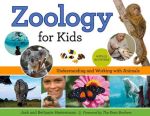 Play out a musical chairs-style model of habitat loss. A simplified ethogram activity is one of 21 experiences in Zoology for Kids: Understanding and Working with Animals by Josh and Bethany Hestermann. Providing a broader introduction to zoology than Beastly Brains, this book also offers a wide range of activities, including ecology-based crafts and games.
The Resource Game (p. 106) is worth a special look. Like many of the books on this month’s STEM Tuesday list, Zoology for Kids tackles habitat loss and the need for conservation to support the diversity of animal life on our planet. The Resource Game brings this issue to a concrete level for readers and helps students focus on animals’ needs for water, food, and space. The game may remind you of musical chairs—with a twist—as “animal” players seek out new resources when their own habitats are disrupted.
 Break the ice before kids “meet” zoologists. While several of this STEM Tuesday’s books introduce readers to animal scientists, Zoology: Cool Women Who Work With Animals, written by STEM Tuesday founder Jennifer Swanson, focuses on several female zoologists. Readers follow these scientists’ varied journeys to this field. With targeted questions, the book also encourages readers to identify with each scientist.
A fun activity called That’s Me! is a social ice-breaker often used to foster an inclusive classroom environment. With a tweak or two, it can support Cool Women’s connection-building between readers and featured scientists.
During the game, a leader makes a statement. Listeners decide if the statement describes themselves. Everyone who thinks so pops out of his or her chair and calls, “That’s me!”
Tweak the game for this book with statements that are true of the featured scientists. Aim to select facts that will be true of many of your students. You might start with the following ideas: “If I could, I’d have tons of pets.” “I’m not really sure what I want as my future career.” “I’ve taken care of a particular animal for most of my life.” “I sometimes have a lot of questions.” You can also turn some of the book’s highlighted Essential Questions into That’s Me statements.
 Catch the zoology bug! Model a disease outbreak. Author Pamela S. Turner’s vivid storytelling about a mountain gorilla veterinarian who pays “nest” calls is sure to make Gorilla Doctors a hit with students. Among other topics, readers will learn about threats to gorillas’ survival, including the fact that well-meaning humans–who might not be ill–can pass potentially fatal germs on to our genetic cousins. This is a perfect opportunity to try an infectious disease modeling activity, described by a teacher in a 7-minute Teaching Channel video.
Carrying cups of a white liquid (milk), students “harmlessly” interact—only to find out later that “germs” have spread from one individual to many. (You have spiked one of the cups with an additive that will change colors with the addition of a readily available solution.)
Want to take this further? Challenge students to consider this experience specifically as a model for the spread of disease between humans and gorillas. What is well represented and not so well represented in this activity? What specific changes could we make in order to improve the model of what is described in the book?
 Please join the pack! (It’s your turn to howl.)
Humans are social animals, right? We need each other and we share resources. So, please: Contribute to this blog community! We hope this will be a dynamic space for all of us as adult learners exploring this exciting territory–connecting middle grade readers with STEM books and their important themes.
- Which ideas seem most intriguing to you?
- What follow-up suggestions do you have?
- What works really well with your readers and STEM learners?
- What else is on your mind?
Carolyn Cinami DeCristofano is often spotted in her semi-wild habitat of Southeastern Massachusettts writing science/STEM books for kids, arranging her author visits, and working as a STEM curriculum and professional development consultant for authors, schools, museums, and anyone else who gives a hoot about science ed. Follow her on Facebook or contact her through her website http://carolyndecristofano.com.





 Historical research can be daunting, even for lovers of history, even for lovers of research and research paper writing. We have so much info available to us now…and yet, sometimes a seemingly easy answer eludes us. And then there’s the very real trust issues we writers have with the online world, and justifiably so; though the internet has certainly made it easier to quickly access reading material, it has also made it crucially necessary to question, check and double check, confirm and re-confirm sources. Random Googling can be appropriate for a brief overview of a historical event, person, or time period in MG historical writing; for example, clicking around for short, valid articles is great when you are still in the throes of a new crazy idea and are exploring the topic to gauge your own interest in it. The question “Is this something I want to learn more about?” is just as important as “Is this idea any ‘good’ for an MG novel?” at this stage of the game, and quick search engine results can help you start to answer these basic questions.
 The Writer’s Guide to… Series. The Wild West, Prohibition through WWII, the 1800’s, Colonial America, Renaissance England, and more.
