Posts Tagged middle-grade readers

May New Releases

So . . . sudden homeschooling while working from home is exhausting, right? I know a lot of parents are in the same boat. Luckily, there are some fantastic middle grade new releases out this month to keep kids reading, thinking, and even cooking (and everyone staying sane)! Happy reading!


The One and Only Bob

by Katherine Applegate

HarperCollins (May 5, 2020)

Bob sets out on a dangerous journey in search of his long-lost sister with the help of his two best friends, Ivan and Ruby. As a hurricane approaches and time is running out, Bob finds courage he never knew he had and learns the true meaning of friendship and family.

Bob, Ivan, and Ruby have touched the hearts of millions of readers, and their story isn’t over yet. Catch up with these beloved friends before the star-studded film adaptation of The One and Only Ivan hits theaters in August 2020!


Becoming Brianna

By Terri Libenson

Balzer + Bray (May 5, 2020)

Middle school is full of challenges.

Everyone knows how much brainy Bri likes the spotlight (not). So why did she ever agree to something that forces her to learn a new language, give a speech, help organize a party, and juggle drama at school and home?! As the big event inches closer, Bri wonders if it’s all worth it. . . .

Told in alternating past and present chapters, Bri’s heartwarming story unfolds over the eight months leading up to her bat mitzvah—as well as over the course of the big day itself.


The Hive Queen (Wings of Fire, Book 12)

by Tui T. Sutherland 

Scholastic Press (May 5, 2020)

Growing up in the hives, Cricket has always had a million questions. Why are trees forbidden, even in art? Why do her parents seem to hate her? And the biggest, most dangerous and secret question of all: Why is Cricket immune to Queen Wasp’s powers? Whenever the queen takes control of all the HiveWings, speaking through their mouths and seeing through their eyes, Cricket has to hide, terrified of being discovered.

Now she’s hiding again, wanted for stealing the Book of Clearsight along with her new SilkWing friends, Blue and Swordtail, and the fierce LeafWing, Sundew. The fugitives need answers, and fast, in order to prevent a LeafWing attack. But Cricket has more questions than ever. How can she stay hidden and discover the queen’s deadliest secret? And if she does succeed — can a powerless dragonet really do anything to topple a regime and stop a war?

Iggy Peck and the Mysterious Mansion (The Questioneers)

by Andrea Beaty  

Amulet Books (May 12, 2020)

Iggy Peck is an architect at his very core: When he’s not making houses out of food, his head is up in the clouds, dreaming of design. So he’s totally blown away when Ada Twist’s Aunt Bernice inherits an old house from ice-cream mogul Herbert Sherbert that is filled with countless rooms from all his favorite architectural periods. But something’s not quite right . . . Everyone says the house is haunted, and it seems that a number of priceless antiques—which were supposed to help Aunt Bernice pay for the house’s upkeep—have gone missing. If they can’t find those antiques, Aunt Bernice might lose the house forever. It will take all of Iggy’s knowledge of architecture and the help of the other Questioneers—Rosie Revere, Ada Twist, and Sofia Valdez—to solve the mystery and find the treasure!


Chef Junior: 100 Super Delicious Recipes by Kids for Kids! 

by Anthony Spears, Abigail Langford, Paul KimballKatie Dessinger, and Will Bartlett

Sterling Epicure (May 19, 2020)

Cookbooks for kids often focus on bland “child-friendly” fare, but the authors of Chef Junior, five young cooks between the ages of 12 and 15, challenge that assumption. Instead, they present a repertoire of healthy, delicious, and inventive recipes that range from easy to advanced. Kids will love these dishes and drinks, including Tiramisu French Toast, Coconut Chicken Nuggets, Garden Fresh Pesto Pasta, Peach Cobbler, chocolate-y No-Bake Cookies, and Mango Lemonade, along with perennial favorites like mac ‘n’ cheese, hamburgers, pizza, and tacos. In addition, children will learn how to set up a working pantry and shop for healthy, high-quality ingredients; use kitchen tools (including knives) safely and skillfully; and create meal plans the whole family will enjoy.


Drawing on Walls: A Story of Keith Haring

By Matthew Burgess, Illustrated by Josh Cochran

Enchanted Lion Books (May 19, 2020)

From Matthew Burgess, the much-acclaimed author of Enormous Smallness, comes Drawing on Walls: A Story of Keith Haring. Often seen drawing in white chalk on the matte black paper of unused advertising space in the subway, Haring’s iconic pop art and graffiti-like style transformed the New York City underground in the 1980s. A member of the LGBTQ community, Haring died tragically at the age of thirty-one from AIDS-related complications. Illustrated in paint by Josh Cochran, himself a specialist in bright, dense, conceptual drawings, this honest, celebratory book honors Haring’s life and art, along with his very special connection with kids.


Machines That Think!: Big Ideas That Changed the World #2 

by Don Brown

Amulet Books (April 28, 2020)

Machines That Think! explores machines from ancient history to today that perform a multitude of tasks, from making mind-numbing calculations to working on assembly lines. Included are fascinating looks at the world’s earliest calculators, the birth of computer programming, and the arrival of smartphones. Contributors discussed include Muhammad ibn Musa al-Khwarizmi, Ada Lovelace, and Bill Gates. From the abacus to artificial intelligence, machines through the ages have pushed the boundaries of human capability and creativity. Back matter includes a timeline, endnotes, a bibliography, an author’s note, and an index.


Re-Read-19: A Short Meditation on Re-Reading in the time of Coronavirus

Bookhoarding: Early and Often

Growing up, a favorite Sunday afternoon outing was to the famed Children’s Bookstore in downtown Toronto. It was the 1980s, the heyday of the bookshop and of me and my siblings piling into the wood-panelled station wagon for squabbling as well as other more-intentional family activities.

A 1980 ad for The Children’s Bookstore in Toronto. Can you believe the talent it attracted!?

When it was time to leave the store my parents would first have to locate me hidden in one of the aisles, deep inside the pages of a book I hadn’t bought yet. I remember the pile of my selections and then their hefty weight in the bags as we walked back to the car. Being obliviously squished in the station wagon (for once unconcerned by who got to sit in the “backy-back”) while reading on the way home. Repeat this experience, perhaps on a different Sunday afternoon, at the Judaica store where I would stock up on Holocaust literature (which as the granddaughter of survivors I was obsessed with and is probably another blog post.) And the thrill of receiving the Scholastic mail order to my classroom. And every once in awhile my mother would bring home used books for me.

I am hard pressed to find any material objects from my childhood—my family moved many times and my mother is a ruthless de-clutterer. But I hereby publicly thank my mom for somehow holding on to my copy of Noel Streatfield’s Ballet Shoes—which she bought for me used and which I then made much use of myself, reading it over and over again; and which now exists in my own home library; and which I have now read twice out loud to various children; and which my eldest has read to herself countless times.

Edition of Ballet Shoes by Noel Streatfeild (published in 1937, this edition in 1979) in our home library, except our cover has disintegrated.

Reading is… Re-reading?

What I loved most about reading was the chance to re-read the books I most loved. It was rare that I would read something only once. The fiendish gobbling down of a new book was also in preparation for the judgment of “is this worthy of re-reading?”

There are many pleasures of re-reading. Because the first read is to find out WHAT HAPPENS. And WHAT HAPPENS NEXT. And HOW DOES IT END. But when you read it again you aren’t flipping the pages compulsively to know all that: you already know it. So in the next reading and any subsequent ones, you are reading to enjoy in a different way—to meander on the path a little more, to take pleasure in the characters and language, to understand better what happens, to laugh at the funny parts like one does at a cult movie—the hilarity often being in knowing exactly what’s going to happen and what will be said, the pleasure in the anticipation and then in getting to experience it all over again. Or the heartbreak. Or the unfairness. The antagonist getting their just desserts. Indeed, the satisfaction of a satisfying ending.

Middle Grade and Re-reading

I now see this with my own children. Most young kids delight in making their parents and caregivers (and any other unsuspecting victims) read their favorite picture books over and over (and over) again. But once children learn to read they often delight in reading their favorite books to themselves over and over again. Usually the middle grade book I am reading out loud to my 9 and 11 year old sons, they will then read to themselves—sometimes reading ahead of where we are together, sometimes taking it to re-read afterward, sometimes both. They will read anything in graphic format, and our collection of Big Nates, Dogmans, Captain Underpants, Hazardous Tales, along with Raina Telgemeirs (both the memoirs and the Babysitter’s Clubs) and other coming-of-age graphic novels such as New Kid, Awkward, Roller-Girl or the beautiful Holocaust-introduction White Bird are thickened and dog-eared.

Agents and editors often say that they will only represent and acquire a manuscript they love enough to see themselves re-reading and re-reading and re-reading. One which will stand up to that amount of scrutiny. In which they love the characters enough to see them through their plot again and again and again. Fair enough!

But middle grade books seem particularly designed to be read over and over again. They are filled with emotion, empathy and adventure. They are where kids can learn about the world, themselves, and each other. And middle grade readers seem uniquely designed to be re-readers. They have the time, the curiosity, the intelligence and the emotional ability to connect deeply and expansively with books and stories that move them, engage them or even just make them giggle.

Bookshelf in my sons’ bedroom, examples of what gets lots of re-reading love.

I’ve written before about the unique pleasure of reading a childhood favorite again as an adult, and the relief of it standing the test of time. Like meeting up with an old friend and immediately connecting once again, the kinship felt both the same and different, and maybe even deeper. But as an adult, I find that it is rare for me to re-read something. I am inundated by what’s new and what’s next—it always feels like there’s something else I should be reading, I should have read already, that I need to consume. Or the book I bought as part of a haul from a bookstore visit suddenly doesn’t seem compelling at the exact moment I’m ready to start something new, but I hear of something else—on Twitter, a book review in the paper, something jogs my memory, a friend’s recommendation—that does and order it immediately.

Panic-buying books

When my kids’ schools announced they were closing six weeks ago, and threats of a lockdown were looming, I found myself not only stocking up on toilet paper and canned food, but on books. Bookstores would close, libraries too, and what if Amazon stopped delivering? It was (AND IS) so scary to think about getting sick, people dying, the uncertainty of anything beyond each day. And so—as a further manifestation of stockpiling mentality or as way of sidestepping the things too scary to contemplate— I panicked about how we would manage without something new to read. How would I nourish my soul in a lockdown? How would I nourish my children’s? It felt like it might be the difference between keeping sane and coping with whatever came our way, and not.

Small graces in a difficult time

Over these lockdown weeks, however, I have watched my older daughter, 14, work her way through the new books I bought her that had been piling up, unread for lack of time due to being a teenager (read: school, friends, Snapchat, Instagram, TikTok, Netflix.) Now there is suddenly LOTS of time. And when she finished the new ones she started reaching in her bookshelf for all the old ones. The ones she loved when she was 7, 8, 9, 10 and 11. (12 being the beginning of her literary teenage wasteland.) In one of the many surprising twists of lockdown and life in the time of the new Coronavirus, this is one of the positive ones for me, and her.

My new TBRR (To Be Re-Read) pile. I’ve started with Possession by AS Byatt.

So I have taken the lead from my children and have started re-reading again as a general practice.

For now my pantry is (thank goodness) well-stocked – and I’ve realized that I have an even better-stocked home library. I have almost every book I’ve bought or been given since college. (Unless I’ve loaned it to you and you haven’t returned it. It’s ok, I don’t mind.)  From picture book to middle grade to adult fiction, non-fiction and plays, all genres are gamely and lovingly represented (Lonely Planet Ireland circa late 1990s anyone?) Not only is self-isolation and lockdown a chance to work my way through my TBR stack, but it is also a wonderful chance to re-read the books that pleased me as an adult. Or on the cusp of adulthood. Great works that deserve more careful reading. Or which I don’t think I understood as fully in my twenties as I might now.

Indeed, with each re-reading we understand something different. The words remain the same, but we—whether it is our age or our stage or our mental place—are different each time. What new knowledge, understanding, satisfaction and joy will each reading bring?

Author Spotlight: Eileen Moskowitz-Palma + a GIVEAWAY!

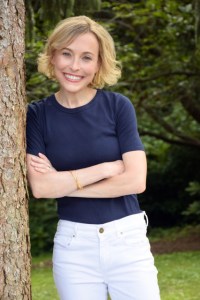
Eileen Moskowitz-Palma and I first crossed paths more than a decade ago, at the Backspace Writers Conference, in New York. I can’t remember which panels I attended, but one thing stands out: meeting Eileen. We were sitting in a large, well-lit room, waiting for the keynote to begin, when she turned around and smiled at me. It was the warmest, friendliest smile I had ever seen, and naturally I wanted to bask in her… Eileen-ness.
It didn’t take before she and I became fast friends, chatting about our daughters (we both have onlies); our writing styles (we both err on the side of funny), and our diminutive statures (Eileen is half an inch taller than I am, which she never lets me forget.) 🙂

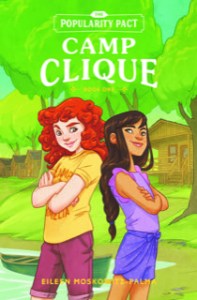
Her debut middle-grade novel, THE POPULARITY PACT: CAMP CLIQUE, which Kirkus describes as “{a}…solid mix of s’mores and girl empowerment… encouraging but never saccharine,” is out now from Running Press Kids. Here is a brief summary:

In the blink of a summer, Bea goes from having a best friend and a place she belongs to being dropped and invisible, eating lunch alone and only talking to teachers. The end of sixth grade and the start of Camp Amelia can’t come soon enough. 

But then the worst part of school, ex-best friend Maisy, shows up in Bea’s safe place and ruins it all. Maisy lands in the same bunk as Bea and summer suddenly seems dire. Never having camped a day in her life, Maisy agrees: it’s hopeless. She should be at home, spending time with her little sister and hanging out with her super popular crew of friends–not at this stupid adventure camp failing everything and being hated by everyone. In a desperate bid to belong, Maisy offers Bea a deal: if Bea helps her fit in at the camp, she will get Bea into the M & M’s, their town’s popular clique, when they enter seventh grade in the fall. The Popularity Pact is born.

 MR: Hi, Eileen! Before we start, can I say how excited I am about this novel? It’s your first middle grade!

EMP: Thank you for that wonderful introduction Melissa. You are one of my first real writing friends and the best take away from that conference! When we met all those years ago, I introduced myself as a rom-com writer, and I really thought that’s what I was. I even published a rom-com back in 2014. But one day the idea for The Popularity Pact series came to me. I was two pages in to the manuscript when I realized I finally felt at home as a writer.

MR: CAMP CLIQUE is told from the alternating perspectives of two ex-BFFs, Bea and Maisy, who strike a mutually beneficial deal in the name of popularity. Is the quest for popularity an issue that affected you as a tween? If so, how did it shape your experience in middle school, and beyond?

EMP: Middle school wasn’t about popularity for me as much as it was about navigating strong and meaningful female friendships. For most kids, late elementary school into middle school is when friendships feel more important than anything else in their world. I loved having a best friend and the certainty that came with knowing I had someone to sit with at lunch or pair up with on a school project, but most importantly I loved having someone I could talk to about anything. I lived for those after-school hangouts, and phone calls and sleepovers. As long as I had my person, I felt a strong sense of belonging. But when my best friend and I had an argument, it felt like the floor had been ripped out from under me. In The Popularity Pact series, I wanted to tap into those complicated dynamics of tween friendships, the intensity of both the good and bad moments.

MR: In addition to popularity, Maisy has other issues on her mind: troubles at home, and acute anxiety. She seeks out the crunchy-granola camp therapist, Dr. Beth, for help. Do most camps have therapists in residence now? If so, what kind of research did you have to do to see how these therapists work with campers? (i.e., short-term vs. long-term therapy; reporting to parents, etc.).  I would imagine it’s very different from therapy done in a more traditional setting.

EMP: From the small bit of research I did, it seems like more and more camps are recognizing the need for mental-health support that extends into the summer months. It makes perfect sense for a child who is undergoing therapy during the school year to seek the same supportive care while at camp. I didn’t extend my research into how therapy is typically done at most camps, because Camp Amelia is unique. Instead, I imagined what type of therapy environment would work for a kid like Maisy who was resistant to therapy, and anxious about talking about her issues at home. Dr. Beth was born because I thought she had the perfect personality and out-of-the-box methods to get Maisy to open up about the secret she had been keeping for over a year. Dr. Beth shares her therapy cabin with a menagerie of rescue cats. The way she holds back and lets the cats come to her is similar to the way she gets through to Maisy.

MR: I actually went to two sleepaway camps as a child: the artsy Camp Hillcroft, where I made enamel jewelry and sang folk songs around the campfire, and sporty Camp Gilford, where I was bullied mercilessly and wished I had a Dr. Beth to talk to. Did you go to sleepaway camp? If so, how did the experience shape the novel? Maisy and Bea’s characters specifically?

EMP: I never went to sleepaway camp because my family spent most of the summer at a cottage in Twin Lakes, Connecticut, an area of the Berkshires which is home to several summer camps. When I was building the world of Camp Amelia, I thought of the white Birch trees that I always associate with the woods that surround Twin Lakes. I pictured the fireflies zapping across the summer sky and heard the sound of the crickets. I remembered how it was always cold there at night, not matter how hot the days were. I thought of the feeling of the wet dirt path under my feet after swimming in the lake. That cottage was my safe place away from any drama I had waiting for me back home. It was the one place where the stressors of my school life couldn’t permeate. I thought about what it would feel like if an ex-best friend showed up there, and it was easy to think about how Bea would feel when Maisy permeated her camp life. For Maisy’s perspective, I thought about some of the uncomfortable parts of country life, like how cold the lake water is, or how scary it can be to see little creatures running across a dirt path. I imagined what it would be like for an anxious kid like Maisy to get sent to camp in the woods against her will.

MR: Camp Amelia is an adventure camp, with the focus on team spirit and athletic ability. There’s even a camp-wide sports competition (“the Cup”), where winning is everything. Were you sporty like Bea, or anxious like Maisy? Perhaps an amalgam of both?

EMP: I was definitely not sporty. I was a tiny, uncoordinated kid with asthma who got picked last in P.E. In fact I was so unathletic, that my P.E. teacher would have to give me multiple tries to pass each section of the mandatory yearly fitness challenge. Like Maisy, I am an anxious person, so I was always scared of getting hit with the ball, whether it was a dodgeball or a basketball. I always try to think of ways to add more natural drama and tension to a story. I came up with the camp idea first, but then I thought…What if it’s an adventure camp? And what if Maisy was anxious and unathletic like me? In every scene where Maisy has to confront a fear at adventure camp, I was able to think about how I would feel in that situation and it made it very easy to write.

 MR: Book Two, THE POPULARITY PACT: SCHOOL SQUAD, comes out on October 6. Can you give us a teaser?

EMP: I would love to! Bea kept up her end of the bargain by getting Maisy “in” with the girls at camp. Now it’s Maisy’s turn to fulfill her promise to ingratiate Bea with the popular girls. When Bea is accepted into this new inner circle, she begins to lose sight of what true friendship is all about. As Bea seems prepared to sacrifice anything to be “cool,” Maisy realizes there’s more to life than hanging out with a bunch of mean girls. Can she convince Bea that the popularity pact was a mistake? Can these former friends find their way back to each other?

MR: And finally, what’s your wildest camp story? I know you have one…

EMP: It took over 40 years for me to finally have my own camp experience. When my book tour was canceled because of COVID-19, I was devastated about the school visits that weren’t going to happen. I had been looking forward to connecting with readers in the classroom because of my experience as a former elementary school teacher. At the same time, my social media feed was filling up with posts by desperate parents who were suddenly juggling multiple homeschooled kids, while also working from home. I realized I could help. My husband and I brainstormed the idea of a free virtual writing camp. I would give kids a multi-session program that was positive, educational, and creative, while also allowing their parents a reprieve that they didn’t have to feel guilty about. In four days, I had a roster filled with 75  kids from all over the country, and a growing wait list for the next session. I have just completed my first camp session, and it has been just as healing for me as it has been for the kids. It gives me a sense of purpose and allows me to serve others in a time when I have been feeling helpless. For more information about my writing camp, or other writing resources for children during this time, please visit my website (see below).

MR: Oh!!! One last thing! A MUF author interview wouldn’t be complete without a lightning round, so…

S’mores or bug juice? S’mores

Friendship bracelets or French braiding? Not to brag, but I am really good at braiding, so French Braiding of course.

Favorite camp song? I actually wrote my own camp song for Camp Clique, which I am very proud of.

Favorite sporty activity? Running

Favorite artsy activity? Painting

The ideal care package? Beauty products and chocolate…lots and lots of chocolate: 🙂

Best camp prank? I have never done a prank in real life. BUT, I had a lot of fun writing a prank scene that the Sunflower bunk girls play on their rival bunk the Dandelion Bunk.

And now… a camp-tastic

GIVEAWAY!!!

Eileen has generously offered to gift THREE lucky readers with an autographed copy of Camp Clique, a bookmark, and two friendship bracelets! Just comment on the blog for a chance to win!

When EILEEN MOSKOWITZ-PALMA double majored in Elementary Education and English at the University of Massachusetts, Amherst, she thought she would have to choose between a career as a writer or a teacher. It wasn’t until she was almost 40 that she realized she could do both. Now, Eileen divides her time between writing middle-grade novels and teaching Beginner Novel Writing and Writing for Children and Young Adults at The Writing Institute at Sarah Lawrence College. Eileen lives in Westchester, New York, with her husband and daughter. Learn more about Eileen on her website and follow her on Instagram.