Posts Tagged middle-grade fiction

Author Spotlight: Interview with Hena Khan

Three years before the pandemic hit, I had the great luck of sharing a train ride with Hena Khan, the award-winning author of Amina’s Voice. Hena and I were headed home from #nErDCampLI, and I remember feeling wiped out—and talked out—from the conference. But once I sat down next to Hena and started chatting, my weariness evaporated and an instant connection was formed. For the next 60 minutes, we talked about writing (we were both debut authors); parenting (Hena’s two sons were in middle school; my daughter was a senior in high school); and countless other topics that newfound friends on a train often discover.

Since Amina’s Voice came out in 2017, Hena has gone on to publish multiple MG novels, including Amina’s Song (2021), More to the Story (2020), and the Zayd Saleem: Chasing the Dream series. She is also the author of seven picture books and has contributed to six children’s anthologies, including Once Upon an Eid: Stories of Hope and Joy by 15 Muslim Voices. A popular guest speaker in classrooms, school auditoriums, and libraries across the country, Hena’s latest MG novel, Zara’s Rules for Finding Hidden Treasure, is out now from Salaam Reads, an imprint of Simon & Schuster. Here’s a brief summary:

Zara’s Rules for Finding Hidden Treasure

Zara lives for bike rides with her friends—so, when her shiny, brand-new bike goes missing from the park one day, she’s crushed. After her parents insist she earn the money for another bike herself, Zara’s determined to start a business. But what kind? A lemonade stand? Not profitable enough. Selling painted rocks? Not enough customers.

Zara’s starting to get discouraged when she and her friend Naomi finally come up with the perfect idea: The Treasure Wagon, a roving garage sale that unloads knickknacks from the Saleem family basement and makes money all at once! But when a mix-up gets Zara in hot water again, will she have to give up everything she’s earned toward her new bike?

The Interview

MR: Welcome to the Mixed-Up Files, Hena! I’m so happy to have you here. I can’t believe it’s been five years since our paths crossed!

HK: I know! But it’s so nice to reminisce about that lovely train ride and our instant friendship! Thanks so much for inviting me to talk about my newest book.

MR: Zara’s Rules for Finding Hidden Treasure is the second of a trilogy. (Zara’s Rules for Record-Breaking Fun came out earlier this year; Zara’s Rules for Living Your Best Life pubs on March 21, 2023.) What was the inspiration behind the series?

HK: I came up with the idea during the pandemic while listening to children playing outside in droves and thinking about my own childhood. I adored Beverly Cleary’s books, characters like Ramona Quimby and Henry Huggins, and reading about their clever antics (anyone else want to stomp around on coffee can stilts too?). I wanted to write a series that similarly makes kids wish they were part of the neighborhood and imagine themselves joining in the fun, just like I did.

MR: Zara has two loving parents, a cute-but-sometimes-annoying little brother, Zayd, a strong bond with her extended family, including her grandparents and her uncle, Jamal Mamoo, and a crew of caring, fun-loving neighborhood friends. Is this reflective of your own childhood? What are the main similarities and differences?

HK: The crew of neighborhood friends is very much based on the children I grew up with, and the Goldsteins are inspired by my lifelong friends who lived across the street. The extended family, however, is more reflective of my children’s experience and vantage point as third-generation Pakistani American Muslims. I’m fascinated by the way my kids interact with their grandparents (Naano and Nana Abu are essentially my real-life parents), aunts and uncles, and the way they relate to the culture. They find it alternately cool and hilarious and don’t have the same type of pressure, expectations, or awkwardness that I felt as a child of immigrants. I also didn’t get to grow up around many relatives, and always wished I had been as fortunate.

Trash and Treasure

MR: One of the main themes of Zara’s Rules for Finding Hidden Treasure is our emotional attachment to possessions. This resonated with me deeply, because I recently had to clear out my mom’s apartment, which contained 60 years’ worth of stuff. (The task was daunting, to say the least.) What made you focus on this theme? And where does Marie Kondo fit into the picture?

HK: Oh wow, my heart is with you—I’m sure that was incredibly difficult! I grew up with parents who saved everything, and we had a storage room much like the one I describe in the book. They were reluctant to part with anything, in the hopes that it could be useful in the future. I wanted to tackle the topic because it’s something I still wrestle with, both in terms of finding the right balance between saving, donating, and recycling my own things, and convincing my mother to part with her “junk.”

I thought a lot about the idea of trash versus treasure, why we value the things we do, sentimental value, and what really matters. And it felt both cathartic and wishful to write some of the scenes. I’ve heard a lot about Marie Kondo, particularly the controversy around getting rid of books (the horror!), and thought it would be funny to include her although I’m not a disciple . . . at least not yet!

Viewing Life from a Younger Lens

MR:  Compared to some of your previous MG novels (Amina’s Voice, Amina’s Song, and More to the Story), the Zara’s Rules trilogy skews younger, ages seven-10, with shorter chapters and numerous illustrations. What’s the main challenge when writing for a younger audience? What’s the most fun?

HK: I’d say the biggest challenge is having less space to fully flesh out characters and plots, which is very important to me even in a shorter book. But it’s so fun to be able to jump right into the action, and to examine the world through the lens of a 10-and-three-quarter-year-old. Kids at that age are very aware and engaged with the world but still so earnest and innocent, and I love to explore the things that I’m thinking about now from that perspective.

Series Versus Stand-alones

MR: In addition to the Zara’s Rules trilogy, you’ve written the Zayd Saleem: Chasing the Dream series, with six books in total. What’s it like to work on a series as opposed to a stand-alone book?

HK: The biggest difference is that you get to know your characters deeply, so it feels like getting to play with old friends in each story. I never really believed authors who talked about their characters deciding what happens in a story, but I kind of understand that concept now. When characters become so fully developed in your mind, you have an idea of what they would say or do in a situation, and it becomes easier to write them. At the same time, it’s critical to keep the stories fresh and interesting and avoid repetition. I love making passing references to former books as little surprises to those who have read them all.

Picture-Book Love

MR: You also write picture books, including the acclaimed Under My Hijab. Is it tricky to switch from MG to picture books—and from picture books to MG…?

HK: It’s not too hard to switch back and forth between the formats since they use very different writing muscles. I generally don’t work on two middle-grade projects at once, but often turn to a picture book during breaks. I love the economy of words and the way one sentence can make or break an entire book. It forces you to be a sharp editor and pay attention to every syllable.

Celebrating Diversity

MR: Your books are lovingly infused with elements from your Pakistani heritage, and your characters are ethnically, culturally, and religiously diverse. What can authors—and publishers—do to increase the visibility of authentic, diverse characters in kidlit?

HK: Thank you! The people I love inspire so much of what I write. But it’s important to remember that I represent only one subset of the Pakistani American Muslim community, which also has diversity within it—in terms of level of cultural assimilation, socioeconomic status, religious observance and more. And then, of course, the American Muslim community is even more diverse. I think it’s wonderful to see more diverse representation in kidlit, but we need a bigger variety of stories and characters in all genres. Also, while it’s wonderful to have books to celebration diversity, culture, and traditions, I hope to see more stories where identities aren’t necessarily emphasized but are simply woven into the background like in Zara’s Rules.

Plotter or Pantser?

MR: What does your writing routine look like? Do you have a particular schedule? Also, are you a plotter or a pantser?

HK: I wish I had a routine, but I don’t. I write at all times of the day, sometimes every day for a while and then not for weeks. But I’d like to find some discipline someday! Overall, I’m more of a plotter than a pantser.

The Secret to Success

MR: You’ve written 13 (and counting!) middle-grade novels, seven picture books, and stories included in six anthologies. What’s the secret to being such a prolific author?

HK: Well, I’ve been at it for a while now, and sometimes it feels like I’ve published a lot, and at other times I think I could have done more! I think the key to staying engaged and motivated is to keep challenging myself to improve my craft, to try to reach audiences in different ways, and to only write about what genuinely excites me.

What’s Next?

MR: What are you working on now, Hena? Enquiring Mixed-Up Files readers want to know…

HK: I’m excited to be starting on my second graphic novel, finishing up a new middle-grade novel, and editing an anthology that hasn’t been announced yet. I’ve also got some new picture books on the way! Please connect with me to get updates on my new titles.

Lightning Round!

MR: And finally, no MUF interview is complete without a lightning round, so…

Preferred writing snack?

I prefer cookies but settle for nuts or kettle corn.

Coffee or tea?

Coffee all the way! I drink espresso with a little bit of milk.

Marie Kondo: Yea or nay?

Nay, can’t do it!

Zombie apocalypse: Yea or nay?

If I had to choose an apocalypse, it would be the one.

Superpower?

I’d have to go with invisibility.

Favorite place on earth (besides Seville, Istanbul, and Seattle)?

Turks and Caicos is just incredible.

If you were stranded on a desert island with only three things, what would they be?

My husband and two sons. Or if they count as one family, then ice cream and my laptop.

MR: Thank you for chatting with us, Hena—and congratulations on the recent publication of Zara’s Rules for Finding Hidden Treasure!

Thank YOU!

Bio

Hena Khan is an award-winning author of picture books and middle-grade fiction. Her middle-grade novel Amina’s Voice launched Simon & Schuster’s groundbreaking Salaam Reads imprint and was named a Best Book of 2017 by the Washington Post, NPR, Kirkus Reviews, and others. The sequel, Amina’s Song, won the 2021 Asian/Pacific Award for Children’s Literature. Hena wrote the popular Zayd Saleem Chasing the Dream series, and More to the Story, a novel inspired by her all-time favorite book, Little Women. Hena’s acclaimed picture books include Golden Domes and Silver Lanterns, Under My Hijab, Crescent Moons and Pointed Minarets, Night of the Moon, and It’s Ramadan, Curious George. Learn more about Hena on her website and follow her on Twitter, Instagram, and Facebook.

(For more on Hena Khan, check out this MUF interview by Jonathan Rosen!)

Author Interview with New York Times Best-Selling Author Jennifer Chambliss Bertman and Book Giveaway!

Photo by Analise Lawson

Jennifer Chambliss Bertman is the New York Times best-selling author of the Book Scavenger
Series, fun and exciting middle-grade mystery stories.
Her latest, The Sisterhood of Sleuths, a stand-alone novel, walks readers through the mysteries of
friendship with none other than the original girl sleuth, Nancy Drew, and her history, central to
the plot.
Maizy is excited about working together with her friend, Izzy on a school project. The two
partners-in-crime have been creating movies together since they were little kids. Maizy envisions
their latest endeavor for the assignment will feature “Shellfish Holmes” as the main character.
But Izzy, who now prefers Isabelle and the company of class clowns Ben and Link, isn’t as
enthusiastic. Maizy and Izzy separate over their difference in creative vision for the project.
Meanwhile, a box of old Nancy Drew books is dropped off at Maizy’s mom’s antique store.
Even more curious, the box includes a picture of Maizy’s grandmother and two other women,
dated April 16, 1993.

Who are the other two women? Were they friends? Why is the photo in the
box of old Nancy Drew books? Did her grandmother leave the books outside the store?
The answers unfold as Maizy maneuvers through the changes in her relationship with Izzy by
renewing her friendship with Nell, her first real friend. Maizy and Nell partner with a classmate
Cam, on a different take for the assignment, leading them to the mysterious history of Nancy
Drew and those who created her.

Do Maizy and Izzy make up and become friends? Does Maizy discover who the two other
women are in the photograph? And how does Nancy Drew fit into the mystery?
The Sisterhood of Sleuths is an engaging mystery that reveals secrets of friendship and Nancy
Drew.


Welcome to From the Mixed-Up Files of Middle-Grade Authors Jenn!
Congratulations on the creation of The Sisterhood of Sleuths. How did the idea for this
mystery come to you?
Thank you so much for having me!
I’ve long been interested in the history behind the creation of the Nancy Drew series, so that was
part of my inspiration. I also wanted to write a funny mystery and thought the concept of
combining the original Nancy Drew character with a modern-day girl had a lot of potential for
humor, while also being an interesting way to explore the theme of friendship and the role Nancy
Drew has played in popular culture over time.

Friendship is at the heart of The Sisterhood of Sleuths. Maizy is struggling with how her
best friend, Izzy, is changing, and ultimately, growing away from their friendship. Yet, in
turn, Maizy re-establishes her friendship with Nell, who she grew apart from several years
before. And, then ultimately, Maizy’s grandmother also separated from a friend years ago.
Could you share with readers the inspiration for these storylines?

The inspiration largely came from thinking about the Nancy Drew series, actually. When I think
back on what I remember about the books, what I loved as a child reader and have held onto in
my memory, it’s not the events of the plot or details from individual stories. It’s Nancy’s
relationships with women. I admired her steadfast friendships with Bess and George and the
mother/daughter-like connection she has with Hannah, the family housekeeper. So, I wanted to
explore the theme of friendship but in a more realistic way. One that feels more authentic to my
own experiences.
I also was thinking about how I discovered Nancy Drew in the 80s when I was a kid handed
down books that had been read by an earlier generation, and how when I visit schools today as
an author and talk about books from my childhood, many kids are still familiar and enthusiastic
about Nancy Drew. Showing how she has been a common thread through so many different
generations was also important to me.

The secret and storied history of Nancy Drew and her creators are central to the plot. Have
you always been a Nancy Drew fan? How old were you when you learned the truth about
Carolyn Keene?
I discovered Nancy Drew when I was 7, so I suppose I’ve been a fan most of my life. I can’t
remember exactly when I learned Carolyn Keene was a pseudonym—I might have been told that
as a young reader. But in my early 20s, I read The Mysterious Case of Nancy Drew and The
Hardy Boys by Carol Kismaric and Marvin Heiferman and was fascinated by the history behind
the two series. I don’t think I’d given much thought to the creation of books before—I’d thought
plenty about the craft of writing, but I mean the actual business of producing books and
marketing. That was the beginning of my interest in the history of Nancy Drew and I continued
to read books and articles as I became aware of them. (Like your great book, Missing Millie Benson!)

Missing Millie Benson: The Secret Case of the Nancy Drew Ghostwriter and Journalist - Rubini, Julie K.

Mildred Augustine Wirt Benson was the original ghostwriter for the Nancy Drew Mystery
Stories. Through your research for your novel, what did you find most interesting/inspiring
about Millie?
I admire so much about her. Her work ethic and resilience were especially inspiring. I’m
thinking in particular of the chapter in your book that delves into the period in Millie’s life when
she had a young child, a very ill husband, the country was at war, and yet she continued to work
diligently at her writing and career.

Edward Stratemeyer, the creator of the Nancy Drew Mystery Stories would create plots
and outlines for the ghostwriters to follow for the series. Do you create an outline for your
stories, or do you allow the story to take you in its own direction?

I do a bit of a mix. I typically have a general sense of how a story might begin and end (although
that can and does change as I get deeper into a project), and outlining often helps me organize
my ideas. But I usually get too excited about the scenes I’m imagining and want to dive in and
start writing. Then, when I reach a point where I’m not sure where the story is going or what
happens next, I’ll return to brainstorming and outline my ideas again until I get excited about the
scenes and jump back into the writing.

It was refreshing to see both of Maizy’s parents present in the story. Maizy’s mom’s
antique store plays an important role in the discovery of the old Nancy Drew books, to her
dad’s endless attempts at building the next great invention. How do these role models
impact Maizy?
I think her parents provide Maizy with stability. I knew she was going to be someone who had a
a lot of things changing in her life all at once, so I tried to make her parents realistically imperfect,
but also something consistent in the background for Maizy as she tries to make sense of
everything around her that doesn’t feel steady anymore.

Sixth grade can be such a transitionary year for kids. Many school systems begin middle
grade that year, in a new, separate building, often bringing in students from other feeder
elementary schools into one. Some children, like Maizy, want to hold onto traditions of the
past, whereas others, like Izzy, jump into new interests, ready to grow into what lies in
store. I think you did a fabulous job representing these changes in The Sisterhood of
Sleuths. What do you hope readers will take away from these two characterizations?

Thank you! I appreciate that. What I hope is that Maizy and Izzy feel real and relatable to
readers. I think the girls represent two different sides of growing up—we have phases where we
want to hold onto what is familiar and comfortable, and we have phases where we step out of our
comfort zone for new experiences, sometimes by choice and sometimes by circumstance. We all
go at our own pace, and we’re all unique individuals, and sometimes there is friction if our
personal goals and a friend’s personal goals no longer align.

You explore a variety of emotions in the storyline, from embarrassment, disappointment,
sadness, joy, grief, and prevailing hope. I thought your scene with Maizy wearing the lobster costume, while riding her bike to the park to meet with Izzy was incredibly relatable. Do you have a favorite scene that explores emotion in the story?
That exact scene that you mentioned, when Maizy is in the lobster costume, is definitely one of
my favorites. It grew out of my own embarrassing childhood memory of a bike-riding incident
(in normal clothes, not a costume), and then I asked myself, “How could I take what happened to
me and make it even more embarrassing? And funny, too, while I’m at it?” It was quite
therapeutic to take my own embarrassing moment, turn it into a humorously horrific series of
events, but then have Maizy endure the embarrassment and rise above and triumph in the end.

You have some awesome photos of your writing space on your website,
www.jenniferchamblissbertman.com Could you share your writing process with our
readers?
My writing process is not anything straightforward. Sometimes I start with an idea for a
character, sometimes I start with a premise, and sometimes I visualize one scene in detail and write it
down but I don’t know anything else about the story. And then I bumble along from wherever I
started, asking myself questions as I go. If I begin with a character, I might look at the things I
know about him or her and ask myself what would really challenge them? With Maizy, someone
who had a very steady and predictable and comfortable life, what challenged her was that some
of those steady and predictable and comfortable things changed. Her best friend is acting
differently. Her brother moves away. Her grandmother is being secretive when she’s never been
like that before. Once I have ideas for what challenges the character might be up against, I
brainstorm how they could be most interestingly conveyed in scenes, and how those scenes could
be built into a compelling plot . . . It’s a lot of trial and error, writing and revising, moving
around scenes, and changing my mind. I also have trusted critique partners and their feedback
helps me as I go along too. Eventually, I find my way to the end of a draft.

Thank you for taking time from your busy schedule to join us for this interview. The
Sisterhood of Sleuths was released on October 4, and may be found at your favorite local
bookstore, or you may order your copy here.

Jennifer has agreed to give away a complimentary copy to a lucky random winner. To enter the contest, click here.

Author Spotlight: Natalie C. Parker + a GIVEAWAY!

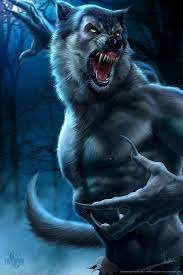
In today’s Author Spotlight, Natalie C. Parker, author of the acclaimed young adult Seafire trilogy among other YA titles, chats with me about her MG debut, The Devouring Wolf. Hailed by Kirkus as “An easily devoured, chilling, and suspenseful adventure,” the fantasy novel is out now from Razorbill. Plus, scroll down for a chance to win one of THREE copies! 👇

But first…

A Summary

It’s the eve of the first full moon of summer and 12-year-old Riley Callahan is ready to turn into a wolf. Nothing can ruin her mood: not her little brother Milo’s teasing, not Mama N’s smothering, and not even Mama C’s absence from their pack’s ceremony. But then the unthinkable happens—something that violates every rule of wolf magic—Riley and four other kids don’t shift.

Riley is left with questions that even the pack leaders don’t have answers to. And to make matters far worse, it appears something was awoken in the woods that same night.

The Devouring Wolf.

The elders tell the tale of the Devouring Wolf to scare young pups into obedience. It’s a terrifying campfire story for fledging wolves, an old legend of a giant creature who consumes the magic inside young werewolves. But to Riley, the Devouring Wolf is more than lore: it’s real and it’s after her and her friends.

The Interview

MR: Welcome to the Mixed-Up Files, Natalie! Thanks for joining us today.

NCP: Hi Melissa! Thank you so much for having me.

MR: Anne Ursu describes The Devouring Wolf book as “A compulsively-readable, big-hearted story,” and I concur. Can you tell us what inspired you to write it? Also, what is it about werewolves that fascinates you?

NCP: Inspiration is always such a sprawling, semi untraceable thing. I feel like I could give you twenty different answers that are all true; I was inspired by mythology and queer families and the love I have for my home state of Kansas! But in this case, I have to say that the inspiration to shift from writing for young adults to writing for middle grade readers belongs to all my nieces and nephews. I wanted to write a story for them.

As for werewolves, I have adored many over the years, starting with Wolfman from the timeless classic, The Monster Squad. As I started thinking about what kind of story I wanted to tell for middle grade readers, I realized that the majority of werewolf stories I was familiar with seemed to focus on adults where the metaphor of shapeshifting was something about the animal inside. When I considered what the metaphor looked like if kids on the verge of puberty were the ones learning how to shift, things got really exciting and the story sort of unraveled from there.

Message to Readers

MR: The novel centers on a community of werewolves, yet Riley, the 12-year-old protagonist, experiences feelings that are universally relatable: the desire to belong; the need for friendship; the importance of family; the fear of the unknown… What was the message you wanted to convey to readers?

NCP: When I was Riley’s age, I was very concerned with what was happening to my body. I was also worried about falling behind my peers and I struggled when things turned out differently for me than they did for others. A lot of this was wrapped up with being a queer kid and not having the language for it. I poured all of those feelings into this story and into Riley’s experience in particular who struggles when she doesn’t shift in spite of having an incredibly supportive family and community. There’s no guidebook for what she and the other four kids are going through, not even the adults can explain it to them. It’s scary and hard and ultimately something that Riley and the others have to figure out for themselves, and that is something I hope readers take away from this story. That sometimes our experiences align and sometimes they don’t and there are many ways of belonging.

Interview with a Werewolf?

MR: While we’re on the subject of werewolves, what kind of research did you do for the book? I’m pretty sure you didn’t interview a werewolf. 🙂

NCP: I wish! But alas. At the time of writing this book, no werewolves were available for an interview. The majority of my research was actually historical, most of which will never show up on the page. But because I was crafting communities of werewolves (and witches!) who reside alongside everyone else, I needed to approach the book as something of an alternate history, of the country and more specifically of the state of Kansas. The werewolves in the book are based in my own hometown of Lawrence and while I know a lot about our recent history and present state, I wanted to make sure everything I set up about the werewolves felt like it could be true.

Diversity and Representation

MR: The characters in your book are diverse in terms of race, gender, and sexual orientation—something that’s desperately needed in children’s publishing. Notably, Riley has two moms, and her friend Kenver is nonbinary, using they/them pronouns. What do you think needs to happen to make diverse representation the norm rather than the exception?

NCP: I think we need books that tackle questions of identity politics head-on and we need books that reflect a diverse world without demanding that authors or readers explore their pain on the page. Along those lines, queer normativity is intensely important to me and my work, so while Riley has two moms and is starting to crush on another girl, those things are woven into the fabric of her life as “normal.” She may have a little anxiety about her crush, but she never questions whether or not she should have those feelings.

We also need to keep finding ways to support our gatekeepers who are currently fighting to keep diverse books in libraries and schools.

Writing for Middle Schoolers

MR: You’ve written novels and short stories for young adults, but The Devouring Wolf is your first foray into middle-grade fiction. What prompted you to write for this age group? Did you encounter any specific challenges while writing the book?

NCP: When I think about who I’ve been as a reader, I have never felt as transported or taken care of by books as I did when I was reading middle grade. Books were an adventure, but they were also a deeply important refuge. I have always wanted to write a book that does for someone else what Madeleine L’Engle and Susan Cooper and Lloyd Alexander did for me. But it was intimidating to think about. I knew I had to wait for the right story. The one that landed with so much clarity that I had no choice but to try. And that’s exactly what happened with The Devouring Wolf.

MG/YA Switcheroo

MR: As a follow-up, is it tricky to switch from YA to MG? From MG to YA…?

NCP: I actually find it refreshing. Both YA and MG require precision and clarity, but it’s different for each and I find the challenge of moving between the two rewarding and enlightening.

Built for Speed

MR: The book moves at a speedy, page-turning clip. What is your secret to writing fast-paced prose?

NCP: This is one of those things that I didn’t realize I was doing until people started to tell me. So, sadly, there is no secret, but I can say that I never start a chapter until I know what the emotional movement will be within it. Whether I’m building anticipation little by little, or tipping that over into a moment of major disappointment, each chapter puts something new in place. That way, no matter what is happening with the plot, there is a feeling of forward momentum. At least, that’s how I think I do it. Another answer could just be that I love coffee and drink copious amounts when I write.

Secret to World-Building

MR: Also, please tell us the secret to fantastical world-building—something you nailed in The Devouring Wolf. How do you create a setting that feels other-worldly and earthbound at the same time?

NCP: That description makes me very happy because that’s exactly what I was trying to do. I think this answer goes back to what I was saying about research. I wanted this world—the werewolves and witches and hunters—to land so close to ours that it felt possible. I wanted young readers to finish reading and imagine that the next patch of woods they passed was secretly hiding a community like Wax & Wayne. I wanted them to reach for a silver bracelet and wonder if it was a wolf cuff. I wanted them to look at the first full moon of summer and hold their breath to see if they could hear the call of First Wolf. I built every piece of the world on top of something that was already familiar from history to mythology so that the magic felt like it was within reach.

Natalie’s Writing Routine

MR: What does your writing routine look like, Natalie? Do you have any particular writing habits or rituals?

NCP: I am mostly a chaos person when it comes to writing rituals, by which I mean, I am envious of them, but have never managed to keep any for myself. I love the idea of writing rituals, but am ultimately too Sagittarius to make them stick. I’m also easily distracted, so one of the best things I’ve discovered are writing sprints. I find a buddy (and honestly, this only works for me if there is a buddy in the picture), then we agree on the starting time, the sprinting time, and the rest period and get to work. And who knows why, but it really works for me. There is something about setting the timer for twenty minutes and typing “GOOOO!” that engages the productive part of my brain and for that I’m grateful.

Up Next…

MR: What are you working on now? Enquiring Mixed-Up Files readers want to know…

NCP: I am hard at work on a follow-up to The Devouring Wolf along with my next YA project, both of which will come out next fall. We should be releasing titles and names of each very soon, so keep a look out!

MR: And finally, no MUF interview is complete without a lightning round, so…

Preferred writing snack?

Coffee!

Coffee or tea?

Coffee!

Werewolves or vampires?

How could you do this to me??? Okay, okay, okay. Werewolves.

Zombie apocalypse: Yea or nay?

I’m a Sagittarius and you cannot convince me I wouldn’t survive the zombie apocalypse so I say BRING IT ON.

Superpower?

Telekinesis!

Favorite place on earth?

Kyoto!

If you were stranded on a desert island with only three things, what would they be?

A water purifier, a knife, and shovel. (And on the off chance you were looking for a less Sagittarian answer: an eReader, some SCUBA gear, and fuzzy blanket.)

MR: Thank you for chatting with us, Natalie—and congratulations on the recent publication of The Devouring Wolf. I thoroughly enjoyed it, and I know MUF readers will too!

And now…

A GIVEAWAY!

For a chance to win one of THREE copies of THE DEVOURING WOLF, comment on the blog–and, if you’re on Twitter, on the Mixed-Up Files Twitter account for an extra chance to win! (Giveaway ends on 9/18 at 12am EST.) U.S. only, please. 

About Natalie

Natalie C. Parker is the author and editor of several books for young adults, including the acclaimed Seafire trilogy. Her work has been included on the NPR Best Books list, the Indie Next List, and the TAYSHAS Reading List, and in Junior Library Guild selections. Natalie grew up in a Navy family, finding home in coastal cities from Virginia to Japan. Now, she lives with her wife on the Kansas prairie. The Devouring Wolf is her debut MG novel. Learn more about Natalie on her website and follow her on Twitter, Instagram, and Facebook. You may also subscribe to her newsletter here.