
Posts Tagged kidlit

STEM Tuesday — Pets! — Book List


Pretty soon we will be entering the “dog days” of summer, so why not let our STEM Tuesday blog reflect our love of dogs and other pets this month?

Support Independent Bookstores - Visit IndieBound.org Support Independent Bookstores - Visit IndieBound.org Dog Science Unleashed and Cat Science Unleashed by Jodi Wheeler-Toppen

These two titles offer readers fun science-based activities and experiments to do with their pets based on how the animals think, move, drink, and more.


Support Independent Bookstores - Visit IndieBound.org Mercy: The Incredible Story of Henry Bergh by Nancy Furstinger, illustrated by Vincent Desjardin

This biography about the founder of the ASPCA demonstrates how one person can make a difference in the world. His work led to the acceptance of the protection of animals.


Support Independent Bookstores - Visit IndieBound.org Support Independent Bookstores - Visit IndieBound.org How to Speak Cat and How to Speak Dog by Aline Newman and Gary Weitzman, DVM

Why do cats purr? Why do dogs wag their tails? These two titles will help readers understand what their cats or dogs are trying to communicate with their body language and behavior.
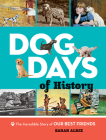
 

Support Independent Bookstores - Visit IndieBound.org Dog Days of History: The Incredible Story of Our Best Friends by Sarah Albee

Delve into the history of our lives with our beloved canines with this book filled with interesting tidbits of historical pet facts.


Support Independent Bookstores - Visit IndieBound.orgEverything Dogs: All the Canine Facts, Photos, and Fun You Can Get Your Paws On!  by Becky Bains

Examine everything about dogs in this great resource book. Readers will explore breeds, history, and more to discover what makes dogs our “best friends.”


Support Independent Bookstores - Visit IndieBound.org Sniffer Dogs: How Dogs (and Their Noses) Save the World by Nancy Castaldo

Why and how do dogs use their noses to help us in so many ways? Delve into the science and the extraordinary tales of these super sniffing canines.


Support Independent Bookstores - Visit IndieBound.org Puppy Training for Kids: Teaching Children the Responsibilities and Joys of Puppy Care, Training, and Companionship by Colleen Pelar and Amber Johnson

This is a great book for families with a new puppy. Get training tips, advice, and more in this title for young dog owners.


Support Independent Bookstores - Visit IndieBound.org Poop Detectives: Sniffer Dogs in the Field by Ginger Wadsworth

Discover dogs helping scientists in the field in this well-researched book about conservation canines.


Support Independent Bookstores - Visit IndieBound.org National Geographic Kids 125 True Stories of Amazing Pets: Inspiring Tales of Animal Friendship and Four-legged Heroes, Plus Crazy Animal Antics by Nat Geo

A perfect book of heart-warming and hilarious stories for the animal-loving reader who may or may not have their own pet. These stories will inspire and entertain.


Support Independent Bookstores - Visit IndieBound.org Inside of a Dog, Young Readers Edition: What Dogs See, Smell, and Know by Alexandra Horowitz, illustrated by Sean Vidal Edgerton  

This young readers edition of the popular adult nonfiction book gives children a glimpse into understanding a dog’s behavior. A great book for budding animal cognition scientists and dog trainers.


Support Independent Bookstores - Visit IndieBound.org Finding Gobi: Young Reader’s Edition: The True Story of One Little Dog’s Big Journey by Dion Leonard and Aaron Rosenberg

An inspiring and heartfelt look at one dog’s rescue. This edition brings this fantastic story of friendship to younger readers, who will appreciate the challenges of an 80-mile race and the struggle to give Gobi a real home.


STEM Tuesday book lists prepared by

Nancy Castaldo has written books about our planet for over 20 years including, THE STORY OF SEEDS: From Mendel’s Garden to Your Plate, and How There’s More of Less To Eat Around The World, which earned the Green Earth Book Award, Junior Library Guild Selection, and other honors. Nancy’s research has taken her all over the world from the Galapagos to Russia.  She strives to inform, inspire, and empower her readers. Nancy also serves as the Regional Advisor of the Eastern NY SCBWI region. Her 2018 multi-starred title is BACK FROM THE BRINK: Saving Animals from Extinction. Visit her at www.nancycastaldo.com  

And she is the proud mom of a rescued Bichon named Boo Radley. 

Patricia Newman writes middle-grade nonfiction that empowers young readers to act on behalf of the environment and their communities. A Sibert Honoree for Sea Otter Heroes, Newman has also received an NSTA Outstanding Science Trade Book Award for Eavesdropping on Elephants, and a Green Earth Book Award for Plastic, Ahoy! Her books have also received starred reviews, been honored as Junior Library Guild Selections, and included on Bank Street College’s Best Books lists. During author visits, she demonstrates how young readers can use writing to be the voice of change. Visit her at www.patriciamnewman.com.


When Hitler Stole Pink Rabbit Still Relevant

When Hitler Stole Pink Rabbit

When beloved children’s book author Judith Kerr passed away in May at the age of 95, I’d been about two weeks into reading to my two sons her classic and still relevant middle-grade novel When Hitler Stole Pink Rabbit.

This was a seminal book for me as a child: I read it over and over again and vividly remember parts of it to this day. I had great feelings—and memories— for the book, but never particularly thought about who wrote it. When I moved to London 25 years later however, I discovered that in fact its author, Judith Kerr, is the creator of some 30 picture books. This includes one of the most classic children’s books here in England: The Tiger Who Came to Tea which I had immediately fallen in love with.

Two Sequels

In that first year we lived in London, I made another surprising discovery, at least to me: When Hitler Stole Pink Rabbit actually has two sequels—Bombs on Aunt Dainty which is more upper middle grade or possibly YA, and A Small Person Far Away, which I would also classify as YA or possibly even adult. They’re all fictionalized versions of Judith Kerr’s own story of being a refugee from Germany as Hitler came to power. 

When Hitler Stole Pink Rabbit starts when its main character, Anna, is nine, and ends when she is 11 going on 12, which is roughly my own age range when I read this book over and over again. Now an adult myself, it was fascinating to read the continuation of Anna’s life into adulthood. And in essence the three books together are a bildungsroman: the story of the artist as a young woman. But while I greatly enjoyed discovering and reading the two sequels, something held me back from re-reading When Hitler Stole Pink Rabbit as an adult. I think I was probably afraid—what if it didn’t hold up to how I remembered it? And when considering a beloved childhood book to read to my kids there is always the extra risk of them hating it, not getting what’s so great about it, or finding it BORE-ING!

When Hitler Stole Pink Rabbit Still Relevant

But the story in When Hitler Stole Pink Rabbit, which was first published in 1971 and takes place in 1933-36, seems highly relevant right now and I sensed my sons were at a good age for it —at least to try. In any case, I needn’t have worried. The two boys, ages eight and ten, were enthralled. Every night they would literally beg me to read, and read more! In fact, the book not only holds up to how I remember it, but is even deeper.

There were several occasions on reading it—and not ones that I remembered from childhood—in which I was moved to tears. And reading the chapters each night with my sons provoked great questions and discussions. The story is not only so relevant now because of the refugee crisis, but it introduces children to Hitler coming to power and to anti-semitism—as well as the idea of racism—in a forthright and age-appropriate way. It “talks up” to them in a way that both the ten-year-old and the eight-year-old could handle and appreciate.

Pink Rabbit and Writing Craft

But it’s as a writer now myself that I marveled most.

Children's Book Still Relevant Today

I can’t find the cover image I remember from childhood but I adore this one from the edition I read with my sons

Judith Kerr expertly crafted When Hitler Stole Pink Rabbit yet with the lightest of touches so it’s only now that I realize what a feat the book is.

She is telling the story of her life and her family’s experiences, but instead of it being a series of “this happened,” “and then this happened,” it is all harnessed to a cohesive story that has a beautiful narrative shape. She writes in an afterward that although she “filled in the gaps with invented detail” and was writing in the third person about a girl called Anna (because she felt that as a middle-aged English woman she was no longer the same little German girl that had fled the Nazis) she decided early on in the project “that all the important things must be true—the things that happened, how I felt about them, what we, our friends and the places we lived in were like.”

I have recently been reading many books on writer’s craft as I work on a major redrafting of my novel, and I am struck and awestruck at how Judith Kerr accomplished this. For one thing, there is an efficiency to each vignette so that no episode is random (even if it might delightfully seem that way at first) and each comes together in service of the greater story or theme—which is that Anna doesn’t feel like a refugee because as long as her family has stayed together that is her home.

For another thing, Judith Kerr has a way of mining the quiet moments for their drama and humor, while what is truly frightening or deeply upsetting (especially read through the eyes of an adult) are handled with a feather-weight dexterity so that they are not made light of but they are not so scary so as to no longer be appropriate for a children’s book. I think a lot of this comes down to her success at seeing everything through a child’s eye and staying true to that perspective. She doesn’t shy away from depressing moments, that sometimes one feels low, or that bad things happen. But through it all there’s a general positivity and the assurance of grown ups.

Overall, re-reading When Hitler Stole Pink Rabbit with my sons, I experienced both nostalgia for how I felt about it as a child, a re-ignition of my love for it, and an all-new feeling of admiration and aesthetic connection. It gave me great joy to read. I wish I could write like her! I will continue to study her novels and figure out just how she did it. Judith Kerr’s work is a huge inspiration to me and children’s literature is richer for her legacy.


Inside the Chappaqua Children’s Book Festival with Dawn Greenberg

Dawn Greenberg and Sally Cook

  THE SEVENTH ANNUAL CHAPPAQUA CHILDREN’S BOOK FESTIVAL brings together exciting authors, favorite characters, and heartfelt stories for children and teens. This small, welcoming town is the place to make a lasting connection between young readers and books. How did this wonderful event come to be? I asked founder, Dawn Greenburg that question–and lots of others.


Q.      What was the intent of the original Chappaqua festival?  How, if at all, has it changed?

DG      We remain focused on our original intent with the Chappaqua festival: to connect authors and readers.   I probably didn’t fully grasp what that meant originally, but in truth there is something so special about seeing a kid chatting away unguarded to an author they only met before in the pages of a book. We want kids to love books but we also want them to realize that the act of writing is as simple as putting pen to paper and letting your mind go. In having our authors explain how and why they write what they do, I think it greatly expands our kids view of what they can capture with their own words.

The beauty of our festival is that the excitement is palpable as those connections happen. I hear from so many parents and community members their gratitude and relief that we have shown that books still matter in our digital world — and that we bring so much excitement to our sleepy town one day each year.


Q.      Can you remember a book that made an impression on you in middle grade?

 DG      I was a voracious reader and had read all of the Nancy Drew books by second grade. From there, I think I graduated to Agatha Christie.  I grew up in a small town and much like Miss Marple, I fancied myself able to see the intrigue beyond the picket fence.


Q.      In October, Chappaqua will host its seventh annual book festival. Does any year stand out as memorable to you, and why? Do you have a story to share about a glitch, dilemma, or mini crisis that popped up in any year?

 DG      Every year I say the festival was the best ever and we’ll never top it. I log almost 20 miles on festival day making sure our authors are happy and that everything is glitch-free. We’re on our feet from 5 am to 8 pm when the last box is packed away. We try to present a “what me worry?” face to the world, but we fuss over every detail to make sure the day works. However, there is always, without fail, one book that doesn’t arrive. We work on our order for months and go line by line with our fastidious book handler and yet we still manage to have a shipment that doesn’t come.  The first few years, it would absolutely ruin my day, but I’ve learned to take it a little more in stride.


Q.      What advice would you give adults about attending the fair with their kids?

DG   My best advice on festival day is to have a plan using our website author biographies, but allow for a lot of serendipity. With this many authors, you should try to make a list of the top ten or 15 that are “must sees” for you. We are trying to help that process greatly with more maps and color-coded guides this year, hopefully even an app. But you’ll be amazed at the authors that you’ll find just by wandering.   Our area is so very rich with marvelous and celebrated authors! You should keep your eyes open and your energy high for chance encounters. You should prioritize authors who aren’t from our immediate area — Jarrett Krosoczka, Cece Bell, Cynthia Levinson, Kate Messner — because we can’t guarantee they’ll be back next year.


Q.      Do you have any great tips for authors about how to be a success at a book fair?

DG      For authors, I’d suggest arriving rested and relaxed.   The first 30 minutes can be a bit overwhelming as everyone rushes to find their table, but you’ll settle in soon. In fact, we ask our local orchestra to provide a three-piece ensemble from 9-10 am to keep everyone’s nerves under control. Authors who bring something cute and eye-catching seem to do well with the youngest readers. For example, Diana Murray’s unicorn horn is a huge hit.  But giveaways aren’t necessary. A colorful pile of books and a warm smile is enough.


Q.      I read that you’ll be hosting 145 authors this year. Last year there were 90. What are the challenges of putting together such a huge fair? What innovations can we look forward to?

DG   In addition to adding almost 50 authors, we will have a kick off keynote address by Jarrett Krosoczka and three author panels. We were given the approval to expand our “footprint” on the school fields, so we’ve taken the opportunity to add even more authors we admire — including SIX Project Lit Club authors — and to add panel discussions.   Additionally, we’ll be closing the street in front of the field, which will allow a bit more of a flow for our families as well as easy access to the town gazebo where we’ll hold our author readings. We’re also thrilled that KidLit TV will be on hand and authors will be interviewing each other and streaming live from the festival!  We hope to create a lot of wonderful content from those interviews. We love when our authors have time to catch up and discuss future collaborations.

Mark your calendar for Sat, Oct 5th, 2019 @ Bell Middle School in Chappaqua, NY 10514. Rain or Shine.

#chapbookfest   @chappaquabookfestival

DAWN GREENBERG and a group of friends founded the Chappaqua Children’s Book Festival in 2013. Since then it has grown from 65 authors to 145 from all across the northeast.  In her professional life, Dawn managed international rights for United Feature Syndicate and Warner Bros./DC Comics. She is the mom of two boys, 16 and 13. She believes books can change lives.


Author Phyllis Shalant (aka Annabelle Fisher) and reader find an amazing connection at Chap Book Fest