Posts Tagged kidlit

Interview with Author Naomi Milliner

Today, it is my pleasure to welcome Naomi Milliner to the Mixed-Up Files! I first got to know Naomi after reading her funny and deeply touching 2019 debut, Super Jake & The King of Chaos. She then went on to co-edit and contribute to the MG anthology On All Other Nights, a collection of short stories centered on the Jewish holiday of Passover. Her sophomore MG, The Trouble with Secrets, a heartfelt story of a tight-knit Jewish family impacted by secrets and tragedy, has been lauded by Kirkus asA touching, intimate exploration of universal themes of trust, conformity, and the impact of family dynamics,” and by author Jeff Zentner asA moving, gorgeous, and life-affirming exploration of grief, faith and how we can build ourselves a joyous life after everything seems to have fallen to pieces.” The book is out tomorrow, April 8, from Quill Tree Books.

The Trouble with Secrets: A Summary

Twelve-year-old Becky has great expectations placed upon her. Not only does she need to be as perfect as her older brother and sister, but her upcoming bat mitzvah needs to be perfect, too. She is the rabbi’s daughter, after all. The trouble is, Becky’s intentions often lead her astray. At least when she plays the flute, she feels like the best version of herself. Until playing the flute causes Becky to do something not so perfect: keep a secret from her parents.

Then Becky discovers that Sara, her “perfect” sister, has an even bigger secret; one that could turn the family upside down. The sisters couldn’t be more ready to keep each other’s secret safe…until the excitement turns to guilt, and Becky is forced to make an impossible choice.

MR: Welcome to the Mixed-Up Files, Naomi. I’m so happy to have you here!

NM: Thanks so much, Melissa! There is no place I’d rather be. 🙂

Inspired Choices

MR: First, I have to tell you how much I enjoyed The Trouble with Secrets. It was incredibly touching, warm, and highly relatable. Can you tell us a bit about the novel? What inspired you to write it?

NM: Thank you! Secrets is a before-and-after story: before there are secrets; before there are consequences of those secrets; and after everything changes as a result. In fact, before and after play such a pivotal part that the book is divided into two sections: Part One (Before) and Part Two (Now). Although I do sprinkle glimpses of Now throughout Before, to warn readers that Something Bad Is Coming!

As far as the original inspiration… it was a very minor subplot in a TV show I loved back in the day (whose name shall remain a secret!). Although the storyline involved a pair of teenage siblings, they actually never had a single scene together!

Character Study

MR: Becky Myerson, the 12-year-old protagonist, is a flawed but incredibly likeable character. She may not always do the right thing, but the reader roots for her nonetheless. What’s the secret to creating believable and nuanced characters, warts and all?

NM: I think fictional characters, like the rest of us, have to be flawed to be believable. And, so long as their flaws are relatable and understandable – maybe even justifiable (lying to protect a friend or sibling; doing something bad for a good reason) – a character can remain sympathetic.

The Magic Flute
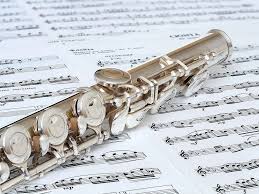
MR: Another important aspect of Becky’s character is her love for music (she plays the flute). Are you a flautist, Naomi? If not, what kind of research did you do to make Becky’s love for the flute so realistic?

NM: I am not a flautist, but I did piano for ten years when I was much younger. My husband and younger son, however, do play the flute, and my older son plays trumpet and a few other instruments – and is a music teacher. Both of my sons were in All-County, and my older one was in All-State as well as All-County Jazz, so I had plenty of inspiration!

Secrets: A Slippery Slope

MR: Secret keeping is an important, overarching theme in this book. What were you trying to say about secrets, and the burden of keeping them?

NM: Keeping secrets can be a slippery slope! They can be fun and exciting, but also have the potential to cause harm – sometimes minor, sometimes major. They can bring people closer together or tear them apart. In Becky’s case, she suffers double the guilt by keeping two secrets, her own and her sister Sara’s; on the other hand, she would feel just as guilty if she betrayed her sister’s confidence. Keeping her own secret is hard enough; keeping her sister’s proves to be even more difficult. There’s really no way she can win.

Exploration of Grief

MR: Another important theme in your book is grief, and how people grieve in such different ways. You explored this theme in Super Jake & the King of Chaos, too. Could you speak more to this?

NM: Thank you for asking. You have such a good memory! I did explore that theme in Super Jake, as well as “Chocolate Tears,” the short story I wrote for On All Other Nights. Apparently, I’m still not done exploring it!

As painful as grief is, we all experience it at one age or another: there is no avoiding it. And there may be no getting over it. But there is getting through it. When I hear that my stories have helped readers (both children and adults) cope with their own losses, it means everything.

Jewish Joy

MR: The Trouble with Secrets is a book that oozes Jewish joy: Becky comes from an observant Jewish family, and her dad is a rabbi. Your debut novel, Super Jake, also features Jewish themes, and the MG anthology you co-edited and contributed to, On All Other Nights, celebrates the Jewish holiday of Passover. Can you tell us why it’s important for you to feature Jewish characters and themes in your books?

NM: The simple answer is, “Write what you know.” I was raised in a very religious family (my grandfather and mother were both Hebrew school teachers and principals; my brother is a rabbi), and Jewish holidays like Passover and Hanukkah were, and are, part of what makes me, me. Some of my fondest childhood memories are tied to Jewish holidays and events, and I did my best to share them with my own children, from participating in our synagogue’s musical services to blowing the shofar on the High Holidays. I am proud to share my Jewish heritage through my books and characters, and hope that all readers can relate in some way.

Path to Publication

MR: Can you tell MUF readers about your path to publication? Was it smooth sailing, choppy seas, or a combination of both?

NM: How long is this interview? 🙂 I guess, in the end, it was a combination. My debut novel took 16 years from first draft to publication (not that I counted)! But the anthology came together quickly (probably thanks to my incredible friends and coeditors, Chris Baron & Joshua S. Levy), and Secrets was acquired just a few weeks later. However… the current version of Secrets is not the original, which I had first written, several years ago, as a YA novel.

The Caffeinated Writer

MR: What does your writing routine look like? Do you have any particular writing habits or rituals?

NM: Nothing gets done before I am fully caffeinated. And fed. And, preferably, after a few word games on my phone… what was the question? 🙂 I am not one of those writers who are disciplined enough to get up at the crack of dawn and write for three hours straight. But, somehow, I always make my deadlines – usually ahead of schedule. And when I’m excited about what I’m writing, I can be found happily scribbling away (yes, I write the first draft in longhand) late into the night, or even sending myself emails on my phone when I come up with a bit of dialogue or a scene I don’t want to forget.

MR: What are you working on now, Naomi? Care to share?

NM: Sure! Thanks for asking. My next book is about four girls who meet at the beach, become fast (and lasting) friends, and try to help each other: save a pet store; uncover a secret origin story; and keep a marriage from falling apart. I’m also revising another mg book about a girl who is an unreliable narrator, which is proving to be a fun challenge!

Magnificent Mah Jongg!
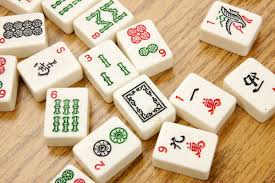
MR: And finally, rumor has it that you’re an avid mah jongg player. (Okay, it’s more than a rumor. I know you love the game as much as I do! 🙂 ) How did you first get interested in mah jongg, and why does it appeal to you?

NM: I was always curious and intrigued by the tiles! I grew up loving board games and card games, but this was something new. My favorite thing is that there is a new card every year, and each card presents endless combinations, so it never gets old or predictable. I only wish my mom had been around when I finally learned how to play. She would have loved it – and been amazing at it. We would have had a lot of fun.

 Lightning Round!

Yellow graphic lightning bolt

MR: No MUF interview is complete without a lightning round, so…

Preferred writing snack? Chocolate. Period.
Coffee or tea? Coffee in the morning; tea in the afternoon.

Cat or dog? This one is tricky. We have a (very fuzzy, sweet and adorable) cat, but I really do love dogs… But what I really want is a quokka! 🙂
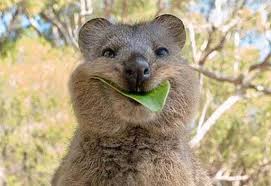
Zombie apocalypse: Yea or nay? Nay.

Superpower? Can it be losing weight while still eating whatever, and whenever, I want?

Greatest indulgence? See preferred writing snack above. 🙂 Also books, whether by the armload from local libraries and bookstores, or a filled-to-the-brim virtual cart.

Favorite place on earth? Highlights. No question. I have formed wonderful and lasting friendships (see Chris Baron and Joshua S. Levy above) at this magical place. It is bursting with talented, creative writers and illustrators, and it’s impossible to leave feeling uninspired (or hungry).

If you were stranded on a desert island with only three things, what would they be?

My 1900-page Riverside Shakespeare (and reading glasses!); Hermione Granger’s fabulous expandable bag (filled with essentials like sunscreen, conditioner, non-perishable foods, and emergency flares); and either Tom Hanks – he knows a thing or two about being a castaway! – or Tom Hiddleston, because he would make excellent use out of the Shakespeare tome… and is tall enough to get plenty of coconuts down from the tree!

MR: Thank you for chatting with us, Naomi—and congratulations on the upcoming publication of The Trouble with Secrets. I thoroughly enjoyed it, and I know MUF readers will, too!

NM: Thank you, Melissa!

Bio:

Naomi Milliner is the author of Super Jake & the King of Chaos (Running Press Kids) and The Trouble with Secrets (Quill Tree/HarperCollins), as well as coeditor and contributor of On All Other Nights, a Junior Library Guild Selection. She created the Author Book Club for her SCBWI chapter, served on The Women’s National Book Association’s Great Group Reads Committee since 2009, and enjoys mentoring both children and adults. Naomi lives in Olney, Maryland, with her family, too many books to count, and one very fuzzy cat. Learn more about Naomi at https://naomimilliner.wordpress.com.

STEM Tuesday– Naturalists — Book List

A naturalist is a person who observes plants, animals and fungi, and looks at how they fit into their environments. You don’t have to go to a special school to learn how to be a naturalist; you just have to be curious. Here are a few books about naturalists, and how you can become one.

I Begin with Spring: The Life and Seasons of Henry David Thoreau by Julie Dunlap and Megan Elizabeth Baratta

Henry Thoreau collected leaves and arrowheads from a young age. He could tell when skunk cabbage was blooming by smelling the air. As an adult, he kept copious notes about nature, sending samples and observations to scientists. Observant readers will enjoy the timeline that runs along the bottom of the pages. Back matter dives into phenology (botanical signs of the seasons) and how Thoreau’s work has helped modern scientists understand climate change.

Wildheart: the Daring Adventures of John Muir by Julie Bertagna

Beginning with boyhood in Scotland and continuing with his adult life in the US, this book presents John Muir’s life in graphic novel format. Muir, more famous as founder of the Sierra Club, was a careful observer of nature. His study of glaciers in Alaska informed his understanding of Yosemite.

Darwin’s Rival: Alfred Russel Wallace and the Search for Evolution by Christiane Dorion

This is an adventure story – a tale of exploration, field research, shipwrecks, and a friendship between two naturalists that evolved over time. Both Wallace and Darwin wrote about natural selection and the evolution of new species. But instead of competing against each other for credit, both tried hard to treat each other fairly – to the benefit of all. Filled with maps and spreads showing diversity of beetles, butterflies, and birds.

The Incredible Yet True Adventures of Alexander Von Humboldt: The Greatest Inventor-naturalist-scientist-explorer Who Ever Lived by Volker Mehnert

Another adventure story of two naturalists — Alexander Von Humboldt (a young German inventor who from childhood preferred exploring nature) and Aimé Bonpland (a young French doctor who preferred studying plants and rocks) — who undertook the first scientific expedition into South America’s rainforest and the Andes mountains. Stunning illustrations highlight their discoveries of plants, geology, animals, and cultures unknown to anyone in Europe. As well as Alexander’s later trek through the wilds of Siberia. His books and lectures inspired a generation of naturalists and scientists – including Charles Darwin. With a conversational tone, maps, and direct quotations, this book brings to life their fascinating, daring, and harrowing adventures.

The Lady and the Octopus: How Jeanne Villepreux-Power Invented Aquariums and Revolutionized Marine Biology by Danna Staaf

From making hats to fine dresses for wealthy Parisians, Jeanne Villepreux put her sewing skills to work. When she had the freedom to study nature, she got interested in sea creatures. Could she bring them into her house like she did caterpillars and turtles? She invented aquariums for holding sea animals, and began to study small octopuses called argonauts that lived in the local waters. Back matter includes “how to be a naturalist.”

What Linnaeus Saw: A Scientist’s Quest to Name Every Living Thing by Karen Magnuson Beil

As a boy and young man, Carl Linnaeus also preferred exploring nature to his studies. This engaging and exciting biography follows his adventures and discoveries in the Scandinavian Mountains, research into the scientific mysteries of unknown animals and plants, and dreams to catalogue every plant and animal in the world. Ultimately, his frustration at a lack of consistency in cataloguing plants and animals, led Linnaeus to create the classification system still used today. Includes period illustrations and maps, scientific update sidebars, direct quotations, and intensive back matter.

Steve and Bindi Irwin by Amy Breguet

From childhood, Steve and Bindi Irwin, where both raised to be modern-day naturalists and conservationists. Filled with great photos, fascinating side bars, and a fair review of controversies, this is a great look at their relationship and dedication to animals, tireless work to preserve wild spaces, and drive to inspire others to preserve and protect nature. Back matter offers numerous ways to get involved.

You Can Be a Naturalist, Too!

The Observologist: A Handbook for Mounting Very Small Scientific Expeditions by Giselle Clarkson

This book presents four potential sites for conducting naturalist expeditions, along with the sorts of things one might observe while there. They are easily accessible to kids of all ages and include a damp corner (perfect site for discovering more about centipedes and fungi), pavement (great habitat for ants and worms) and weedy patches.

Be a Nature Explorer!: Outdoor Activities and Adventures by Peter Wohlleben

This book is filled with 52 activities that range from following slugs and snails to mapping plants that move. In addition to a pencil and notebook, Wohlleben suggests a few other things to take along including plastic containers, a hand lens, binoculars, and maybe a cell phone with a camera and a nature app.

The Naturalist at Home: Projects for Discovering the Hidden World Around Us by Kelly Brenner

The 20 individual projects specify the season(s) and study topic involved and specific materials needed. The projects range from creating a woodland in ajar, sugaring for moths, and finding tardigrades. With wonderful illustrations, a general naturalist toolkit, easy to follow steps, sidebar tips and warnings, and a few bonus activities, this is a great book for budding naturalists.

The most important book – is the one you’ll use to collect your notes and drawings.


This month’s STEM Tuesday book list was prepared by:

Sue Heavenrich is an award-winning author, blogger, and bug-watcher. A long line of ants marching across the kitchen counter inspired her first article for kids. When not writing, she’s either in the garden or tromping through the woods. Her books for middle-grade readers include Funky Fungi: 30 Activities for Exploring Molds, Mushrooms, Lichens, and More and Diet for a Changing Climate. Visit her at www.sueheavenrich.com

Maria is a children’s author, blogger, and poet who is passionate about making nature and reading fun for children. She was a round 2 judge for the Cybils Awards (2017 – present), and a judge for the #50PreciousWords competition since its inception. Two of her poems are published in The Best of Today’s Little Ditty 2016 and 2014-2015 anthologies. When not writing, critiquing, or reading, she bird watches, travels the world, bakes, and hikes. Visit her at www.mariacmarshall.com.

Author Spotlight: Rosanne Parry + a GIVEAWAY

Author Spotlight: Rosanne Parry + a GIVEAWAY                                                            

Today, I’m excited to shine the Author Spotlight on children’s author and fellow MUF member Rosanne Parry! Rosanne’s latest MG novel, A Wolf Called Fire, praised by Kirkus as “an exciting and thoughtful portrait inspired by a real animal who succeeded by being different,” was out February 4 from Greenwillow Books and is a 2025 Junior Library Guild Gold Standard Selection and a #1 Indie Best Seller.

Interview with Rosanne

Welcome, Rosanne! Congratulations on the release of your beautiful new novel! It’s a pleasure to highlight the work of a fellow MUF member. A Wolf Called Fire is such a wonderful addition to the Voice of the Wilderness Series. Can you tell us a little background about what inspired these books?

Over the years I’ve gotten many letters from young readers who loved A Wolf Called Wander and were very worried about what happened to the brother he loved so much. So I was happy to return to the world of my wolf pack in the Wallowa Mountains. And there is much more research now about the dynamics of how wolf packs are lead and what kind of wolf grows up to be the alpha. So I wanted to explore how a wolf pup who starts out his life as the omega pup goes on to become a leader.

Point of View

It is so interesting that this story was inspired by a real wolf who became such an extraordinary pack leader, and I was amazed at how you were able to truly capture the point of view of an animal. I’d love to hear about your process and how you manage to write from this perspective so effectively. 

The work of reading fiction is to step outside of the self for a time and live as the fictional character does. So the work of the writer of fiction is to describe that fictional life and world with accuracy and detail that is not just vivid but accessible to the reader.

I have to reach out toward the wolf and ask myself what does this environment feel like. What color is the dirt and how does it feel under my feet and what does it smell like and what does the smell of this particular patch of dirt I’m standing on tell me about the world I need to survive in.

And then I also have to reach toward that child reader and ask myself what words will make this particular wilderness come to life. Because my reader has almost certainly never been to the backcountry of the Eagle Cap Wilderness and probably has not spent any time at all in the wilderness. So how can I choose words that will make them feel a part of that wilderness experience. It takes a lot of research and a lot of time spent in the actual settings of the story.

Voice

You describe the natural world so vividly through all the senses. Your writing is beautiful and lyrical. What advice do you have to new writers as they strive to find their voices?

I would encourage new writers to think of their voice as not so much something external to quest after, as though you might, at last, arrive at the Tree of Symbolism and pluck your own voice from among its fruits. Your voice has always resided within. So it’s more an enterprise of listening deeply to yourself and asking yourself what you hope to communicate in a particular story. And then thinking what a story needs in terms of tone and structure. Your own voice is already there. It’s more a matter of being humble enough to recognize it and proud enough not to let the editing process knock off all the interesting edges.

Characters

Along with Warm, the book includes many other memorable characters. Do you have a favorite secondary character? Who and why?

I really enjoyed writing Snow and Pounce in this story. Both are female wolves with plenty of leadership qualities who find themselves is a pack they don’t like. The one gathers her courage and leaves her pack. But the other quietly forms alliances within the pack she hates and in the end forms a new pack with them.

Back Matter

With its wonderful educational content, this book is sure to be a huge hit with teachers, and the exciting, fast-paced story and beautiful illustrations throughout will be so appealing to kids. Your back matter is very interesting and an excellent supplement. Young readers are going to absolutely adore learning about the real wolf behind the story, as well as the map of Warm’s journey and the pictures of the animal tracks. I love all you say about how kids can make a difference. How did you decide what to include in the back matter? 

When the first Voice of the Wilderness book was written I could not find an American publisher for it, so it was the British publisher Andersen Press who took it on. I had a meeting with them in London when we were at the beginning of the editing process. A British audience knows so little about the American wilderness that we talked at length about how to make the text accessible to them. Illustrations were my editor’s idea. I asked for the back matter to make the book work for teachers who also have to teach map reading and ecosystems and natural history and human history. They agreed that teachers need every bit of support we can offer, and so they set the standard for the books that followed. I’m grateful that Greenwillow has stuck with the format because the price of paper is rising and absolutely every page counts.

What was your biggest challenge in writing this story?

Greenwillow was very keen to have FIRE come out in 2025–their 50th anniversary year. And my approach to writing is not a speedy one. Honestly, the biggest challenge was getting the story researched and written in time to have it so beautifully illustrated and designed. It was a huge team effort. Much gratitude to the illustrator, Mónica Armiño, art director Sylvie Le Floc’h, and editor Virginia Duncan.

Writing Process

Will you tell us a little about your writing process? Where/when do you prefer to write?

I love to write outside when it’s warm enough for that. My treehouse is a favorite spot, but the truth is I can write almost anywhere and I often have to make due perching in whatever space is available. Research is probably the most defining aspect of my writing. I do a lot of it and it requires a fair amount of camping at the moment. Fortunately I love that!

Takeaways

What do you hope readers take away from this story?

Literacy is my primary objective. Because it’s a relatively short book, it’s often a 7 or 8 or 9 year olds first middle grade novel that they have read on their own, and they are a better reader by the time they get to the end of it. I want my reader to feel empowered to read ever more complex and challenging books and newspapers. I want them to care about the wilderness and believe that they have something to say in the defense of land and creatures who cannot speak for themselves.

Influences

What are some current books that have influenced you as a kidlit writer?

I really enjoy books that test the limits and try something new. Virginia Euwer Wolff is a long time friend and mentor. She’s also one of the first YA authors to write in verse. Her Make Lemonade was a game changing read for me.

I have heaps of admiration for Brian Selznick who pioneered an alternating text and sequential illustration story that stands apart from all the rest and makes me think about story in new ways every single time. If you haven’t read The Invention of Hugo Cabret, you are in for a treat.

I’m also a big fan of the graphic novel Little Monarchs by Jonathan Case. It’s a climate future story about a middle school girl and her scientist guardian who are traveling a west coast almost devoid of humans. The story alone is fabulous but the author included non-fiction touches large and small that I very much appreciated. There are pages of the main character’s homework which provide useful back story and fun facts. There are directions on how to tie knots or get into a backpacker’s hammock or navigate by stars. Every new setting has the GPS coordinates in case you wanted to find the place for yourself. A real innovation — blending traditional graphic novel panels with the finest in illustrated nonfiction.

Can you give us some insights into what you’ll be working on next?

My next Voice of the Wilderness novel will be about ravens.

And for the lightning round:

Coffee or tea? Cocoa

Sunrise or sunset? Sunset

Favorite place to travel: The homeward journey has always been my favorite.

Favorite dessert: Ice cream

Superpower: Moral Courage and Compassion are the superpowers we most need.

Favorite music: When I was writing A Wolf Called Fire I listened to a lot of classical pieces by Vivaldi and Respighi. They made me think of the forest.

Favorite book from childhood:  A Wizard of Earthsea by Ursula LeGuin

Thanks again, Rosanne! It was so much fun to learn about you and get a behind the scenes look at your amazing novel! Learn more about Rosanne on her website and follow her on Instagram.

Bio

Rosanne grew up in Oregon loving its wild places and fabulous libraries.  She’s the author of the bestselling Voice of the Wilderness novels and nonfiction picture books. Her newest is A Wolf Called Fire. Rosanne sells books at Annie Blooms, and writes in a treehouse in her backyard.

For a chance to win a signed copy of A Wolf Called Fire, comment on the blog!  (Giveaway ends March 17, 2025 MIDNIGHT EST.) U.S. only, please.