
In the fall of 2014 I attended my first SCBWI-British Isles conference and met Peter Bunzl. Another Scoobie (as SCBWI is affectionately known in the UK) friend was in his conference critique group and introduced us when it was over. A second friend was in the same group and said that Peter’s excerpt had literally made her cry. Soon we all joined together in a middle grade critique group regularly meeting up back in London; and I too was immediately taken by Peter’s steampunk adventure novel about a girl and her mechanical fox searching for her missing airship pilot and inventor father.
A few months later we celebrated Peter getting an agent, and a few months after that we celebrated COGHEART being sold as the lead title in Usborne’s 2016 list. It came out in September 2016 and was simultaneously chosen as Waterstones Book of the Month; a huge deal for a debut. Four years later Peter’s fourth COGHEART ADVENTURE book, SHADOWSEA has just been released in the UK, and the award-winning first three volumes —COGHEART, MOONLOCKET, AND SKYCIRCUS are now available in the US with Jolly Fish Press. (SEE BELOW FOR HOW YOU CAN WIN ALL 3 BOOKS.) I am so pleased and excited to welcome Peter Bunzl to The Mixed Up Files!


MD: Hi Peter, thanks so much for joining us!
PB: Thank you for having me, it’s lovely to be here!
MD: The world in the Cogheart adventures is so much fun with mechanicals (mechanical animals and people) and other distinctive and unique details. How did you come up with the world of the Cogheart adventures and did anything help you with your world-building?
PB: Thanks! The inspiration came from reading about the clockmaking geniuses of the 18th and 19th Century who built the first automata and androids. It was their desire to create artificial life – or an illusion of life – which really chimed with me as a writer and animator. Someone who’s primary goal it is to make people believe in imaginary characters with all their heart.
Those tales of clockwork robots and their creators helped me envisage a fictional Victorian world where mechanical-people and humans lived side by side. A world which begged the question: What makes us human, and could that spark of life ever exist inside a machine?
MD: Your story worlds are a cool mix of imagination and historical accuracy. When you are planning and writing a book, what kind of research do you do? Do you use mood boards or other visual prompts?
PB: Research plays a big part in the crafting my stories. I use Pinterest to save inspiring images and create mood boards for my projects. I collect Victorian photos of interesting looking people and locations. I also use Evernote to save research documents. Historical descriptions of the places the characters visit etc.
For the steampunk aspects of the story, I read about real airships, like the Graf Zeppelin and the Hindenburg. There’s lots of zeppelin battles in the Cogheart Adventures. I didn’t stick to the physics of flying, because I saw from great steampunk that you don’t have to, but I tried not to go too wild as this is an alternate reality not a total fantasy world.
In terms of the Victoriana, I wasn’t a fanatical researcher, quite the opposite. I prefer fiction that give a flavour of the era, rather than dry history books. So I read a little bit of Dickens for the atmosphere, Treasure Island for the adventure, and some Penny Dreadful type books like: Hooligan Nights and Mord Em’ly – for their sensationalist accounts of Victorian street life.
MD: Did you intend Cogheart to become a series? Once the emotional arc was completed for the characters at the end of the first book, how did you navigate creating compelling emotional journeys for your characters in each of the subsequent books? Did you find it difficult?
PB: In the beginning, I never intended to write a series after Cogheart, but when my agent, Jo Williamson, originally sold the book in the UK it was for a two book deal and it became apparent that the publisher wanted a sequel.
The lucky thing was, after writing the first book, I had a lot of different left-over bits and pieces that never made it into the story. And those became the basis for each of the subsequent adventures.
The obvious choice for the second story was to make it more about Robert’s family, because his history had barely featured in Cogheart. So that became Moonlocket. I had an idea that I wanted to write about a magician and a mysterious locket and that fed into the story too.
I had a couple of other left-over scenes from Cogheart. One where the characters visit a travelling circus. This eventually became Skycircus. There was also a pitch that the publisher turned down for book 2, that eventually became the basis of Shadowsea.
The moral of the story is nothing is ever wasted. So don’t throw your excess ramblings!
MD: Had you always intended to write for children?
PB: I actually set out to write for Young Adults first of all, but along the way my story turned into a children’s book because the plot and ideas were much more suited to that age group.
As soon as I realized that was the way it was going I wrote a little Post-it for myself with the words: MARVEL, MAGIC and HUMOUR on it. So I knew the things I needed to add more of in the edits.
The more I wrote the more I discovered that my ideas fitted well into the middle grade bracket. Before I was writing, I worked for ten years in the animation industry on various projects. I wrote and directed my own short films on the side and my scripts often featured child protagonists, so to me it didn’t feel a great leap from that to writing children’s fiction.
MD: How do you find the words and rhythm that characterize your stories?
PB: I don’t think anyone has ever asked me this question before! Thanks.
I suppose it has a lot to do with voice. Your voice as a writer, but also the specific voice of the story, which is either directly the character’s, in a first person book, or in a third person’s story like the Cogheart Adventures, it is part character-voice and part narrator-voice.
As you write a book, you start to get a strong idea of which of those is required, where and when. It has a lot to do with how the book sounds as you read it in your head during the editing process, and with who the characters are.
The Cogheart Adventures are written in third person, but the narration is always close to our heroes. Apart from the prologue, you never see or hear anything they don’t themselves. I would describe that style as ‘close third person’ or ‘over the shoulder’.
It has moments of free indirect style, where the narration is almost directly Robert and Lily’s point of view and you try to weave their words and thoughts into what they are experiencing. And moments which are more straight up narration.
Narration can’t be too intrusive, in my opinion. For me it should paint an exciting visual picture, but fade into the background in terms of its opinions. Although I feel it can be more stylized at the beginning and end of a story, where you’re trying to draw a reader in or wrap things up.
MD: What authors or creators have had a strong impact on your work?
PB: As a young reader I adored the quirky British fantasy of Diana Wynne Jones, Roald Dahl and Joan Aiken; I was forever popping into the bookshop to see when the next Terry Pratchett was coming out. More recently I loved Philip Pullman’s His Dark Materials series and his Sally Lockhart books, plus I enjoy a bit of Dickens, and greatly admire Mervyn Peake’s incredible Gormenghast stories.
They all influenced me in countless ways – some for plotting, others for character or worldbuilding; or poetic language, strange names and humour. When a stunning sentence leaps out at me from a book I underline it so I can refer to it later when I need writing inspiration.
MD: Your attention to detail and the images you create are often very visual. Do you find that your past work as an animator and filmmaker influences your writing?
PB: Coming from a background of animation and film, means that I will see the story very vividly in my head. As I write it unspools like a movie.
My years studying film also taught me a lot about story structure. How to tell a story economically and cinematically. There’s a grammar in film in the way you structure a sequence of shots that’s similar to the way you structure clauses and sentences in fiction. I’ve read some great books on both editing processes that highlight those similarities.
Each shot, or each sentence, should ask a question that’s part-answered and part-added-to by the next one and the next one. And yet each answer also withholds information until you’re ready to reveal it. That’s basically how to create the illusion of a developing story with suspense. It’s when you have the elements in the wrong order that it jars and seems off.
MD: What do you enjoy most about being a full-time children’s author and what do you dislike?
PB: I love meeting readers. Especially kid readers, because if they enjoy your book they’ll tell you so in no uncertain terms. They say things like: “You’re my favourite author of all time!” “Better than Roald Dahl!” “One of the best books I’ve ever read!”
Those kind of comments are ace, especially if they tell you personally or write you a letter with pictures of the characters they’ve drawn. All of their feedback is such a joy and it’s one of the best parts of writing children’s books.
The worst part is when you see a disparaging adult review online. Especially when they say things like: “I tried to read this book, but it seems like it was written for kids”. Don’t read bad online reviews, that’s my advice. Somehow they stick to your brain much more than the good ones. Maybe it’s their spikes that make them sticky.
MD: Your record of four books in four years is remarkable! And these are not short chapter books, these are 140-page middle grade novels with tight plotting and beautiful language. The UK tends to have a much shorter lead time for publishing than in the US, which is exciting in terms of seeing your book come out with a relatively short turn-around, but it also must be an enormous amount of pressure. What advice do you have for other writers—whether they are just starting out or already mid-career— in terms of ‘just getting it done?’ What does a typical day look like for you?
PB: Write what you love, not what you think the market is looking for. That way you will always have some joy in doing it, even on days when that joy is buried deep and seems unaccessible.
In terms of my writing process, I sit down at a desk and try and write for a few hours each day. I write on the computer and I use Scrivener, because I love the way you can keep all your documents and chapters together but separate. It lets you see the structure of your novel in one window and jump between different parts.
When I’m not writing I have a notebook for the ideas that come at odd times, and a writing diary where I try and keep track of my word counts and how it’s all going – just a short note for each day, so I know if I’m on track or not. That way you can assess your own progress. Give yourself a small gift if you hit your goal for the week or month, and a bigger gift if you finish the whole book.
MD: I’ve noticed that boys and girls equally enjoy your books. Can you speak to any secret sauce you’ve put in, or why you think your books are so appealing across what are sometimes considered traditional gender lines?
PB: I have no idea why this is. I think maybe because the books have both a boy and girl hero, who are equally brave and courageous, equally strong and equally good at problem solving and getting each other out of trouble.
I really don’t think books should be gendered anyway. As long as it’s age appropriate, boys and girls should be able to read anything they like without the publishing industry, or parents, deciding: “oh, pirates and space are for boys” or “princesses and cooking are for girls”. It’s nonsense. What’s more important is writing a good story that’s inclusive and empathetic and can appeal to everyone.
MD: Peter, thanks so much again for joining us at MUF. Your insights into your work, the writing process and writing philosophy are fabulous. Is there anything you’d like to add about your books to the writers, librarians, teachers and avid readers that enjoy our blog?

Peter Bunzl: Author of the Cogheart Adventures
PB: Thank you. If you are looking for more information about my books, I have a website: peterbunzl.com which has updates and links about all my books. It also has a great amount of teaching resources, created by me and the publisher and by teachers who sent me their brilliant suggestions and ideas. I am pretty active on twitter: @peterbunzl and instagram: @peter_bunzl so feel free to say hi over there too!
Thanks again Peter! Cogheart Adventures are available wherever fine books can be found.
Jolly Fish Press is giving away a copy of all three books to one lucky winner! Enter BELOW for a chance to win.
a Rafflecopter giveaway
(This giveaway is only available in the US.) The contest ends at midnight on February 19th and the winner will be announced on February 20th. GOOD LUCK!

 Welcome to STEM Tuesday: Author Interview & Book Giveaway, a repeating feature for the fourth Tuesday of every month. Go Science-Tech-Engineering-Math!

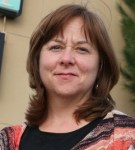 Your host is


 Lane Books) illustrated by Diana Sudyka. It is gorgeous! And I love that Diana implemented the two main characters (kids) as POC. Birding has often been characterized as a hobby for retired Caucasian people. That needs to change; the future of our planet and birds depends on it – Jason Ward @JasonWardNY is making great strides with this.
Also next fall – a picture book called, “Round” (S&S/Beach Lane Books) illustrated by Lisa Congdon. It’s premise is everything round in nature, from objects to elements to seasons and beyond.
And 2021 or ’22 – a picture book called, “Just You and Me” (S&S/Beach Lane), with illustrations by Alexander Vidal. Alexander also illustrated “I Love Birds!”
Lane Books) illustrated by Diana Sudyka. It is gorgeous! And I love that Diana implemented the two main characters (kids) as POC. Birding has often been characterized as a hobby for retired Caucasian people. That needs to change; the future of our planet and birds depends on it – Jason Ward @JasonWardNY is making great strides with this.
Also next fall – a picture book called, “Round” (S&S/Beach Lane Books) illustrated by Lisa Congdon. It’s premise is everything round in nature, from objects to elements to seasons and beyond.
And 2021 or ’22 – a picture book called, “Just You and Me” (S&S/Beach Lane), with illustrations by Alexander Vidal. Alexander also illustrated “I Love Birds!” Your host is