Posts Tagged diversity

Go Visual-Spatial with Maps and Middle Grade Books

I came across the phrase “carto-literate” in an article last week. The author was referring to geography skills, but it made me think of all the cool map-based activities one can offer readers of middle grade books. Maps, globes, and online mapping tools maintain a strong role in the study of history, geography, science, and math; however, the great benefits of using maps as learning tools can be extended to the reading experience, as well.  If you haven’t thought about utilizing map activities for literature selections in your classroom, home school, or library, consider these awesome benefits:

  • Maps immediately call up the use of Visual-Spatial skills, and might engage readers who are not quite as Verbal-Linguistic as others.
  • Maps promote flexible, creative thinking through the use of to-scale renderings and symbols.
  • Maps directly connect to math, science, technology, and research skills, and they promote discussions on cultural topics of inclusivity and acceptance. They also encourage an understanding of history, as borders and place names change over time due to migration, conflict, and political transition.
  • Maps also inspire the imagination with the notion of travel and adventure; after all, it’s easy to envision yourself as an explorer or treasure-seeker when you have a map in hand!

These activity ideas involving maps might inspire a more fulfilling reading experience, and will promote thinking and discussion on these and other titles.

1. Using a world map, locate and mark the literary settings of books that might be new to your library or books on suggested or curricular reading lists. Settings can be approximate or specific; sometimes, while specific names of roads or towns are fictionalized, the state or region is identified—giving students just enough context to pinpoint the setting on a map. For example, these recent MG books have specific or general settings that are “mappable”:

The Bridge Home by Padma Venkatraman (Chennai, India)

Ghosts by Raina Telgemeier (Northern CA)

The Book of Boy by Catherine Gilbert Murdock (Medieval France)

Finding Langston by Lesa Cline-Ransome (Chicago, IL)

North to Benjamin by Alan Cumyn (Dawson, Yukon)

Merci Suarez Changes Gears by Meg Medina (South Florida)

2. Use Google Maps to explore a realistic, named setting and discuss plot conflicts in terms of the story’s geography. Students can zoom in on locations, study city layouts, and even “drive around” neighborhoods in Street View. For example, when reading Jewell Parker Rhodes’s Ninth Ward, students can investigate through Google Maps the geography of New Orleans, and make connections to the impact of Hurricane Katrina.

3. Pinpoint the settings of books that share a historical time period on a map, and consider the ways in which location and culture impacted the plot and characters. For example, on a map of the world, mark the literary settings of books like these that take place in the time of WWII:

Milkweed by Jerry Spinelli (Warsaw, Poland)

The War That Saved My Life by Kimberly Brubaker Bradley (London, England and vicinity)

The End of the Line by Sharon E. McKay (Amsterdam, Netherlands)

Lily’s Crossing by Patricia Reilly Giff (Rockaway, NY)


4. Maps can help promote comprehension and increase the emotional value of a story when used in conjunction with the travels of a character. For example, readers can use a world map to trace the journey of Ebo, a refugee from Ghana, in Illegal, a graphic novel by Eoin Colfer and Andrew Donkin and illustrated by Giovanni Rigano.


5. In an exploration of their own world-building skills, readers can create maps for middle grade fiction with geography context clues. For example, readers can use close reading skills, logic, and imagination to draw a map of locations in Erin Entrada Kelly’s Hello, Universe, or for works that have a fantasy or purely fictionalized setting. Many MG fantasies showcase beautiful maps of the story’s settings, like Jaleigh Johnson’s The Door to the Lost. Readers can use these already-created maps to note plot points and trace the paths of characters.

6. A start-of-the-year icebreaker I’ve tried with success involves a world map, displayed in the classroom: each student shares the location farthest from home to which he or she has traveled and pins a marker on the map. Put a literary spin on this idea, and have readers share the book title they’ve read with a setting that is farthest from home. Each student can mark the map with the book title and author. A longer project idea might involve individual student presentations of plot summaries or book reviews.

Perhaps you’ll find a map activity here that suits your reader or students! Good luck to parents, teachers, librarians, writers, and readers of MG as we all head back to the classroom this school year.

STEM Tuesday — Pets! — Book List


Pretty soon we will be entering the “dog days” of summer, so why not let our STEM Tuesday blog reflect our love of dogs and other pets this month?

Support Independent Bookstores - Visit IndieBound.org Support Independent Bookstores - Visit IndieBound.org Dog Science Unleashed and Cat Science Unleashed by Jodi Wheeler-Toppen

These two titles offer readers fun science-based activities and experiments to do with their pets based on how the animals think, move, drink, and more.


Support Independent Bookstores - Visit IndieBound.org Mercy: The Incredible Story of Henry Bergh by Nancy Furstinger, illustrated by Vincent Desjardin

This biography about the founder of the ASPCA demonstrates how one person can make a difference in the world. His work led to the acceptance of the protection of animals.


Support Independent Bookstores - Visit IndieBound.org Support Independent Bookstores - Visit IndieBound.org How to Speak Cat and How to Speak Dog by Aline Newman and Gary Weitzman, DVM

Why do cats purr? Why do dogs wag their tails? These two titles will help readers understand what their cats or dogs are trying to communicate with their body language and behavior.


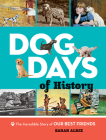
Support Independent Bookstores - Visit IndieBound.org Dog Days of History: The Incredible Story of Our Best Friends by Sarah Albee

Delve into the history of our lives with our beloved canines with this book filled with interesting tidbits of historical pet facts.


Support Independent Bookstores - Visit IndieBound.orgEverything Dogs: All the Canine Facts, Photos, and Fun You Can Get Your Paws On!  by Becky Bains

Examine everything about dogs in this great resource book. Readers will explore breeds, history, and more to discover what makes dogs our “best friends.”


Support Independent Bookstores - Visit IndieBound.org Sniffer Dogs: How Dogs (and Their Noses) Save the World by Nancy Castaldo

Why and how do dogs use their noses to help us in so many ways? Delve into the science and the extraordinary tales of these super sniffing canines.


Support Independent Bookstores - Visit IndieBound.org Puppy Training for Kids: Teaching Children the Responsibilities and Joys of Puppy Care, Training, and Companionship by Colleen Pelar and Amber Johnson

This is a great book for families with a new puppy. Get training tips, advice, and more in this title for young dog owners.


Support Independent Bookstores - Visit IndieBound.org Poop Detectives: Sniffer Dogs in the Field by Ginger Wadsworth

Discover dogs helping scientists in the field in this well-researched book about conservation canines.


Support Independent Bookstores - Visit IndieBound.org National Geographic Kids 125 True Stories of Amazing Pets: Inspiring Tales of Animal Friendship and Four-legged Heroes, Plus Crazy Animal Antics by Nat Geo

A perfect book of heart-warming and hilarious stories for the animal-loving reader who may or may not have their own pet. These stories will inspire and entertain.


Support Independent Bookstores - Visit IndieBound.org Inside of a Dog, Young Readers Edition: What Dogs See, Smell, and Know by Alexandra Horowitz, illustrated by Sean Vidal Edgerton  

This young readers edition of the popular adult nonfiction book gives children a glimpse into understanding a dog’s behavior. A great book for budding animal cognition scientists and dog trainers.


Support Independent Bookstores - Visit IndieBound.org Finding Gobi: Young Reader’s Edition: The True Story of One Little Dog’s Big Journey by Dion Leonard and Aaron Rosenberg

An inspiring and heartfelt look at one dog’s rescue. This edition brings this fantastic story of friendship to younger readers, who will appreciate the challenges of an 80-mile race and the struggle to give Gobi a real home.


STEM Tuesday book lists prepared by

Nancy Castaldo has written books about our planet for over 20 years including, THE STORY OF SEEDS: From Mendel’s Garden to Your Plate, and How There’s More of Less To Eat Around The World, which earned the Green Earth Book Award, Junior Library Guild Selection, and other honors. Nancy’s research has taken her all over the world from the Galapagos to Russia.  She strives to inform, inspire, and empower her readers. Nancy also serves as the Regional Advisor of the Eastern NY SCBWI region. Her 2018 multi-starred title is BACK FROM THE BRINK: Saving Animals from Extinction. Visit her at www.nancycastaldo.com  

And she is the proud mom of a rescued Bichon named Boo Radley. 

Patricia Newman writes middle-grade nonfiction that empowers young readers to act on behalf of the environment and their communities. A Sibert Honoree for Sea Otter Heroes, Newman has also received an NSTA Outstanding Science Trade Book Award for Eavesdropping on Elephants, and a Green Earth Book Award for Plastic, Ahoy! Her books have also received starred reviews, been honored as Junior Library Guild Selections, and included on Bank Street College’s Best Books lists. During author visits, she demonstrates how young readers can use writing to be the voice of change. Visit her at www.patriciamnewman.com.


STEM Tuesday– Tiny Worlds (Microscopic/Nanotech)- Writing Tips & Resources


Figuring on Figurative language


“What is it?” A small hand lifts a treasure toward my face. It is brown and round and was found along our rocky trail.

“What does it look like?” I ask as I lower his hand back down to my student’s eye level.

“No, I mean, what is it called?” His earnest eyes plead with me to identify it.

“I suppose it has a name, but I’d rather take a closer look.”

He looks at me like I’m being difficult, which I guess I kind of am. I often sidestep the step of labeling the treasures my students find as we explore outdoors. Instead, I pull out two jeweler’s loupes and hand him one. Holding the magnifier to my eye, I squat and lean over his hand. “Wow! It looks like the surface of the moon!” I lean back to give him a turn. “What does it remind you of?”

Five minutes later, my young friend has a list of 15 analogies (a farmer’s field, skin with pimples, crumpled paper bag, a lonely egg, …) and is drafting a poem based on this natural artifact.

No longer stubbornly stuck on “What is it?” his brain was free to observe and associate, think and create, synthesize and evaluate analogies. Deep thinking, all thanks to looking closely and a few careful probes.

Changing Scale

That trick of changing scale and asking questions works wonders for both scientific and writing work. Something about diving into microscopic worlds allows our mind to operate at a different cognitive level. We are no longer harnessed to the prescribed method of investigation, the expected question, the quantitative answer.

Take a look at some of this month’s highlighted books and you’ll see how “looking little” results in impressive investigations and fantastic language. Stephen Kamer’s Hidden Worlds: Looking Through a Scientist’s Microscope provides a great example. You’ll see stalks of mold described as “a bouquet of exotic flower,” saltwater diatoms which will remind you of a kitchen sponge, a butterfly mouth that looks like a spring.

When I am trying to strengthen figurative language in my writing, I look little and practice by looking at the world through my jeweler’s loupes. It’s not microscopic, but it does the trick. I learned this technique from The Private Eye Project, a program that provides professional development for educators on thinking by analogy. http://www.the-private-eye.com/index.html Once I started seeing analogies in the micro world, I couldn’t stop seeing them in the macro world. Train your brain (and your students’) and whole new worlds will be opened to you.


Try it Yourself

Let’s practice together with this image.

What does it look like?

Maybe:

Hair released from a braid

Waves

Rain drops sliding down windshield – stormy nights

Earthworm trails

The color of mountains, dried cactus, shredded wheat cereal

Chocolate milk

Now you add on to the list.

Keep going! There are no wrong answers here.

Notice how some of my items reminded me of additional, tangential items? That’s great. That means the mind is reaching further.

Be sure to write all of your items down. There are NO WRONG ANSWERS!


Let’s do another:

What does it look like?

Teeth – dentist

Cogs on a machine

Tiny fingers

Bristly like my doormat

Hands – hands coming together in huddle for sports team, the cheer from friends and family

Rows in a farmer’s field

Color of straw

Paint brush tips

Toothpicks – corn on the cob, summers at the lake, Grandpa

Add on to the list. Keep going! There are no wrong answers here.


Now, do this one on your own:

What does it look like?

Keep going! There are no wrong answers here.

Take it Further

  • Get a magnifier. Any magnifier will work but I prefer Private Eye’s loupes because they fit to my eye, blocking out all other distractions.
  • Select an object from nature. The more mysterious the object, the better, but it can be something simple like a leaf.
  • Ask yourself what it looks like. Write at least 10 things. For additional prompts, compare it to objects in the kitchen, your bedroom, sports equipment. Concentrate on the texture, the color, or one section of the object.

Wondering why I avoid identifying these nature treasures? When I label items that closes one door of possibilities to your mind. For developing figurative language, we want our minds as wide open as possible.


Heather L. Montgomery loves to look little. Thinking by analogy helped her write books such as Bugs Don’t Hug: Six-Legged Parents and Their Kids (Charlesbridge), Little Monsters of the Ocean: Metamorphosis Under the Waves (Millbrook Press), Something Rotten: A Fresh Look at Roadkill (Bloomsbury). For more about Heather, her work and her educational programs, visit www.HeatherLMontgomery.com.


THE O.O.L.F. FILES

This month, the Out Of Left Field (O.O.L.F.) Files provide links to amazing images to spark even more analogies. Dive in and enjoy!


Extraordinary Microworld of Dennis Kunkel

https://www.sciencephoto.com/dennis-kunkel-microscopy-collection

Science as Art

https://www.nature.com/news/science-as-art-wellcome-image-awards-2015-1.17118

Nikon’s Small World Photomicrography Contest Winners (From 1944 – present)

https://www.nikonsmallworld.com/galleries/photomicrography-competition

Scanning Electron Microscope Photography of David Scharf

http://www.scharfphoto.com/images