
Posts Tagged diversity

STEM Tuesday — Coding– In the Classroom


This month we’re focusing on coding. On our booklist, coding includes how to program computers, careers as a coder/programmer, and cryptography or secret codes.

This week is Computer Science Education Week, so it’s a great time to explore ways to incorporate coding ideas into lesson plans, scouting activities, and home learning. (Plus, it’s really fun.)

I tried to read the books like a codes and coding novice. This was a bit of a challenge. Prior to writing children’s books, I spent 15 years programming embedded computers (the microchips that go inside things like phones), often working with elements of cryptography.

Support Independent Bookstores - Visit IndieBound.orgCoding Games in Scratch
by Jon Woodcock (2019)
You don’t approach this like a typical book. Rather, you work your way through it, alternating between reading and coding. It’s very easy to follow, providing a great introduction to MIT’s fabulous free coding system, Scratch. This book doesn’t just cover coding, though. It includes ideas behind game design like themes, difficulty, and playability.

Support Independent Bookstores - Visit IndieBound.org
Video Game Coding
by Janet Slingerland (2019)
The title of this book may be a little misleading. It doesn’t teach readers how to code video games. Its purpose is to introduce readers to careers in video game coding. It looks at how many people work on a game, what kind of code they use, and a what the general process is.


Support Independent Bookstores - Visit IndieBound.org

Can You Crack the Code?: A Fascinating History of Ciphers and Cryptography
by Ella Schwartz, illustrated by Lily Williams (2019)
I love this book. It follows the history of secret codes, from Julius Caesar to modern day internet encryption. I found the explanations easy to understand, and there are lots of examples to put your understanding to the test.


As always, I have way more ideas on this subject than I have time and space to provide them. I’m going to restrain myself and give you a few things to explore and consider here.

For additional resources and ideas, you can check out the coding page on my website (http://janetsbooks.com/my-books/coding) and my STEM for Kids Pinterest board (https://www.pinterest.com/janetslingerlan/stem-for-kids).

Hour of Code

If you’ve never heard of Hour of Code or haven’t taken a closer look, I encourage you to do so. Code.org and HourOfCode.com have resources for students, educators, and more.

Hour of Code activities are generally designed for beginner coders. They cover a variety of coding languages and platforms.

The activities are searchable by many different variables: grade, time to complete, topics (including social studies and language arts), and available technology.

There are even activities that require no computers or other devices, just filter on “No computers or devices”.

If you want to host an Hour of Code event, you can find help to do so here: https://hourofcode.com/us/how-to.

Explore Scratch

Many of the books on this month’s list use Scratch. There are several reasons for this.

Scratch is free language, provided and managed by MIT (Massachusetts Institute of Technology). If you need to work offline, you can download a Scratch program. But if you have a reliable internet connection, you can work solely online – no program download needed.

Scratch is a block-coding language. Coders choose blocks of code they customize to create a program. The blocks are designed to fit together like puzzle pieces. This takes away the syntax errors that programmers of text-based languages run into.

It’s designed as a sharing platform, so Scratch coders can learn from and be inspired by other coders. They can also easily share their coded creations with other Scratch users.

Many of the Scratch resources online encourage users to explore Scratch in a freeform manner. This can be rather intimidating for some new coders. Following the projects in one of this month’s books introduces users to Scratch. Once they get comfortable with Scratch, they are more likely to explore new ways of using the platform.

Like Hour of Code, Scratch has project ideas that focus on different areas like art, music, and stories: https://scratch.mit.edu/starter-projects.

Escape Room Challenge

As the current state of things has moved much of our lives online, virtual Escape Rooms have become very popular. There are many escape rooms out there to try. But how about challenging young readers and coders to create their own?

Designing an escape room can put into use computer coding ideas, game design elements, development processes, and cryptography skills. The experience will give young developers a taste of life as a video game designer/coder.

There at least 2 free platforms that could be used to develop an escape room – Google Forms and Scratch. Here are helpful resources for these.
Scratch: http://scratched.gse.harvard.edu/sites/default/files/pdf-escape-the-room-scratch-draggable-using-lock-button.pdf
Google Form: https://www.bespokeclassroom.com/blog/2019/10/4/how-to-build-a-digital-escape-room-using-google-forms

Developers will follow the basic process described on page 29 of Video Game Coding. They can use the secret codes described in Can You Crack the Code? and consider the game elements discussed in Chapter 1 of Coding Games in Scratch.

Pre-Production

Plan out the stages of the escape room, including the puzzles and/or challenges players will face. This is the pre-production or design stage of video game coding. The platform will determine the level of design required.

The first decision is what theme to use. The escape room could be based on a favorite book, character, or fictional world – like Harry Potter, Pete the Cat, or Star Wars. This could also be an opportunity to create new characters, stories, and worlds.

How many levels will there be? What are the challenges players will face? Make sure each challenge makes sense to get the player from one level to the next.

This is a creative process that mirrors fictional story writing. Characters need to be developed and worlds built. The progression through the levels is the plot. Challenges should work with the chosen world, character(s), and plot.

How are players working through the escape room – individually or in teams? Does that change what the challenges look like?

If coding in Scratch, are players represented on the screen? If so, what do they look like and what are they able to do?

Production

Once the overall story and challenges are planned out, it’s time to move on to the production stage. This is where designers create the art, puzzles, and code needed to turn the escape room into reality.

In Coding Games in Scratch, readers learn to code a little then test a little. Build a part of the game, then try it out to make sure it works correctly. This is a great way to develop a game or program. It helps identify where problems are by keeping the testing area small. It also helps ensure programmers don’t incorrectly use a coding element throughout an entire program.

Post-Production

Once the initial escape room is put together, it’s time to move on to the post-production phase.

The escape room needs to be tested. Each path through needs to be checked for errors. This is often one of the most tedious portions of coding and game development. Once the designers have done their testing, it’s time to get a beta tester.

Beta testers are new to the game. Can they understand how to start and how to progress through the challenges? If not, the designers may need to add additional instructions or learning steps.

Beta testers may move through the escape room in a way the designers didn’t anticipate. This can highlight other errors or omissions that need to be corrected.

Each time a designer makes a change, they’ll need to test out everything to make sure they’ve solved the problem without introducing any new ones.

Release

Once designers are confident their escape room is working the way they want, it’s time to release it to a broader audience. Invite classmates, friends, and family to try out them out.

This would be an excellent time to have a celebration. Developing something like this is a lot more work than people realize. Finishing is a huge accomplishment.

Explore More

I hope this has given you some ideas for exploring coding. There are so many more out there. I hope you take the time to explore and code.

**********************************************************************
Janet Slingerland in LondonJanet Slingerland has written more than 20 books for children, including several about coding. To find out more about Janet and her books, check out her website – http://janetsbooks.com – or visit her on Facebook, Twitter, or Instagram.

Author Spotlight: Christine Kendall… plus a GIVEAWAY!

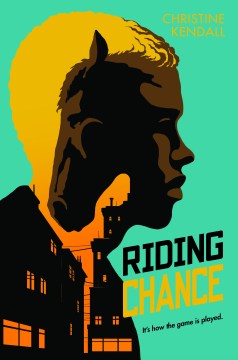
Let’s give a warm Mixed-Up welcome to Christine Kendall, the NAACP Image Award–nominated author of the MG debut, Riding Chance (Scholastic, 2016). Christine’s sophomore novel, also published by Scholastic, The True Definition of Neva Beane, came out in September and was lauded by Lesa Cline-Ransome as “an inter-generational story written with humor, heart, hope—and the power of self-discovery.
Here is a summary of Neva Beane:

Being twelve isn’t easy, especially when you’re Neva Beane. She knows she’s beautiful and smart, but there are so many confusing signals in everyday life about, well… everything, including the changes taking place in her preadolescent body; her relationship with her best friend, Jamila; and her admiration for the social activist on the block, Michelle.

Mom and Dad are on tour in Europe and Neva and her brother, Clay, are left at home with their traditional grandparents. The household descends into inter-generational turmoil and Neva is left with what comforts her most—words and their meanings. While the pages of her beloved dictionary reveal truths about what’s happening around her, Neva discovers the best way to define herself.

And here’s a summary of Riding Chance:

Troy is a kid with a passion. And dreams. And wanting to do the right thing. But after taking a wrong turn, he’s forced to endure something that’s worse than any juvenile detention: He’s “sentenced” to the local city stables, where he’s required to take care of horses. The greatest punishment has been trying to make sense of things since his mom died, but through his work with the horses he discovers a sport totally unknown to him—polo. Troy’s has to figure out which friends have his back, which kids to cut loose, and whether he and Alisha have a true connection.

Q&A with Christine Kendall

MR: So glad to have you with us, Christine. Welcome to the Mixed-Up Files!

CK: Thanks so much for inviting me. It’s a pleasure to be here.

MR: I can’t tell you which of your novels I enjoyed more, Riding Chance or The True Definition of Neva Beane. They are both wonderful in such different ways. I know you wrote Riding Chance because you were inspired by a story on NPR (more on that later), but what prompted you to tell Neva’s story? Were you like Neva growing up? 

CK: It warms my heart to hear you enjoyed both books as I consider them companion novels. They’re both coming of age stories that take place in current-day Philadelphia. The True Definition of Neva Beane isn’t memoir but, like Neva, I paid a lot of attention to words as I was growing up, and I came to understand their power pretty early on.

One of the things that prompted me to write the book is my fascination with how young girls are seen, and how those notions about who they are may or may not align with how they define themselves. This is important because the period in a girl’s life when she moves from early childhood into adolescence is magical, but it can also be very confusing. People read girls differently as their bodies develop and often make judgments about them based purely on their physical selves. I wanted to explore those issues. Once I had the Neva Beane character I thought about other issues she may be confronted with in today’s world. That led me to think about her political awakening and various ways a person can make a positive contribution to their community.

Body Positivity in MG Fiction

MR: Speaking of Neva, it’s clear from page one that she has a strong sense of self, particularly when it comes to her changing body. She feels beautiful in her first bra, a “glorious white cotton status symbol,” and admires herself in front of the mirror until she’s “dizzy.” I love this scene because it’s such a gorgeous display of girl power and body positivity. Was that your intention when you wrote the scene—to encourage tween girls to take pride in their changing bodies? If so, what role does body positivity play, or should play, in MG fiction?

CK: I’ll confess that I wrote Neva Beane’s “mirror scene” based on memory. I was eleven years old and, unbeknownst to me, I was seen admiring myself in front of a mirror by one of my brothers. Well, of course, my brother almost died laughing and I was humiliated. I spent hours trying to figure out why I felt that way before I realized there’s no shame in acknowledging your own beauty. I just hadn’t expected to be seen in that moment by anyone else. I think many young teens have experienced moments like that and I wanted them to know that I see them and their beauty. Body positivity is an issue for boys as well as girls and MG fiction is a good place to explore it.

What’s the Good Word?

MR: As above, Neva Beane is obsessed with words and finds great comfort in them. In fact, her most beloved possession is a Merriam-Webster’s Collegiate Dictionary. What is it about words that fascinates and comforts Neva—and maybe you, too?

CK: Words have power. Neva Beane is fascinated by them because she sees how they can be used to elevate or to wound. I share that fascination and wanted to show how Neva’s ability to analyze words brings her comfort especially when she is in the midst of confusing situations. I also wanted to provide a concrete example of how a person can use words to elevate. Neva chooses that path at the end of the book.

Work to Ride Program

MR: Turning our attention to Riding Chance, I know you wrote the book because you were inspired by a story on NPR about a program called Work to Ride, where inner-city kids work with horses and learn how to play polo in exchange for stable chores. Can you tell MUF readers a bit about the program and how it inspired you? Also, what kind of research did you do in order to make the polo-playing scenes realistic? I’m guessing you weren’t a horseperson prior to writing the novel…?

 CK: You’re right about my not being a horseperson before I wrote Riding Chance. I hadn’t planned on writing a novel. I was simply inspired when I heard the wonderful story about how kids in a mentoring program in Philly won a polo national championship in 2011. It was such an incredible story about what can happen when young people are given opportunities to explore and develop themselves in new ways.

I had to do a lot of research including taking horseback riding lessons, studying the game of polo, going to polo matches, and learning about the powerful bonds between humans and animals. I was fortunate in that there were a couple of horsepeople in the critique group I was a member of who were more than happy to offer constructive criticism. I learned quite a bit and really enjoyed the process.

Themes in Christine’s Books

MR: I noticed that loss and abandonment is a theme in both of your novels. In Riding Chance, Troy is grieving the death of his beloved mom; in Neva Beane, Neva feels as if she’s been cast aside by her best friend, Jamila. Neva also misses her musician parents while they’re on tour in Europe. What is the message you’re trying to convey? Resiliency? Grit? Something else?

CK: You hit the nail right on the head with resilience. I think it is such an important skill for young people to develop. Life can be difficult at times and we need to believe we can work our way through tough situations. One of the ways people develop resilience is by not being afraid to take reasonable risks. We will not always succeed at everything we try but even our failures provide opportunities to learn and to become more confident.

Ch Ch Changes…

MR: Before writing Riding Chance, you were in the legal profession. What prompted you to make the switch from the law to writing? Can you tell Mixed-Up Files readers about your path to publication? Was it a steady canter or a wild Headless Horseman-style gallop? (I know… 🙂)

CK: I like the visual of a Headless Horseman-style gallop especially since my path to publication was somewhat unusual. As you mentioned, I had a career before I became a writer. I worked with large law firms in the areas of  attorney recruitment, associate relations, and diversity and inclusion. I enjoyed my legal career but I got to the point where I wanted to do something more creative. I had always loved books and reading so I took a big step, talk about taking a risk, and left my job to focus on writing.

After about a year of sitting at home by myself struggling with picture book manuscripts I took a writing workshop with an editor from Scholastic, the amazing Andrea Davis Pinkney. She saw my fascination with Philly kids playing polo and encouraged me to use that as inspiration for a novel. It took me three years to research and write and revise but, in the end, she wanted the book.

This Writer’s Life

MR: What your writing process like, Christine? Do you have a specific routine? Writing rituals?

CK: I don’t have a specific writing routine, but I often need something like music to move me from real life into the fictive world. I love jazz so I may listen to that while I’m working. I also read my work aloud as I go along and I write with my whole body. What I mean is I get up and sometimes act out what my characters are doing so I can describe their actions accurately. Needless to say, I write at home. I don’t think people would put up with me in other places.

MR: Finally, what’s next on your writing agenda, Christine? Care to share a bit about your latest project?

CK: I’m working on another MG novel. I wrote a short story a few years ago that doesn’t feel like it’s finished even though it’s been published. I’m expanding that story into a longer work.

MR: Oh! Last thing…

No MUF interview is complete without a LIGHTNING ROUND!

Preferred writing snack? Popcorn.

Coffee or tea? Tea.

Merriam-Webster’s Collegiate Dictionary or Oxford English Dictionary? Merriam-Webster.

Favorite word? Milieu, although I don’t think I used that word in Neva Beane.

Mister Ed or Mister Rogers? Mister Rogers.

Zombie apocalypse: Yea or nay? Nay.

Superpower? Ability to find humor in most any situation.

Favorite place on earth? Mashomack Nature Preserve on Shelter Island, New York.

You’re stranded on a desert island, with only three items in your possession. What are they? A book, my eyeglasses, and a flashlight.

MR: Thank you for chatting with me, Christine—and congratulations on the publication of The True Definition of Neva Beane. I thoroughly enjoyed it, and I know MUF readers will too.

And now…

A GIVEAWAY!!!

For a copy of The True Definition of Neva Beane, comment on the blog–and, if you’re on Twitter, on the Mixed-Up Files’ Twitter account–for a chance to win! 

CHRISTINE KENDALL grew up in a family of artists, the fourth of six children, where everyone studied the piano along with one other instrument. She still feels sorry for the neighbors. They woke up one morning and found themselves living next door to a flute, two clarinets, a French horn, a cello, a set of drums, and always, always somebody on the piano. Christine wasn’t any good on the piano or the clarinet, but she loved writing. Her short fiction has appeared in numerous literary journals and her debut novel, Riding Chance, was nominated for a NAACP Image Award in the category of Outstanding Literary Work for Youth/Teens. The True Definition of Neva Beane is her second novel. Christine lives in Philadelphia where she co-curates and hosts the award-winning reading series, Creative at the Cannery. Learn more about Christine on her website and follow her on Twitter.

STEM Tuesday – Diseases and Pandemics — Author Interview

Welcome to STEM Tuesday: Author Interview & Book Giveaway, a repeating feature for the fourth Tuesday of every month. Go Science-Tech-Engineering-Math!

Today we’ve the pleasure of revisiting Gail Jarrow, author of the highly acclaimed Fatal Fever: Tracking Down Typhoid Mary. Although this is a historical medical thriller its exploration of the opportunities and ethics of public health resonate in today’s COVID-19 reality.

Carolyn Cinami DeCristofano: Thank you for joining STEM Tuesday again. I hope you are doing well during this pandemic. Fatal Fever takes readers to a time when typhoid fever outbreaks were not uncommon in the U.S. and elsewhere. What would you say the book is primarily about?

Picture of the cover of fatal fever. Gail Jarrow:  The book is part of my Deadly Diseases trilogy, which focuses on early-20th-century medicine.  I consider that period a turning point. After the acceptance  of  germ theory, scientists and physicians were looking for ways to prevent, treat, and cure diseases. I wrote Fatal Fever to explain how typhoid fever was tackled, and I chose Mary Mallon, aka Typhoid Mary,  as a way to tell the story.

CCD: The opening scene, in which Mary Mallon seeks to escape from health officials and the police, is full of suspense. It’s a gripping beginning and it flows smoothly to the rest of the book’s structure. It makes me wonder how the book’s narrative arc took shape in your mind. Can you fill us on in some of that process?

GJ:  I think it helps readers to understand unfamiliar information, such as a disease, when I approach the subject through personal stories.  Because Mary Mallon was an asymptomatic typhoid carrier,  I couldn’t show the disease’s horrible toll by only telling  her story.  I found another way.  I discovered that George Soper (the sanitary engineer  who tracked her down) had helped to clean up a typhoid epidemic in my hometown of Ithaca, New York, in 1903.  Early in my  book, I use details about that episode to introduce readers to the biology of the disease, the ways it devastated the bodies of individual Ithacans, and the fact that there was no cure or treatment.  When Soper starts his search for Mary Mallon in New York City just three years later, the reader understands why he believes it is critically important to find her before she can sicken and kill others.

CCD: This book brings in various disciplines and topics –history, human rights and civics, and public health and the biology of disease all come into play. Yet it’s a tight story. Did you ever struggle with drafts that were too complex or too rambling a book for your readers?

GJ: My biggest hurdle is the jump from researching to writing. I’ve read thousands of pages of historical background, past and present scientific literature, and primary documents. From all that, I have to figure out the most engaging, accessible, and accurate way to present this knowledge in abbreviated form. One thing that often helps is to remember my days teaching middle-school science. If I were conveying this information to my students, how would I do it?  As I write, I keep an eye on vocabulary as well as sentence, paragraph, and chapter length. I read everything  aloud so that I hear how it sounds. I’m not afraid to slash my prose. When I hand my manuscript to my longtime editor, Carolyn Yoder, I always ask her to look for spots that drag or confuse.

CCD: How did you decide which scientific information to include and what to leave out?

GJ: I consider how much science background my typical readers probably have. Do they know enough that I can build on that foundation to explain new information?  I’m careful not to simplify so much that I make incorrect statements.  Sometimes, after reading many scientific papers and talking to experts, I realize that parts of the science aren’t settled. Depending on the topic, I might explain the debate. But if it’s too technical and in the weeds for my audience, I might not include that aspect. I ran into a different problem with my book about plague, Bubonic Panic. I came across a recent controversial hypothesis about the history of plague. Though intriguing, it was based on very weak evidence. If the evidence had been stronger, I might have mentioned the idea. But I decided it would be irresponsible to perpetuate what might turn out to be speculative balderdash.

CCD: I have experienced similar decisions in my own writing. Deciding which new ideas to include can be a tough call! Moving on…Obviously, as a book that features a dangerous infectious disease, there are parallels to our current COVID-19 pandemic. Which Fatal Fever themes and issues resonate most strongly for you as the world faces and attempts to cope with COVID-19?

GJ:  In my Author’s Note to Fatal Fever, which I wrote several years ago, I raised the issues that arise when a deadly, highly contagious, and untreatable disease strikes.  I was thinking about typhoid fever in 1900 and the plight of Mary Mallon when quarantines and contact tracing were part of the story. But what I wrote then applies to any epidemic:  What do we expect health authorities to do? What government actions would or should we tolerate? Does protecting a city/state/country override the rights and freedoms of an individual?  You can’t get any more relevant to COVID than that!

public health poster/cartoon

 The numerous historical images and documents in FATAL FEVER, such as this cartoon (Page 115), help to bring readers back to the early 20th century and better understand the tale and its context.

CCD: In Fatal Fever, you point out that science understanding that asymptomatic individuals can spread typhoid fever was new at the time when Mary Mallon was identified as a carrier. Today, we are facing a new disease, and information about its transmission has developed and evolved over the months. I wonder if you see anything in the story of Mary Mallon and her intersection with disease, transmission, and public health that might be of use in our individual and collective responses to COVID-19?

GJ: I personally learned several lessons from Mary’s case and typhoid outbreaks. People whose job it was to worry about public health (officials, medical personnel) had one agenda. People who had to make a living to support themselves and their families (Mary, other typhoid carriers) had a different agenda. The goals and needs of these groups ended up in conflict.  Compromises had to be found.  They have to be found today, too.

World Health Organization slide about how COVID-19 is spread.

An early 21st-century public health slide about how COVID-19 spreads. Note that as of this posting, WHO and the US Centers for disease control acknowledge that asymptomatic individuals can also spread the coronavirus. (Source: World Health Organization)


Another lesson is a hopeful one. The diseases I’ve studied from 100 years ago have been controlled and, in some cases, conquered.  We have witnessed amazing discoveries in COVID treatments and vaccines in nine or ten months. It took years, even decades, to make that progress with earlier diseases. Our parents, grandparents, great-grandparents suffered through much worse times—disease-wise—than today, and they coped and survived. History gives us perspective.

CCD: I appreciate that hopeful, historical angle! As you explain in a short video on your website, you write about history. Yet science themes come into your books. What thoughts do you have about how these historical stories might impact readers’ relationship to science?

GJ: First, as I mentioned above, I think personal stories make scientific topics more relatable.

Second, the history of science shows that understanding and “theories” change as we gain more information. In the past, scientists and physicians  fervently believed in ideas that we now know were absolutely wrong, and the scientific/medical establishment criticized and ridiculed anyone who challenged those ideas. Two examples of 19th-century mavericks who are relevant today as we deal with antiseptics and handwashing: Lister and Semmelweis. Scientific views change. Careful observation and proof from unbiased tests are essential.

CCD: Stepping away from history—what’s new for you as an author, and what we can we look forward to seeing from you in the future?

The cover of Gail Jarrow's most recent book, BLOOD AND GERMS.

Gail Jarrow continues to write about the intersection of history and medicine. BLOOD AND GERMS is her most recent book.

GJ: In keeping with my interest in history and the evolution of medicine, this fall I launched my Medical Fiascoes series with Boyds Mills & Kane. The first book, BLOOD AND GERMS: The Civil War Battle Against Wounds and Disease,  came out last month. The second book, AMBUSHED!: The Assassination Plot Against President Garfield, will be published next fall, and it explores the way medical ignorance led to his death. I’m currently in the midst of research for the third book in the series.

CCD: This is exciting! I’m sure we all look forward to exploring more medical history with you as our thoughtful, informative guide, Gail. I want to thank you for your wonderful writing and for this interview. Stay well.


***

Win a FREE copy of FATAL FEVER: Tracking Down Typhoid Mary!

Enter the giveaway by leaving a comment below. The randomly-chosen winner will be contacted via email and asked to provide a mailing address (within the U.S. only) to receive the book.

Good luck!

Photo of Carolyn DeCristofanoYour host is Carolyn Cinami DeCristofano, founding STEM Tuesday contributor, STEM Education Consultant, and author of STEM books for kids. Her books include A Black Hole is NOT a Hole, Running on Sunshine: How Does Solar Energy Work?, and National Geographic Kids Ultimate Space Atlas.


Gail Jarrow is the author of nonfiction books and novels for ages 8-18. Her nonfiction books have earned numerous awards. Photograph of author Gail Jarrow