
Posts Tagged diversity

STEM Tuesday –Invasive Species– Book List

Tracking Pythons : The Quest to Catch an Invasive Predator and Save An Ecosystem by Kate Messner

This book takes readers out on a python patrol where we meet a team of scientist studying the invasive snake. Readers also meet other invaders of the Florida Everglades. There’s technology (radiotracking), python CSI, snake autopsies (called necropsies) and a wonderful series of sidebars highlighting “How to Catch a Python.” Great photos and a Most Wanted invasive species list add interest.

Science Warriors: The Battle Against Invasive Species by Sneed B. Collard

Each of the four chapters focus on scientists studying invasive species. We meet brown tree snakes and zebra mussels, red fire ants taking over Texas, and the Melaleuca (paperbark) tree that was brought to the US and planted to stabilize soil. We see scientists doing field research and working on biological controls for invasive species. Includes a “Guide to Stopping Invasive Species.”

Invaders From Earth Series by Richard Spilsbury

There are six books in the series, highlighting threats from invasive reptiles and amphibians, plants, insects, mammals, birds, and fish and other marine species. Individual spreads detail specific organisms, highlighting how one species native to one area can be an unwelcome invader across the globe. End chapters go into mitigation and things kids can do.

Invasive Species in Infographics by Renae Gilles

Divided into four sections, this book focuses on what invasive species are, the damage they cause, and how to control them. The book models different ways of presenting information visually, using pie charts, bar graphs, timelines, flow charts, and annotated maps

Nature Out of Balance : How Invasive Species Are Changing the Planet by Merrie-Ellen Wilcox.

This book opens with a discussion of what invasives are and how they travel from one place to another. Two chapters look at ecosystems in balance and out of balance, the importance of biodiversity, and how scientists are studying invasive species. The final chapter explores whether – and how – we may want to rethink the word “invasive” and offers ideas for what we can do. Sidebars feature a who’s who list of invasive all-stars, from Asian carp to Zebra mussels.

Alien Invaders: Species That Threaten Our World by Jane Drake & Ann Love

Each examination and image of an invader and their devastating effects worldwide is accompanied by a sidebar listing their alias, size, homeland, method of invasion, and line of attack. Besides the commonly known invaders, such as the starling, rat, and Kudzu, the book examines humans, walking catfish, yellow crazy ants, water hyacinth, mosquitos, and avian flu. Detailed sections on “Who Cares?,” “Volunteers,” and “Lessons Learned” expand the information into actions everyone can take to prevent, control, or help eliminate invaders.

Plants Out of Place (Let’s Explore Science) by Courtney Farrell

First, we learn what native plants are and their role in the food chain. Following chapters discuss introduced plants and how invasive species threaten the balance of ecosystems. Sidebar “mini field guides” include descriptions and range maps for some species of interest. In addition to discussing control methods, the author shows alternative uses, such as using kudzu vines to weave baskets.

Invasive Species (Ecological Disasters) by Lisa J Amstutz

Beginning with the exploration of an ecological plague in Australia – of European rabbits, the book demonstrates the varied effects and subsequent difficulties of eradication of invasive species. Using a conversational voice, photographs, and great sidebars, it examines (1) ways invasive species arrive – introduction (dandelion, goats), hitchhiking (small pox, rats), and escapees (pythons, pets); (2) circumstances that enhance their survival – Island effect, climate change & lack of predators; (3) specific examples or invasive land animals, plants, and fish; (4) the techniques and the cost of elimination and containment; and (5) prevention and citizen efforts. Strong back matter and sources notes round out this book.

What Is The Threat Of Invasive Species? (Sci-Hi: Science Issues) by Eve Hartman And Wendy Meshbesher

After defining invasive species and how they invade an ecosystem, the book evaluates the cost to native species and environments around the world from numerous plants, mammals, fungus, birds, amphibians, insects, and water invaders. It includes a detailed world map of invasive species and their effects. As well as “What Can You Do to Help?” and “Topics to Research” sections.

Animal Invaders (Let’s Explore Science) by Amanda F Doering

Focusing primarily on the US and Hawaii, the book briefly reviews habitats then discusses where invaders come from, the harm they do, and various methods tried to control them. As well as “Did you Know?” sections, this photo illustrated book contains maps, graphs, and diagrams.

Crab Campaign: An Invasive Species Tracker’s Journal by J.A. Watson

Five kids spend a summer in Maryland learning about and tracking the Chinese Mitten Crab. An invasive species that has actually been spotted in the Hudson River. As a Science Squad doing a community science project, the kids raise community awareness, research, track, and document their searches and ultimate discoveries. An engaging informational fiction.

________________________________________________________________________________________________

 STEM Tuesday book list prepared by:

Sue Heavenrich writes about science for children and their families, from space to backyard ecology. Bees, flies, squirrel behavior—things she observes in her neighborhood and around her home—inspire her writing. Visit her at www.sueheavenrich.com

Maria Marshall is a children’s author, blogger, and poet passionate about making nature and reading fun for children. She’s been a judge for the Cybils Awards from 2017 to present. And a judge for the #50PreciousWords competition since its inception. Her poems are published in The Best Of Today’s Little Ditty 2017-2018, 2016, and 2014-2015 anthologies. When not writing, critiquing, or reading, she bird watches, travels the world, bakes, and hikes. Visit her at www.mariacmarshall.com

Paired Texts: Inspired by Classics

Need a last-minute gift idea for a middle grade bookworm? Or maybe you’re a teacher, librarian, or homeschooling parent on the lookout for some fresh literature lists or features for the new year? Consider pairing together a retelling, sequel, or inspired tale with the title that preceded it.

  • Reading paired texts is a great workout for MG readers’ critical thinking skills, especially when they think critically about the context of the classic work (such as the time period in which it was written).
  • The comparing/contrasting of two stories is a lesson goal that can be tailored to a wide variety of learning styles and levels.
  • Reading two related texts fulfills important core standards in educational settings.

Or if someone on your gift list simply enjoys thinking about stories and writers in cool and comparative ways, reading a modern retelling, sequel, or companion novel alongside its classic predecessor might be a cozy way to spend some winter afternoons. Here are some ideas for paired titles you might consider for your classroom, library, or personal gift-giving.

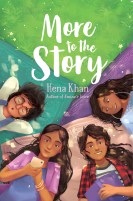
Hena Khan’s More to the Story is inspired by Louisa May Alcott’s Little Women. In More to the Story, a modern American Muslim family faces challenges that compare to the March family’s conflicts of a century-and-a-half ago in Alcott’s classic.

Rajani LaRocca’s Midsummer Mayhem is subtly inspired by Shakespeare’s A Midsummer’s Night’s Dream. Midsummer Mayhem features Indian American protagonist Mimi who uses both culinary skill and magic to solve the mysterious goings-on in her household and town. For the Elizabethan classic, consider an introductory adaptation like this comics-style version if your middle graders aren’t ready for Shakespearean verse. This author also wrote Much Ado About Baseball, a companion piece to Midsummer Mayhem which Kirkus calls an “homage” to the bard’s Much Ado About Nothing.

Lou Kuenzler’s Finding Black Beauty is a spin on the story of Anna Sewell’s classic Black Beauty, retold from the perspective of groom Josephine who masquerades as a boy in order to find the horse she loves when they become separated.

Sequels to children’s classics The Secret Garden and A Little Princess by Frances Hodgson Burnett include Holly Webb’s Return to the Secret Garden and The Princess and the Suffragette. Hilary McKay’s Wishing for Tomorrow is a sequel to A Little Princess as well.

A variety of writers compile new perspectives on Alice’s adventures in Return to Wonderland, a collection of retellings of Alice’s Adventures in Wonderland by Lewis Carroll.

The Three Musketeers by Alexandre Dumas sees a modern-day retelling and new perspective from young protagonist and time traveling teen Greg Rich in Stuart Gibbs’s The Last Musketeer.

Wishing everyone the best in your holiday seasons and new year!

Somos Americanos También – We Are Also American


We Need Diverse MG

Artwork by Aixa Perez-Prado

Finding Our Places in the World

Do you have any troubling childhood experiences that have stuck with you? Ones that have taken up permanent residence in your adult psyche? Maybe things someone said or did that you have not been able to forget —no matter how hard you try. I’d like to tell you about some of my memories as a child immigrant, because they underscore the need for diverse middle grade books. When misrepresentation, or lack of representation, of an entire continent, it’s people and languages are part of a childhood story – how does that affect how children find their place in the world?

The In-Between Years

Fourth to seventh grade seem to be pivotal childhood years. Maybe it’s because kids are at that magical age of in-between. An age of transition that can be powerful and perilous, hilarious and horrible. A lot of the troubling expereinces I remember happened during my middle school years. And they all start with words.

“Go back to Mexico!”

This is something a friend said to me once. She was ‘joking’. So many of the words that stick were meant to be jokes, but felt more like little punches. I told her I’d never been to Mexico. “Then go back to Spain!” she countered.

I explained that I’d never been there either. Puerto Rico? I had also never been. Laughter ensued. Nobody could understand what I was. After all, I spoke Spanish so I must be from Mexico, Spain or Puerto Rico. But I’m from Argentina. That was a strange place to be from in Buffalo, N.Y. all those years ago. I suppose it’s different now, but back then that was weird. I was weird, and always struggling to fit in. Struggling to find myself in books, TV shows, movies — in the world I lived in. But no matter how hard I looked, I wasn’t there.

argentina

Soy Argentina @aixasdoodlesandbooks

“Why are you white?”

My classmate was looking in our social studies textbook. There was a picture of an indigenous South American child dressed in traditional gaucho costume in a rural setting. My experience of South America was nothing like this child’s experience, but he was the only representation of a person from my entire continent in our textbook.  I explained that I was from the big city, Buenos Aires. I told my classmate that I had never even seen a gaucho, and that not everybody from South America looked like this child, dressed like this child, or had that kind of lifestyle. But my classmate persisted in wanting to know why I was white. I explained that my grandparents and great grandparents were mostly European.“Then you’re not really one of them,” my classmate declared, “or one of us.”

Words can be daggers sometimes. Because what does an in-between child want more than anything in the world? It is often to fit in somewhere, anywhere, to be like everyone else. Most children want to find connections with the protagonists of books, the characters in cartoons, the heroes of history. Some children never do.

“You’re not American.”

I can’t count how many times I’ve heard this, both inside and outside of school settings. In fact, I am American by birth, as is every South and Central American. We are from the Americas. It is true that those born in the US are most often referred to as ‘American,’ but that does not negate the fact that the rest of us also have claim to that label and all that it implies. We also come from a continent that was populated and thriving when colonization occurred. In many countries we also had slavery and the genocide of indigenous peoples. We also are culturally diverse mosaics made up of Native Americans, the descendants of enslaved peoples, descendants of immigrants from all over the world, and a mixture of all of those groups. We also hold the brutal, glorious and complicated history of what it means to be American. But the books I found as a child, and even as an adult, often didn’t reflect that.

america latina“Why does your mom talk like that?”

My mother had a heavy accent. She talked ‘like that’ because she learned English in her thirties. My mother was a physician who spoke fluent English but would never pass for a native speaker, and why should she? She had a full life before immigration. She had an established identity as an Argentinian professional woman. I am ashamed to say that I was ashamed of her accent when I was a kid. Every time I saw a character with an accent in a book, cartoon or movie, the accent was a source of ridicule or shame. Unfortunately, I internalised that message.

How can books help?

As a child immigrant, kidlit author/illustrator, professor of diversity studies and teacher education, I am convinced that the more books we have that represent linguistic and cultural minority communities in all of their varieties, the better. In Latin America and the Caribbean there are over thirty countries and dozens of languages spoken aside from Spanish and Portuguese. Latin Americans come in all skin tones, eye and hair colors, shapes, and sizes. Native/ Indigenous Latin Americans or Pueblos Originarios (Original Peoples as they are called in some countries) have rich histories, cultures, belief systems and a wealth of knowledge to explore. Luckily, more kidlit books are coming out from Latin American and Caribbean authors that challenge the stereotypes of what it means to be an American from south of the US border. Still, even more are needed. Below are a few books that I recommend (or that have been recommended to me) by Latinx and Caribbean authors that provide captivating, thoughtful, and fresh perspectives on all kinds of American stories.

Libros Recomendados – Recommended books

The following books contain a rich variety of experiences and adventures for kids in those in-between years who are also often in-between cultures. Most of these books feature immigrant children or children of immigrants from Latin America and the Caribbean and are written by authors who have the authenticity and background to represent those cultures in the diverse and complex way they deserve to be represented. Happy Reading!

Argentina

lobizona Lobizona (YA) by Romina Garber – This book has so much to offer, experiences of the undocumented, conflicting feelings about identity and belonging, Argentine culture and werewolves!

“This layered novel blends languages and cultures to create a narrative that celebrates perseverance.” (Publishers Weekly, starred review)

(**new book by this author – Cazadora)

Chile

nines

Niños: Poems for the Lost Children of Chile by Maria Jose Ferrada, translated by Lawrence Schimel, illustrated by Maria Elena Valdez. A book to be read and remembered, a tribute to children whose lives were lost by forces not of their own creation. Kirkus

Click on the image for more information from the publisher

Colombia

fish bookWhat if a Fish (MG) by Anika Fajardo  – This book takes place between the US and Colombia and centres around one child’s search for his own story of belonging with some magical realism thrown in.

Click on the link to read my interview with the author and on the book itself to to to the publisher’s page.

Multilayered and convincing, the book will have readers rooting for its sweet and smart protagonist. Kirkus

Cuba

total eclipseThe Total Eclipse of Nestor Lopez (MG) by Adriana CuevasA charming and vibrant debut fantasy”. Kirkus.

Click on the title link to see the MUF interview of the author and learn more about this book, and click on the image for info from the publisher.

(**new book by this author– Cuba in my Pocket – interview coming up in 2022)

Guatemala

The Other Half of Happy (MG) by Rebecca Balcarcel “At its core, Balcárcel’s novel is a story of identity within one’s self and within a broader community.” School Library Journal

This is a Pura Belpre Honor book. Click on the image for information from the publisher.


Haiti

flew awayHaiti: The Year I Flew Away (MG) by Marie Arnold. “Pratchett like world building centres immigrant kids in a story filled with culture, humor and heart.” Kirkus. 

Click on the image for more information on this magical book from the publisher.


Mexico

Aida SalazarThe Moon Within (MG) by Aida Salazar “A dazzling story told with the sensitivity, humor, and brilliant verse of debut talent Aida Salazar.” This is a novel in verse that explores multiple layers of identity as well as gender and heritage.

Click on the image for more information from the publisher.


garzaThe Garza Twins series (MG) by David Bowles Bowles creates an action-packed story based on Aztec and Mayan mythology while capturing the realities of life in contemporary South Texas and Mexico.” –Pura Belpré Award Committee

Click on the image for more information from the publisher.

Peru

lolaThe Lola Levine series by Monica Brown  “Celebrate a truly accepting multicultural character.” Kirkus

Click on the image for more information on this entire, fun, young MG series.


Latinx Kidlit Book Festival This Week!

And don’t forget to participate in the Latinx Kidlit Book Festival this week streaming on YouTube with interesting panels for teachers, and authors, and interactive activities for readers of all ages. See my blogpost with festival organisers for more information or click on the heading to go directly to the festival YouTube area.


LKBF invite