Posts Tagged diversity

STEM Tuesday — Community Science – Book List

More and more individuals today are assisting in the collection of scientific data all over the world. Every person, regardless of age or degree, can make a difference by joining together with other community members or making their own observations. Together our world can be healthier and stronger with community science involvement. Here are our book choices to help you and your students get involved wherever you live! 

The Field Guide to Citizen Science : How You Can Contribute to Scientific Research and Make a Difference by Darlene Cavalier, Caren Cooper,, and Catherine Hoffman

This book from the expert team at SciStarter provides lots of ways for readers to get involved with citizen science projects in their community and discover where their data might lead.

Citizen Scientists: Be A Part of Scientific Discovery From Your Own Backyard by Loree Griffin Burns and Ellen Harasimowicz

This Scientists in the Field title from the notable team of Burns and Harasimowicz describes ways to get involved in the Audubon Bird Count, FrogWatch USA, and other community science projects in your own backyard or neighborhood park. 

The Outdoor Scientist: The Wonder of Observing the Natural World by Temple Grandin

Professor of animal science and inventor, Temple Grandin, introduces readers to many scientific disciplines and how these disciplines can play a role in everyday observations. A perfect read for curios readers. 

Citizen Science Guide for Families: Taking Part in Real Science by Greg Landgraf

Readers will discover what citizen science is and how they can get involved in Landgraf’s book. This is an accessible read for the entire family. 

Get Into Citizen Science (Get-Into-It Guides) by Vic Kovacs

Track butterfly migration or watch the sky for comets. This book gives examples of how readers can use their skills to make an impact as citizen scientists. 

Bat Citizens: Defending the Ninjas of the Night by Rob Laidlaw

Here is an example of how citizen scientists can get involved with one specific species – bats. 

12 Epic Animal Adventures by Janet Slingerland

These animal adventures will connect with curious readers who want to get involved in community science, especially the chapter on sea turtle nest counts.

Be The Change: Rob Greenfield’s Call to Kids – Making A Difference in a Messed-Up World by Rob Greenfield and Antonia Banyard

There are so many ways to make a difference in our world. This book provides young readers with many simple ways to get started. 

Chasing Bats and Tracking Rats: Urban Ecology, Community Science, and How We Share Our Cities by Cylita Guy PhD, Cornelia Li

Community science initiatives happen everywhere, including urban environments. This book delves into the ways city residents can make a difference by observing urban wildlife. 


Photo of DESERTS author Nancy Castaldo

Nancy Castaldo , a founding STEM Tuesday team member, has written books about our planet for over 20 years including, THE STORY OF SEEDS, which earned the Green Earth Book Award, Junior Library Guild Selection, and other honors. Nancy’s research has taken her all over the world from the Galapagos to Russia.  She strives to inform, inspire, and empower her readers. Nancy also served as Regional Advisor Emeritus of the Eastern NY SCBWI region. Her 2022 titles are When the World Runs Dry (Jr Library Guild Selection), The Wolves and Moose of Isle Royale (Scientists in the Field) and Buildings That Breathe. Visit her at www.nancycastaldo.com. 

Patricia Newman , a founding STEM Tuesday team member, writes middle-grade nonfiction that empowers young readers to act on behalf of the environment and their communities. Academy Award winner and environmentalist Jeff Bridges calls Planet Ocean a “must read.” Newman, a Sibert Honor author of Sea Otter Heroes, has also received an NSTA Outstanding Science Trade Book Award for Eavesdropping on Elephants, a Green Earth Book Award for Plastic, Ahoy!, and a Eureka! Gold Medal from the California Reading Association for Zoo Scientists to the Rescue. Her books have received starred reviews, been honored as Junior Library Guild Selections, and included on Bank Street College’s Best Books lists. During author visits, she demonstrates how young readers can use writing to be the voice of change. Visit her at www.patriciamnewman.com.

STEM Tuesday — Women Who Changed Science — Writing Tips & Resources


I’ve always been fascinated by the way the minds of scientists and engineers work. Maybe that’s why I write about them so often, especially women in these fields. One thing that always amazes me is that artists’ minds often work in the same ways, which is our topic for this month.

Arts and Sciences: Not Mutually Exclusive

Of course, many scientists and engineers are artists in their own right. For example, Einstein was an accomplished musician As his second wife said, “Music helps him when he is thinking about his theories. …He goes to his study, comes back, strikes a few chords on the piano, jots something down, returns to his study.” Einstein also was know to carry his violin, Lina, with him practically everywhere.

Book cover for Temple Grandin

Inventor Temple Grandin also felt an early connection to the arts. As she writes in the preface to Sy Montgomery’s TEMPLE GRANDIN: How the Girl Who Loved Cows Embraced Autism and Changed the World (from this month’s book list), “Before I started my career with animals, I was one of those kids who did not fit in with the rest of the crowd. … What saved me and enabled me to succeed were my love of making things and creating art.”

Common Characteristics

NO BOUNDARIES coverSo what are some common traits that make scientists and artists, including writers, successful? Another book on this month’s list, NO BOUNDARIES: 25 Women Explorers and Scientists Share Adventures, Inspiration, and Advice by Clare Fieseler and Gabby Salazar, is rich with examples. Here are a few.

  • Curiosity – For most scientists and writers, it all starts with curiosity. As Dr. Danielle N. Lee, an American mammologist and outreach scientist writes, “The questions I asked as a child were kind of the same questions I’m asking now. … I was always very curious.”


  • Training – Wasfia Nazreen, a mountaineer and activist from Bangladesh, would never attempt to summit a mountain without training physically. Likewise, writers must train too. They study the craft of writing in workshops, ready and study books by authors they admire, and most of all, practice writing as much as possible.
  • Courage to take risks– Ecologist Dominique Goncalves of Mozambique emailed a brand-new science lab out of the blue to ask if they offered internships. She was told no. But eventually the director emailed her back to find out why she was so interested. That email changed her life and led to her career. Goncalves’ advice? “If you see an opportunity, take it. But even if there is no opportunity – make one.” Authors take risks every day, trying new formats and approaches, for example. A fiction writer may try out nonfiction writing. Or an author who normally writes with a lyrical (poetic) voice, may try out a humorous voice. Such risks can lead to new writing opportunities. Don’t be afraid to try something new.
  • Perseverance – Egyptian archaeologist Nora Shawki notes the importance of perseverance when working toward a career in science. She says, “Even if you get rejected, be persistent, become resilient, and stay focused. Rejection will mold you and push you and make you grow.” Guess what? Authors experience different types of rejection all the time. Perhaps they get unfavorable feedback on a manuscript. Or an editor decided not to publish their next book. Yet that rejection could lead to a better book or opportunities with a new publishers.

Challenge

What other traits to you think successful writers and artists need and why? Do scientists share that trait? Why or why not?

headshot of Kirsten W. LarsonKirsten W. Larson used to work with rocket scientists at NASA and now writes about women in science and much more. Her books include the WOOD, WIRE, WINGS: Emma Lilian Todd Invents an Airplane, illus. Tracy Subisak and A TRUE WONDER: The Comic Book Hero Who Changed Everything, illus. Katy Wu. Learn more at kirsten-w-larson.com.

WNDMG Wednesday- Guest Post – Waka T. Brown

We Need Diverse MG Logo hands holding reading globe with stars and spirals floating around

Illustration by: Aixa Perez-Prado

WNDMG Wednesday Guest – Author Waka T. Brown

We at WNDMG Wednesday are thrilled to host our guest post writer, author Waka T. Brown. Waka’s piece in honor of AAPI Heritage Month is a spot-on look at the importance of representation in middle-grade books, and we’re so grateful she took the time to stop by our blog.

Author Waka T. Brown–My Journey

Happy Asian American and Pacific Islander (AAPI) Heritage Month, everyone! I’m honored to write a blog post this month for “From the Mixed-Up Files… of Middle-Grade Authors.”

With two middle grade novels which prominently feature Asian American main characters under my belt (and two more under contract), I’d like to take this opportunity to reflect and share what my journey as an Asian American author has been like thus far.

Being Sabrina Duncan

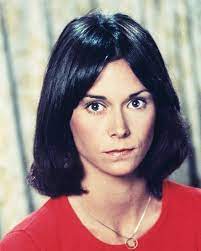
I’m curious how many Asian American children of the 70s and 80s are out there who remember “Charlie’s Angels.” Not the 2019 reboot with Kristen Stewart, Naomi Scott, and Ella Balinska. Not even the 2000 one with Drew Barrymore, Lucy Liu, and Cameron Diaz. I’m talking about the one with Farrah Fawcett, Jaclyn Smith, and Kate Jackson. Way back when, my friends and I sometimes played like we were the Angels—fighting crime and beating up the bad guys. I always played the character of Sabrina Duncan because… she had the darkest hair of the trio. Like me.

Television star Kate Jackson white woman with short black hair wearing red shirt

It Felt Presumptuous

I grew up reading and loving books by Madeleine L’Engle, Lois Duncan, Beverly Cleary, L.M. Montgomery, Frances Hodgson Burnett, Louisa May Alcott, Laura Ingalls Wilder (just to name a few). I might not have looked like any of their main characters, but I identified with the spunky, smart, and resourceful girls featured in almost all their stories.

Book Cover for Little Women 4 white women wearing 19th century dresses seated together on a couch

I never once thought about what it might mean to read a book with girls on the cover who looked like me. I didn’t even know that it was an option. It felt presumptuous to even want that. After all, until I left home for college, I only knew fewer than a dozen Asian Americans outside of my family. I assumed there weren’t many of us at all, and TV, films, books all seemed to support what I assumed was true.

Looking for Meaningful, Positive Representation

So, what does it mean to grow up without meaningful, positive representation? When I was a teenager, beautiful equaled Christy Brinkley. When kids told me I was ugly, part of me wondered if they had a point. After all, I never saw models like me gracing the covers of Seventeen. When I never encountered stories about people like me, I internalized that maybe our stories don’t matter.

Magazine Cover Seventeen Magazine actor Brook Shields on cover

However, when I arrived in California for college for the first time when I was 18, it was with a bit (a lot) of culture shock that I realized I was not alone. I had never experienced a diverse environment like that one before. I joined the Asian American Student Association. I met Chinese, Taiwanese, Korean, Japanese, Vietnamese, Filipina, and South Asian friends. During study breaks we watched episodes of “Beverly Hills 90210,” and I wondered to myself where all the Asian people were. It took place in California, after all, and what I saw represented in media didn’t look anything like the diversity that now surrounded me.

“Asian Leads Don’t Sell”

Yet, when I started writing (screenplays mostly), my characters still didn’t look like me. “Imagine a bankable star,” I was advised when I created my characters. I wrote shallow, frothy romcoms that I thought would have mass appeal. When nothing came of them, I decided to throw previous advice out the window and wrote a teenage Roman Holiday-esque story… with two Asian leads. I would like to say this is when my big break came, but alas no. I was only able to get one person in the industry to even read it because, “Asian leads don’t sell.” Maybe at the time people truly believed that. But part of me thought (like my character Annie in Dream, Annie, Dream), How do you get to be a big name/bankable star if you’re never cast? After a disappointing reception to my attempt to create some Asian American representation, I went back to writing my standard fare for a while… but then again, I decided on a project, a far-fetched project. A memoir about 12 year-old me called While I Was Away.

Book Cover for While I was Away - profile sketch of an Asian girl with a small village in the background

Waka T Brown at 12 years old, photo of young Japanese girl in plaid shirt

Waka T. Brown at age 12

Even though a lot of people were dismissive of this endeavor and echoed my own concerns such as “Memoir? And middle grade? Good luck, that’s gonna be a tough sell,” and “you need to have an established platform to sell something like that,” I wrote it anyway. No one bought my more “commercial” writing, so why not? I wanted to get the memories down before they faded for myself. For every negative remark, there were also encouraging ones, like “You should definitely write that story” and “That is the story only you can write.” And those were the ones I hung on to.

((Like reading memoirs and ready to find more? Read this Rosanne Parry’s roundup of Diverse MG Memoirs))

Plus, there were other promising signs urging me not to give up. Crazy Rich Asians was a box office smash. Bookstore shelves looked a lot different from when I was a little girl. I caught up on years of reading, including works by Grace Lin and Kelly Yang. And despite a number of rejections that pointed toward my story’s lack of marketability and/or relatability with a wider audience, While I Was Away eventually sold at auction in a 2-book deal.

movie poster for movie "Crazy, Rich Asians"

How people have embraced my first book since its publication in January 2021 has truly blown me away. It was an Oregon Book Award finalist, one of New York Public Library’s Best Books for Kids of 2021, a Bank Street Children’s Best Book of the Year for 2022…

Dream, Annie, Dream

But, I definitely feel my work as a writer isn’t finished. With my second book, Dream, Annie, Dream, I tackle the issue of representation head-on. Even though it’s a work of fiction, many of the experiences were drawn from my own. Although some of the topics and incidents in it might feel uncomfortable, it is my hope that young readers are drawn to my main character Annie Inoue like I was drawn to Sara Crew, Laura Ingalls, Anne Shirley, and Jo March.

Book Cover for Dream Annie Dream, young Asian girl with basketball and books and pencil as "dreams" floating around her head

They’ve Needed This Story for Decades

While I truly feel my books are for everyone (even teenaged sons who have yet to read their mother’s second book… cough, cough… you know how you are), I appreciate that what each reader gains from them is their own. Some readers have let me know how they related to certain incidents. Some have mentioned that they just enjoyed the story. But the ones that I hold the most dear have been the ones who tell me that they’ve needed this story for decades.

For me personally, representation has come a long way from “the dark-haired Charlie’s Angel” to these two books.

Book Cover for Dream Annie Dream, young Asian girl with basketball and books and pencil as "dreams" floating around her headBook Cover for While I was Away - profile sketch of an Asian girl with a small village in the background

It’s my sincere hope that more stories, diverse stories, stories about events we’ve never heard of continue to surface. And that as readers, we continue to embrace them all with open hearts and minds.


Headshot author Waka T. Brown - Asian woman seated on couch, smiling

Waka is a Stanford graduate with a B.A. in International Relations and a Master’s in Secondary Education. While I Was Away (Quill Tree/HarperCollins 2021) is her debut novel.

Dream, Annie, Dream (Quill Tree/HarperCollins 2022) is her first work of historical fiction.

More About Waka T. Brown

In addition to writing middle-grade stories, I enjoy writing screenplays. I wrote and co-directed the short film Double Tap (Official Selection, 2018 DC Shorts and Portland Film Festivals) and my feature-length screenplays (comedies, romcoms, & animated features) have been 2nd-rounders at AFF, placed in the semifinals of PAGE, and quarterfinals of Screencraft writing competitions.

I’m currently an online instructor with the Stanford Program on International and Cross-Cultural Education (SPICE). I teach about U.S.-Japan relations to high school students in Japan, and have also authored curriculum on several international topics. Recently, I was honored to receive the U.S.-Japan Foundation and EngageAsia’s national 2019 Elgin Heinz Outstanding Teacher award.

I live in the Portland, Oregon area with my husband, three sons, and my naughty yet lovable shiba Niko. I have a lot of hobbies such as running, art, baking, and playing guitar.

Connect with Waka:

Twitter

Instagram

Website