 Let’s give a warm Mixed-Up welcome to Christine Kendall, the NAACP Image Award–nominated author of the MG debut, Riding Chance (Scholastic, 2016). Christine’s sophomore novel, also published by Scholastic, The True Definition of Neva Beane, came out in September and was lauded by Lesa Cline-Ransome as “an inter-generational story written with humor, heart, hope—and the power of self-discovery.
Here is a summary of Neva Beane:

Being twelve isn’t easy, especially when you’re Neva Beane. She knows she’s beautiful and smart, but there are so many confusing signals in everyday life about, well… everything, including the changes taking place in her preadolescent body; her relationship with her best friend, Jamila; and her admiration for the social activist on the block, Michelle.
Mom and Dad are on tour in Europe and Neva and her brother, Clay, are left at home with their traditional grandparents. The household descends into inter-generational turmoil and Neva is left with what comforts her most—words and their meanings. While the pages of her beloved dictionary reveal truths about what’s happening around her, Neva discovers the best way to define herself.
And here’s a summary of Riding Chance:
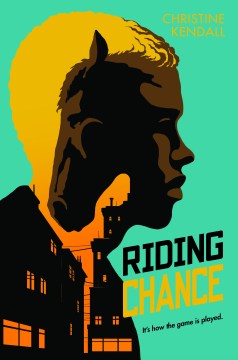 Troy is a kid with a passion. And dreams. And wanting to do the right thing. But after taking a wrong turn, he’s forced to endure something that’s worse than any juvenile detention: He’s “sentenced” to the local city stables, where he’s required to take care of horses. The greatest punishment has been trying to make sense of things since his mom died, but through his work with the horses he discovers a sport totally unknown to him—polo. Troy’s has to figure out which friends have his back, which kids to cut loose, and whether he and Alisha have a true connection.
Q&A with Christine Kendall
MR: So glad to have you with us, Christine. Welcome to the Mixed-Up Files!
CK: Thanks so much for inviting me. It’s a pleasure to be here.
MR: I can’t tell you which of your novels I enjoyed more, Riding Chance or The True Definition of Neva Beane. They are both wonderful in such different ways. I know you wrote Riding Chance because you were inspired by a story on NPR (more on that later), but what prompted you to tell Neva’s story? Were you like Neva growing up?
CK: It warms my heart to hear you enjoyed both books as I consider them companion novels. They’re both coming of age stories that take place in current-day Philadelphia. The True Definition of Neva Beane isn’t memoir but, like Neva, I paid a lot of attention to words as I was growing up, and I came to understand their power pretty early on.
One of the things that prompted me to write the book is my fascination with how young girls are seen, and how those notions about who they are may or may not align with how they define themselves. This is important because the period in a girl’s life when she moves from early childhood into adolescence is magical, but it can also be very confusing. People read girls differently as their bodies develop and often make judgments about them based purely on their physical selves. I wanted to explore those issues. Once I had the Neva Beane character I thought about other issues she may be confronted with in today’s world. That led me to think about her political awakening and various ways a person can make a positive contribution to their community.
Body Positivity in MG Fiction

MR: Speaking of Neva, it’s clear from page one that she has a strong sense of self, particularly when it comes to her changing body. She feels beautiful in her first bra, a “glorious white cotton status symbol,” and admires herself in front of the mirror until she’s “dizzy.” I love this scene because it’s such a gorgeous display of girl power and body positivity. Was that your intention when you wrote the scene—to encourage tween girls to take pride in their changing bodies? If so, what role does body positivity play, or should play, in MG fiction?
CK: I’ll confess that I wrote Neva Beane’s “mirror scene” based on memory. I was eleven years old and, unbeknownst to me, I was seen admiring myself in front of a mirror by one of my brothers. Well, of course, my brother almost died laughing and I was humiliated. I spent hours trying to figure out why I felt that way before I realized there’s no shame in acknowledging your own beauty. I just hadn’t expected to be seen in that moment by anyone else. I think many young teens have experienced moments like that and I wanted them to know that I see them and their beauty. Body positivity is an issue for boys as well as girls and MG fiction is a good place to explore it.
What’s the Good Word?

MR: As above, Neva Beane is obsessed with words and finds great comfort in them. In fact, her most beloved possession is a Merriam-Webster’s Collegiate Dictionary. What is it about words that fascinates and comforts Neva—and maybe you, too?
CK: Words have power. Neva Beane is fascinated by them because she sees how they can be used to elevate or to wound. I share that fascination and wanted to show how Neva’s ability to analyze words brings her comfort especially when she is in the midst of confusing situations. I also wanted to provide a concrete example of how a person can use words to elevate. Neva chooses that path at the end of the book.
Work to Ride Program

MR: Turning our attention to Riding Chance, I know you wrote the book because you were inspired by a story on NPR about a program called Work to Ride, where inner-city kids work with horses and learn how to play polo in exchange for stable chores. Can you tell MUF readers a bit about the program and how it inspired you? Also, what kind of research did you do in order to make the polo-playing scenes realistic? I’m guessing you weren’t a horseperson prior to writing the novel…?
CK: You’re right about my not being a horseperson before I wrote Riding Chance. I hadn’t planned on writing a novel. I was simply inspired when I heard the wonderful story about how kids in a mentoring program in Philly won a polo national championship in 2011. It was such an incredible story about what can happen when young people are given opportunities to explore and develop themselves in new ways.
I had to do a lot of research including taking horseback riding lessons, studying the game of polo, going to polo matches, and learning about the powerful bonds between humans and animals. I was fortunate in that there were a couple of horsepeople in the critique group I was a member of who were more than happy to offer constructive criticism. I learned quite a bit and really enjoyed the process.
Themes in Christine’s Books
MR: I noticed that loss and abandonment is a theme in both of your novels. In Riding Chance, Troy is grieving the death of his beloved mom; in Neva Beane, Neva feels as if she’s been cast aside by her best friend, Jamila. Neva also misses her musician parents while they’re on tour in Europe. What is the message you’re trying to convey? Resiliency? Grit? Something else?
CK: You hit the nail right on the head with resilience. I think it is such an important skill for young people to develop. Life can be difficult at times and we need to believe we can work our way through tough situations. One of the ways people develop resilience is by not being afraid to take reasonable risks. We will not always succeed at everything we try but even our failures provide opportunities to learn and to become more confident.
Ch Ch Changes…
MR: Before writing Riding Chance, you were in the legal profession. What prompted you to make the switch from the law to writing? Can you tell Mixed-Up Files readers about your path to publication? Was it a steady canter or a wild Headless Horseman-style gallop? (I know… 🙂)
CK: I like the visual of a Headless Horseman-style gallop especially since my path to publication was somewhat unusual. As you mentioned, I had a career before I became a writer. I worked with large law firms in the areas of attorney recruitment, associate relations, and diversity and inclusion. I enjoyed my legal career but I got to the point where I wanted to do something more creative. I had always loved books and reading so I took a big step, talk about taking a risk, and left my job to focus on writing.
After about a year of sitting at home by myself struggling with picture book manuscripts I took a writing workshop with an editor from Scholastic, the amazing Andrea Davis Pinkney. She saw my fascination with Philly kids playing polo and encouraged me to use that as inspiration for a novel. It took me three years to research and write and revise but, in the end, she wanted the book.
This Writer’s Life

MR: What your writing process like, Christine? Do you have a specific routine? Writing rituals?
CK: I don’t have a specific writing routine, but I often need something like music to move me from real life into the fictive world. I love jazz so I may listen to that while I’m working. I also read my work aloud as I go along and I write with my whole body. What I mean is I get up and sometimes act out what my characters are doing so I can describe their actions accurately. Needless to say, I write at home. I don’t think people would put up with me in other places.
MR: Finally, what’s next on your writing agenda, Christine? Care to share a bit about your latest project?
CK: I’m working on another MG novel. I wrote a short story a few years ago that doesn’t feel like it’s finished even though it’s been published. I’m expanding that story into a longer work.
MR: Oh! Last thing…
No MUF interview is complete without a LIGHTNING ROUND!
Preferred writing snack? Popcorn.

Coffee or tea? Tea.
Merriam-Webster’s Collegiate Dictionary or Oxford English Dictionary? Merriam-Webster.
Favorite word? Milieu, although I don’t think I used that word in Neva Beane.
Mister Ed or Mister Rogers? Mister Rogers.

Zombie apocalypse: Yea or nay? Nay.
Superpower? Ability to find humor in most any situation.

Favorite place on earth? Mashomack Nature Preserve on Shelter Island, New York.

You’re stranded on a desert island, with only three items in your possession. What are they? A book, my eyeglasses, and a flashlight.
MR: Thank you for chatting with me, Christine—and congratulations on the publication of The True Definition of Neva Beane. I thoroughly enjoyed it, and I know MUF readers will too.
And now…
A GIVEAWAY!!!
For a copy of The True Definition of Neva Beane, comment on the blog–and, if you’re on Twitter, on the Mixed-Up Files’ Twitter account–for a chance to win!
CHRISTINE KENDALL grew up in a family of artists, the fourth of six children, where everyone studied the piano along with one other instrument. She still feels sorry for the neighbors. They woke up one morning and found themselves living next door to a flute, two clarinets, a French horn, a cello, a set of drums, and always, always somebody on the piano. Christine wasn’t any good on the piano or the clarinet, but she loved writing. Her short fiction has appeared in numerous literary journals and her debut novel, Riding Chance, was nominated for a NAACP Image Award in the category of Outstanding Literary Work for Youth/Teens. The True Definition of Neva Beane is her second novel. Christine lives in Philadelphia where she co-curates and hosts the award-winning reading series, Creative at the Cannery. Learn more about Christine on her website and follow her on Twitter.
Like this:
Like Loading...


 Changing the Equation: 50+ US Black Women in STEM
 Beastly Bionics
 All Thirteen
 Wood, Wire, Wings
 Fighting Words
 Woke: A Young Poet’s Call to Justice
 Class Act
 The Land of the Cranes

 Hello, fans of Middle Grade! I hope the school year is running smoothly for your students, your readers, or your own kids, whether they are learning in-person, remotely, independently, or in a hybrid or homeschool environment. While online learning and the use of technology are certainly helpful in this time of Covid, I know my own kids sometimes grow weary of screens and keyboards in their current environments. So I wanted to share a fun and engaging reading activity that can work equally well in both the home and classroom: A Mini-Museum display based on a great Middle Grade read.
 If you’ve read or taught the excellent Stella by Starlight by Sharon M. Draper, you’ll recognize how these real objects make great representations of the novel’s important character and plot points: