
Posts Tagged children’s books

STEM Tuesday –Planes, Trains, Automobiles, and More! — Interview with Author Jennifer Swanson

Welcome to STEM Tuesday: Author Interview & Book Giveaway, a repeating feature for the fourth Tuesday of every month. Go Science-Tech-Engineering-Math!

Today we’re interviewing Jennifer Swanson, author of Save the Crash Test Dummies.  Booklist gave it a starred review, calling it an “innovative blend of history, technology, and engineering…insightful fun. STEM at its best.”

Mary Kay Carson: Tell us a bit about your new book.

Watch the book trailer on YouTube!

Jennifer Swanson: The idea for this book came when I was writing another book — about electrical engineering. I did a section on the self-driving car and I was hooked. I wanted to ride in one, very badly. I sent email after email to Google asking if I could ride in one. Of course, I got no response. But that didn’t stop my interest. After all, I survived three teenage drivers, surely I could survive a self-driving car. 🙂  Anyway, I began to think, practically everyone rides in a car every day. I bet they don’t even think about how safe it is– OR how it got that way. Enter the crash-test dummies. We couldn’t live without them. Literally. Having them has helped engineers to save many, many lives. I knew then that I had to find a way to introduce the crash-test dummies to kids.

MKC: Any fun finds while researching the book?

Jennifer: I read a lot of car manuals and watched a LOT of videos of crashes. It was pretty cool. I do have to say my favorite moment, though, might have been when I came across the old crash-test dummy commercials that I remember watching as a kid. They are so fun! Here is a YouTube link to one of them if you want to check it out.

MKC: Do you choose to specifically write STEM books?

Jennifer: I have loved science my whole life. After all, I started a science club in my garage when I was 7 years old. My mom gave me a microscope and I used to collect leaves and flowers to look at under it. Gradually, my interests grew and I spent hours in the creek behind my house, making compounds with my multiple chemistry sets, and began dreaming of becoming a doctor one day. While that didn’t happen, I did get my B.S. in chemistry from the U.S. Naval Academy and my M.S. Ed in K-8 science education. Now I’m not just a science author, but also a middle school science teacher for Johns Hopkins Center for Talented Youth.

MKC: What approach or angle did you take to writing this book?

Jennifer Swanson is the award-winning author of over 35 nonfiction books for children. Her passion for science resonates in in all her books but especially, BRAIN GAMES (NGKids) and SUPER GEAR: Nanotechnology and Sports Team Up (Charlesbridge) which was named an NSTA Best STEM book of 2017. She has presented at multiple SCBWI conferences, National NSTA conferences, the Highlights Foundation, the World Science Festival and the Atlanta Science Festival. Visit her at jenniferswansonbooks.com.

Jennifer: When I write about technology and engineering I try to find a unique entry point, one that is FUN and unexpected. For this book, I really wanted to write a book about self-driving cars, but that seemed a bit, well, blah. I mean I find the engineering and technology that makes a self-driving car exciting and interesting, but not everyone does. So I asked myself how I could make this book interesting to people who maybe wouldn’t normally pick it up to read. The idea came to me after watching an old-time crash-test dummy commercial on TV. While on a walk with my husband, I made the comment that if we all went to self-driving cars, we wouldn’t need any more crash-test dummies. He responded by agreeing, saying you’d probably save alot of crash-test dummies. then. WHAM! That was it! Save the Crash-test Dummies, the history of car safety engineering. What a unique way to tell this story. Not only that, when I tell people the title, they usually smile (always a good sign). You see, finding a way to make engineering intriguing and complex topics easy to understand in my goal in my books.

Who did I write this book for? The kid who has TONS of questions about how the world works. That’s who I write all my books to. After all, I still am that 9-year-old kid that was full of curiosity and spent many hours devouring encyclopedias and nonfiction books at the library. Research ROCKS!

MKC: Could you give us a peek into your process?

Jennifer: My writing process is to find the hook for the book first. Usually that is in my title. For example, I wanted to write a book about nanotechnology and sports, so I titled my book SUPER GEAR: Nanotechnology and Sports Team Up. For my book comparing Astronauts and Aquanauts, I titled it (of course) Astronaut-Aquanaut: How Space Science and Sea Science Interact. When the hook to your book is in your title, people understand what the book is about right away. The second part of making a book is to find the structure. I ask myself, “what is the best way for this information to be presented?”. Then I read widely and look at a lot of mentor texts. Eventually I set on a structure. After I have those two things, I dive in into the research and write.

Win a FREE copy of Save the Crash Test Dummies!

Enter the giveaway by leaving a comment below. The randomly-chosen winner will be contacted via email and asked to provide a mailing address (within the U.S. only) to receive the book.

Good luck!
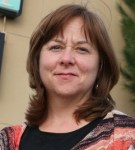
Your host is Mary Kay Carson, author of The Tornado Scientist, Alexander Graham Bell for Kids, Mission to Pluto, Weird Animals, and other nonfiction books for kids. @marykaycarson

Books About Museums

I’ve spent the last few weeks in Italy – eating gelato and losing myself (and sometimes my husband) in the museums of Rome and Florence. I already miss it, and since I can’t really pull a Claudia and live at the Uffizi, I figured I needed to bring life in a museum to me. Which is why I put together a list of books about museums to share.


Support Independent Bookstores - Visit IndieBound.orgPieces and Players By Blue Balliett

THE PIECES

Thirteen extremely valuable pieces of art have been stolen from one of the most secretive museums in the world. A Vermeer has vanished. A Manet is missing. And nobody has any idea where they and the other eleven artworks might be . . . or who might have stolen them.

THE PLAYERS

Calder, Petra, and Tommy are no strangers to heists and puzzles. Now they’ve been matched with two new sleuths — Zoomy, a very small boy with very thick glasses, and Early, a girl who treasures words . . . and has a word or two to say about the missing treasure.

The kids have been drawn in by the very mysterious Mrs. Sharpe, who may be playing her own kind of game with the clues. And it’s not just Mrs. Sharpe who’s acting suspiciously — there’s a ghost who mingles with the guards in the museum, a cat who acts like a spy, and bystanders in black jackets who keep popping up.

With pieces and players, you have all the ingredients for a fantastic mystery from the amazing Blue Balliett.


Support Independent Bookstores - Visit IndieBound.orgMrs. Brown on Exhibit And Other Museum Poems By Susan Katz, R.W. Alley (Illustrator)

Mrs. Brown loves museums — and so does her class! In fact, these cultural connoisseurs are just wild about field trips. Whether it’s sneaking up on an ancient Egyptian mummy, walking into a room of fluttering butterflies, or stomping through a giant heart, this class surely makes the grade when it comes to fun. They even take a tour of a skull exhibit and visit a lady who turned to soap! But the excitement doesn’t stop there — author Susan Katz uses a wide variety of poetic forms and unusual exhibits to show just how fascinating museums can be. Her text paired with the hilarious illustrations of acclaimed artist R. W. Alley will have readers grabbing their permission slips and readying themselves for a day of museum madness.


Support Independent Bookstores - Visit IndieBound.orgThe Frame-Up By Wendy McLeod MacKnight, Ian Schoenherr (Illustrator)

When Sargent Singer discovers that the paintings in his father’s gallery are alive, he’s pulled into a captivating world behind the frame he never knew existed.

Filled with devious plots, shady characters, and a grand art heist, this inventive mystery-adventure celebrates art and artists and is perfect for fans of Night at the Museum and Blue Balliett’s Chasing Vermeer. School Library Journal said, “This middle grade read paints fantasy, humor, and mystery into a satisfying tale about the power of friendship.”

There’s one important rule at the Beaverbrook Art Gallery—don’t let anyone know the paintings are alive. Mona Dunn, forever frozen at thirteen when her portrait was painted by William Orpen, has just broken that rule.

Luckily twelve-year-old Sargent Singer, an aspiring artist himself, is more interested in learning about the vast and intriguing world behind the frame than he is in sharing her secret. And when Mona and Sargent suspect shady dealings are happening behind the scenes at the gallery, they set out to uncover the culprit. They must find a way to save the gallery—and each other—before they are lost forever.

With an imaginative setting, lots of intrigue, and a thoroughly engaging cast of characters, The Frame-Up will captivate readers of Jacqueline West’s The Books of Elsewhere series. Booklist said, “This chapter book’s most memorable element is also its most unusual: the imaginative conviction that art is alive.” Includes images of the real paintings featured in the book.


Support Independent Bookstores - Visit IndieBound.orgBehind the Museum Door:  Poems to Celebrate the Wonders of Museums By Lee Bennett Hopkins, Stacey Dressen-McQueen (Illustrator)

“This collection of poems touches on the sights and sensations a group of children experience on a field trip. Inside the museum, they encounter a suit of armor, a mummy, a dinosaur skeleton, an ancient wheel, paintings (Picasso, Cassat, Renoir), a modern mobile, a fossil, and an old tapestry. Selections are by such poets as Lilian Moore, Jane Yolen, Alice Schertle, and Myra Cohn Livingston—one per spread—shown amid the subjects they portray. Each of Dressen-McQueen’s folk-art-style “exhibits,” carefully crafted in acrylic paint, oil pastel, and colored pencil, successfully captures and reinforces the mood of its accompanying poem. For a poetic museum field trip from a child’s point of view, try Susan Katz’s Mrs. Brown on Exhibit (S & S, 2002). Both books can add excitement and fun to an impending museum visit or help inspire a class to summarize a recent trip.”—Susan Scheps, Shaker Heights Public Library, OH


And – who can forget?

Support Independent Bookstores - Visit IndieBound.orgFrom the Mixed-Up Files of Mrs. Basil E. Frankweiler By E.L. Konigsburg

In this winner of the Newbery Medal from E.L. Konigsburg, when suburban Claudia Kincaid decides to run away, she knows she doesn’t just want to run from somewhere, she wants to run to somewhere—to a place that is comfortable, beautiful, and, preferably, elegant.

Claudia knew that she could never pull off the old-fashioned kind of running away…so she decided not to run FROM somewhere, but TO somewhere. And so, after some careful planning, she and her younger brother, Jamie, escaped — right into a mystery that made headlines!


What are you favorite books that take place in museums and galleries? Help me out and share your favorite books about museums in the comments below. 🙂

Naked Mole Rat Saves the World by Karen Rivers

Ever read the title of a book and know instantly that you must find out more about the story?

When I first saw the title of our next spotlight, I couldn’t help being filled with all sorts of questions. What’s up with this mole rat? Why did the day have to be saved? And how does he do it?

And wait! A mole rat?

Haha! I know. I’m being a little overly dramatic, but this goes to show how much value a title can hold. Let’s meet this mole rat.

Can Kit’s super-weird superpower save her world?

Kit-with-a-small-k is navigating middle school with a really big, really strange secret: When she’s stressed, she turns into a naked mole rat.

It first happened after kit watched her best friend, Clem, fall and get hurt during an acrobatic performance on TV. Since then, the transformations keep happening—whether kit wants them to or not. Kit can’t tell Clem about it, because after the fall, Clem just hasn’t been herself. She’s sad and mad and gloomy, and keeping a secret of her own: the real reason she fell.

A year after the accident, kit and Clem still haven’t figured out how to deal with all the ways they have transformed—both inside and out. When their secrets come between them, the best friends get into a big fight. Somehow, kit has to save the day, but she doesn’t believe she can be that kind of hero. Turning into a naked mole rat isn’t really a superpower. Or is it?

“A warm coming-of-age story populated with a cast of memorable characters.”
—Kirkus Reviews

The book releases on October 15, 2019 by Algonquin.


It’s wonderful to have you visit us here again, Karen. Welcome!

Kit is such an intriguing and endearing character. What characteristics did you know you had to include within her?

Kit, like most of my characters, came to me fully formed as herself, right from the beginning. I knew she had to be stronger than she knew, but I also knew that she was going to have occasionally overwhelming anxiety herself, that would be secondary (in her mind) to her mum’s more paralyzing version. I also wanted her to be brave, in particular brave to be herself, even when others might think it’s “weird” (to rollerskate, to believe in magic, to tie ribbons to trees in the park, to blow bubbles). And I knew she would be funny, of course.

Just hearing you describe her in your own words makes me like her even more.

We all know how important it is for young readers to relate to the characters they read. How will young readers relate to Kit?

I think a lot of kids around the age that kit is in the book are on the cusp of young adulthood, while also still wanting to stay kids. Kit very much wants to hold on to her kid-like qualities. I know some kids like this, who feel like they are being left behind because their friends are more like teenagers already, even when they aren’t quite ready.

That’s a very important reality during the transformation between tween and teen, and it’s not talked about enough. Glad you’ve mentioned it here. What is your favorite part of the world you’ve created for Kit and why?

I love the magic more than anything — all of it, from the literal to the metaphorical. I also love the way both kit and Clem find their power in surprising ways. Both of them are exploring the scarier, darker sides of their realities in these brave and surprising ways.

Was there anything about Kit that surprised you?

When I started writing, I didn’t realize that sometimes she was going to be angry or that she was going to show her anger on the page, that she could be unforgiving. I happen to have a twelve year old of my own now (although she was younger when I was writing this story) and this ability to flip back and forth between joy and fury turns out to be very real. It felt true on the page, too, but I hadn’t necessarily anticipated it.

Would you have been friends with Kit as a middle schooler?

Oh, definitely. She’s kind and fierce and funny and loyal AND she roller skates!

She definitely sounds like fun! What’s the most important element from this story you hope readers take with them once they’ve finished the book?

That everyone has something going on beyond the version of themselves that they present and that you see at school. You don’t have to scratch the surface very deeply to realize that we all have many, many layers. You never know what someone else is going through, and you definitely can easily underestimate what they are capable of if you forget to look beyond their outward appearance. And of course it’s also a book about forgiveness, about acknowledging that not everyone always does the right thing.

Another hidden truth during those middle grade years. Thank you for sharing your thoughts about Kit and Clem’s story and for helping young readers explore who they are through them. All the best from your Mixed-Up Files family . . .

Karen Rivers’s books have been nominated for a wide range of literary awards and have been published in multiple languages. When she’s not writing, reading, or visiting schools, she can usu­ally be found hiking in the forest that flourishes behind her tiny old house in Victoria, British Columbia, where she lives with her two kids, two dogs, and two birds.

Find her online at karenrivers.com and on Twitter: @karenrivers.